
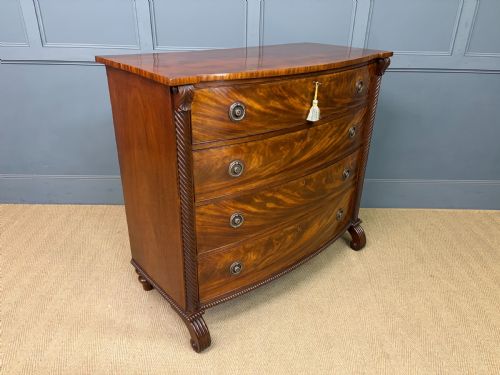
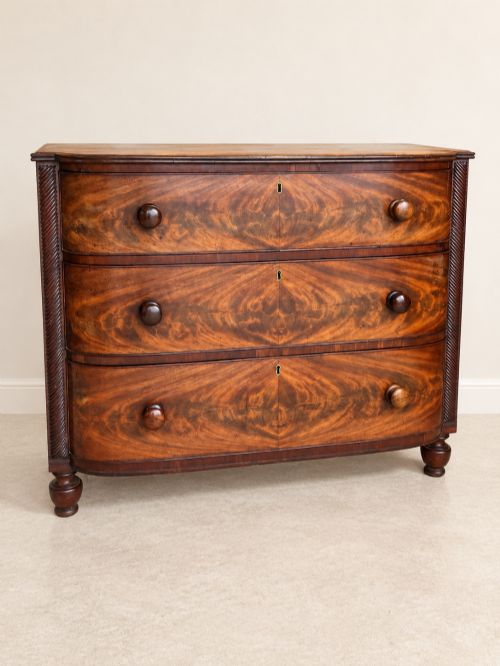
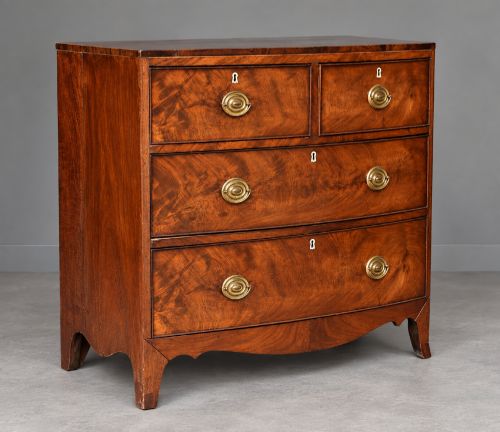
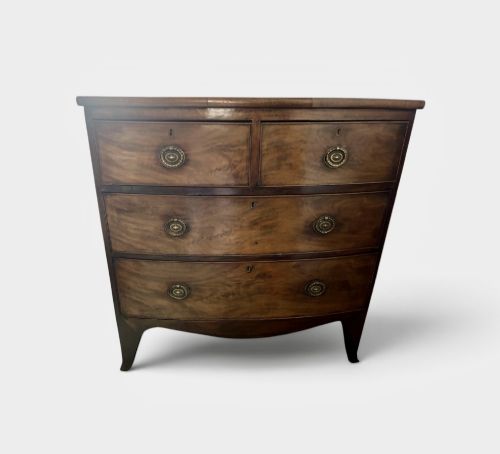
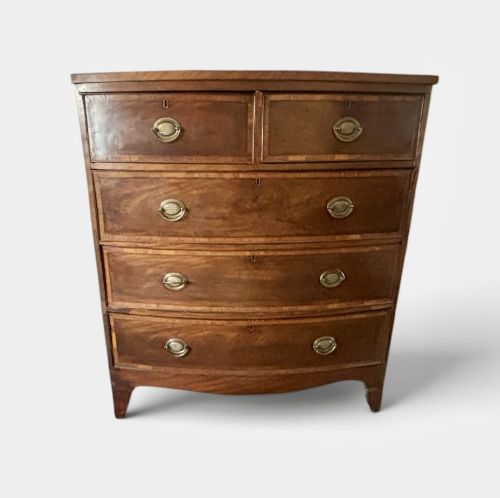

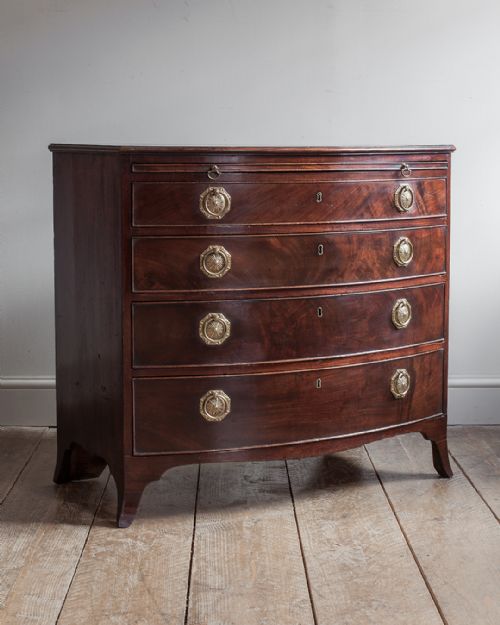
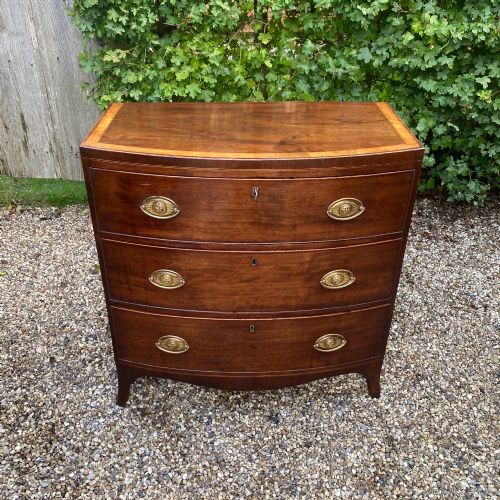
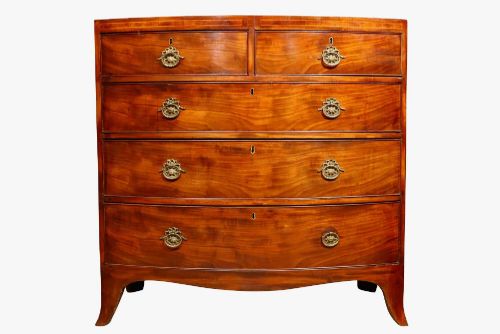
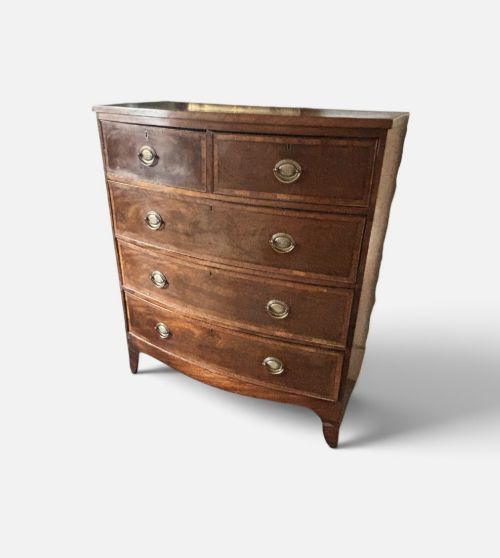
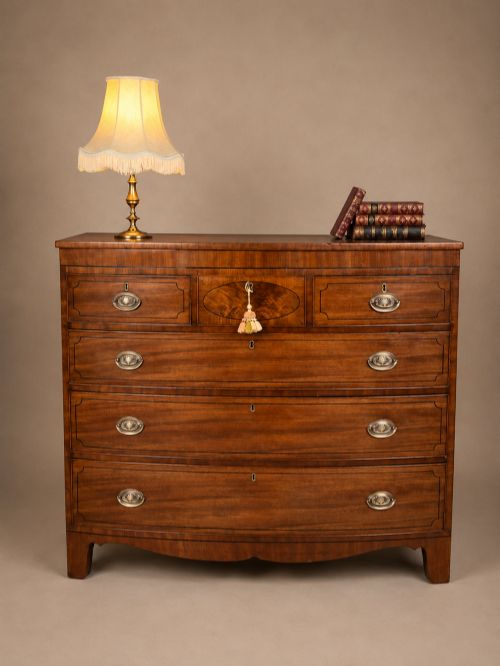
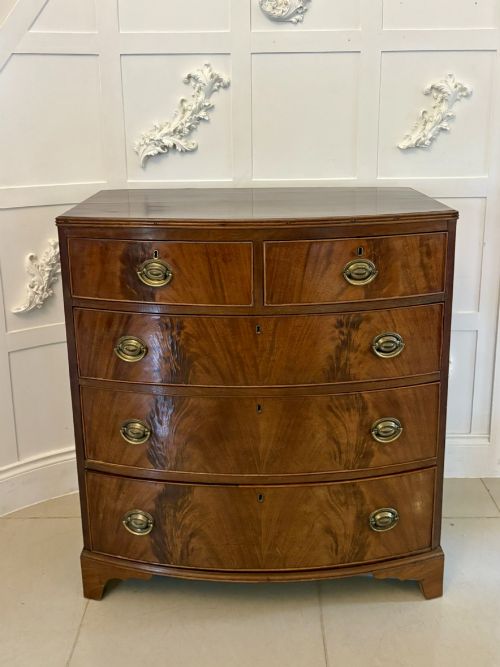
Georgian Bowfront Commode
A georgian bowfront commode brings curved fronts and rich timber to a room, offering practical storage with distinct period character.
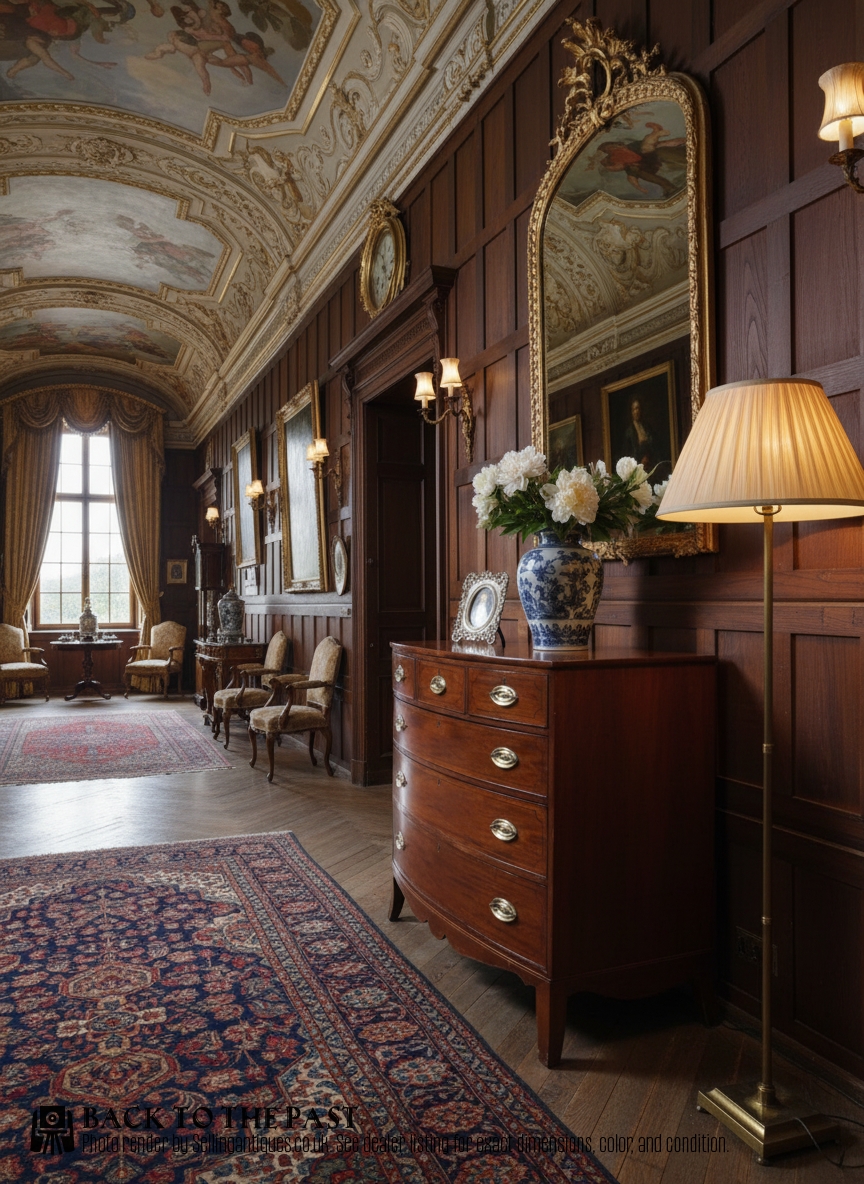
Georgian Bowfront Commode
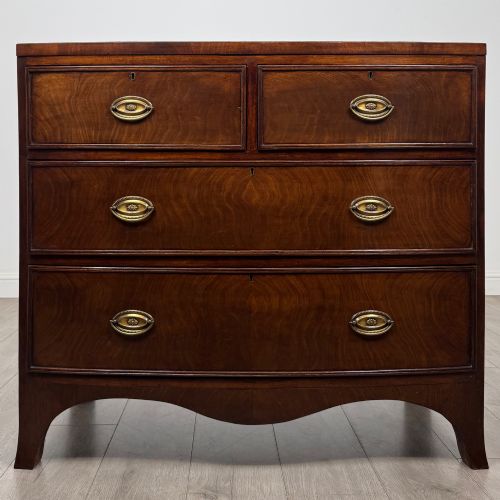
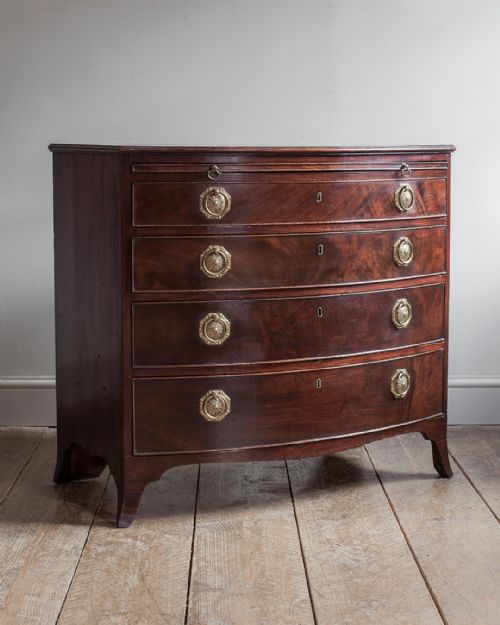
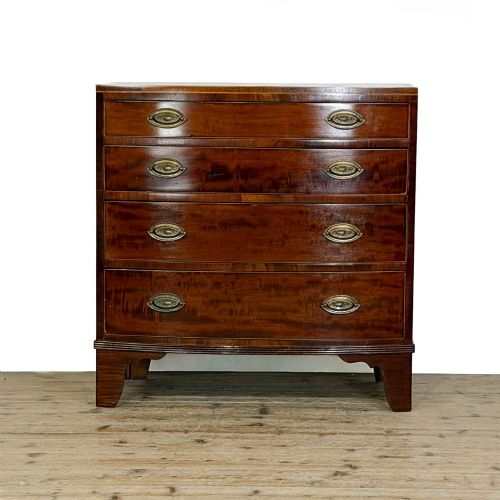
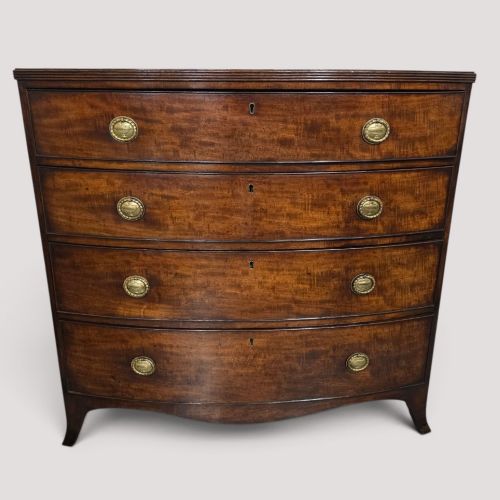
A georgian bowfront commode is a chest of drawers defined by a convex curving front, appearing frequently in mahogany across the Georgian, Regency, and 18th Century periods. These pieces serve primarily as bedroom or hallway storage, combining functional drawer space with a decorative curved silhouette.
The selection ranges from full-sized George III examples to smaller or narrow Scottish variants, alongside occasional miniature pieces and later Edwardian interpretations. Most pieces rely on solid timber carcases fitted with multiple graduated drawers, often supported on bracket feet.
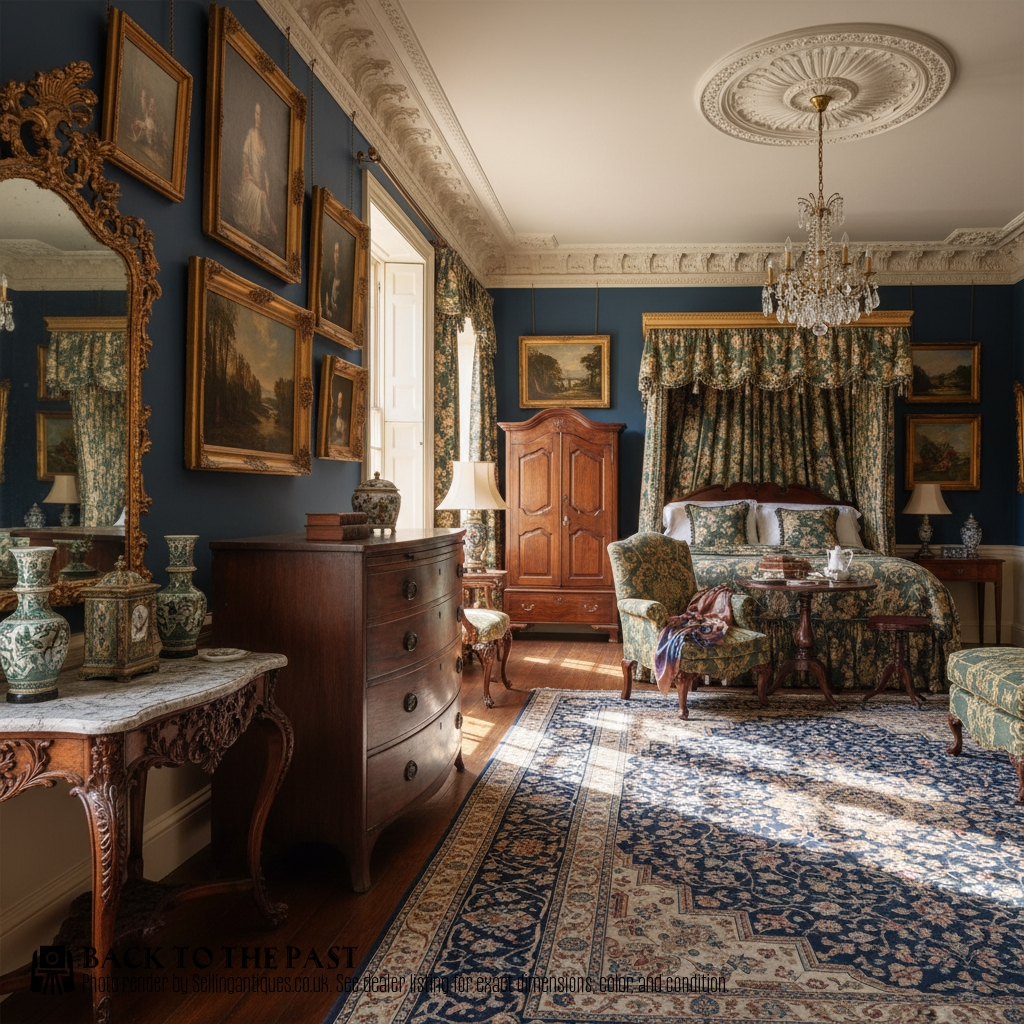
What varies in quality
Quality rests in the choice of veneers and the crispness of the timber grain, with highly figured flame mahogany or intricate satinwood banding marking out superior examples. The depth of the natural patina and the preservation of the original polished surface also distinguish finer pieces from plainer ones.
Construction details such as hand-cut dovetails on the drawer linings and the proportional balance of the curved front indicate the maker's skill. Pieces retaining their original brass hardware and untouched timber surfaces hold greater integrity.
Georgian Bowfront Commode Retail Price Guide 2026
Typical asking prices for georgian bowfront commode among the pieces listed under this phrase on Sellingantiques today, from the lower quarter to the upper quarter. They describe what is for sale here now, not the wider market.
Listings feature mahogany, satinwood, walnut, oak, and brass, spanning the 18th, 19th, and 20th centuries.
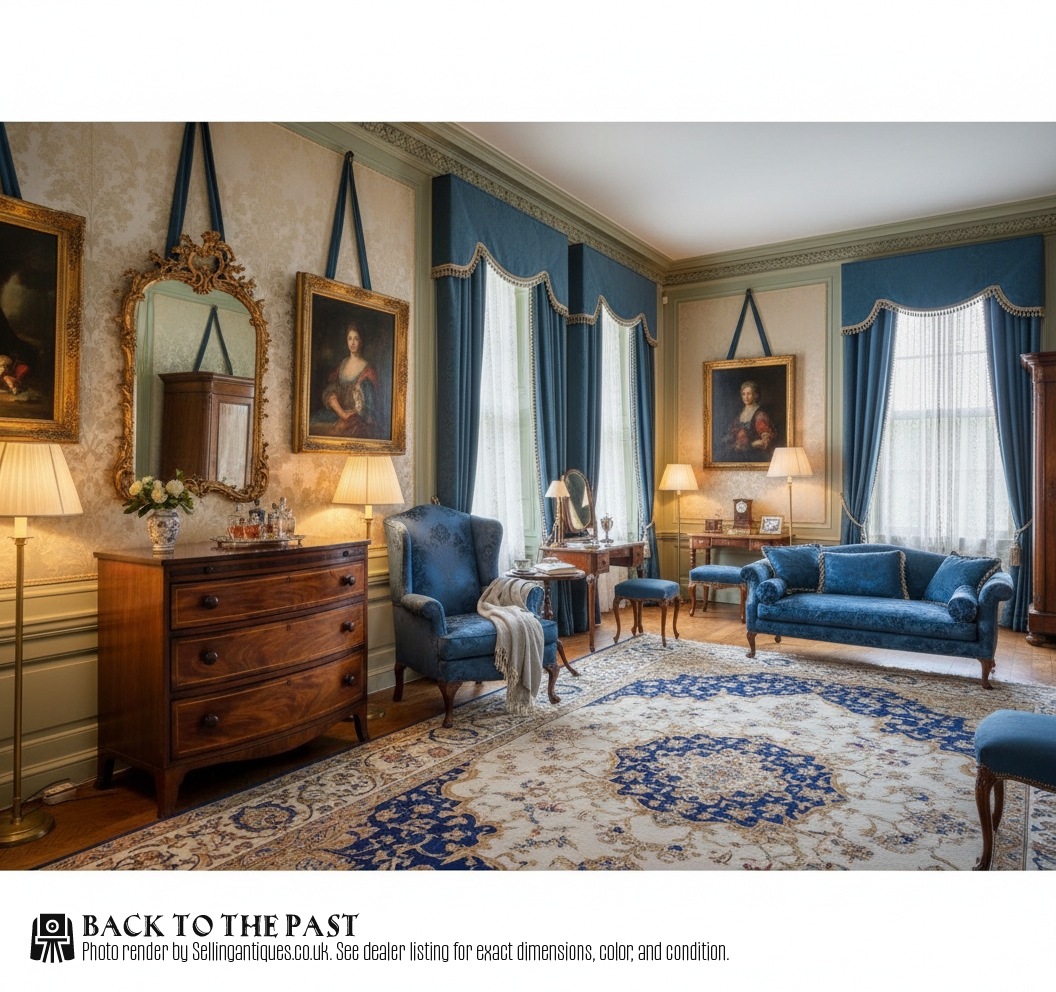
The Georgian Bowfront Commode Glossary
- Bowfront
- A furniture front that curves outward in a convex arc. This shape softens the profile of a standard rectangular chest.
- Caddy top
- A tabletop style with a raised, moulded edge that sits above the carcase. It frequently appears on 18th century and Georgian drawer units.
- Crossbanding
- A strip of veneer laid perpendicular to the grain of the surrounding surface. It creates a decorative border along the edges of drawers.
- Flame mahogany
- A distinct timber figure resembling leaping flames, cut from the branch forks of the tree. Cabinet makers selected it for its dramatic visual movement.
- Graduated drawers
- A set of drawers that decrease in depth from bottom to top. This arrangement provides stability and visual balance to the chest.
Georgian Bowfront Commode: Frequently Asked Questions
What is a bowfront chest?
A bowfront chest is a set of drawers featuring an outwardly curved front that swells from the corners. This design softens the rigid lines typical of standard rectangular furniture.
The curved shape requires specialised carpentry to ensure the drawers operate smoothly within the rounded frame, combining decorative appeal with practical storage.
How do I date a Georgian chest?
Dating relies on observing timber choices, construction methods, and hardware styles across different reigns such as George III or the Regency period. Secondary woods like oak and the style of dovetailing offer further clues to the decade of manufacture.
Changes in proportion and decorative veneers like satinwood banding also help narrow down the period from the 18th century into the 19th century.
Where were these pieces used?
These chests were primarily placed in bedrooms and dressing rooms to store clothing and personal items. Their decorative fronts also suited them for placement in hallways and drawing rooms.
Smaller or narrow variants allowed these units to fit into tighter domestic spaces while maintaining substantial drawer capacity.
Are all these chests made of mahogany?
Mahogany is the predominant timber seen across the listings, often highlighted with flame veneer, satinwood, or walnut details. Oak also appears frequently, typically utilised for internal drawer carcases and structural linings.
Occasional pieces incorporate alternative woods or decorative marquetry to create contrasting borders and surface patterns.