
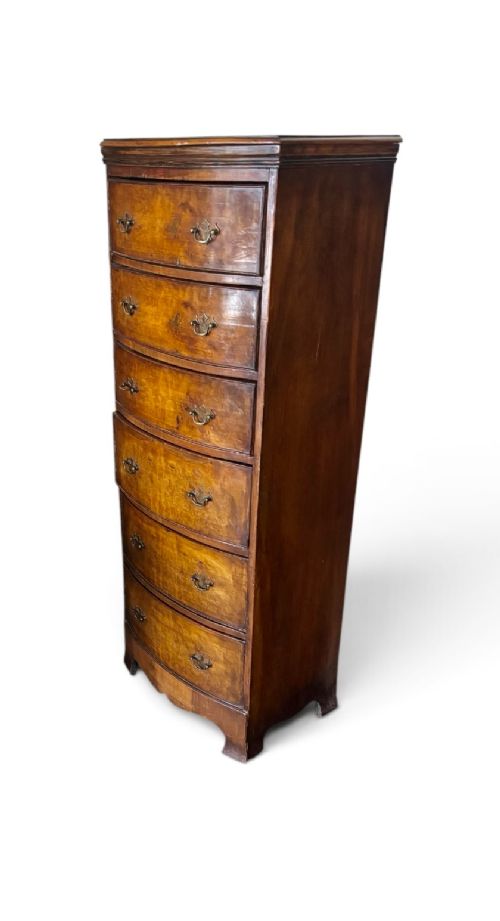
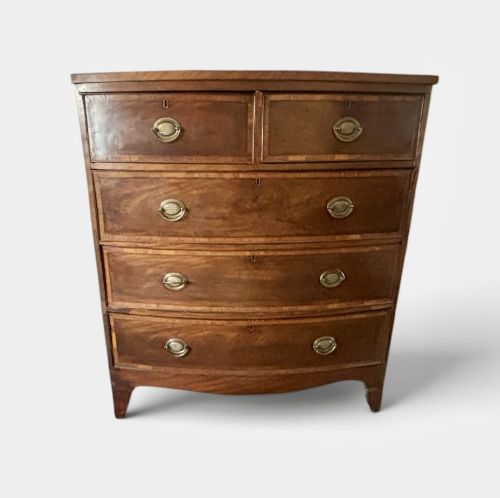

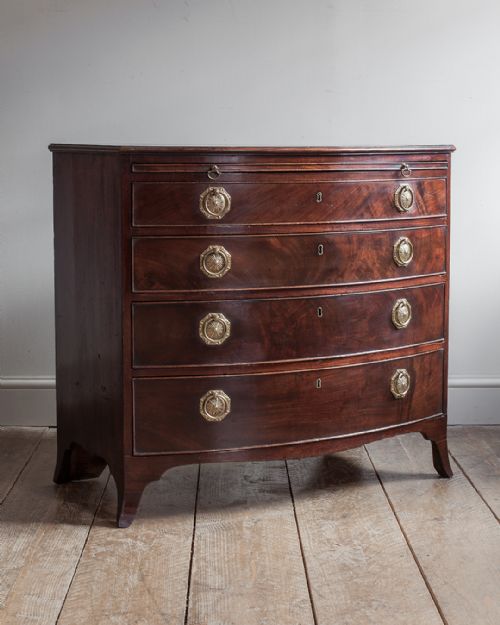
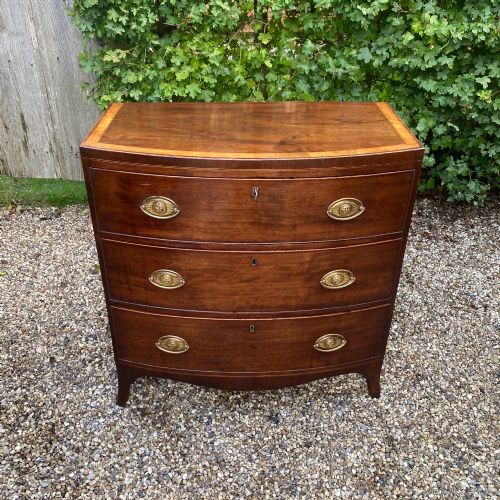
Georgian Bowfront Chest Drawers
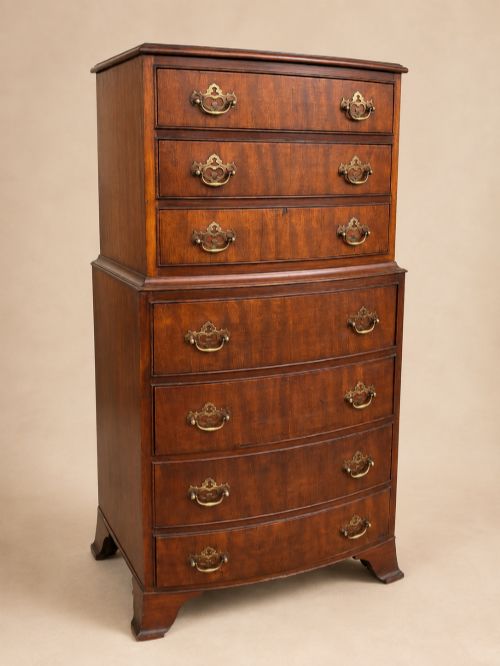
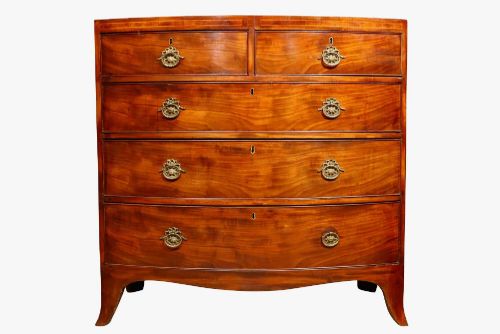
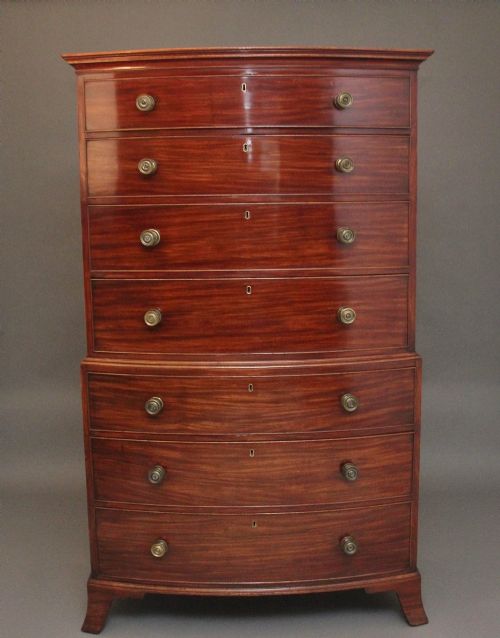
A georgian bowfront chest drawers brings architectural curve and rich timber to a room, offering generous storage with undeniable presence.
Understanding the georgian bowfront chest drawers
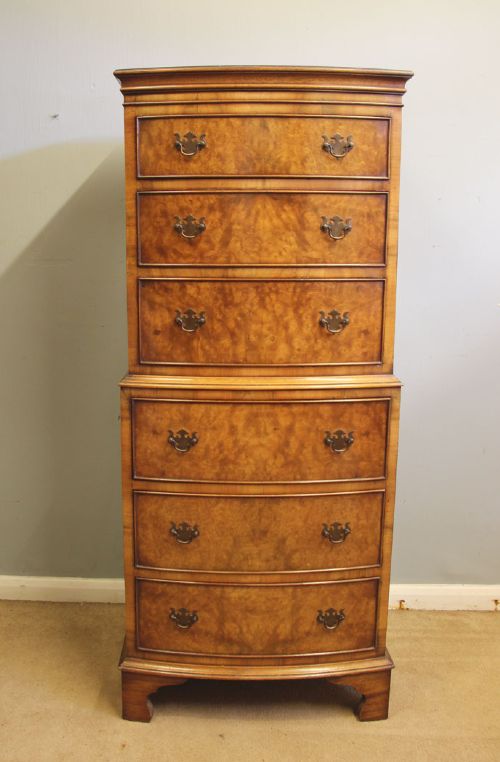
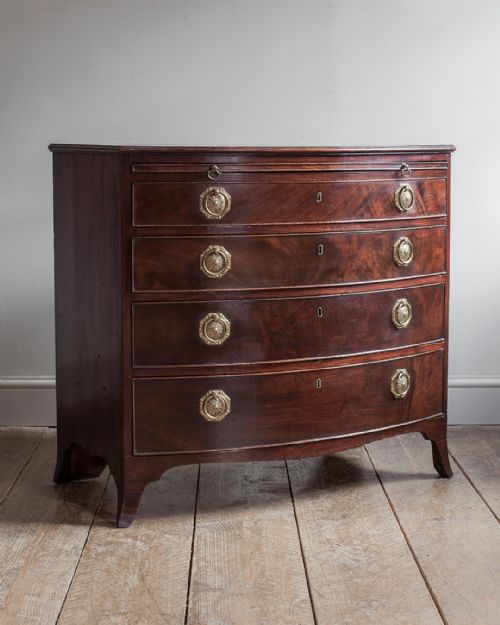
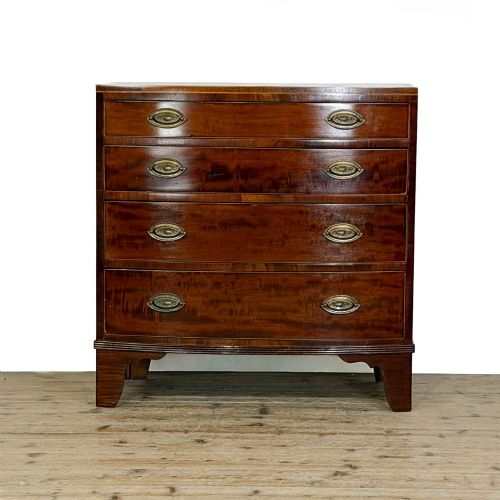
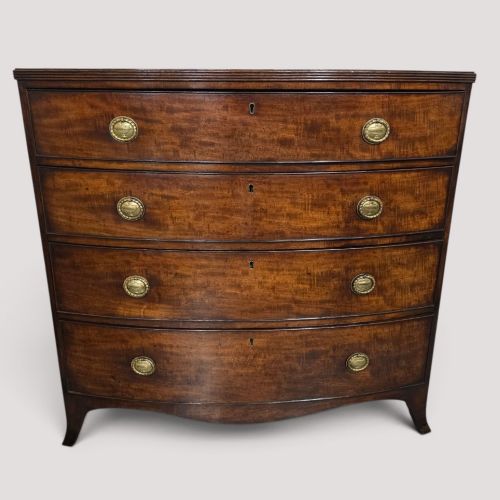
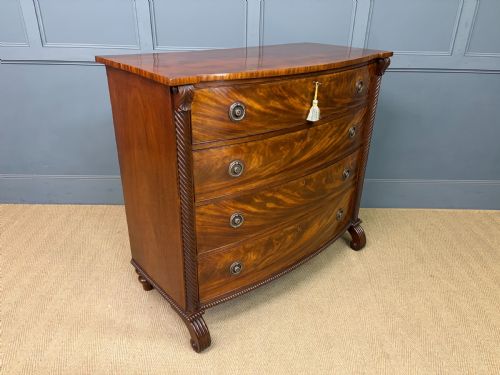
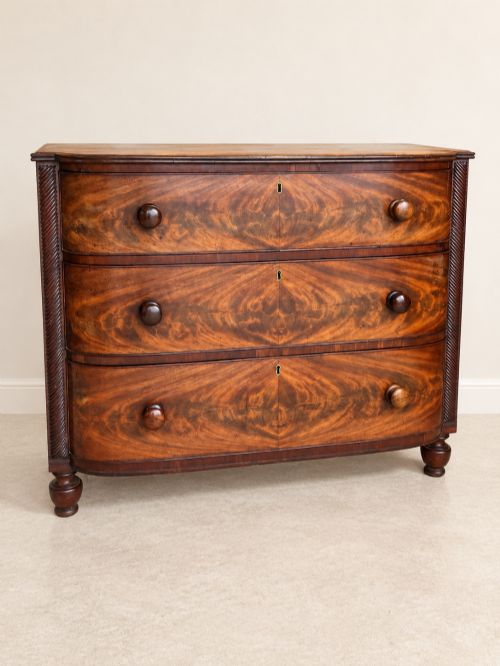
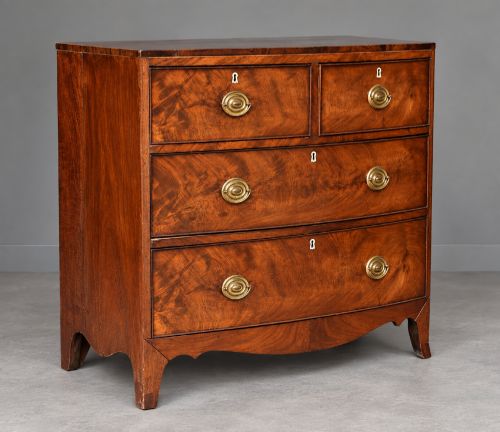
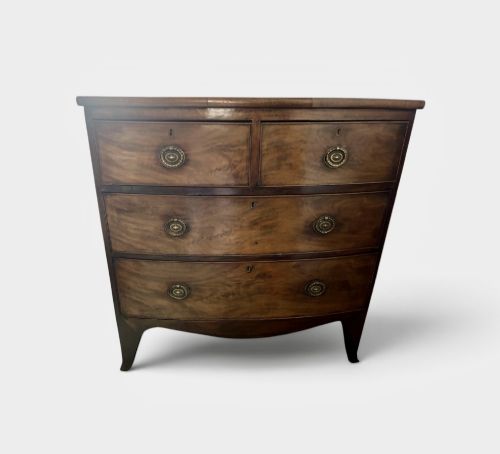
When you search for a georgian bowfront chest drawers, you seek a distinctive storage piece defined by its convex front projection. The pieces appearing here span the Georgian and George III periods, stretching into the nineteenth century.
Mahogany dominates the selection, frequently appearing in figured or golden varieties, alongside painted wood surfaces. Forms range from standard chests of five drawers to smaller scale examples designed for compact spaces.
Stylistic influences include classic English country and occasional French chateau expressions. Oak lining often underpins the sturdy drawer construction seen in these historical examples.

Materials and construction methods
Cabinetmakers utilised solid wood and veneers, selecting timber with prominent grain patterns such as figured mahogany. Secondary woods like oak provided structural stability for drawer linings and internal frames.
Hardware details typically involved brass fittings for drawer pulls and escutcheons. Paint finishes were applied to select wooden surfaces, creating solid colour or decorative treatments.
The curved front profile required precise joinery to shape the timber rails and drawer fronts. Inlaid decorative elements were occasionally integrated into the mahogany surfaces.
Retail Price Guide 2026
Typical UK retail prices for georgian bowfront chest drawers, calculated from the Sellingantiques database of over a million retail prices indexed since 2003. This retail price guide relies exclusively on Sellingantiques data; no external sources or auction records are used, so the figures do not describe the wider market.
Many a midnight sock hunter has blessed the cabinetmaker who curved these corners.
Assessing quality and craftsmanship
The choice of timber grain sets superior examples apart, with highly figured or golden mahogany denoting finer material selection. The crispness of the curved bowfront and the subtlety of inlaid details reveal the cabinetmaker's skill.
Internal construction, including the use of oak linings and traditional dovetail joints, marks the difference between standard utilitarian pieces and finer productions. Original brass hardware and well-fitted drawers maintain the integrity of the piece.
The Georgian Bowfront Chest Drawers Glossary
- Bowfront
- A convex curving front facade typical of certain chest designs. This curved profile softens the rectangular lines of traditional furniture.
- Figured mahogany
- Timber exhibiting attractive, mottled or rippled grain patterns. Cabinetmakers reserved these decorative boards for prominent exterior surfaces.
- Dovetail joint
- An interlocking wood joint formed by wedge-shaped fingers. This method secures drawer corners with exceptional strength.
- Escutcheon
- A protective plate surrounding a keyhole. These brass fittings prevent the wood from wearing around the lock.
- Oak lined
- Drawer interiors constructed using oak timber. This durable wood resisted heavy daily wear.
Frequently Asked Questions
What is a bowfront chest?
A bowfront chest is a set of drawers featuring a convex, outward-curving front facade. This design emerged to soften interior angles and provide a more sculptural furniture form.
Cabinetmakers adopted the curved front extensively during the Georgian era, pairing the shape with rich mahogany timbers.
How old are these chests?
The pieces listed originate from the Georgian and George III periods, generally dating from the late eighteenth century into the nineteenth century.
Construction details like oak drawer linings and hand-cut joinery help confirm this historical origin.
What wood are they made from?
Mahogany is the primary wood found in these pieces, often appearing as figured or golden varieties. Oak frequently serves as a secondary wood for internal drawer linings.
Painted wood finishes also appear among the material options recorded in the listings.
Are there smaller sizes available?
Small scale examples frequently appear within this category, often described simply as small chests. These compact variations offered similar storage capacity for smaller rooms.
Cabinetmakers maintained the signature curved bowfront design even on these reduced dimensions.