

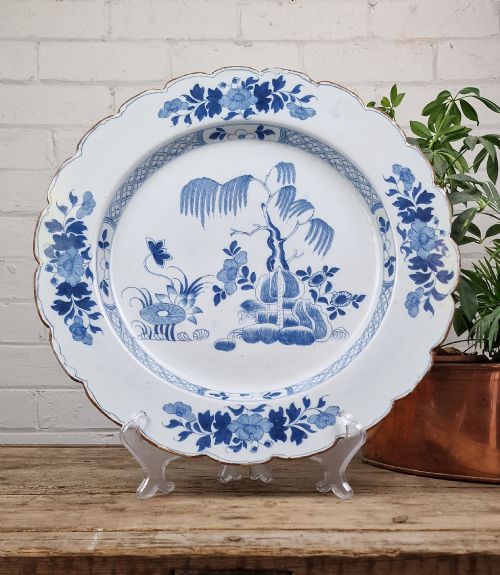


Georgian Blue White Platter
These georgian blue white platter selections bring substantial ceramic serving pieces with cobalt designs into modern dining rooms.
Georgian Blue White Platter
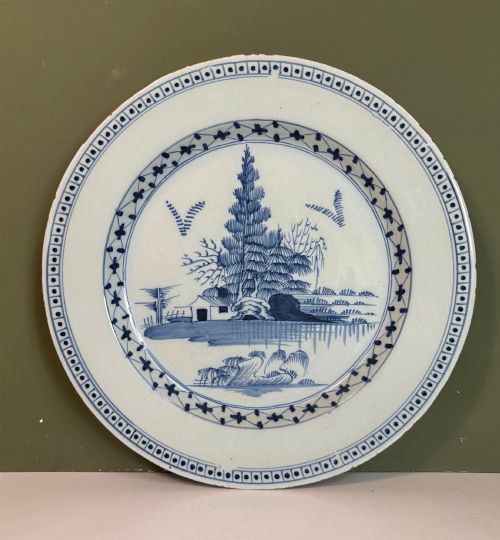
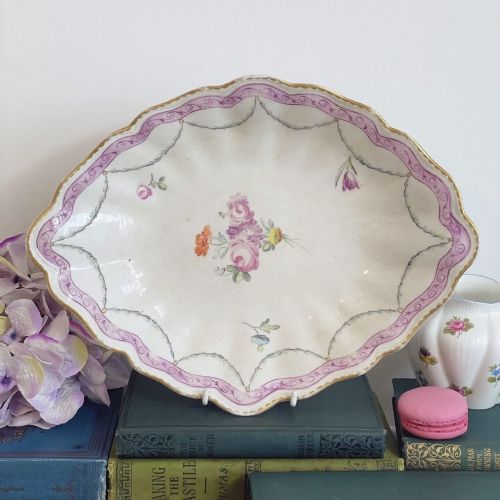
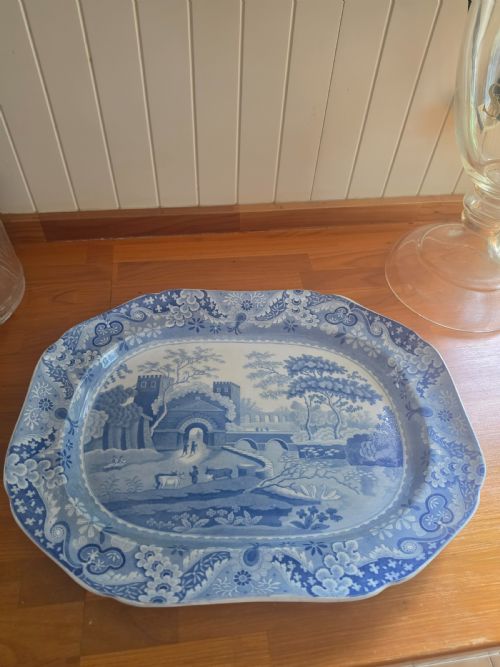
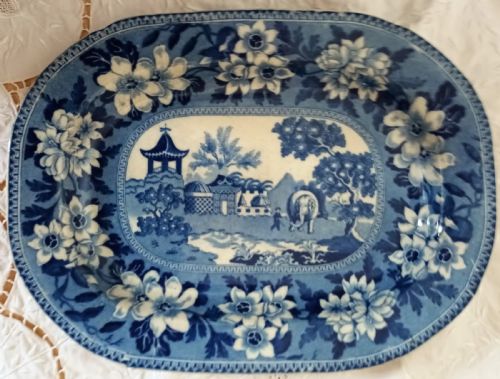
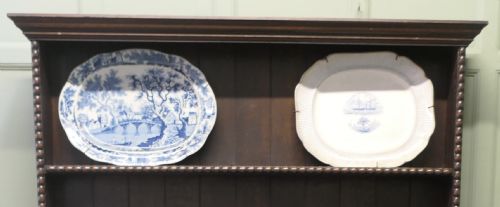
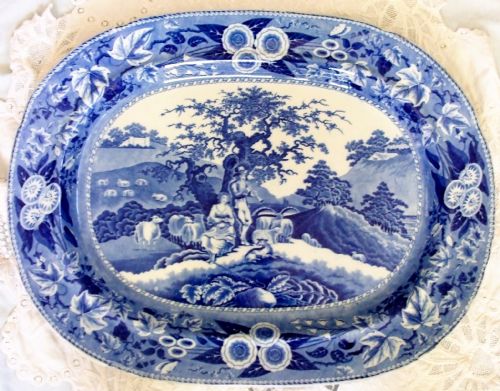
A georgian blue white platter encompasses large serving dishes, meat plates, and deep chargers produced across the eighteenth and nineteenth centuries. Potters shaped these ceramic surfaces to hold substantial joints of meat or present decorative scenes at formal dining tables.
The versions most common on this page arrive from English kilns, utilising earthenware, pearlware, and ironstone fabrics. Makers applied dense cobalt pigment to depict landscapes, architectural ruins, and narrative motifs derived from Asian and European sources.
Materials and Techniques
Potters formed these heavy platters from refined earthenware bodies, coating the dried clay in tin glazes or clear lead glazes before firing. This established a smooth white or cream background capable of receiving detailed underglaze painting.
Makers applied cobalt pigment directly to the raw ceramic surface by hand or through copperplate transfer printing. The pieces then underwent a high-temperature kiln firing that fused the blue oxide permanently into the glass layer.
Platters featuring swimming water dogs and pacing zebras demonstrate the wonderfully eccentric wildlife imaginations of Georgian potters.
Design and Execution
Quality rests upon the crispness of the cobalt transfer print and the balance of the composition across a large surface. Superior examples maintain deep, even blue tones without smudging or pooling in the recesses of the glaze.
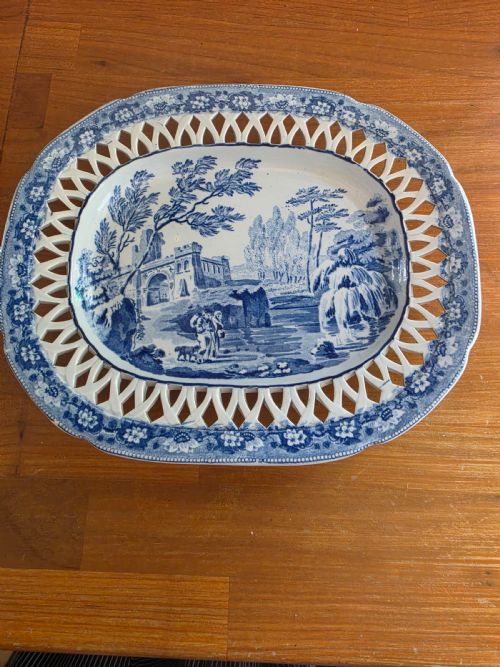
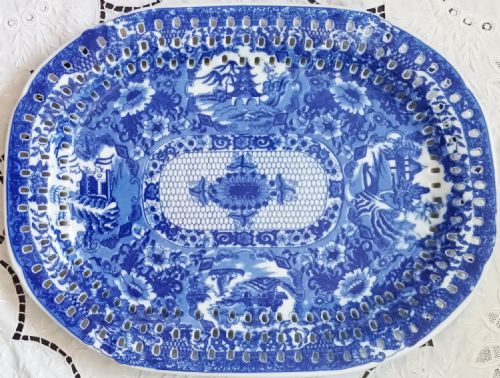
The sophistication of the moulded rim and the complexity of the landscape scene distinguish finer platters from standard utility wares. Potteries achieved greater distinction when integrating pierced draining inserts or specialised gravy wells into the serving surface.
John Rogers And Son·Thomas Lakin·Brameld And Company·Robert Hamilton Of Stoke·J And W Ridgway
The Georgian Blue White Platter Glossary
- Transferware
- A pottery decoration technique where a design is engraved on a copper plate, inked with cobalt pigment, and transferred to paper before being pressed onto unglazed ceramic. This method allowed intricate topographical and narrative scenes to be replicated consistently.
- Pearlware
- A refined earthenware body developed by Josiah Wedgwood around 1779, featuring a thin glaze with a slight bluish tinge that made the underlying ceramic appear whiter. It served as the primary canvas for many early nineteenth-century blue and white tablewares.
- Tin Glaze
- An opaque white ceramic coating containing tin oxide, utilised on delftware chargers before transparent lead glazes became standard. It provided a pale ground for handpainted cobalt motifs.
- Ironstone
- A heavy, durable type of feldspathic earthenware patented in the early nineteenth century to imitate Chinese porcelain. Factories utilised this dense ceramic body for large meat platters destined for heavy daily usage.
Georgian Blue White Platter: Frequently Asked Questions
How were these platters used?
These large ceramic platters served as the centrepiece for presenting roasted meats, fish, and large quantities of food at the dining table. Many incorporated built-in wells or separate draining inserts to catch juices during carving.
Their robust earthenware and ironstone bodies were designed for heavy domestic service in country houses and urban dining rooms alike. They moved directly from the kitchen to the dining table during formal multi-course meals.
How do I display a platter?
Platters can be mounted securely on walls using specialist plate hangers or stood upright on sturdy plate rails within dining rooms. Their bold cobalt patterns provide strong visual contrast against neutral interior walls.
When placed flat on sideboards or tables, they work well to anchor displays of smaller ceramics or glassware. Ensure any mounting hardware supports the full weight of the heavy earthenware body safely.
How are periods told apart?
Earlier eighteenth-century pieces often feature handpainted tin-glazed earthenware bodies with softer, unrefined edges and looser brushwork. Nineteenth-century examples typically employ crisp transfer printing on harder pearlware or ironstone fabrics.
Markings on the reverse, stylistic shifts in the border patterns, and changes in the shade of the cobalt pigment also help assign specific dates to individual items.
What is transfer printing?
Transfer printing is a manufacturing method where an engraved copper plate is inked with cobalt pigment and pressed onto tissue paper. This printed paper is then applied to the raw ceramic body to transfer the detailed design before glazing.
This technique allowed potteries to produce intricate landscapes and narrative scenes uniformly across large production runs. It revolutionized ceramic decoration during the Georgian era.