

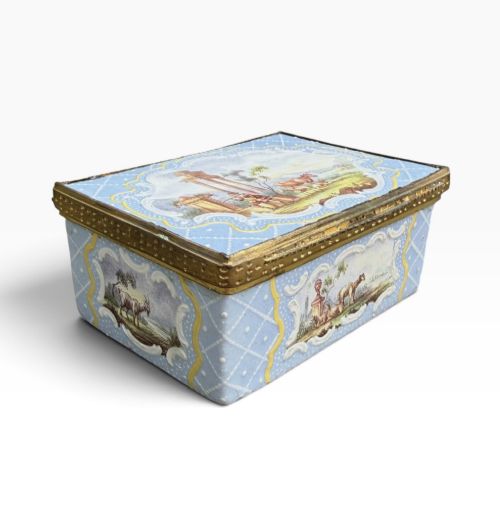


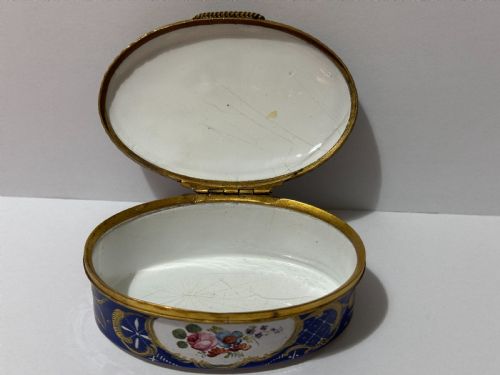


Georgian Blue Enamel Box
A georgian blue enamel box is a small, hand-painted container made for snuff or patches, prized by collectors for its vibrant miniature artistry.
Georgian Blue Enamel Box
When you search for a georgian blue enamel box, you encounter small personal containers fashioned primarily during the eighteenth century. These pieces appear as snuff boxes, patch boxes, and vinaigrettes, serving the personal grooming needs of the Georgian period.
The versions you meet most frequently on this page originate from Bilston and Staffordshire. They represent the core output of English enamel production from that era, often dated towards the latter half of the seventeen-hundreds.
Makers shaped these items into oval and rectangular forms designed to fit comfortably in a pocket or reticule. Each object combines functional storage with decorative painting, capturing the aesthetic tastes of Georgian society.
How they were made
Craftsmen built these boxes using copper or brass as the structural metal base. They applied vitreous enamel to the metal surface through high-temperature firing, creating a smooth and durable canvas for subsequent painting.
Makers incorporated gilt metal or gold mounts to hinge and frame the containers securely. Artisans then hand-painted the enamel surfaces, frequently utilising blue ground colours and detailed neoclassical or rococo motifs.
Georgian Blue Enamel Box Retail Price Guide 2026
Typical asking prices for georgian blue enamel box among the pieces listed under this phrase on Sellingantiques today, from the lower quarter to the upper quarter. They describe what is for sale here now, not the wider market.
Listings feature eighteenth-century pieces from Staffordshire and Bilston, utilising copper, brass, and gold materials.
What varies in quality
The refinement of the hand-painted decoration separates standard examples from superior pieces. Crisp detailing in portraiture or topographical scenes indicates a more skilled hand at work during the manufacturing process.
The precision of the metal mounts and the retention of original gilding influence the overall integrity of the object. Heavier gauge copper and well-preserved hinge mechanisms denote higher workshop standards.
Bilston Enamel·Staffordshire Enamel
The Georgian Blue Enamel Box Glossary
- Bilston enamel
- Enamel work produced in the town of Bilston, Staffordshire, known for small decorative containers. These items formed a major part of the English enamel trade.
- Patch box
- A small container holding cosmetic patches made of silk or velvet used by Georgian nobility. Ladies applied these to the face to cover blemishes or highlight complexions.
- Snuff box
- A small pocket-sized container designed to hold powdered tobacco. Users opened the hinged lid to take a pinch during social gatherings.
- Vinaigrette
- A small ornamental box containing a perforated grille over a sponge soaked in aromatic vinegar. Owners held the container to their face to revive themselves in crowded rooms.
- Neoclassical
- A decorative style inspired by classical Greece and Rome featuring symmetrical patterns and urn motifs. This aesthetic heavily influenced the ornamentation of late eighteenth-century objects.
Georgian Blue Enamel Box: Frequently Asked Questions
What is a georgian blue enamel box?
A georgian blue enamel box is a small, hinged container made of fused glass on copper, typically produced in eighteenth-century England. These items served practical daily functions for personal grooming and social display.
Craftsmen shaped them into pocket-sized forms featuring rich blue enamel grounds and delicate hand-painted decoration. They represent a distinct period of British decorative arts.
How were these boxes used?
Original owners used these containers to store scented snuff, small cosmetic patches, or aromatic vinegar for reviving the senses. They were carried in pockets or displayed on dressing tables during social calls.
The secure hinged lids kept volatile contents contained safely while remaining easy to open with one hand during conversation.
How do I care for a georgian blue enamel box?
Protect your box from sharp impacts and drops, as the vitreous enamel coating can chip or crack upon hard surfaces. Keep it away from prolonged direct sunlight to prevent fading of the painted pigments.
Clean the surface only with a soft, dry cloth and avoid harsh chemical polishes that might damage the delicate metal mounts or enamel.
How can I tell the period?
Dating relies on examining the construction of the metal mounts, the weight of the copper base, and the style of the painted decoration. Eighteenth-century pieces typically feature specific hinge types and hand-mixed enamel colours.
Comparing the form and motifs to documented examples from Staffordshire helps confirm the era of manufacture.