





Enamelled Copper Patch Box
An enamelled copper patch box is a small, hinged Georgian trinket designed for cosmetic face patches, combining bright vitreous colours with base metal.
Enamelled Copper Patch Box
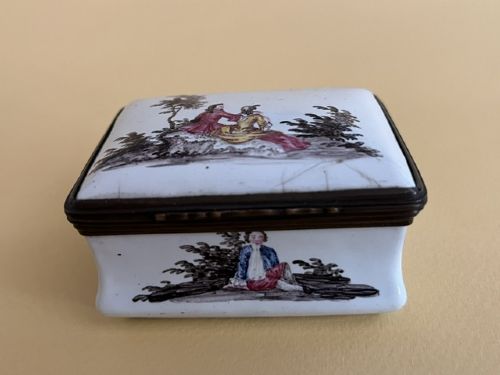
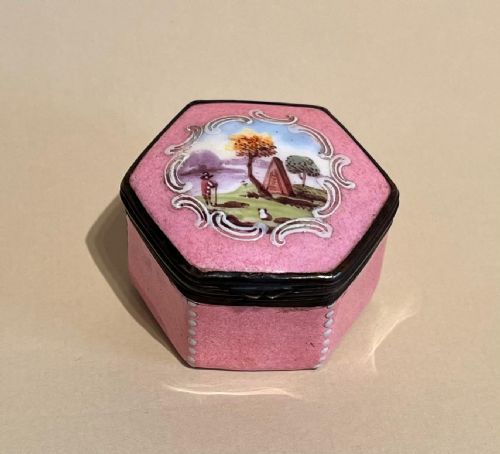
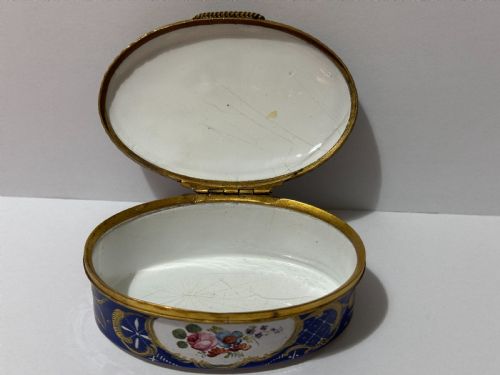
An enamelled copper patch box is a small container produced primarily during the eighteenth century in English centres such as Bilston and Staffordshire. These portable items served polite society for holding small silk beauty patches or snuff, and they frequently feature shaped or oval hinged lids.
The version most commonly met on this page is the Georgian Bilston or South Staffordshire enamel box, dating around seventeen seventy to seventeen eighty. These examples often display pictorial lids with transfer prints or hand-painted scenes, including parkland musicians or topographical views like Cheltenham Wells.
How they were made
Makers constructed the body from beaten copper or gilded metal, forming bases and hinged mountings in brass or gilt frames. Artisans applied vitreous enamel pastes to the metal surfaces, firing the pieces in kilns to achieve a smooth, glossy coating.
Decoration relied on hand-painting or transfer printing applied over the fired enamel ground. Further kiln firings fixed the pigments permanently onto the surface of the box.
Enamelled Copper Patch Box Retail Price Guide 2026
Typical asking prices for enamelled copper patch box among the pieces listed under this phrase on Sellingantiques today, from the lower quarter to the upper quarter. They describe what is for sale here now, not the wider market.
Object forms on this page include snuff boxes, bonbonniere containers, and novelty trinket boxes.
What varies in quality
The refinement of the hand-painting and the clarity of transfer-printed lids distinguish superior pieces from standard production. Delicate brushwork on figural scenes, such as cavalier spaniels or musicians, elevates the artistry of the box.
The integrity of the vitreous enamel layer and the precision of the brass or gilt metal hinge mounts dictate the overall condition. Heavier gilding and well-preserved enamel surfaces without extensive cracking reflect higher manufacturing standards.
The Enamelled Copper Patch Box Glossary
- Patch box
- A small container used in the Georgian era to hold cosmetic face patches made of silk or velvet. These boxes often incorporate internal mirrors fitted to the lid.
- Bilston enamel
- Enamelled metalware produced in the town of Bilston in Staffordshire during the eighteenth century. These items are noted for their bright colours and copper-gilt mounts.
- Vitreous enamel
- A material made by fusing powdered glass to a metallic substrate through firing. This produces a durable, glossy coloured coating.
- Bonbonniere
- A small ornamental container originally intended to hold sweets or sugar-plums. In this context, it describes novelty-shaped enamel boxes.
- Gilt metal
- Base metal treated with a thin layer of gold or gold-coloured wash. It provides a decorative metallic finish to the mounts and rims.
Enamelled Copper Patch Box: Frequently Asked Questions
What were patch boxes used for?
Georgian society used these small lidded containers to store cosmetic face patches, which were artificial beauty spots made from silk or velvet. People attached them to the face using adhesive to hide blemishes or signal social stance.
They also doubled as miniature carriers for snuff or small trinkets. Their portable nature made them popular pocket accessories for fashionable individuals.
How do I date an enamel box?
Dating relies on stylistic clues, framing mounts, and manufacturing techniques associated with eighteenth-century Staffordshire production. Pieces from the Georgian period typically exhibit specific hinge types and copper gauges characteristic of workshops active around seventeen seventy to eighteen hundred.
Subject matter on the lids also offers chronological indicators. Transfer printing gained widespread use in the latter half of the eighteenth century, helping to narrow down the decade of creation.
Where were these boxes made?
The primary English production centres were Bilston and South Staffordshire, where specialised enamel workshops flourished during the eighteenth century. Artisans in these areas mastered the union of copper shaping and vitreous enamel painting.
While English pieces dominate, international workshops also produced comparable items, such as eighteenth-century Beijing enamel boxes. Each region employed distinct palettes and mounting styles.
How should I display enamel boxes?
Display these delicate pieces in enclosed cabinets away from direct sunlight to protect the fragile enamel pigments from fading. Stable indoor humidity prevents potential stress on the copper and glass bond.
Because of their small size, grouping them on dedicated shelves or inside glass-topped display tables allows the painted details on the lids to be viewed clearly.