



Georgian Beer Tankard
A georgian beer tankard brings substantial weight and generous capacity to the table, offering a tangible link to eighteenth- and nineteenth-century drinking habits.
Georgian Beer Tankard
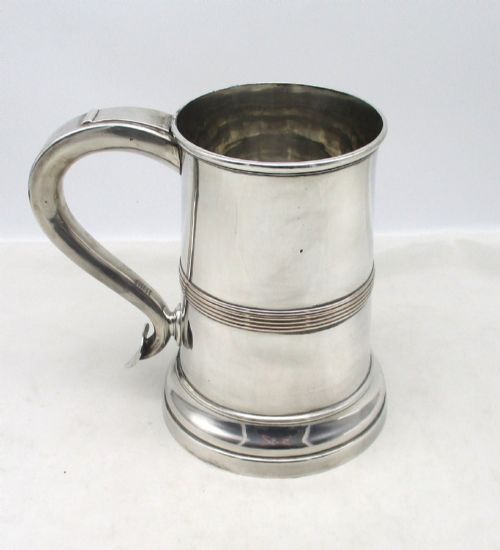
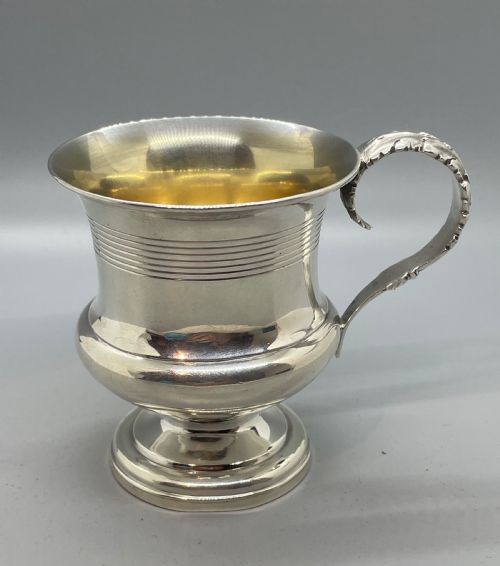
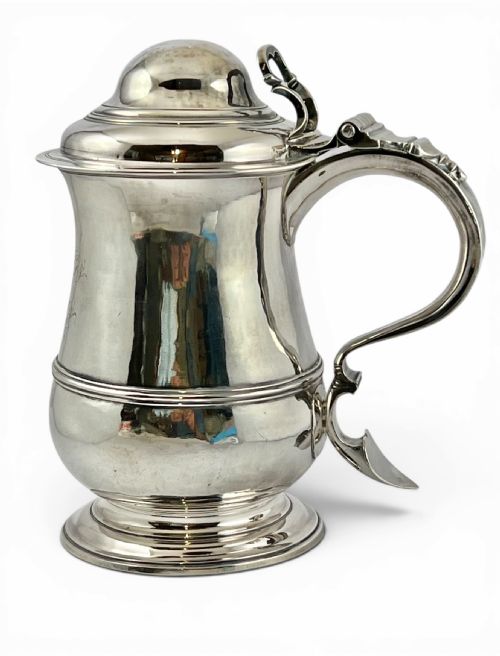
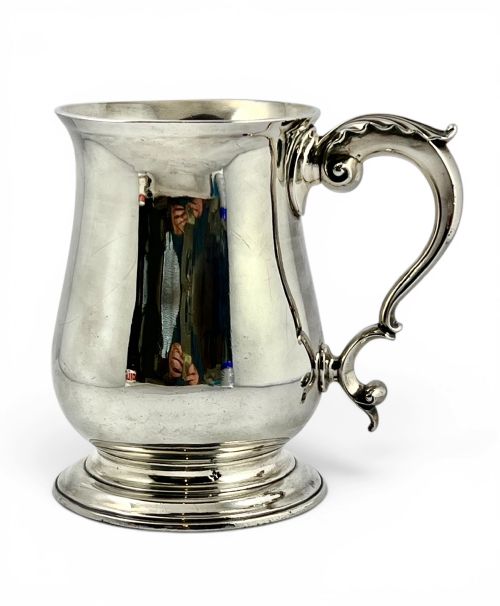
A georgian beer tankard is a robust drinking vessel designed for ale, beer, and similar brews, appearing in forms ranging from plain pint mugs to large lidded flagons. The pieces seen most frequently on this page date from the eighteenth and nineteenth centuries, taking the shape of cylindrical, barrel-shaped, or baluster vessels.
Makers and manufacturers produced these items in various sizes, including small fractional pints, standard pints, and substantial quart capacities. The selection includes domestic drinking vessels alongside pieces suited for larger gatherings and tavern service.
How they were made
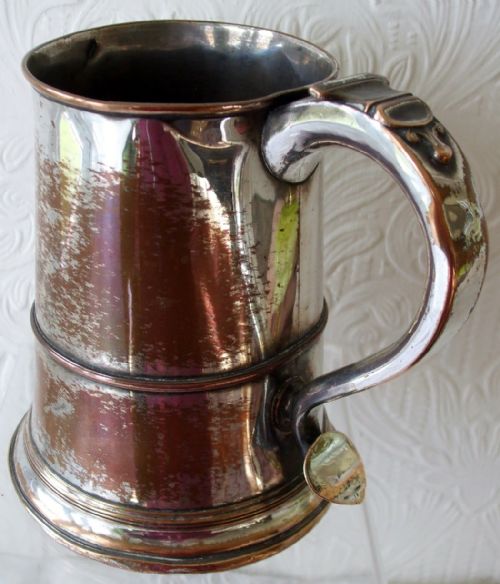
Silversmiths and pewterers shaped sterling silver, pewter, and copper through hammering, casting, and soldering, often applying scroll handles and hinged lids to secure the contents. Old Sheffield Plate and silver plate techniques combined copper and silver layers to achieve a metallic sheen at a different cost point.
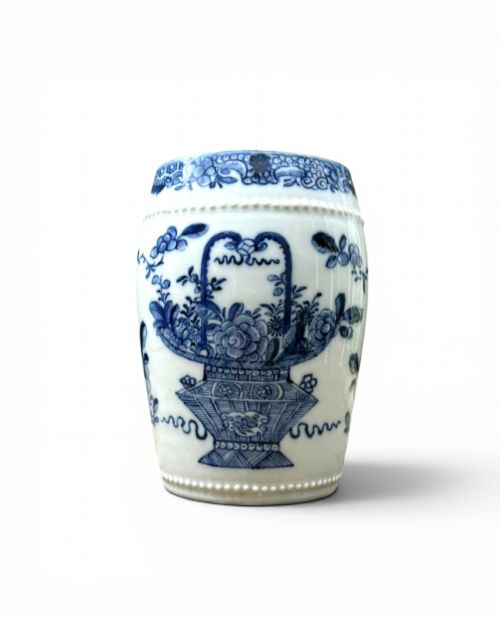
Potters utilised porcelain, creamware, and ceramic bodies, firing pieces like Chinese export porcelain and Westerwald salt-glazed stoneware before applying painted or moulded decoration. Engraved inscriptions and early maker marks frequently record individual commissions or workshop origins directly onto the metal surface.
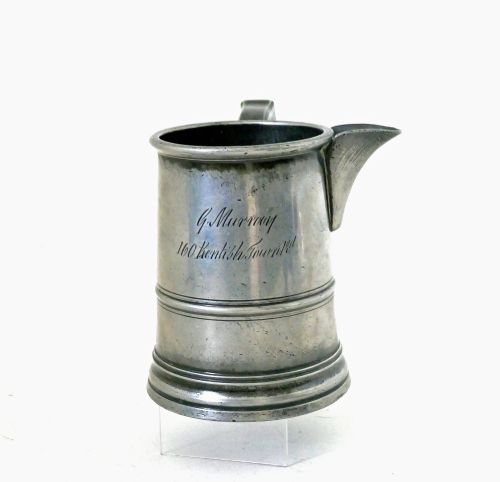
One cheerful pewter jug carries the specific address of G. Murrouy at 160 Kentish Town Road, preserving a neighborhood merchant in metal.
What varies in quality
The weight of the metal and the crispness of casting separate utilitarian vessels from finer presentation pieces. Solid sterling silver and heavy gauge pewter demonstrate substantial substance in the hand compared to lighter plated items.
The skill involved in forming scroll handles, fitting hinged lids precisely, and executing hand-engraved armorials or inscriptions distinguishes workshop output. Ceramic versions reveal quality through the evenness of the glaze and the clarity of polychrome or transfer-printed decoration.
John Payne·William Grundy·Richard Morton·Burgum And Catcott·Frederick Brasted·Gabriel Sleath·Shaw And Priest·John Langlands I
The Georgian Beer Tankard Glossary
- Old Sheffield Plate
- A fused composite material made by melting a sheet of silver to a thicker copper base. This technique preceded modern electroplating and produced durable domestic items.
- Pewter
- A malleable metal alloy consisting primarily of tin mixed with copper and lead. It formed the body for numerous tavern and household drinking vessels.
- Baluster
- A curved, vase-like architectural profile often seen on the bodies of mid-eighteenth-century drinking vessels. This shape provides a stable base and comfortable grip.
- Creamware
- A refined earthenware developed in Yorkshire with a pale yellowish-cream glaze. It offered an affordable ceramic alternative to porcelain.
- Flagon
- A large drinking vessel with a handle and lid, designed to hold generous quantities of liquid. These pieces often feature capacity marks or special seals.
Georgian Beer Tankard: Frequently Asked Questions
How do I identify the date of a metal tankard?
Metal vessels often rely on hallmarks, maker stamps, or engraved dates to establish their period of manufacture.
Pewter touchmarks and silver town marks provide specific clues to the workshop and decade of production.
Were ceramic tankards used for daily drinking?
Ceramic vessels made from creamware, porcelain, or stoneware functioned as practical tablewares for domestic households and taverns alike.
Their glazed interiors prevented liquid absorption, making them suitable for serving beer and ale alongside metal alternatives.
What capacity did a quart tankard hold?
A quart tankard held two imperial pints of liquid, representing a substantial serving size for historical drinking vessels.
Smaller fractional sizes like half-pints and third-pints also appeared for individual portions.