
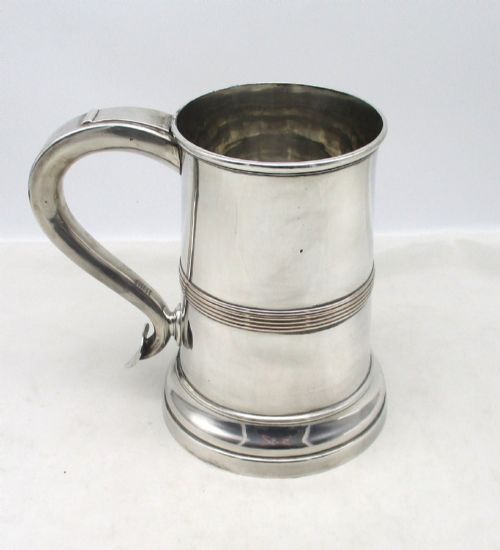
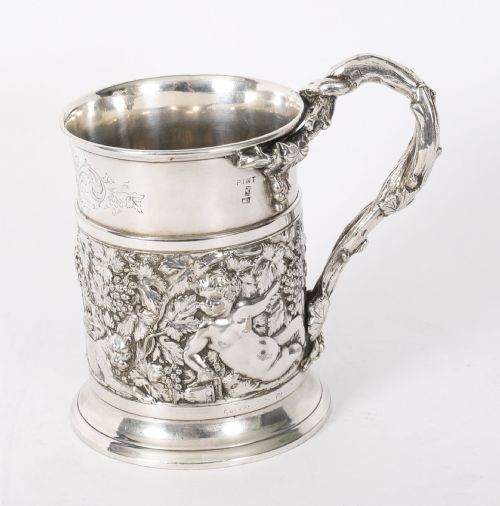


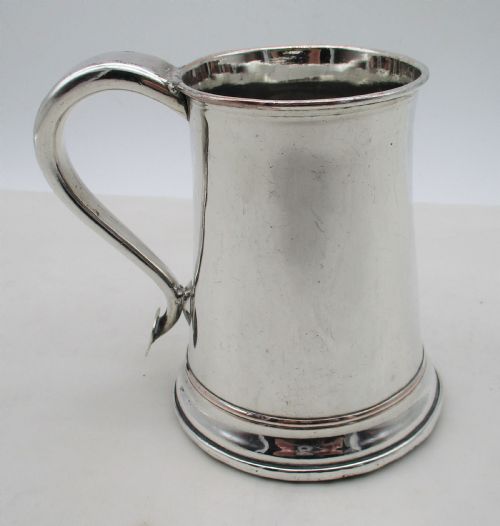


Silver Plated Pint Mug
A silver plated pint mug brings substantial Georgian and Victorian weight to a table, offering solid metal craftsmanship without solid silver cost.
Silver Plated Pint Mug
A silver plated pint mug sits within a category of barware and drinking vessels that includes tankards and mugs, spanning the eighteenth century, the nineteenth century, and the Georgian period. These pieces are substantial drinking vessels designed for daily service or display.
The versions most commonly found here are Old Sheffield plated tankards and Victorian mugs. They present familiar cylindrical or tapering forms shaped for handling ale, beer, or cider.
Makers and manufacturers produced these items in various sizes, ranging from small pint formats to large quart examples and pairs. The design draws directly from the domestic and tavern traditions of the eighteenth and nineteenth centuries.
How they were made
Old Sheffield plate was produced by fusing a thin sheet of silver to a thicker base of copper, then rolling the combined metals into sheets for smithing. This fusion created a durable material that predated electroplating.
Victorian examples utilise standard silver plate or white metal bases, often enhanced with surface embellishments. Artisans applied decoration through embossing and engraving directly into the metal body.
What varies in quality
The standard of Old Sheffield plating depends on the evenness of the fused silver layer over the underlying copper body. Earlier eighteenth-century pieces often display sharper hand-raised forms and cleaner solder joints than later mass-produced items.
Engraved and embossed ornamentation varies significantly in depth and clarity. Crisp lines on Victorian mugs indicate superior toolwork by skilled silversmiths.
G R Collis·Richard Morton
The Silver Plated Pint Mug Glossary
- Old Sheffield Plate
- A composite material made by fusing silver and copper together before shaping. It forms the basis of many eighteenth-century drinking vessels.
- Tankard
- A tall drinking vessel with a single handle, frequently fitted with a lid in larger formats. These pieces often served ale or beer in domestic and tavern settings.
- Embossing
- A technique of hammering or pressing metal from the reverse side to raise a design in relief. Victorian makers utilised this method for decorative surface patterns.
- White Metal
- An alloy of various base metals used as a substitute for silver or copper in certain manufacturing periods. It provides a pale ground for plating.
- Barware
- Utilitarian vessels and implements intended for serving drinks. This grouping includes mugs, tankards, and related drinking containers.
Silver Plated Pint Mug: Frequently Asked Questions
What is a silver plated pint mug?
A silver plated pint mug is a traditional drinking vessel made from copper or white metal covered with a thin layer of silver. They follow the form of historical tankards used for ale and beer.
Most examples date from the eighteenth and nineteenth centuries, reflecting the domestic drinking habits and metalworking standards of those periods.
How do I tell Old Sheffield Plate from later plate?
Old Sheffield Plate involves a fused sheet of silver and copper, often revealing a thin line of copper along cut edges or where wear occurs. Later silver plate uses an electrochemically applied coating.
Eighteenth-century pieces typically show the physical characteristics of fused manufacturing, whereas Victorian items rely on standard electroplating techniques.
Were these mugs used for drinking?
These vessels were built as functional drinking vessels for ale, beer, and other beverages in homes and taverns. Their sturdy construction suited daily use.
Many survive from the Georgian and Victorian eras because durable base metals like copper and white metal withstood regular handling.
How should I clean a silver plated mug?
Cleaning requires a soft cloth and a mild silver polish formulated to protect thin metal coatings. Aggressive scrubbing can wear through the silver layer.
Gentle maintenance preserves the underlying copper or white metal beneath the plate, especially on older eighteenth-century and nineteenth-century surfaces.