


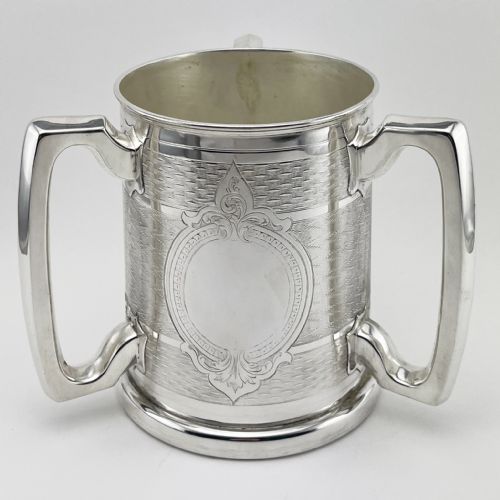
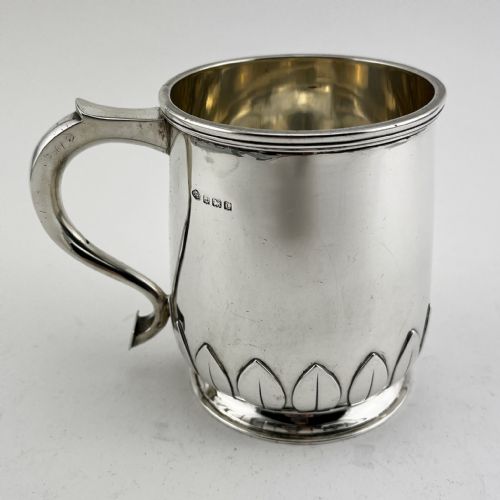
Antique Silver Drinking Mug
An antique silver drinking mug is a sturdy domestic vessel built to hold ale, wine, or water, valued for its solid heft and traditional form.
Antique Silver Drinking Mug
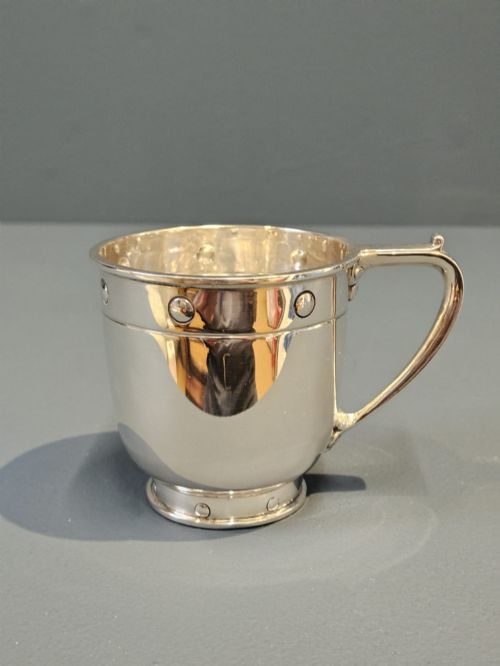
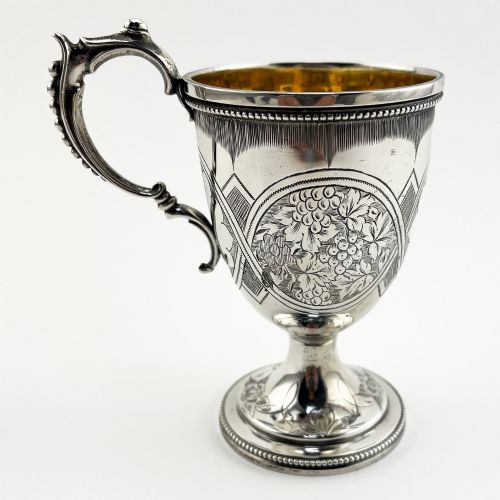
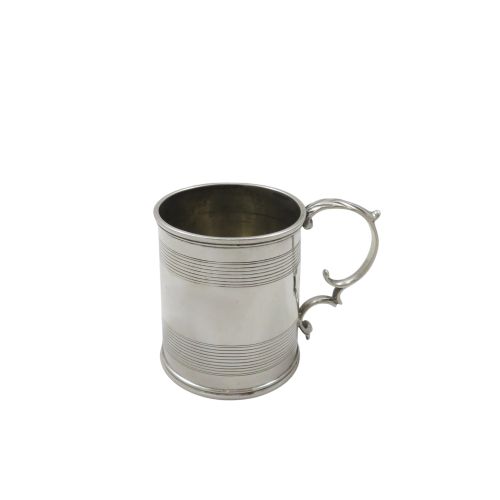
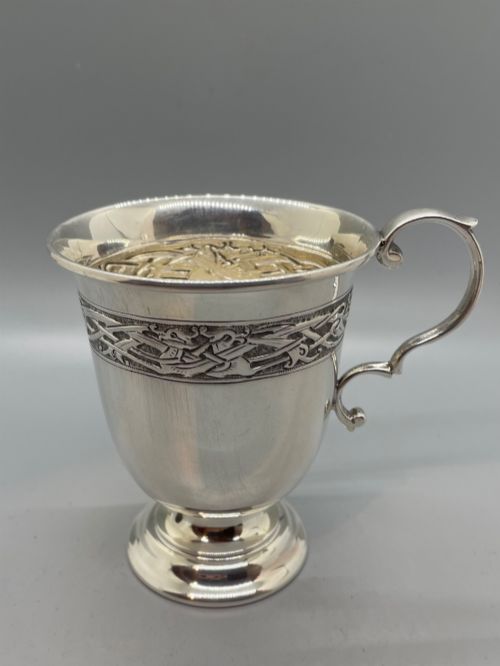
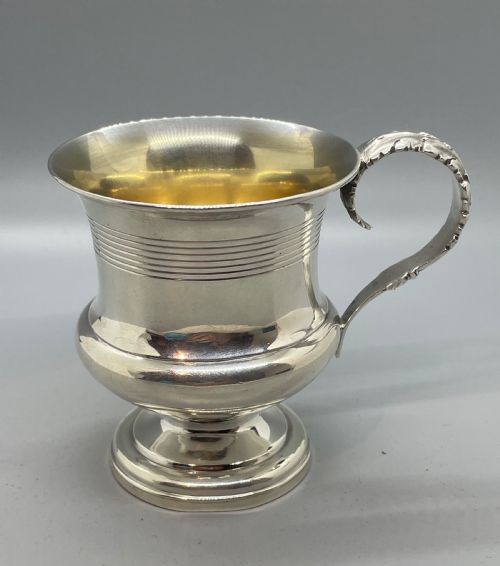
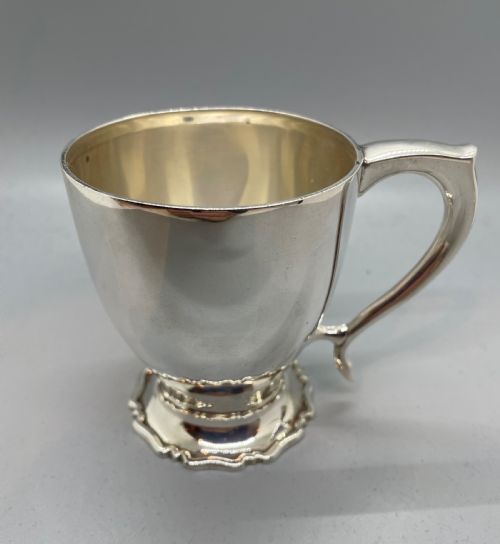
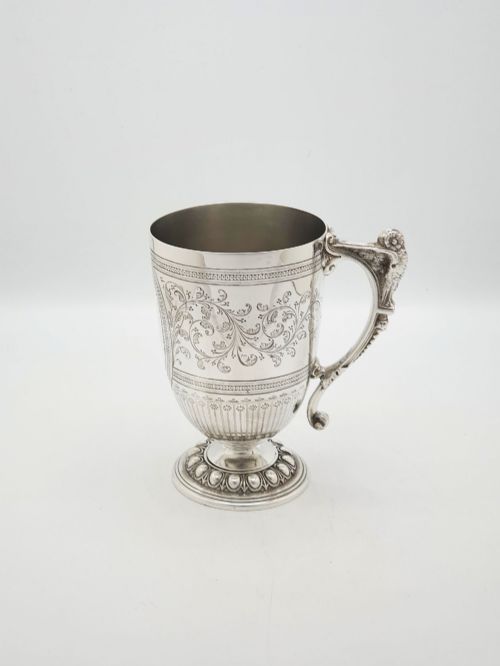
An antique silver drinking mug brings centuries of drinking culture directly to the table, taking forms from simple pint vessels to lidded tankards and small christening gifts. The examples gathered here span the eighteenth, nineteenth, and twentieth centuries, reflecting changing domestic habits across the Georgian, Victorian, and Edwardian eras.
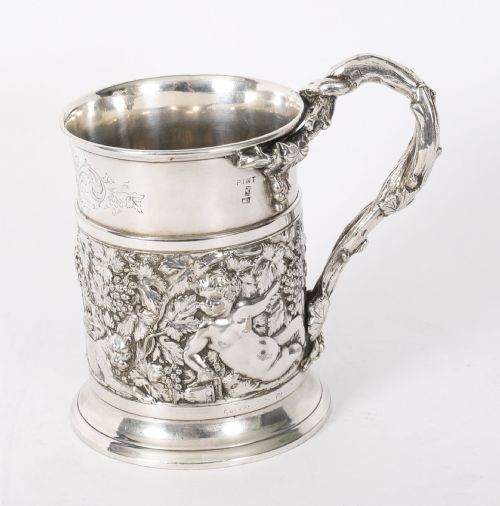
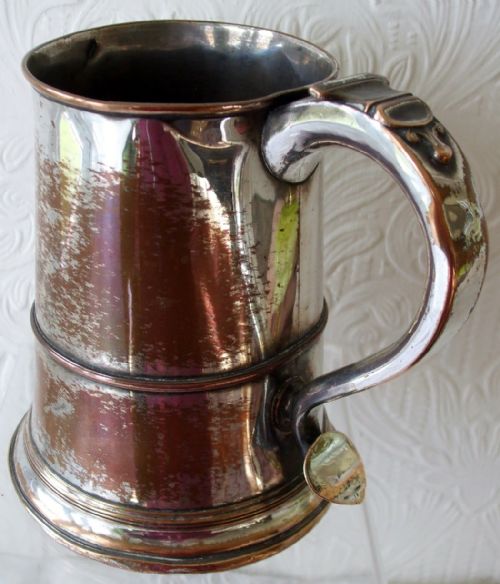
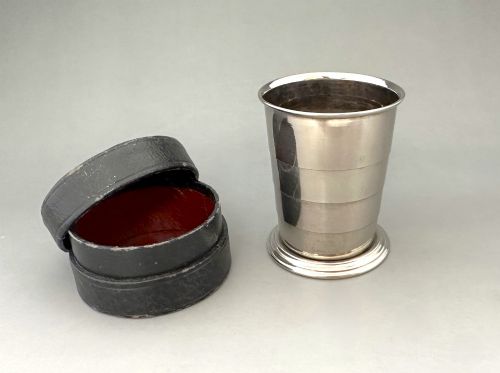
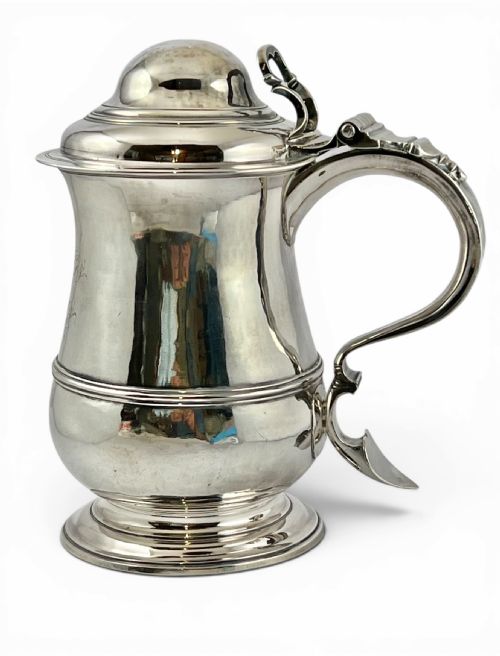
Most pieces encountered on this page are solid sterling silver or silver plate, though Old Sheffield plate and pewter also appear. Forms range from plain cylindrical bodies to embossed Victorian presentation pieces and lidded drinking vessels designed to keep contents covered.
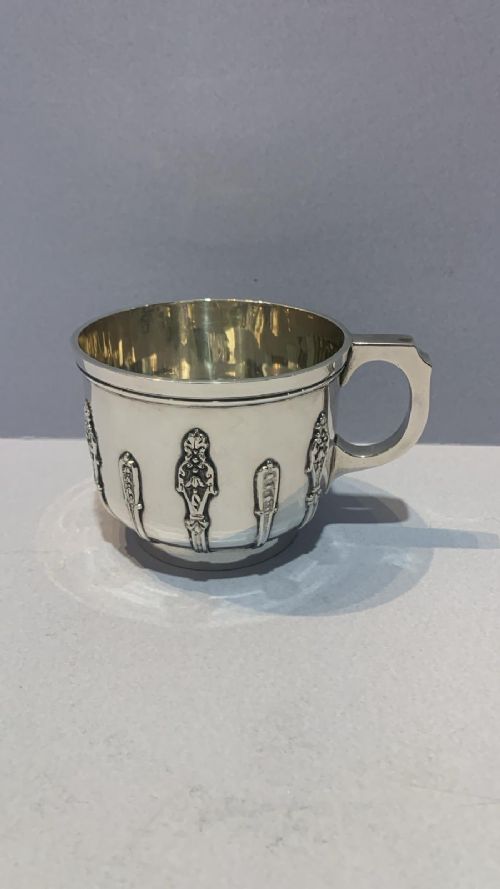
Christening mugs appear frequently among these listings, often smaller in scale and given to mark a birth or baptism. Larger quart tankards and pint mugs represent the more utilitarian side of historical drinking vessels, shaped for regular use in homes and taverns.
Materials and construction methods
Silversmiths constructed these drinking vessels primarily from sterling silver, hammering sheet metal into cylindrical forms or casting heavier components like handles and rims. Solid silver pieces bear hallmarks that record the city of assay, the date letter, and the maker's mark.
Old Sheffield plate and silver-plated copper offer an alternative to solid silver, fusing a thin layer of silver over a base metal core. Embossing, engraving, and gilding were often applied by hand to decorate the surface of both solid metal and plated wares.
Judgements of quality and finish
Quality rests upon the weight of the metal and the crispness of the hand-engraved or embossed decoration. A heavier gauge of silver provides a solid feel in the hand that lighter stamped metal cannot replicate.
The integrity of the construction, from the secure attachment of the handle to the base, separates standard utility wares from finer examples. Crisp, legible hallmarks and minimal distortion from past polishing also mark out the better pieces.
Barker Bros·G R Collis·John Payne·George Ernest Hawkins
The Antique Silver Drinking Mug Glossary
- Hallmark
- Official stamps applied to precious metals indicating the standard of purity, the assay office, and the date of manufacture. These marks provide a reliable guide to a piece's origin.
- Tankard
- A tall drinking vessel, typically featuring a single handle and sometimes fitted with a hinged lid. They were historically used for ale and beer.
- Christening mug
- A small presentation mug traditionally given to a child upon their baptism. They are frequently engraved with names, dates, or decorative motifs.
- Old Sheffield plate
- An early form of plated metal produced by fusing a sheet of silver onto a copper ingot. This technique was widely used before the invention of electroplating.
- Tyg
- A large drinking cup featuring three or more handles designed to be passed around a company. They date back to the seventeenth century and continued in modified forms into the Victorian era.
Antique Silver Drinking Mug: Frequently Asked Questions
What is an antique silver drinking mug used for?
These vessels were designed for consuming ale, beer, or wine in domestic and public settings. Many smaller examples served as presentation pieces for christenings rather than everyday drinking.
Over time, their function shifted from active tavern and dining table use to decorative display items and commemorative gifts.
How do I identify the date of a silver mug?
British silver typically carries a series of hallmarks that include a specific letter indicating the year of assay. Comparing this letter against published assay office records reveals the exact year of manufacture.
Stylistic clues, such as the shape of the handle and the presence of Georgian or Victorian decorative motifs, also help narrow down the period.
What is the difference between a mug and a tankard?
A tankard traditionally refers to a larger, heavy drinking vessel that includes a hinged lid to cover the contents. Mugs are generally open-topped containers designed for daily drinking.
In historical records, the two terms are often used interchangeably by makers and merchants.
Can I use an antique silver mug for drinks today?
Solid silver and silver-plated vessels can hold cold beverages safely, provided they are cleaned properly after use. Acidic drinks should not be left in silver for extended periods.
Many collectors prefer to keep older pieces for display or special toasts rather than daily household use.
What is Old Sheffield plate?
Old Sheffield plate is an early composite material made by thermally fusing a thin sheet of silver to a thicker copper base. This technique produces items that look and feel like solid silver but reveal subtle copper lines at the edges.
It predates nineteenth-century electroplating methods and remains prized by collectors of historical metalwork.