



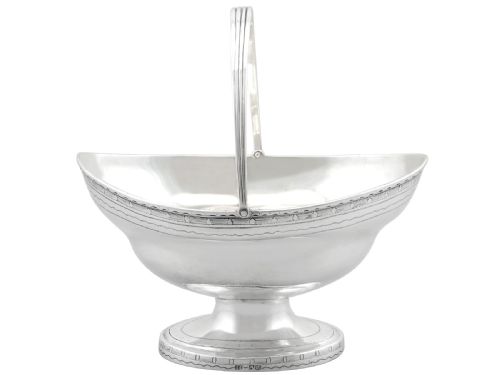


George V Silver Basket
When you handle a george v silver basket, you hold early twentieth-century silversmithing that adapts eighteenth-century elegance for modern dining tables.
George V Silver Basket
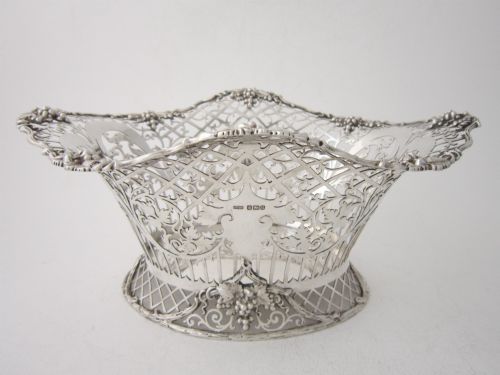
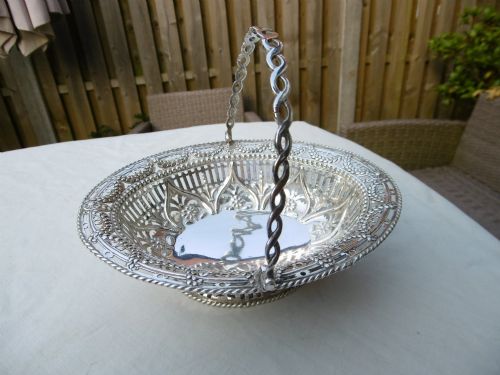
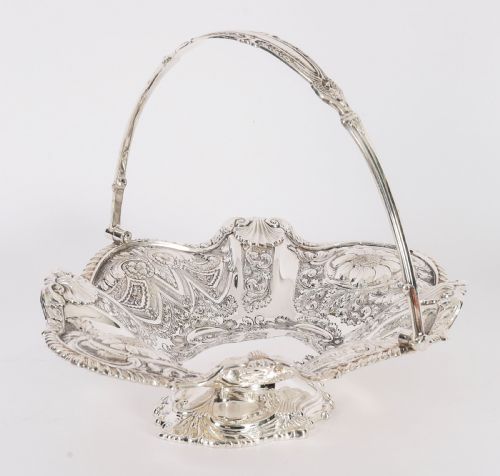
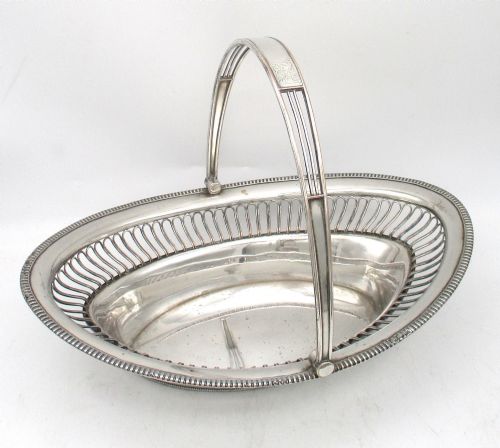
A george v silver basket spans sugar bowls, fruit dishes, and bonbon holders created during the reign of George V, alongside earlier Georgian prototypes that collectors prize. You will frequently encounter swing-handled sterling silver vessels and plated wirework designed for practical display.
Makers of this era produced forms ranging from small sweetmeat dishes to large bread baskets and centrepieces. These objects served formal dining and tea rituals, utilising traditional pierced and solid metal techniques.
Distinctions in craftsmanship
Quality rests in the crispness of pierced decoration and the structural integrity of swing handles. Superior examples display balanced weight, clear hallmarks, and precise piercing without distortion to the metal rim.
The refinement of the maker's handwork separates standard production items from exceptional commissions. Thicker gauge silver retains its shape through decades of use, whereas thinner metal compromises the vessel's rigidity.
The inventory records functional forms including bread dishes, fruit baskets, sugar buckets, and complex epergne centrepieces.
Aldridge and Green·Elkington·Samuel Herbert·George Fox·John Walton·William Hutton and Sons·Hester Bateman·Alexander Clark·Atkin Brothers·James Dixon and Sons
The George V Silver Basket Glossary
- Sterling silver
- An alloy containing ninety-two point five percent silver and seven point five percent other metals, typically copper. This standard ensures durability while maintaining precious metal purity.
- Old Sheffield plate
- A material made by fusing a thin sheet of silver to a thicker copper base. It predates electroplating and exhibits a warm tone where the copper core shows slightly at the edges.
- Bonbon dish
- A small decorative vessel intended for holding sweets or small confectionery. These pieces often feature delicate pierced work or pedestal feet.
- Epergne
- A large table centrepiece featuring a central basket surrounded by smaller hanging or attached dishes. They served grand dining tables for fruit and sweetmeat presentation.
- Swing handle
- A movable handle attached to the rim of a basket by pivots. It allows the vessel to lie flat when stored and rise for serving.
George V Silver Basket: Frequently Asked Questions
How were these baskets used originally?
These vessels held bread, fruit, sugar lumps, or small sweets during formal meals and afternoon tea. They functioned as both serving items and decorative centrepieces.
Servants passed them among guests or placed them centrally on the dining table for self-service during courses.
What is the difference between sterling and plate?
Sterling silver contains a regulated high purity of silver throughout the entire object. Plated items consist of a base metal coated with a thin layer of silver.
Markings on the base usually distinguish solid silver standards from electroplated or old sheffield plate alternatives.
How do I care for silver and glass liners?
Wash silver gently in warm soapy water and dry it immediately with a soft cloth to prevent tarnishing. Avoid harsh abrasive dips that strip the natural patina.
Glass liners should be removed before cleaning the metal frame to prevent trapped moisture from damaging joints and hinges.
How can I tell George V from Georgian pieces?
George V pieces bear twentieth-century hallmarks that include specific date letters and monarch profiles. Georgian examples date from the eighteenth or early nineteenth century and feature different crown and duty marks.
Stylistic execution also differs, as twentieth-century silversmiths frequently revived earlier neoclassical patterns with modern mechanical precision.