
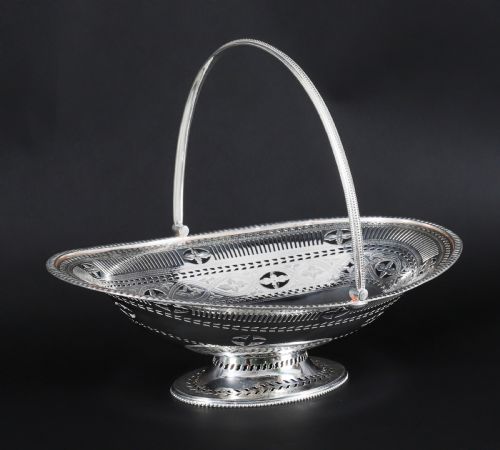
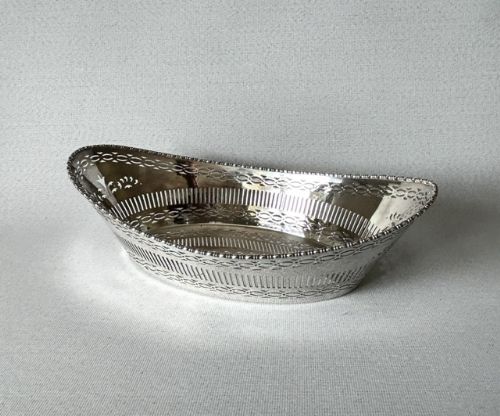


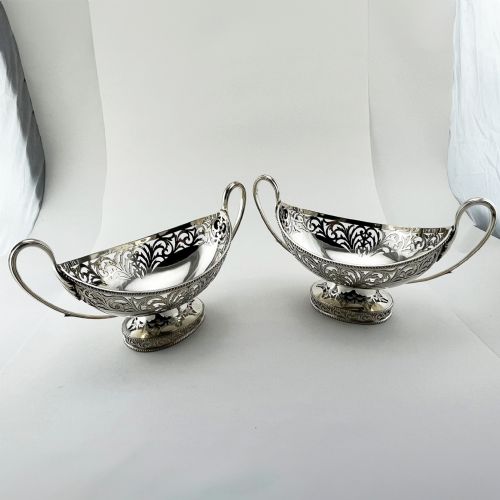


Pierced Silver Fruit Bowl
A pierced silver fruit bowl brings openwork delicacy and polished reflection to a table, combining structural metalwork with decorative function.
Pierced Silver Fruit Bowl
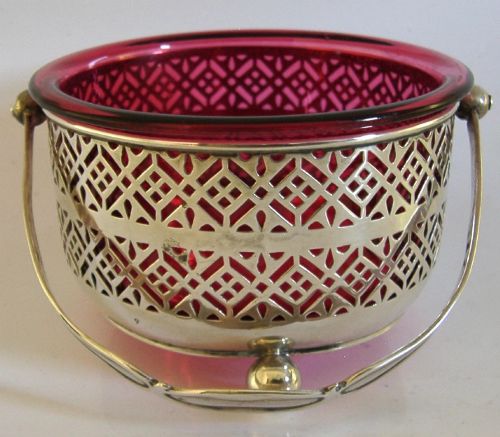
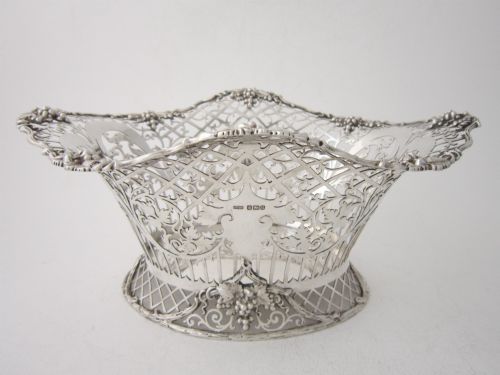
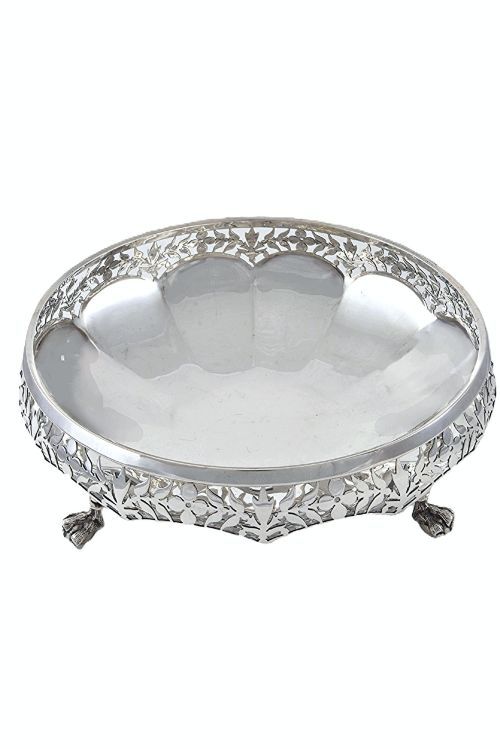
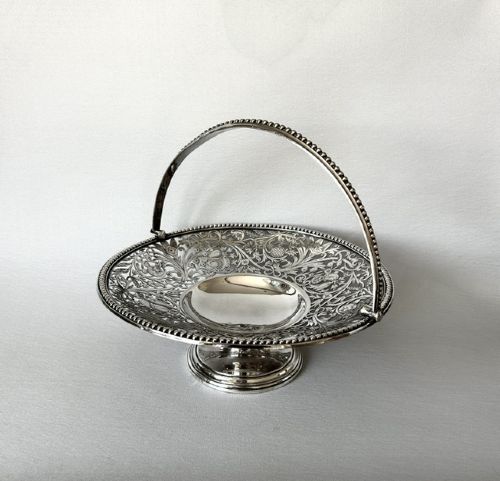
A pierced silver fruit bowl encompasses openwork vessels created to serve fruit, bread or cakes, appearing across the nineteenth and twentieth centuries in various regional styles. These pieces take the form of swing-handled baskets, pedestal dishes, heavy centrepieces and low oval serving dishes.
The Edwardian era and the Victorian period dominate the selection, bringing neo-classical motifs, pierced lattice patterns and heavy cast mounts to the table. Examples range from simple domestic silver plated cake baskets to massive sterling silver centrepieces by notable makers.
Materials and technique
Makers utilised sterling silver, solid silver and durable silver plate over base metal, sometimes incorporating contrasting liners of cranberry glass, cobalt blue glass or polished wood. Piercing, fretwork and wirework were executed by hand or machine to create intricate open lattices that kept the vessels light while maintaining structural rigidity.
Handles were frequently articulated with swing mechanisms, and feet were cast separately before being attached to the main bowl body. Repoussé decoration and embossed floral details were often worked around the pierced borders to give texture and depth.
One massive centrepiece tips the scales with a recorded weight of over three kilograms.
Judging the work
Quality rests upon the crispness of the piercing and the weight of the metal utilised in the body and handle. Superior examples display clean, sharply defined apertures without distortion, paired with substantial gauge silver that resists flexing under weight.
The integration of handles, feet and decorative mounts indicates the maker's hand, where smooth joints and balanced proportions distinguish high-grade production from standard commercial output.
Mappin & Webb·Thomas Bradbury·Joseph Rodgers·Fenton·William Comyns·Walker & Hall·Hammond Creake & Co·William Hutton & Sons·Martin Hall·James Dixon & Sons·Edward Viner·Jay Richard Attenborough·Alex E Clark & Company
The Pierced Silver Fruit Bowl Glossary
- Piercing
- The technique of cutting decorative patterns out of sheet metal to form openwork designs. This reduces the weight of the vessel while creating intricate visual motifs.
- Sterling Silver
- An alloy containing a high proportion of pure silver combined with other metals for durability. British pieces typically carry hallmarks confirming this standard.
- Silver Plate
- A base metal layer coated with a thin layer of silver through electroplating or older techniques. Common marks include EPNS.
- Swing Handle
- A pivoting handle attached to the rim of a basket or bowl via hinged joints. It allows the handle to fold down flat against the sides.
- Compote
- A raised bowl used for serving fruit or sweets, typically supported on a central pedestal foot. They often feature shallow pierced rims.
- Repoussé
- A metalworking technique where the design is hammered into relief from the reverse side. It frequently appears alongside pierced work to add sculptural depth.
Pierced Silver Fruit Bowl: Frequently Asked Questions
How do I clean a pierced silver fruit bowl?
Use a soft cloth and a gentle, non-abrasive silver polish to remove tarnish from the solid or plated surfaces, taking care around delicate lattice edges.
Avoid soaking vessels that incorporate glass liners or wooden components, as moisture can damage the structural adhesives and materials.
What is the difference between sterling and silver plate?
Sterling silver consists of solid precious metal throughout the piece and carries official hallmarks indicating its alloy standard. Silver plate uses a base metal core covered by a thin outer layer of silver.
Both materials appear frequently across these bowls, with hallmarks guiding identification for sterling items.
Can I use these bowls for actual fruit?
These vessels were originally designed to hold fruit, bread or cakes, and they function well for dry produce today. Acidic fruits should not be left in direct contact with silver for extended periods to prevent surface pitting.
How do I date an unmarked silver plated bowl?
Dating relies heavily on the overarching style, such as neo-classical revival motifs from the mid-nineteenth century or cleaner geometric lines from the interwar period. Handle attachments, shape and manufacturing techniques also provide clues to the decade of production.