



George III Secretary Desk
A george iii secretary desk brings together architectural cabinetry and functional writing quarters from the eighteenth century.
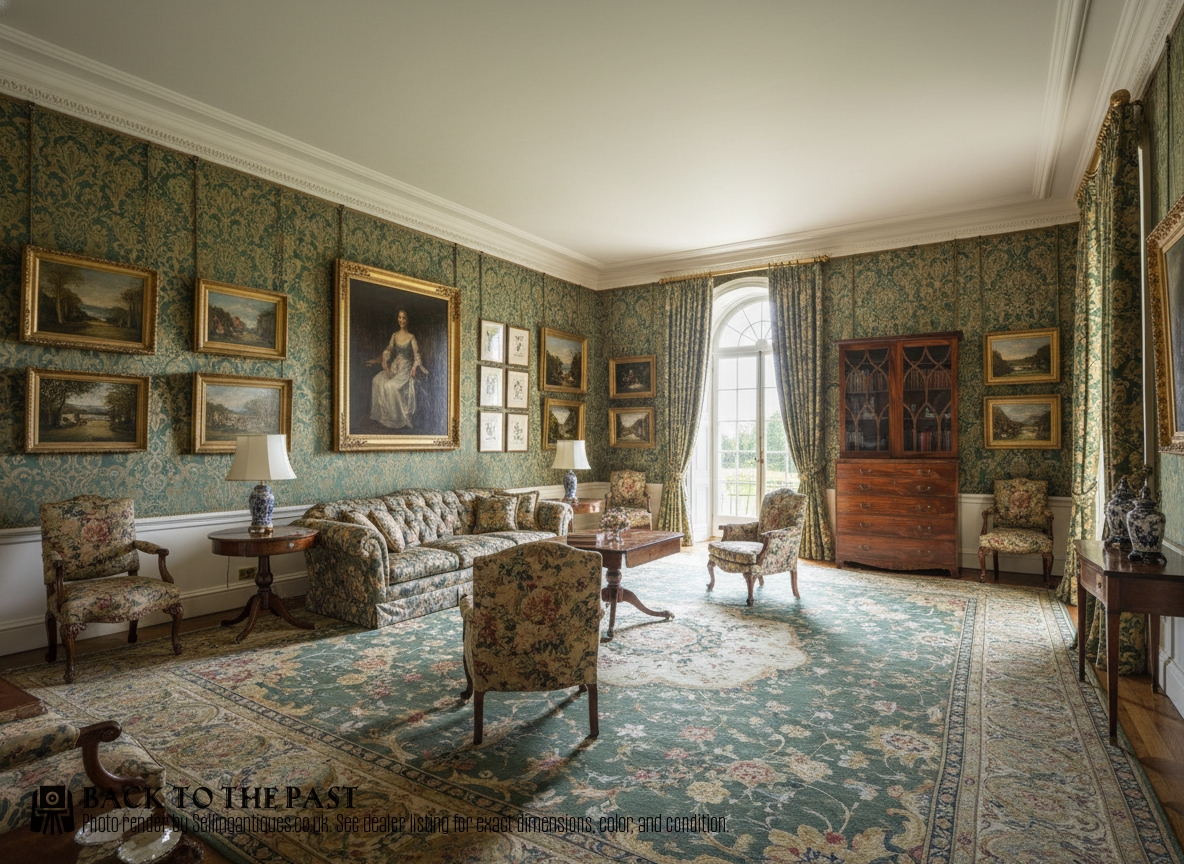
George III Secretary Desk
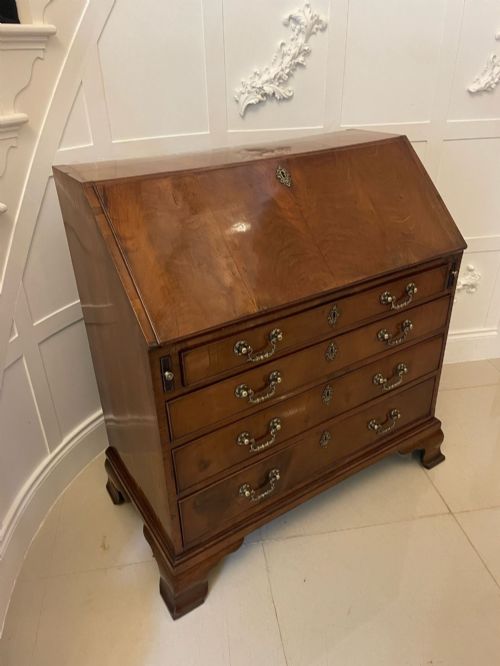
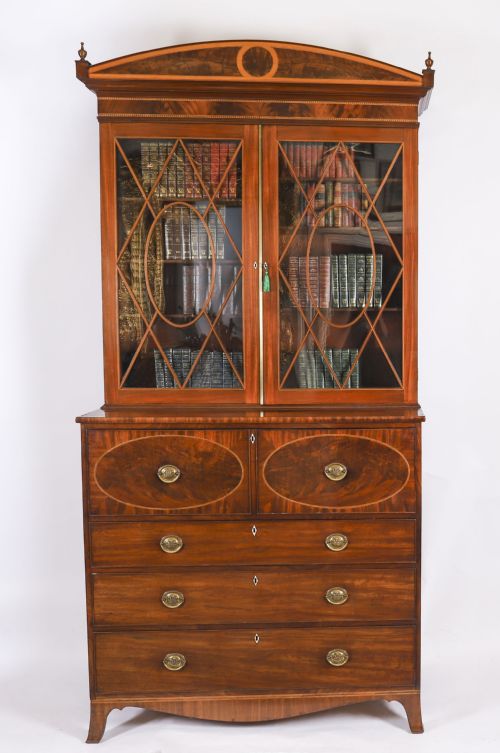
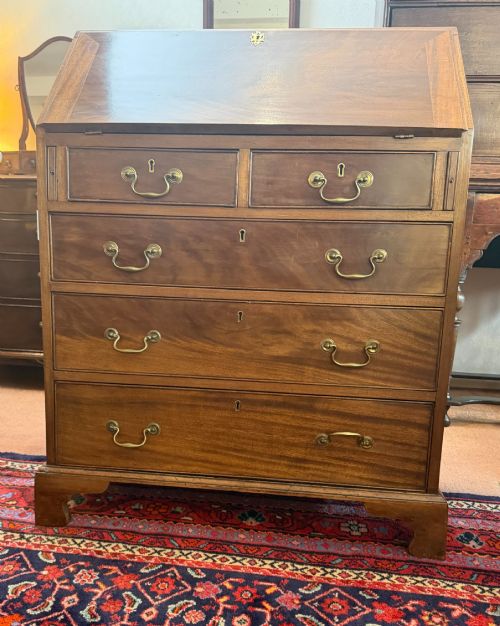
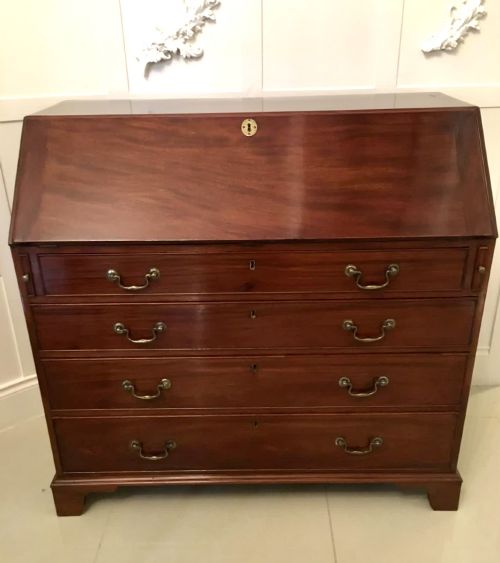
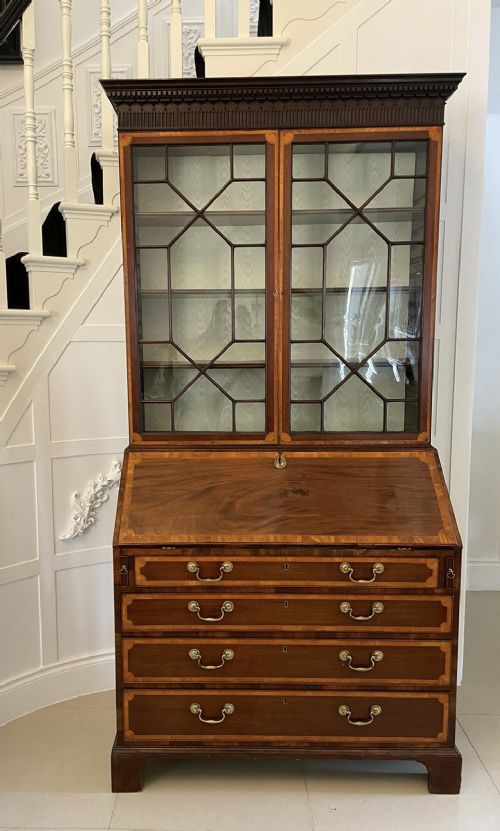
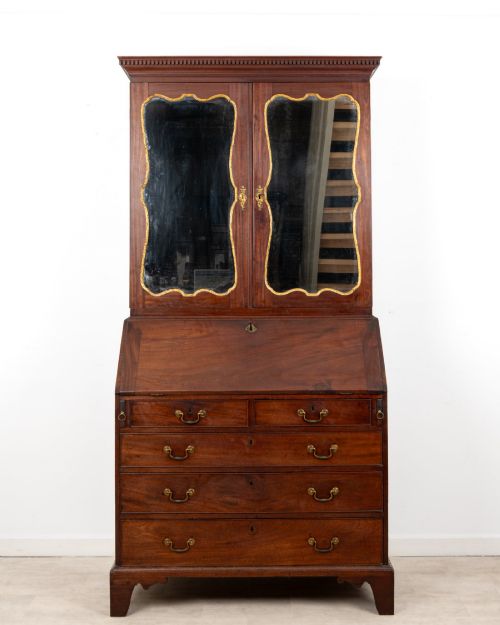
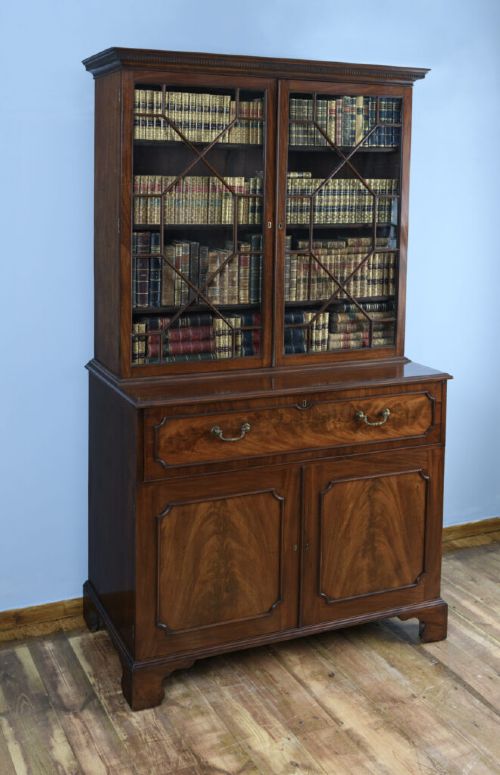
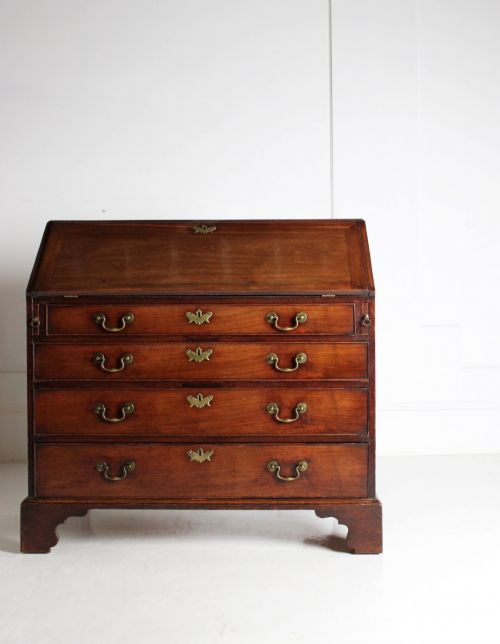
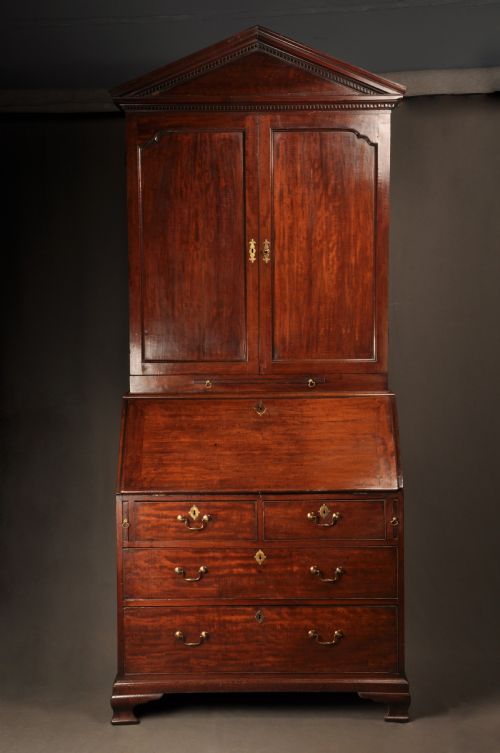
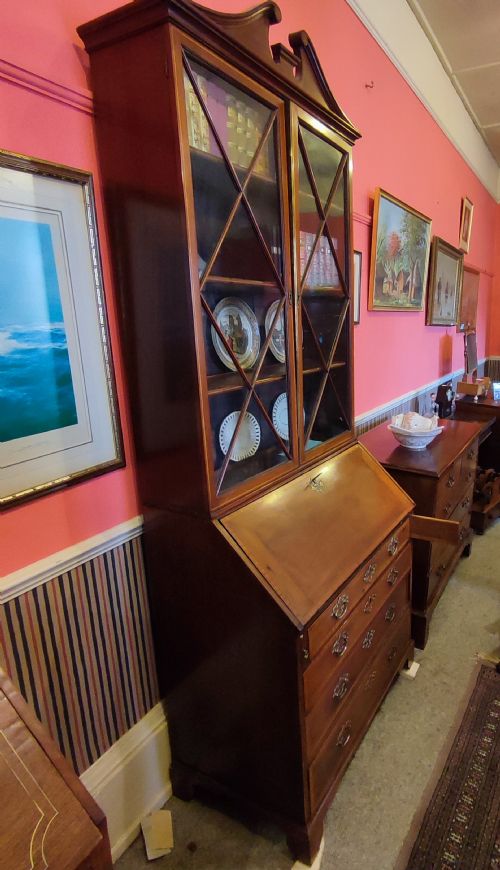
A george iii secretary desk unites a writing surface with storage, frequently taking the form of a bureau bookcase with glazed upper doors or a fall front desk. These pieces originate primarily in the Georgian period and the eighteenth century, constructed to serve domestic writing and library needs.
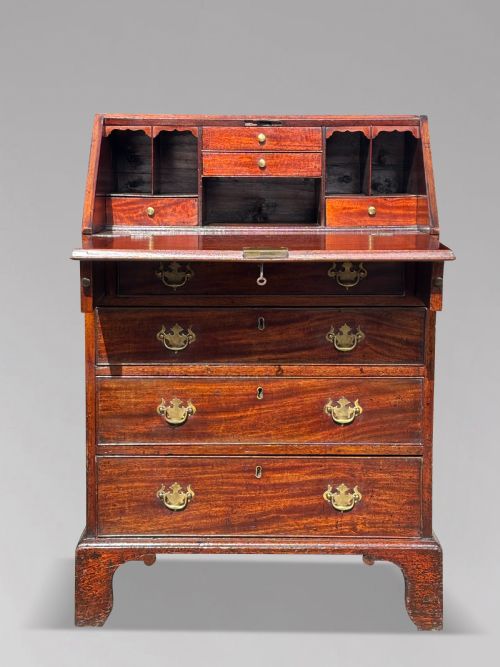
The most common examples encountered here are mahogany bureaux and secretaire bookcases, sometimes featuring inlaid satinwood or flame mahogany veneers. Dimensions range from small diminutive pieces to large architectural bookcase cabinets fitted with multiple internal drawers and pigeonholes.
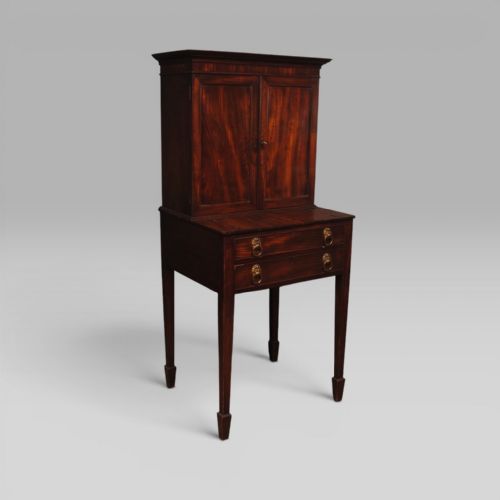
Variations include writing cabinets on stands and serpentine fronted designs, demonstrating the range of cabinet work produced during the reign. Oak versions also appear alongside the predominant mahogany constructions, representing simpler provincial output.
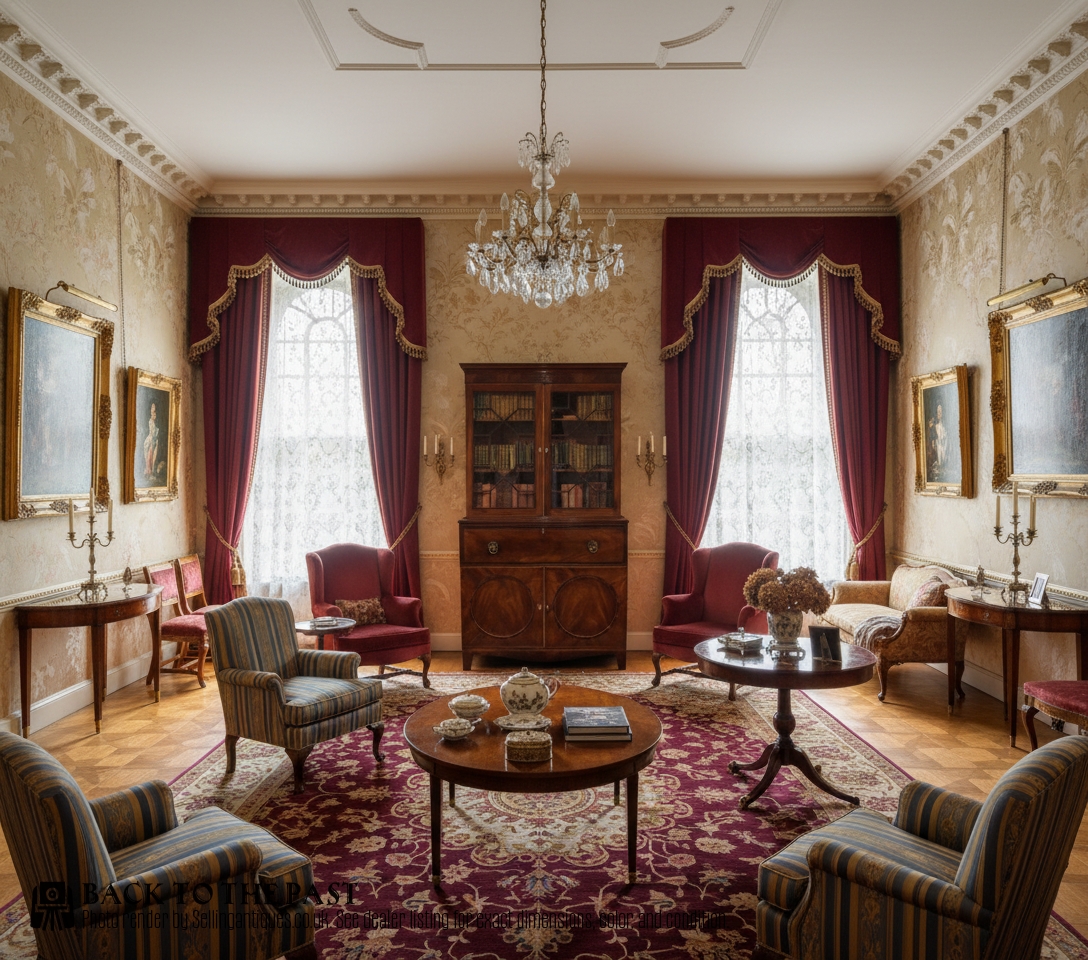
Materials and Construction Methods
Cabinetmakers relied heavily on solid mahogany and figured veneers, often selecting flame mahogany for drawer fronts and cabinet doors to create striking visual movement. Satinwood inlay provides contrasting border details, while secondary timbers such as oak support internal carcase construction.
Brass hardware, including escutcheons and drop handles, secures operational points alongside glass panes fitted within upper bookcase doors. Fall front writing slopes utilise internal hinges and wooden support arms to bear weight when opened for correspondence.
George III Secretary Desk Retail Price Guide 2026
Typical asking prices for george iii secretary desk among the pieces listed under this phrase on Sellingantiques today, from the lower quarter to the upper quarter. They describe what is for sale here now, not the wider market.
The listings on this site span the Georgian period, the 18th Century, and the 19th Century, utilising mahogany, oak, satinwood, and brass.
Distinctions in Execution and Materials
The sophistication of timber selection dictates much of the visual merit, distinguishing plain surfaces from those finished with highly figured flame mahogany and crisp satinwood inlay. The precision of internal drawer pigeonholes and cabinet joinery further separates standard production from superior workshops.
Proportion and scale play significant roles, where diminutive or serpentine forms demand advanced carpentry skill compared to standard rectangular carcases. Original brass fittings and untouched cabinet surfaces preserve the integrity sought by collectors of the period.
Gillows
The George III Secretary Desk Glossary
- Bureau
- A desk featuring a sloping fall front that drops to reveal a fitted interior of small drawers and pigeonholes. This form serves as the primary writing desk configuration in eighteenth century furniture.
- Secretaire Bookcase
- A tall cabinet combining a writing section with an upper bookcase enclosed by doors, typically glazed. The writing drawer often pulls out with a drop front rather than a sloping lid.
- Flame Mahogany
- A veneer cut from the fork of the mahogany tree where branches meet the trunk, creating a characteristic rippled flame pattern. Cabinetmakers used this timber on principal display surfaces.
- Satinwood
- A pale, hard timber from tropical trees utilised for contrasting inlay and banding on darker carcases. It brings a bright decorative element to drawer fronts and pediments.
- Bonheur du Jour
- A light lady's writing desk originating in the late eighteenth century, featuring a small cabinet or set of drawers on the upper surface. Examples in the records date to later revival periods.
George III Secretary Desk: Frequently Asked Questions
What is a george iii secretary desk?
A george iii secretary desk is an eighteenth century writing cabinet, usually combining a fall front desk or pull out secretaire drawer with shelving above.
These pieces reflect the proportions and cabinetmaking standards of the Georgian era, utilising mahogany and decorative veneers.
How do I use a bureau bookcase?
The fall front or writing drawer pulls down to create a flat writing surface above fitted interior compartments for paper and ink.
The upper glass doors enclose shelves intended for books, turning the furniture into a combined writing station and library bookcase.
What wood is used in these desks?
Mahogany is the primary timber found in these pieces, often enhanced with flame mahogany veneers and satinwood inlay for visual contrast.
Some provincial examples utilise oak for the main carcase construction, while secondary softwoods appear in internal drawer linings.
How do I date a george iii desk?
Dating relies on stylistic markers such as bracket feet, cornice details, brass hardware types, and the grain patterns of the mahogany veneers.
Pieces from the period generally span the later eighteenth century into the early nineteenth century under Georgian influence.