
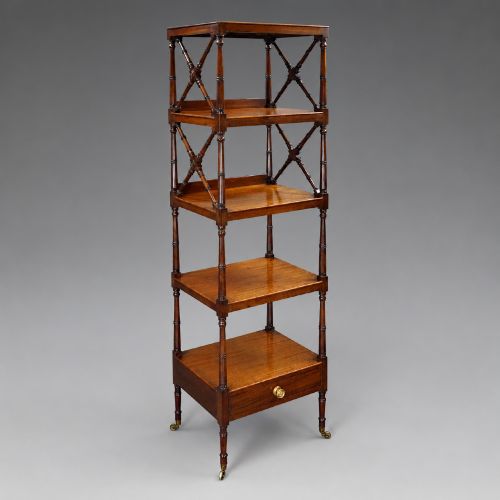

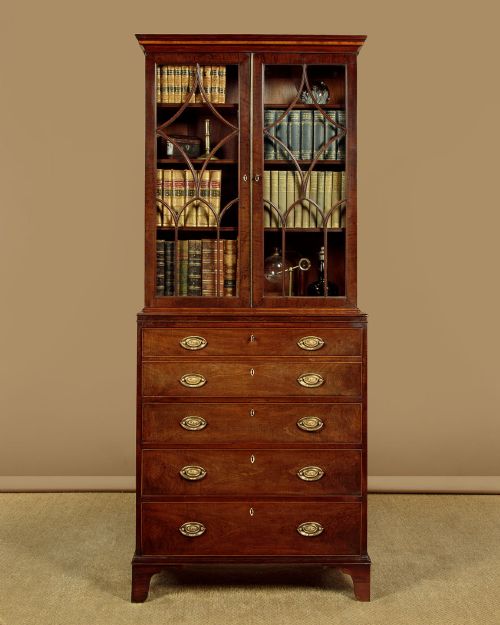
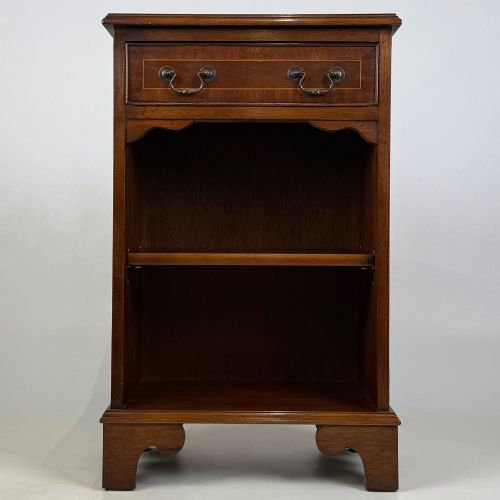
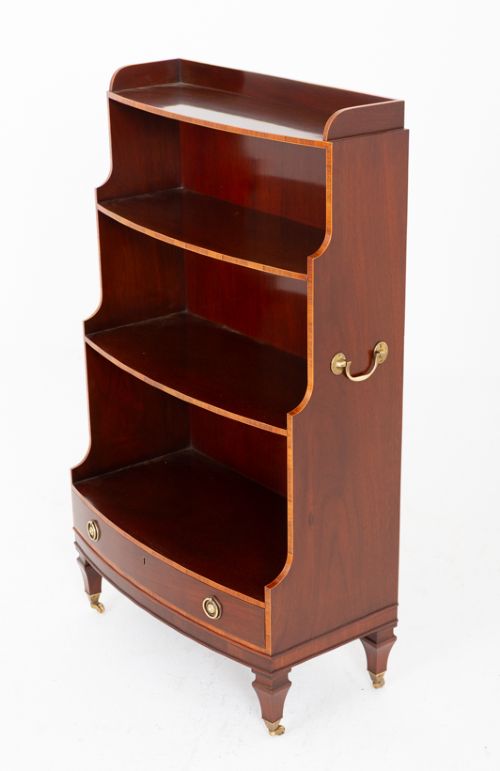
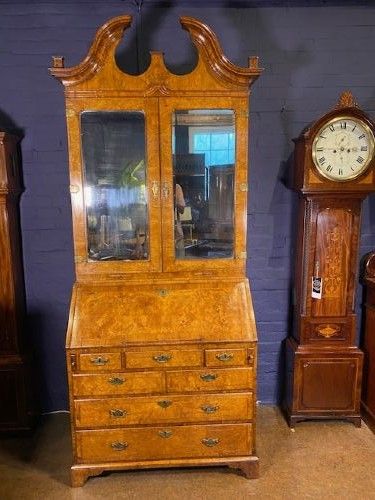
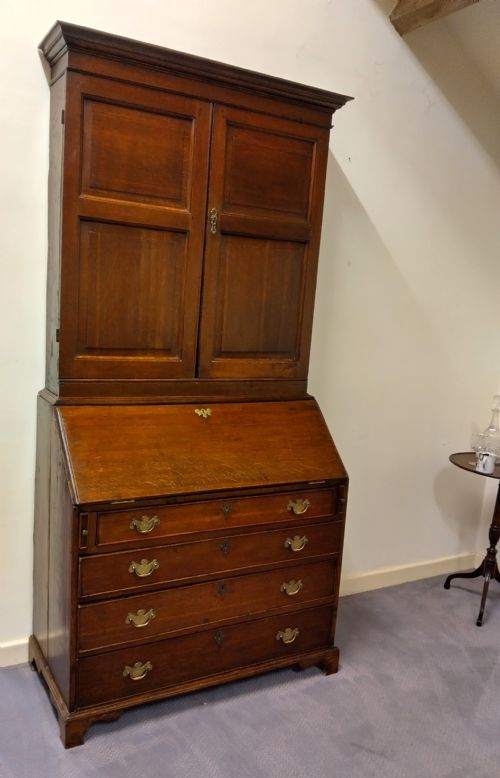
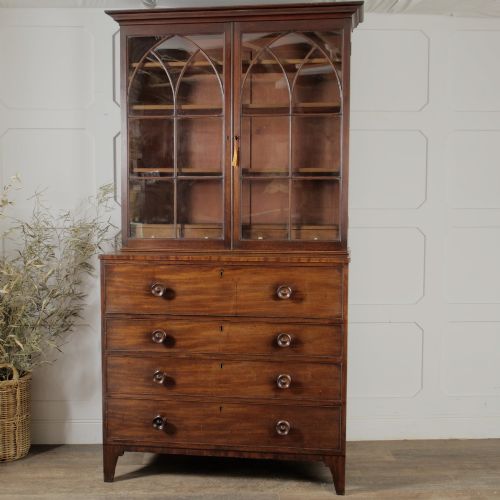
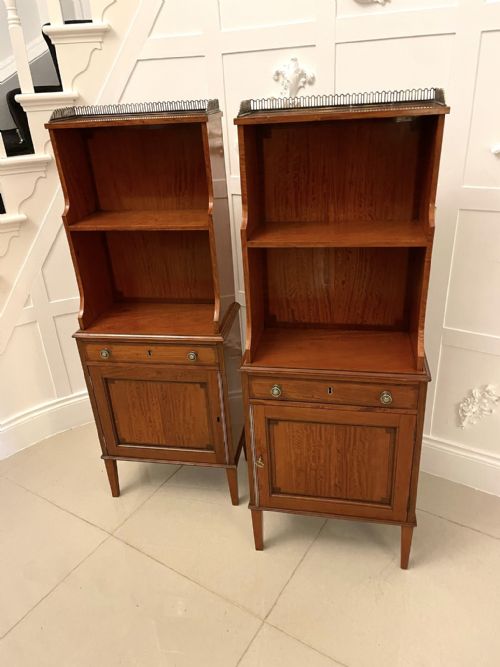
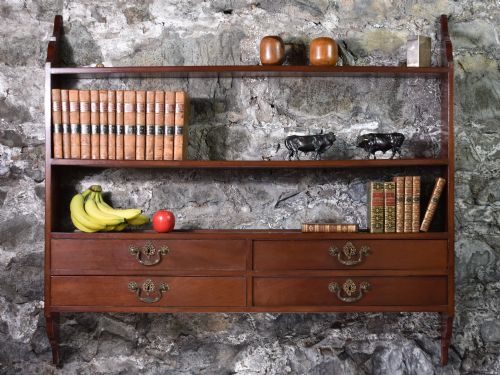


Georgian Bookcase with Drawers
A georgian bookcase with drawers combines upper display shelving with lower storage, offering a practical centrepiece for books and writing.
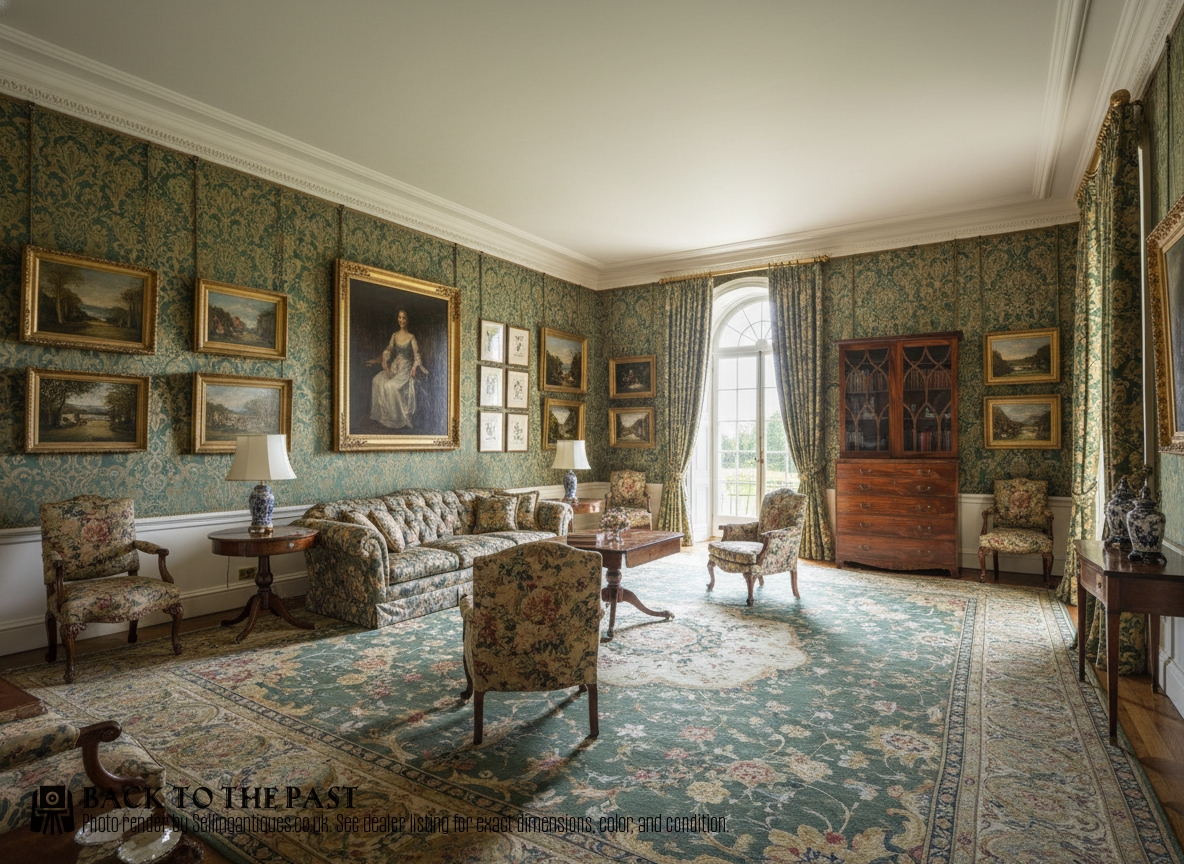
Georgian Bookcase with Drawers
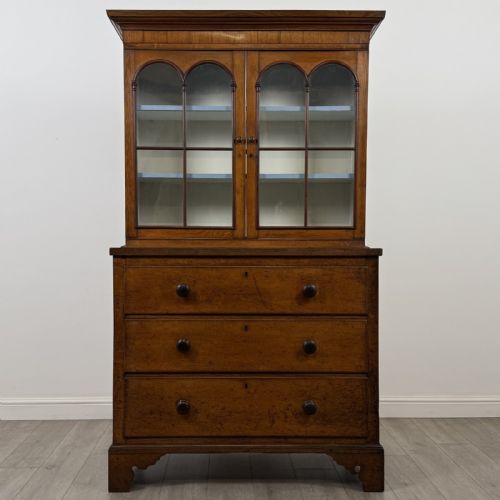
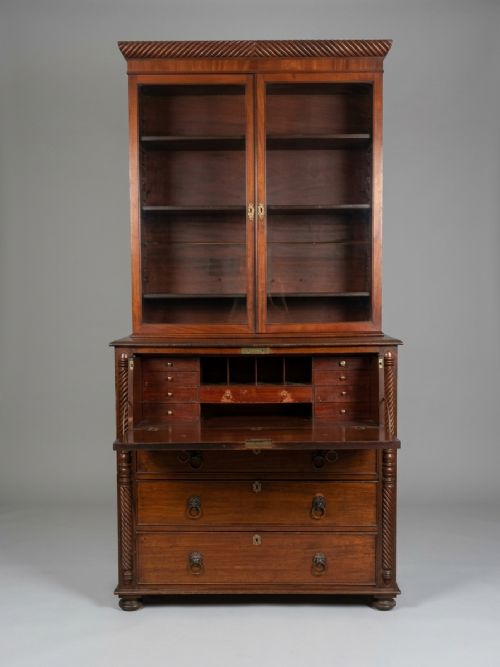
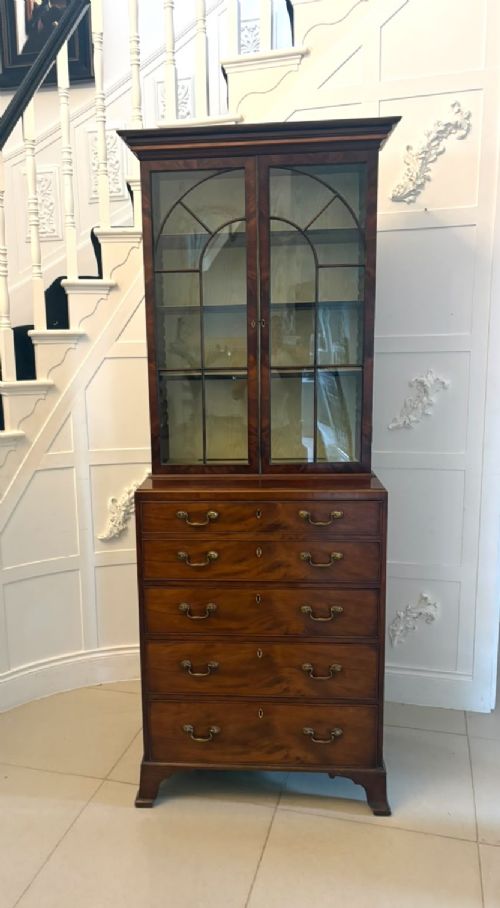
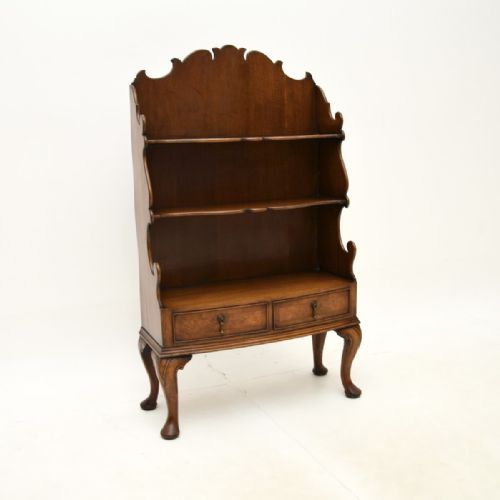
A georgian bookcase with drawers most often appears as a bureau bookcase or secretaire bookcase, where a fitted writing flap drops down above a chest of drawers. The upper section typically encloses shelves behind glazed wooden doors, though open shelf formats and tall break-front designs also occur.
The pieces span the eighteenth and nineteenth centuries, taking specific shape under George II, George III, and Regency periods. Cabinetmakers constructed these heavy pieces primarily in mahogany, walnut, and oak, often incorporating smaller proportions for domestic spaces.
Materials and construction
Makers relied heavily on solid mahogany and figured walnut, frequently employing satinwood inlay and brass hardware for decorative contrast. Secondary timbers such as pine appeared in drawer linings and internal divisions.
Joinery involved precise dovetailing in the drawer construction and secure framing for the heavy glazed upper doors. Panel construction accommodated the natural movement of timber over centuries.
Some early oak examples arrive with adaptations for modern television sets, proving that historic storage readily accommodates twenty-first-century habits.
Quality and proportion
Quality rests in the figure of the timber veneer, the crispness of any inlay work, and the integrity of the original glass panes. Superior examples maintain balanced proportions and retain their original brass handles and feet.
Internal fittings dictate the grade of a bureau section, where secret compartments, pigeonholes, and small drawers demonstrate the cabinetmaker's skill. Alterations to feet or cornices shift a piece away from its original state.
Gillows
The Georgian Bookcase with Drawers Glossary
- Secretaire
- A writing drawer that drops open to reveal a fitted interior of small drawers and pigeonholes. This element allows a piece to function as a desk without sacrificing lower storage space.
- Glazed doors
- Glass panels set within a wooden framework on the upper cabinet. These doors protect books from dust while keeping volumes visible.
- Break-front
- A cabinet design where the central section projects forward from the flanking wings. This architectural layout adds depth and visual weight to larger bookcases.
- Inlay
- Contrasting woods or materials set flush into the primary surface to form decorative patterns. Satinwood is frequently utilised for this purpose on dark mahogany bodies.
- Cornice
- The moulded projection that crowns the top of the upper bookcase. It provides a finished architectural transition to the ceiling height.
Georgian Bookcase with Drawers: Frequently Asked Questions
How do I use a secretaire drawer?
The front folds down on hinges to create a flat writing surface at a comfortable desk height.
Inside, you will find small drawers and letter slots designed for correspondence and paperwork.
Are the shelves adjustable?
Most period bookcases feature fixed wooden shelving held by traditional housing joints or stationary supports.
Altering shelf heights is rarely straightforward in older pieces, so measure your books before placing them inside.
How do I care for mahogany surfaces?
Dust regularly with a dry, soft cloth and apply traditional beeswax periodically to nourish the grain.
Keep the wood away from direct sunlight and heat sources to prevent the timber from splitting.
Can the top separate from the base?
Almost all tall examples separate into an upper glazed cabinet and a lower chest of drawers for transport.
This two-part construction made movement through domestic stairways and doorways possible during the Georgian era.