

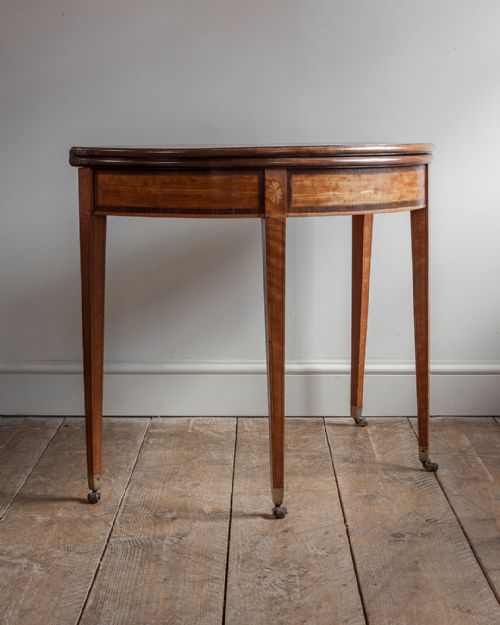
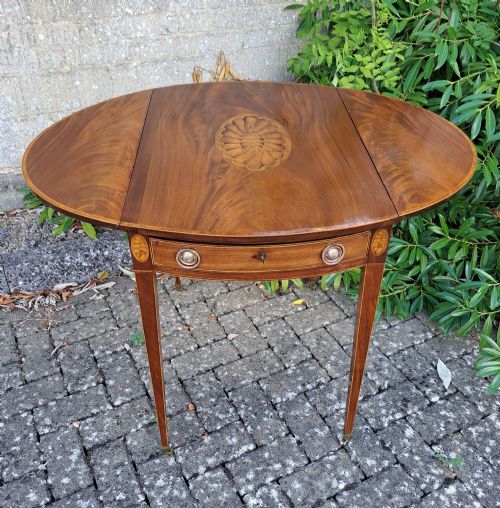
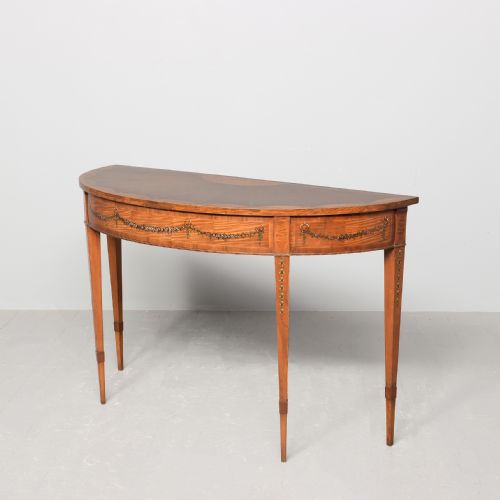


George III Satinwood Table
When you want a george iii satinwood table, you are looking for late eighteenth-century polish and golden timber.
George III Satinwood Table
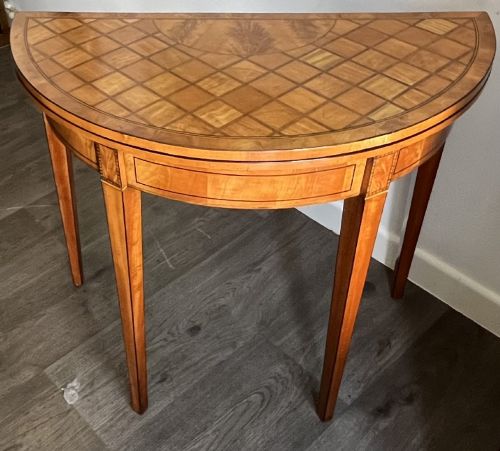
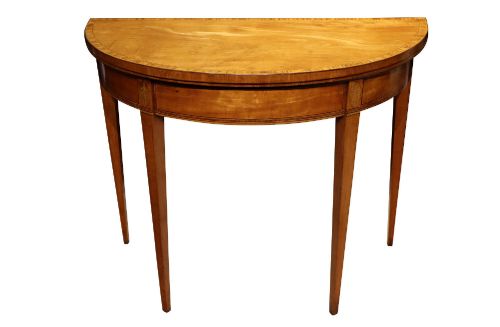
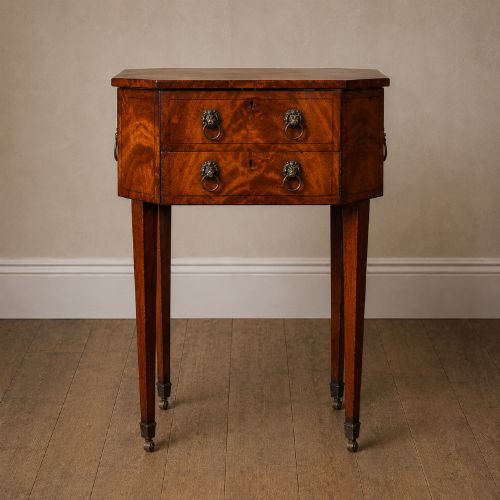
A george iii satinwood table spans several distinct forms designed for social rooms and private chambers, with card tables and Pembroke tables appearing most frequently on this page.
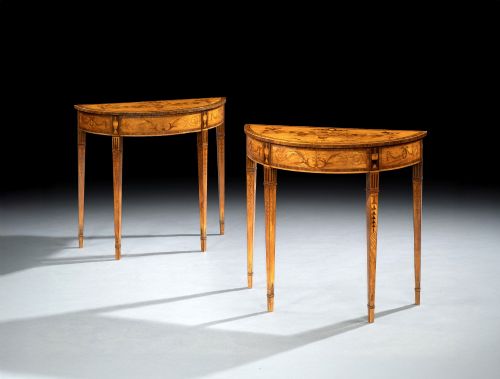
Makers of the period utilised the pale, reflective grain of satinwood for demi-lune console tables, Pembroke tables, and folding card tables often edged with mahogany or rosewood crossbanding.
The material gained widespread popularity during the late eighteenth century, aligning with neoclassical tastes and the refined cabinet-making associated with the Sheraton manner.
Materials and Construction
Cabinet-makers laid fine veneers of satinwood over stable secondary timbers such as mahogany, framing the tops with contrasting borders of kingwood, boxwood, and tulipwood.
Marquetry and painted decoration added floral motifs and geometric banding to table surfaces, while delicate brass hardware secured drawers and folding leaves.
Listings feature mahogany, rosewood, and boxwood alongside satinwood.
Distinctions in Execution
The visual success of a piece depends on the figuration of the satinwood veneer and the precision of the crossbanding and stringing lines.
Refined examples display crisp proportions, intact original brass handles, and subtle integration of secondary woods like rosewood and ebony without excessive restoration.
The George III Satinwood Table Glossary
- Crossbanding
- A border of veneer laid with the grain running perpendicular to the central panel. This technique frames the top of a card table or console.
- Demi-lune
- A half-moon shape characteristic of side and card tables designed to sit flush against a wall.
- Pembroke table
- A small, drop-leaf table with hinged flaps on either side, often fitted with a single drawer.
- Stringing
- Thin inlaid lines of contrasting timber used to outline drawers, legs, and tabletops.
- Marquetry
- Elaborate decorative patterns formed by fitting together small pieces of coloured veneers.
George III Satinwood Table: Frequently Asked Questions
How were card tables used?
Card tables remained folded against the parlour wall when not in use, featuring a hinged top that opened to reveal a baize-lined surface for evening gaming.
Servants moved them into the centre of the room only when company gathered for cards.
What is satinwood timber?
Satinwood is a hard, durable timber with a natural golden lustre that reflects light similarly to satin fabric.
Cabinet-makers prized West Indian satinwood for its fine grain and high-polish finish.
How do I care for a satinwood table?
These tables require stable indoor humidity and protection from direct sunlight to prevent the delicate veneers from fading or lifting.
Apply a traditional wax polish sparingly to maintain the sheen of the timber.
What defines the Sheraton style?
The Sheraton style incorporates neoclassical restraint, straight tapered legs, and disciplined geometric inlay.
Furniture from this design vocabulary emphasises lightness and symmetry.