
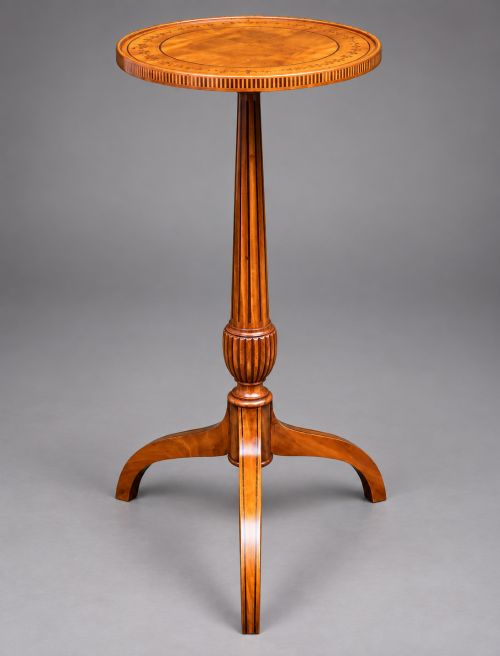
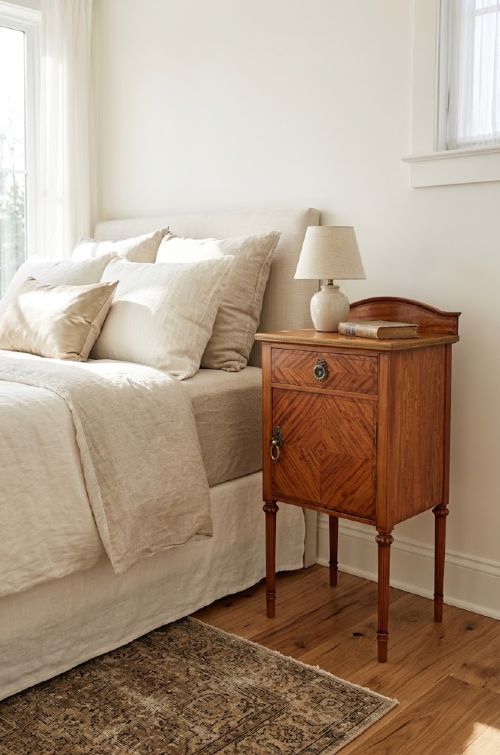
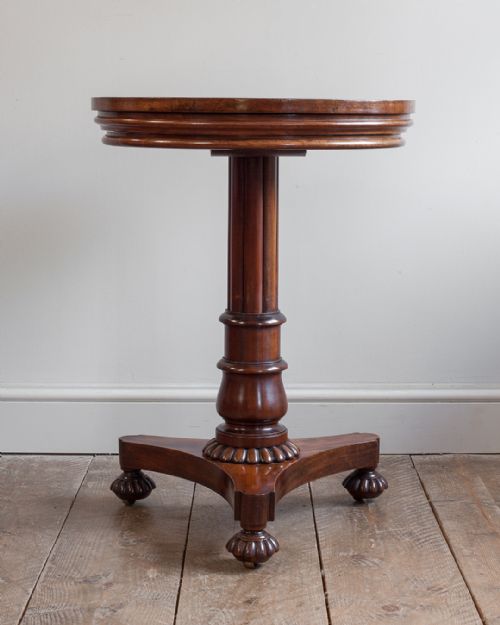


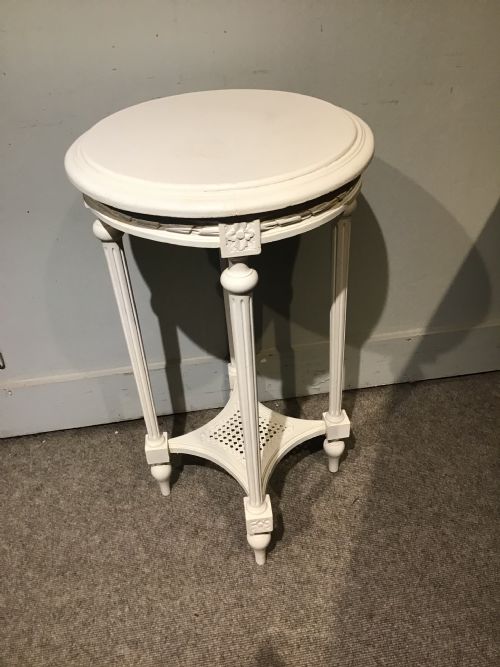


Fluted Pedestal Side Table
These fluted pedestal side table pieces combine architectural form with timber turning, offering a compact surface for lamps and small objects.
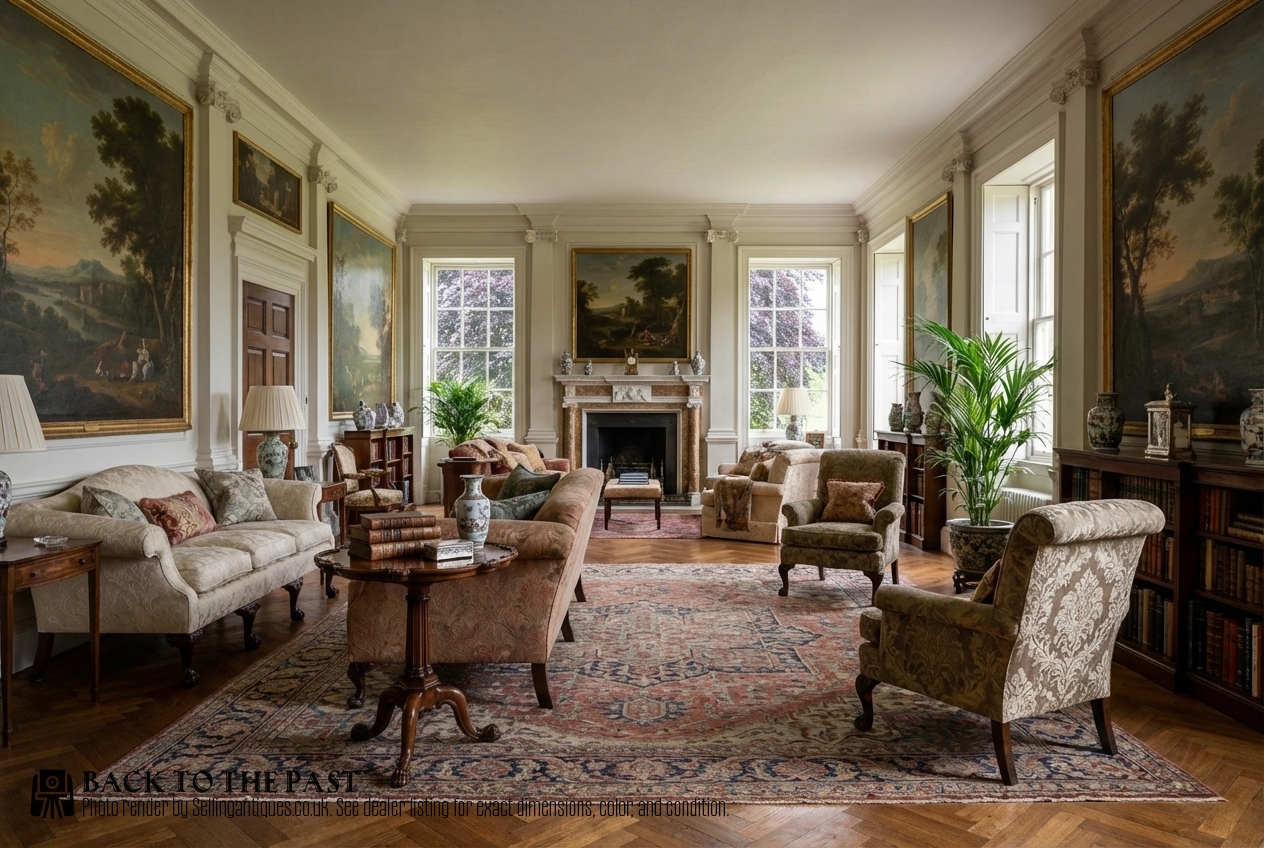
Fluted Pedestal Side Table
When searching for a fluted pedestal side table, a buyer encounters forms ranging from compact wine tables and occasional pieces to bedside cabinets and bedside cupboards. These items span the eighteenth, nineteenth, and early twentieth centuries, drawing on Georgian, Victorian, Edwardian, and Continental design traditions.
The materials recorded across these examples include mahogany, satinwood, walnut, burr elm, pine, and oak, often paired with marble tops, brass mounts, or ormolu details. Most pieces rely on a central column or pillar support, frequently featuring turned or carved fluting that lifts the surface off the ground on tripod or plinth bases.
Assessing quality and craftsmanship
The distinction between standard and superior pieces rests on the crispness of the timber turning and the depth of the column fluting. Hand-carved or cleanly reeded stems demonstrate a higher level of joiner skill than machine-cut alternatives.
Selection of timber grain also dictates merit, particularly in burr elm, figured mahogany, and satinwood surfaces where natural figuring is matched symmetrically. Original mounts, intact marble slabs, and stable pillar construction further separate accomplished cabinet work from ordinary production.
A Hungarian pine bedside cabinet painted black sits comfortably alongside grand French Empire mounts and English Georgian satinwood wine tables.
The Fluted Pedestal Side Table Glossary
- Fluting
- A series of shallow, parallel concave grooves running vertically along a column or pedestal stem. This classical architectural detail adds visual lightness to turned supports.
- Pedestal
- A single central support or column holding up the table top, typically resting upon three or four feet. It allows for unrestricted legroom around the table base.
- Wine table
- A small occasional table traditionally used for holding drinking vessels during the eighteenth and nineteenth centuries. These pieces usually feature a circular top on a pillar base.
- Ormolu
- Gilt bronze ornamentation applied to furniture and decorative objects, popular in French Empire and Continental design. The technique involves creating a finely chased bronze mount coated in gold amalgam.
Fluted Pedestal Side Table: Frequently Asked Questions
What is a fluted pedestal side table used for?
These pieces serve as compact surfaces for lamps, drinks, and small decorative objects in sitting rooms and bedrooms.
Their small footprint allows them to fit easily beside seating or beds without cluttering the floor space.
How do I date a wooden pedestal table?
Dating relies on identifying the timber species, construction joinery, and stylistic motifs associated with periods like Georgian, Victorian, or Edwardian.
Examining the underside and turning methods reveals whether a piece belongs to the eighteenth century or later revivals.
Are marble top tables difficult to maintain?
Marble surfaces require gentle cleaning with mild soap and water to protect the polished stone from acidic spills.
The heavy stone top simply rests on the wooden base in many examples, making periodic checks of the support structure sensible.
Where were these tables made?
The listings show English, French, Swedish, and Hungarian origins, reflecting diverse European cabinet-making traditions.
Regional preferences appear in the choice of woods, such as satinwood in English workshops or painted finishes on Continental pieces.