
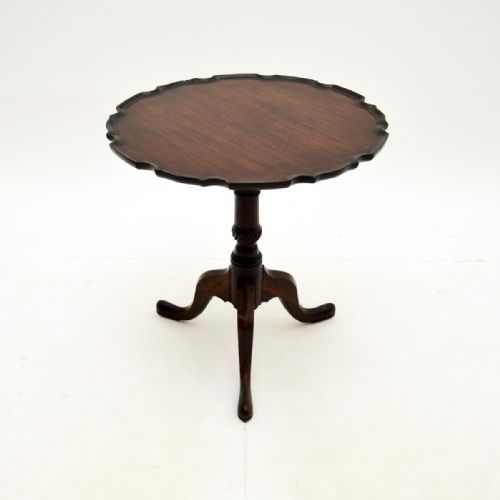
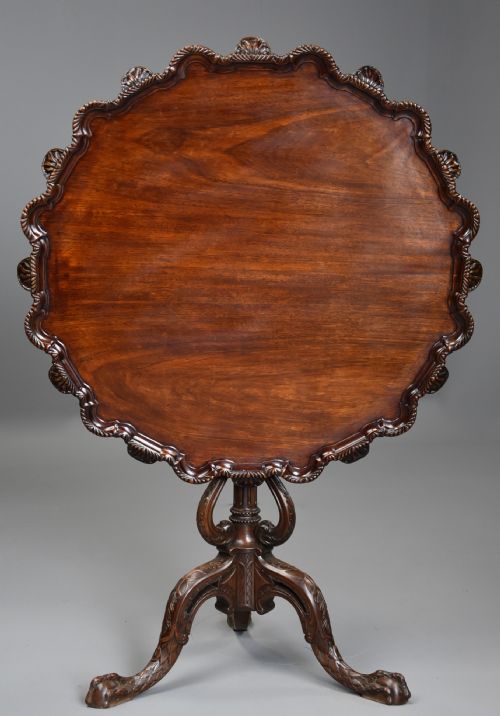
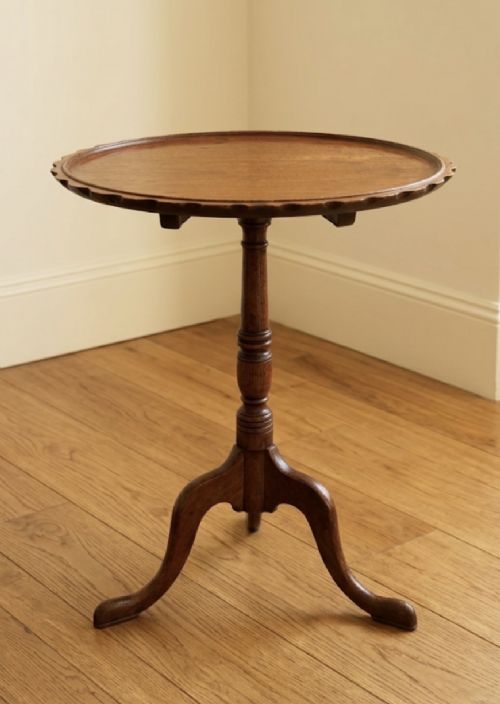


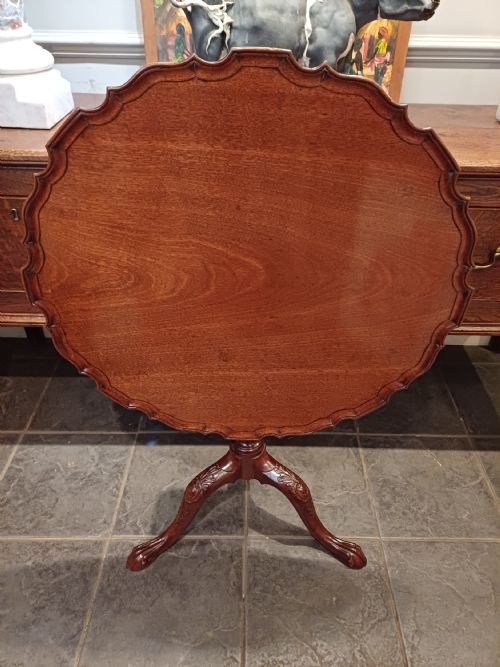

Piecrust Edge Accent Table
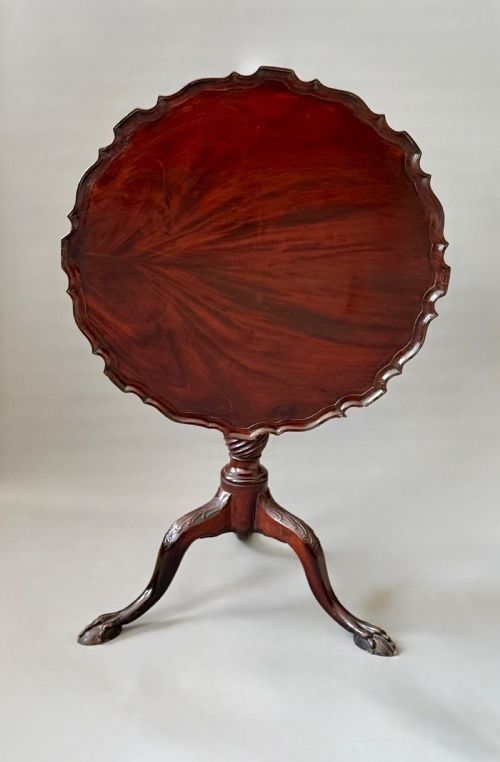
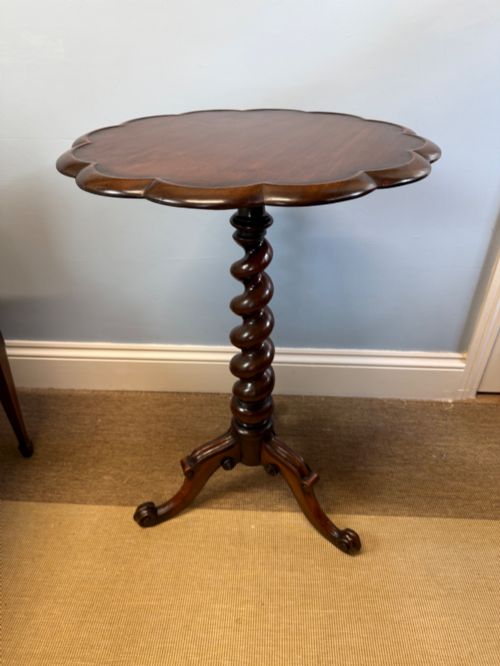
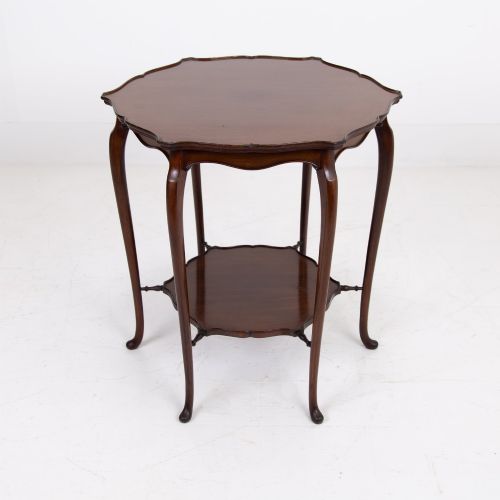
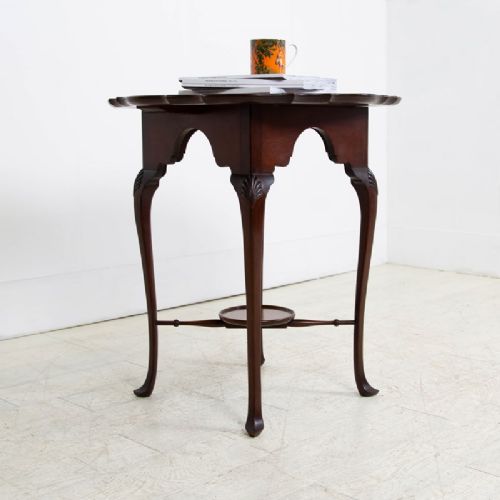
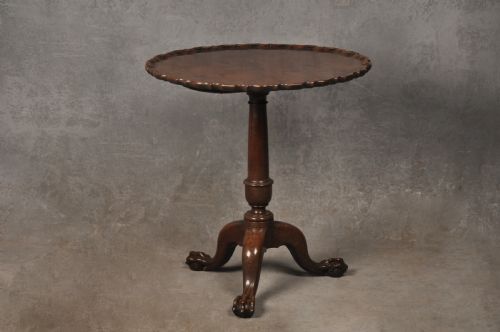
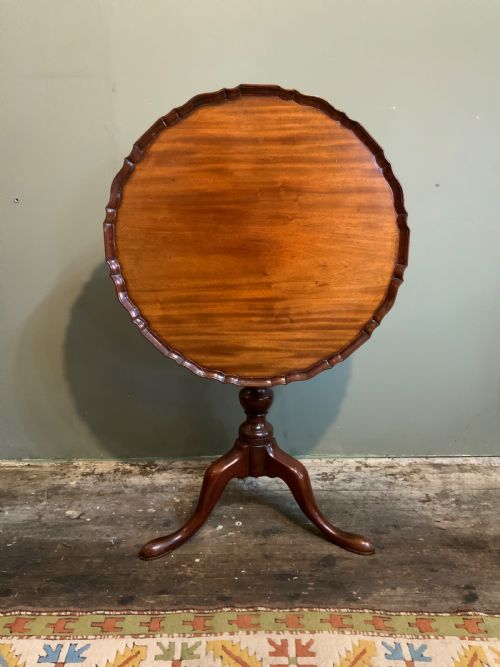
A piecrust edge accent table brings a shaped, raised border to mahogany and walnut timber, offering a classic surface for small items.
Piecrust Edge Accent Table
The selection ranges from eighteenth-century George III examples in the Chippendale taste down to later nineteenth-century and early twentieth-century revivals. Mahogany and figured walnut dominate the forms available on this page.
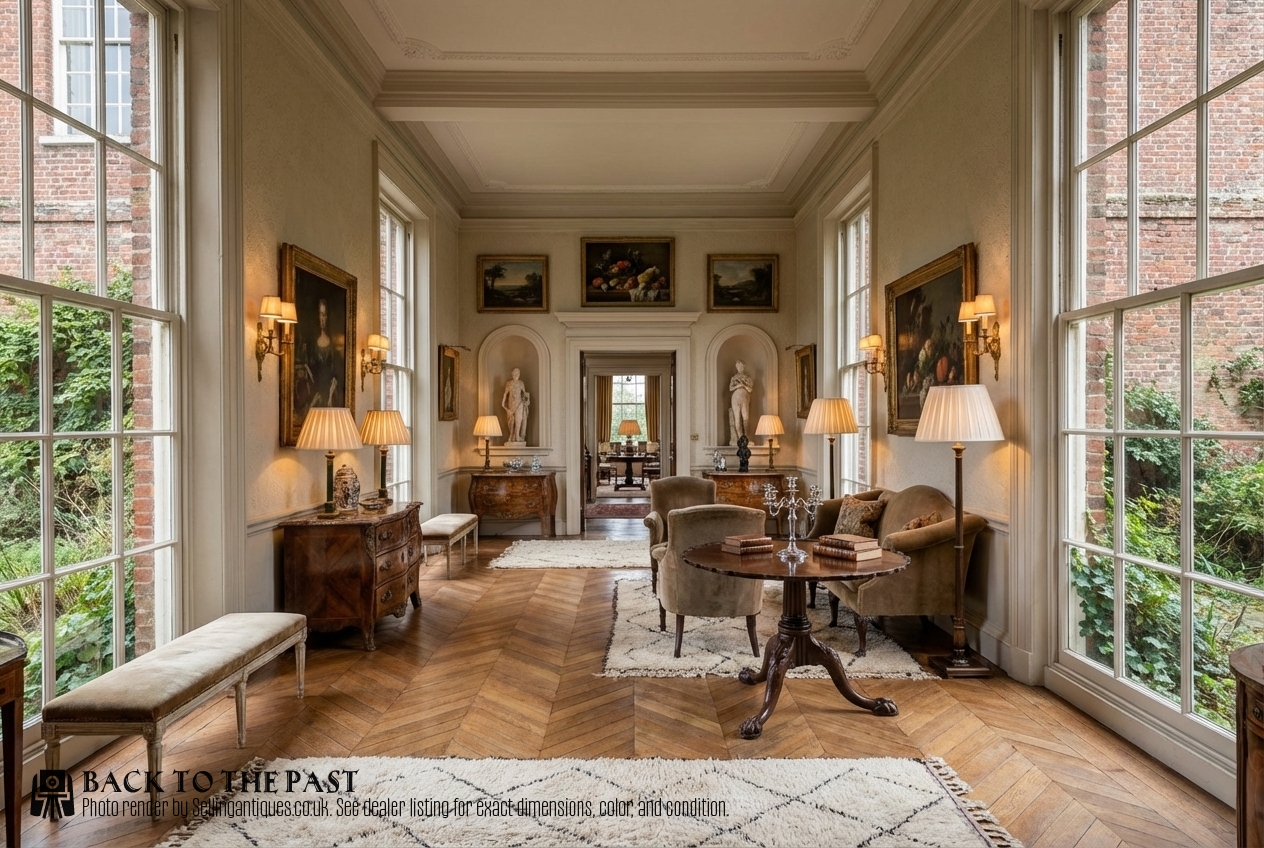
Buyers will encounter occasional tables and tripod bases designed for flexible placement around a room. The defining feature remains the undulating edge that echoes traditional pastry work.
Materials and construction
Makers utilised solid timbers such as mahogany and figured walnut, often turning the central columns on a lathe. Tripod bases demand precise joinery to ensure the three legs support the elevated top evenly.
The characteristic rim required skilled hand carving to shape the undulating profile directly from the solid board. Tilt-top mechanisms incorporate clever brass catches and birdcage fixtures to allow the surface to pivot and fold flat.
Piecrust Edge Accent Table Retail Price Guide 2026
Typical asking prices for piecrust edge accent table among the pieces listed under this phrase on Sellingantiques today, from the lower quarter to the upper quarter. They describe what is for sale here now, not the wider market.
Listings span the eighteenth, nineteenth and early twentieth centuries, featuring mahogany, walnut, oak and satinwood across tripod, occasional and nest formats.
Variations in quality
Quality rests in the crispness of the hand-carved rim and the selection of the timber grain. Finer examples display deeply carved piecrust profiles and richly figured walnut or mahogany surfaces.
The integrity of the tripod mechanism and the weight of the central pillar determine the stability of the piece. Superior construction shows seamless joints and timber selected for depth and natural colour.
Shapland and Petter
The Piecrust Edge Accent Table Glossary
- Piecrust edge
- A raised, scalloped perimeter carved into the solid timber top of a table. This decorative border resembles pastry crimping and stops small items from rolling off.
- Tripod table
- A small freestanding table supported by a central pillar resting on three legs. This construction prevents wobbling on uneven floors.
- Tilt-top
- A hinged tabletop mechanism that allows the surface to pivot vertically when not in use. This design enabled tables to stand flat against walls to save space in period rooms.
- Birdcage
- A wooden box assembly beneath the tabletop that permits the surface both to tilt and to revolve. This clever mechanism sits atop the central column.
- Chippendale style
- A decorative manner inspired by eighteenth-century cabinet maker Thomas Chippendale. It frequently employs carved mahogany, tripod bases and intricate edge work.
Piecrust Edge Accent Table: Frequently Asked Questions
What is a piecrust edge accent table?
A piecrust edge accent table is a small occasional piece featuring a raised, scalloped timber rim. These tables commonly stand on a central tripod base and serve multiple functions around the home.
Such pieces range from eighteenth-century examples to later revivals in mahogany and walnut. The distinctive border provides both a decorative finish and a practical barrier for small objects.
How were tilt-top tables used?
Tilt-top tables served as flexible furnishings that could be moved easily to firesides or corners for tea and reading. When not in use, the top tilted vertically to save floor space.
This clever mechanism allowed homeowners to clear rooms quickly for entertaining. The small footprint made them ideal accessories in principal reception rooms.
How do I distinguish eighteenth-century pieces?
Eighteenth-century pieces display hand-carved timber details and construction methods characteristic of the Georgian period. The grain of the solid mahogany often shows deeper patina and natural wear.
Later revivals from the nineteenth and twentieth centuries replicate these classical proportions. Examining the underside and the joinery helps clarify the age of the timber.
Where should I place a wine table?
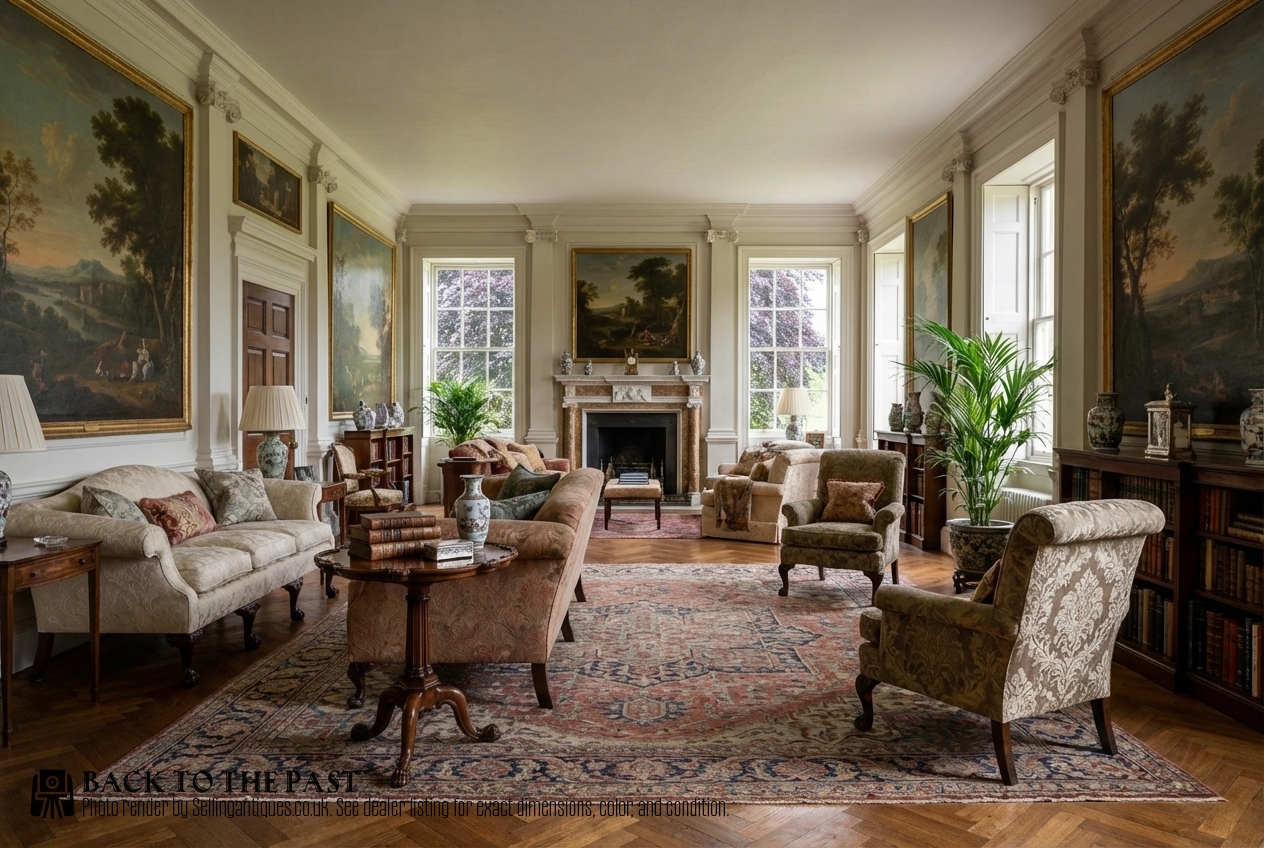
Wine tables suit placement beside armchairs, sofas or corners where surface space is limited. Their compact tripod bases allow them to fit into narrow gaps.
They function well holding lamps, drinks or decorative items without crowding a room. The raised edge keeps vulnerable objects secure on the small tabletop.