




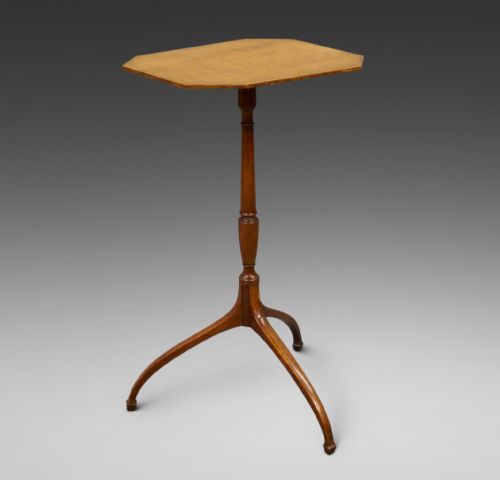

Satinwood Tripod Table
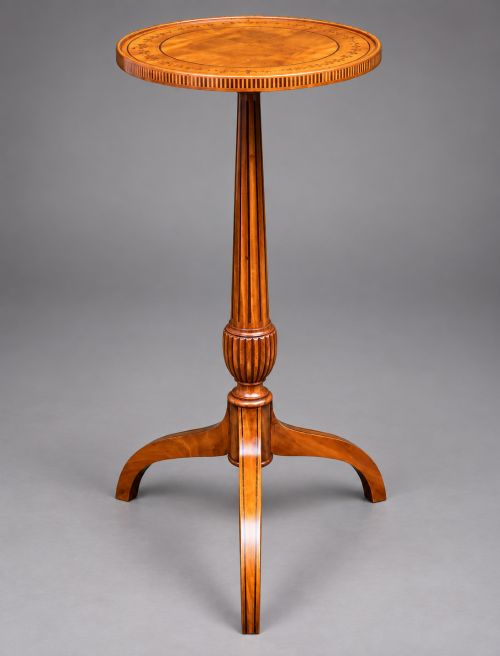
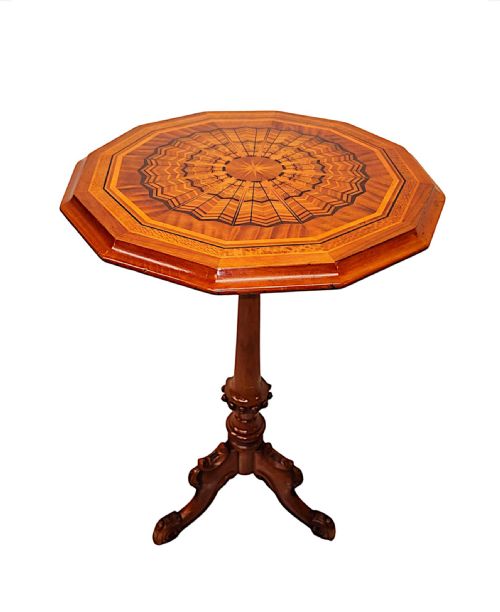
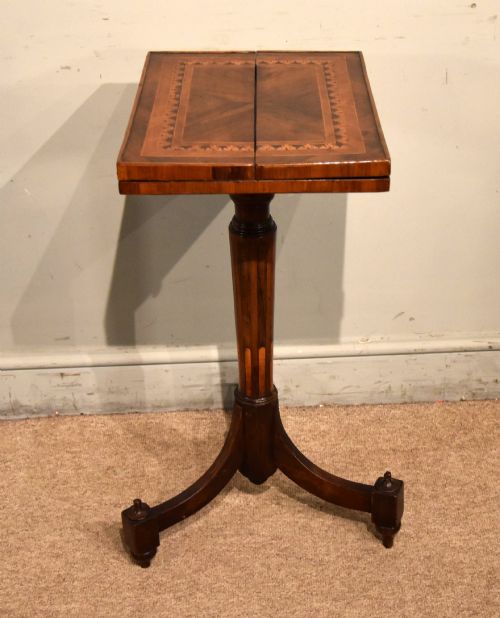
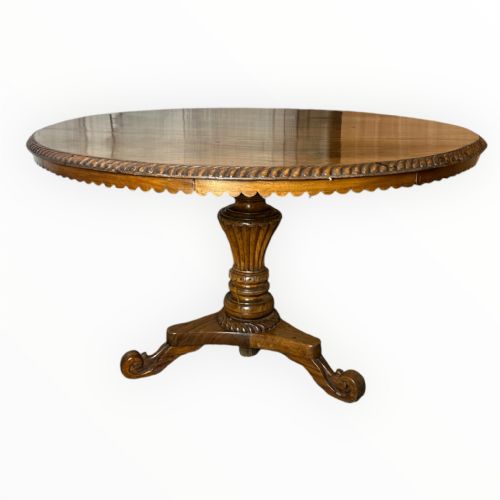
These satinwood tripod table examples bring warm, golden timbers and slender pedestals to a room.
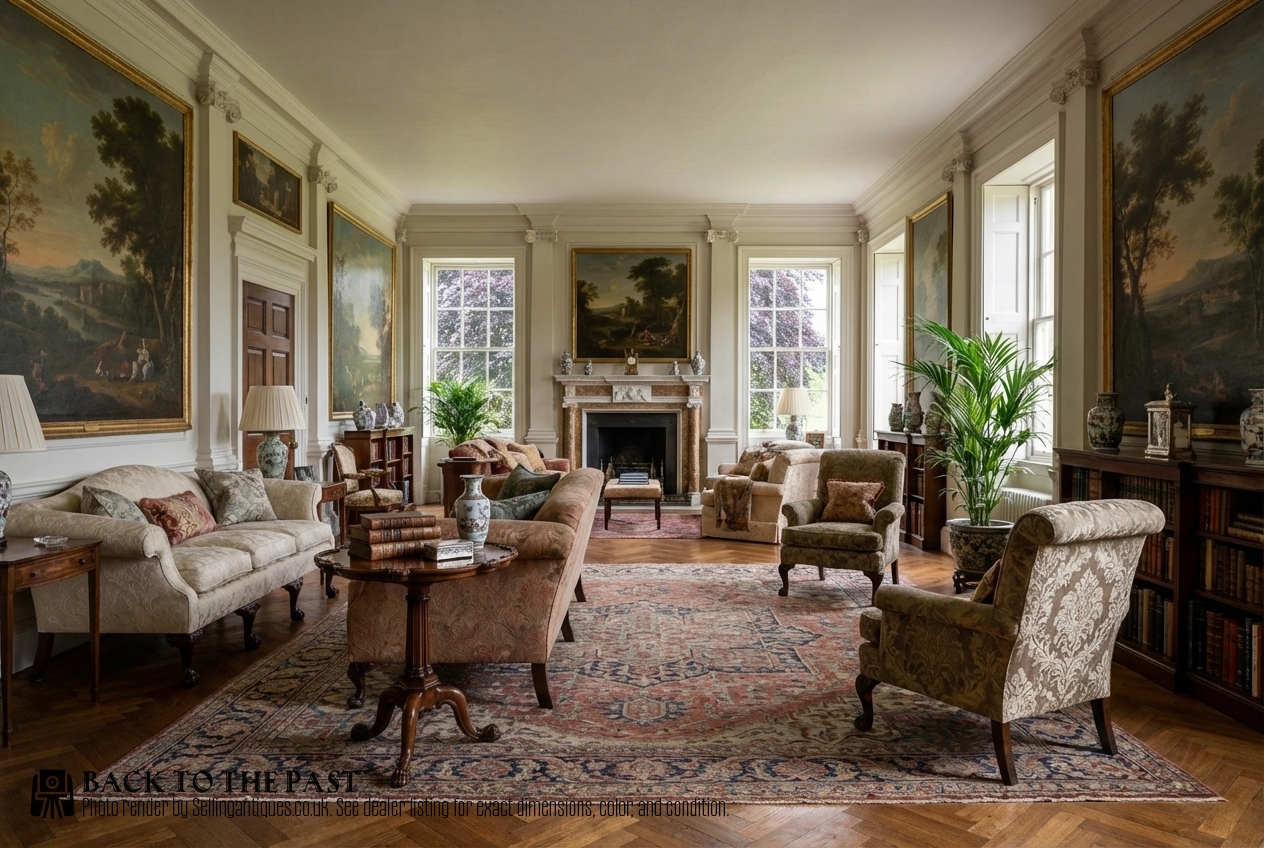
Satinwood Tripod Table
When you search for a satinwood tripod table, you encounter small serving, wine, and occasional pieces supported by a central pillar and three feet. The pieces appearing here span Georgian, Regency, Victorian, and Edwardian eras, utilising the pale sheen of satinwood alongside mahogany, rosewood, and ebony.
Most examples function as compact lamp, side, or wine tables designed for mobility and display rather than heavy dining. Makers from the 18th century onward shaped these tops in circular or tilt formats, often banding the borders with darker contrasting timbers.
Regional variations include English Sheraton-revival interpretations, Scottish pieces, and Ceylonese or Anglo-Indian colonial constructions. This variety ensures that tables range from simple utilitarian surfaces to highly decorative inlaid objects.

Distinctions in Quality
Quality rests upon the choice of timber and the precision of the inlay, where finely figured satinwood grain and crisp banding create striking visual depth. Finer workshops invested greater labour in the stability of the central pillar and the balanced splay of the tripod feet.
The integrity of the surface polish dictates the preservation of the original golden tone, separating unrestored surfaces from those obscured by later interventions. Construction details, such as precise dovetails and original tilt mechanisms, reveal the hand of skilled makers.
Materials appearing across the inventory range from solid mahogany and satinwood to olive veneers, burr oak, and specimen marble.
Gillows
The Satinwood Tripod Table Glossary
- Satinwood
- A dense, lustrous timber native to tropical regions, prized for its pale yellow hue and reflective chatoyant grain.
- Tripod base
- A pedestal support terminating in three distinct feet, allowing the table to stand stable on uneven floors.
- Tilt-top
- A hinged table mechanism permitting the top to fold vertically when not in use, saving space in smaller chambers.
- Marquetry
- The art of forming decorative patterns using fitted pieces of various coloured veneers.
- Cross-banding
- A decorative border of veneer laid around the edge of a table top with the grain running perpendicular to the centre.
Satinwood Tripod Table: Frequently Asked Questions
What is a satinwood tripod table used for?
These tables served historically for holding candles, wine glasses, or books beside seating furniture in sitting rooms.
Today, they function well as compact lamp stands or decorative surfaces in hallways and drawing rooms.
How do I identify a Regency satinwood table?
Regency examples often feature contrasting ebony or rosewood cross-banding, classical pedestal forms, and painted or inlaid motifs.
Examining the construction methods and timber ageing helps distinguish this period from later Victorian revivals.
Can I use a tilt-top table normally?
The tipping mechanism allows the table to rest flat against a wall when floor space is needed.
Ensure the brass catch or wooden peg securing the top remains properly aligned during daily use.
What woods appear alongside satinwood?
Cabinetmakers frequently combined satinwood with mahogany, rosewood, ebony, and satin birch to create contrasting borders and inlay.
These secondary woods highlight the pale golden shimmer of the primary timber.