
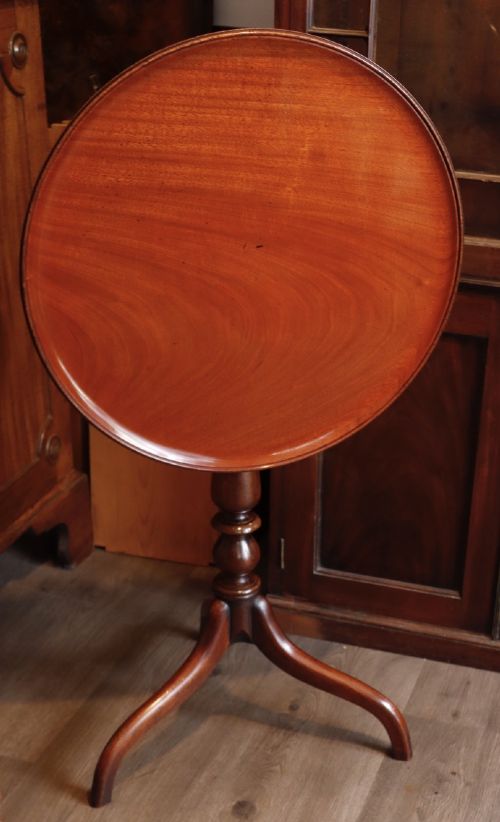
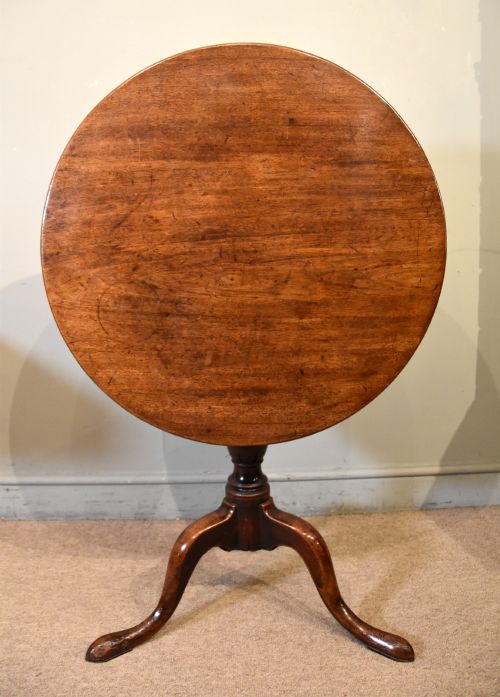
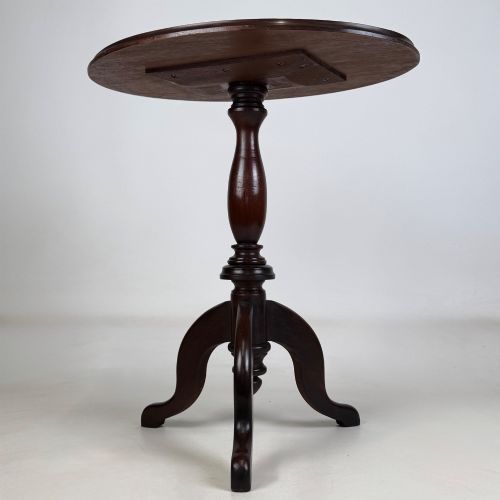
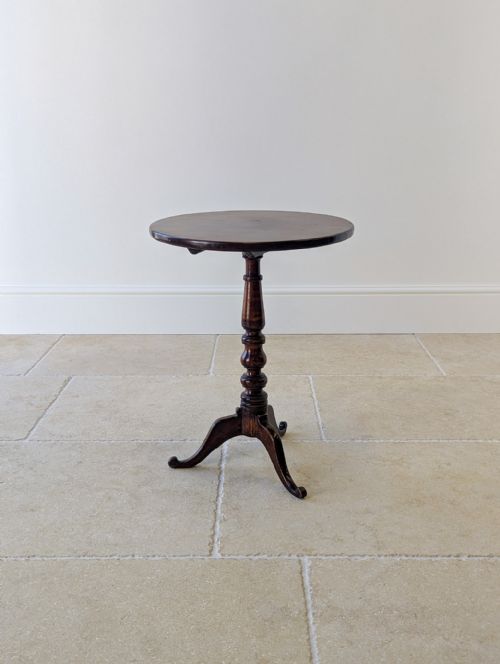

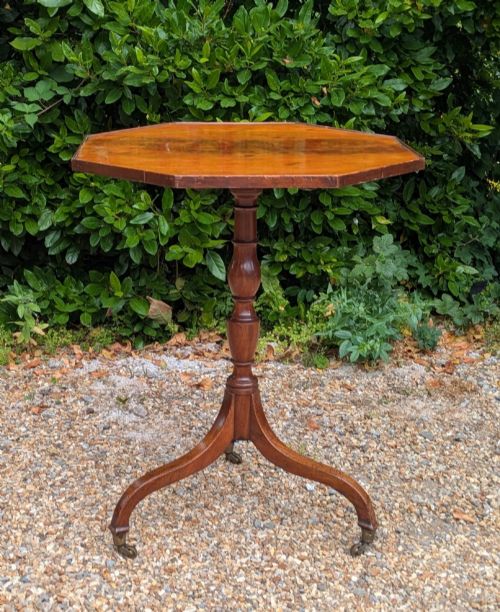
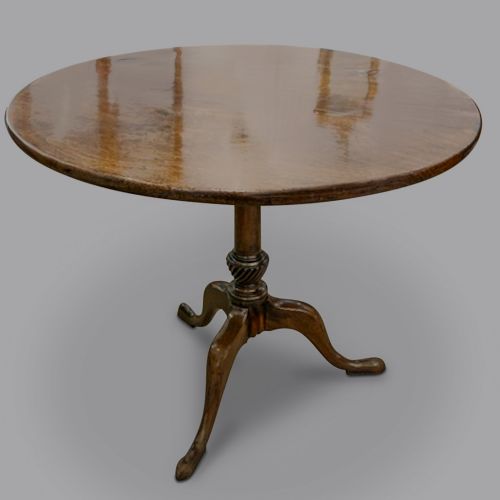
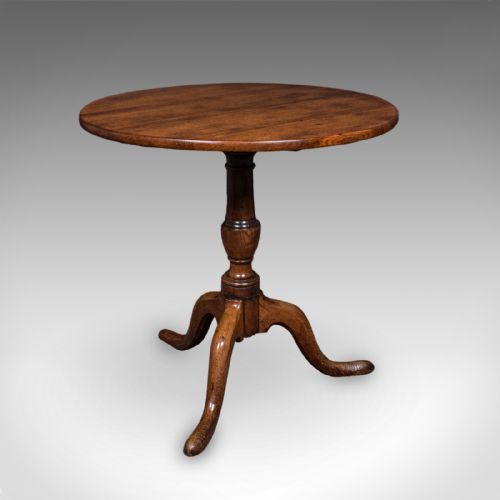
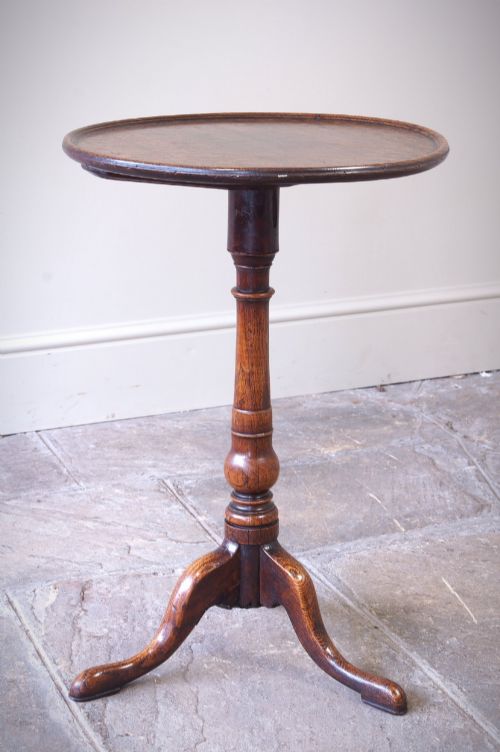
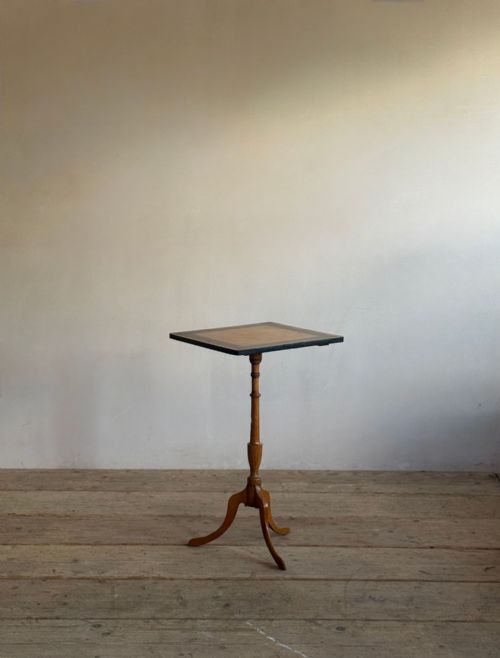
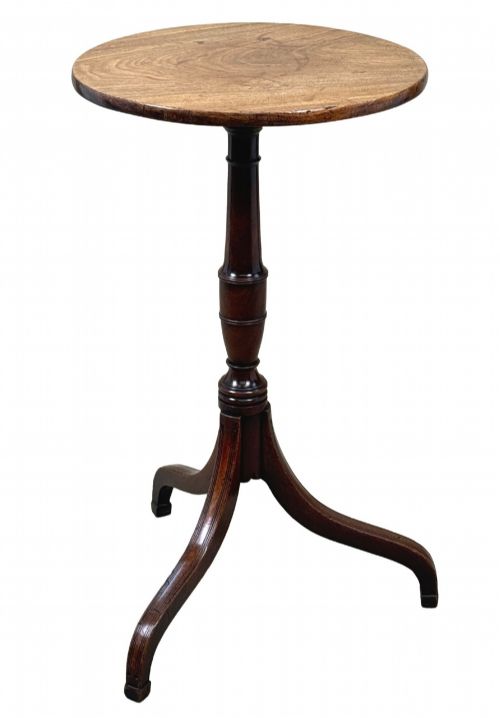
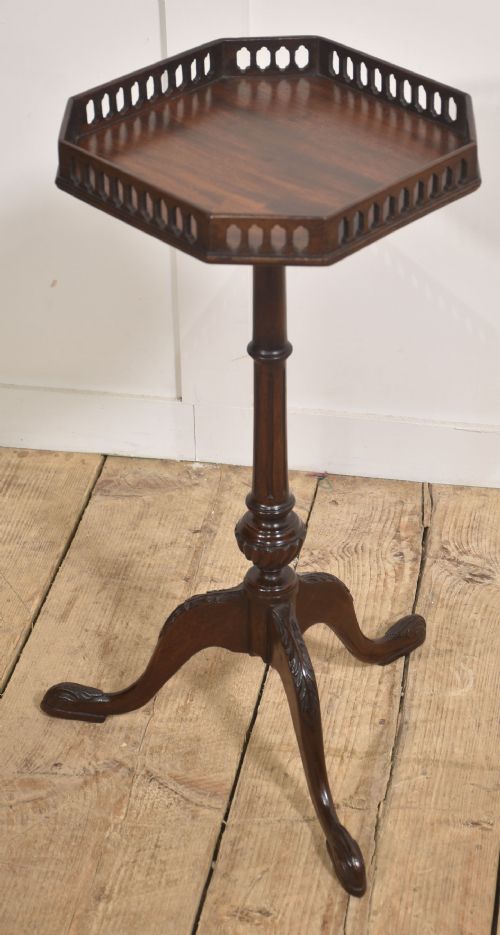
Turned Stem Wine Table
A turned stem wine table is a compact pedestal stand built to hold a single glass or candle, offering both mobility and period character.
Turned Stem Wine Table
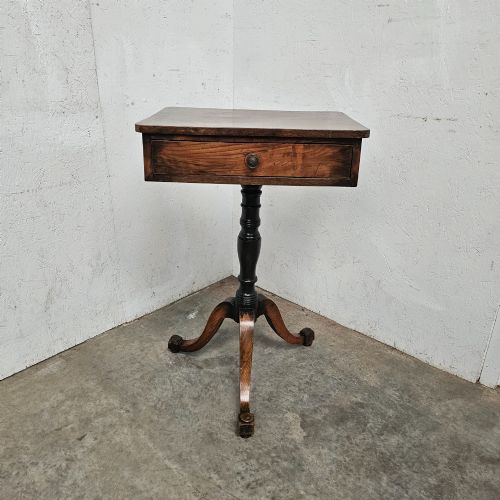
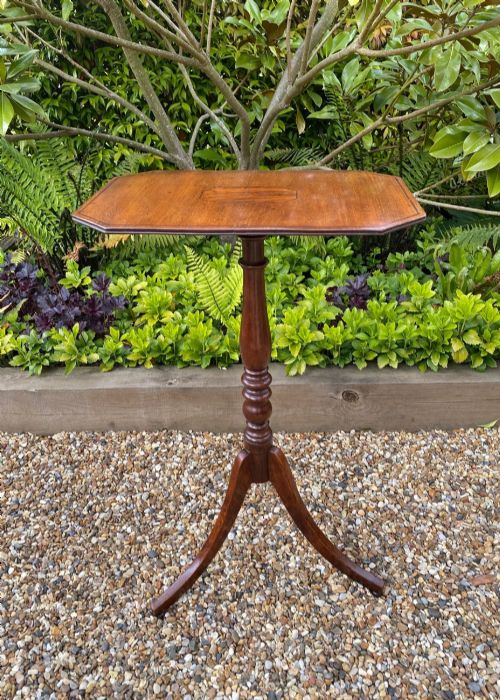
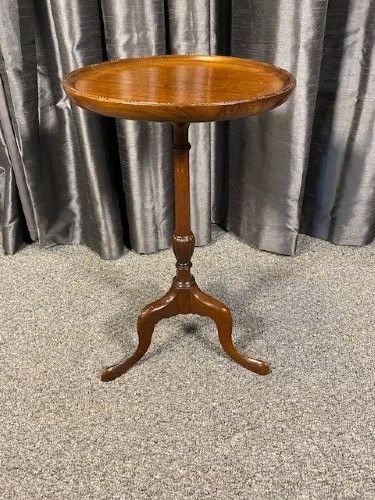
A turned stem wine table is a small, portable pedestal piece designed primarily to hold drinks, candles, or small lamps beside a seating area. When searching for this form, buyers encounter variants spanning the eighteenth, nineteenth, and early twentieth centuries, reflecting changing domestic habits.
Beyond standard wine tables, the category overlaps with related occasional forms such as kettle stands, candle stands, and lamp tables. Their compact footprints make them versatile additions to modern rooms, serving effectively as bedside stands or small accent furniture.
Materials and construction
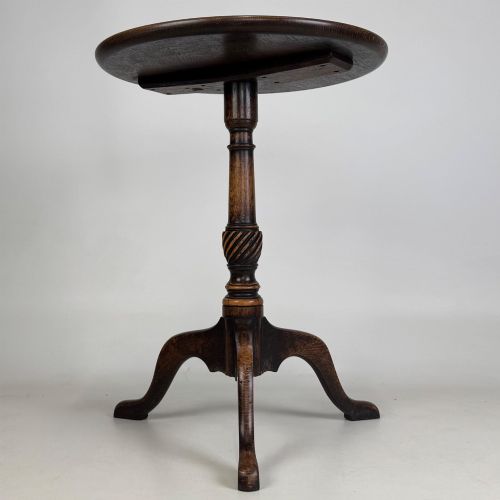
Makers relied heavily on dense hardwoods such as mahogany and oak, turning the central pillars on a lathe to create shapely, balanced stems. Tops were frequently fashioned from single boards or tilt-top mechanisms, joined securely to three-legged tripod bases.
Country examples introduced regional materials like elm, yew wood, fruitwood, and ash, sometimes combining multiple timbers within a single frame. Specialised surfaces, including penwork decoration and sunburst veneers, demonstrate finer decorative techniques employed by period artisans.
Turned Stem Wine Table Retail Price Guide 2026
Typical asking prices for turned stem wine table among the pieces listed under this phrase on Sellingantiques today, from the lower quarter to the upper quarter. They describe what is for sale here now, not the wider market.
Listings feature pieces spanning the 18th century, Georgian era, Regency period, and Victorian times, alongside Edwardian designs.
Distinctions in quality
Quality rests upon the proportion and grace of the turned stem and the stability of the tripod base, where slender yet robust legs ensure proper balance. Finer specimens display carefully selected timber grains, such as plum pudding mahogany, matched with crisp carving or well-fitted tilt mechanisms.
Simpler country pieces prioritize sturdy utility over ornamental refinement, utilising local woods and straightforward joinery. The distinction between everyday domestic items and high-status furnishings lies in the precision of the turning and the sophistication of the top's edge profile.
The Turned Stem Wine Table Glossary
- Tilt-top
- A hinged tabletop mechanism allowing the surface to fold vertically when not in use. This clever design saved floor space in smaller period rooms.
- Tripod base
- A three-legged support structure joined to a central column. It ensures stability on uneven historical floors without rocking.
- Dish top
- A circular tabletop with a raised, carved rim designed to prevent cups and glasses from sliding off. This feature is characteristic of better Georgian examples.
- Kettle stand
- A small low table specifically intended to support a boiling kettle for tea service. They share similar proportions and tripod construction with wine tables.
Turned Stem Wine Table: Frequently Asked Questions
What is a turned stem wine table used for?
These small tables were historically positioned beside chairs to hold a single glass of wine, a candle, or a small lamp. Their compact size made them easy to move around a drawing room as needed.
Today, they function well as bedside stands or accent pieces in living spaces where floor space is limited.
How do I identify a Georgian wine table?
Georgian examples often feature rich mahogany timbers, graceful turned pedestals, and tripod bases with pad or snake feet. Many include tilt-top mechanisms for storage.
Looking closely at the timber grain and the hand-turned details helps distinguish eighteenth-century pieces from later nineteenth-century revivals.
Are tilt-top mechanisms original?
Many period wine tables feature functioning tilt-top catches that allowed the surface to fold away against the pedestal. Examining the hinge blocks and pivot pins reveals whether the mechanism belongs to the original period of manufacture.
Slight wear around the pivot point is normal and expected in authentic antique examples.
Can I use an antique wine table daily?
These tables are surprisingly sturdy and handle everyday use well if placed on even surfaces and treated with care. Using coasters protects the polished timber tops from moisture rings.
Their robust tripod construction makes them practical for holding modern drinks or small lamps just as they did centuries ago.