





Sheraton Period Table
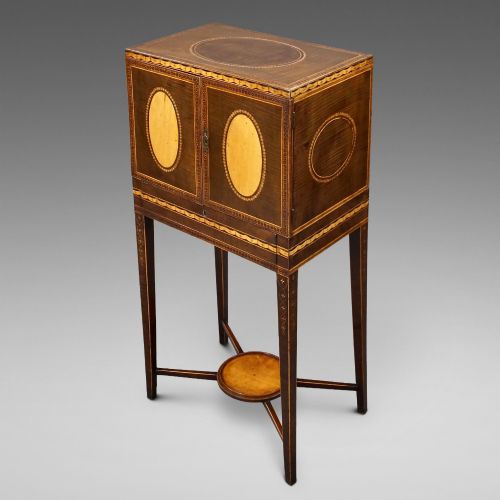
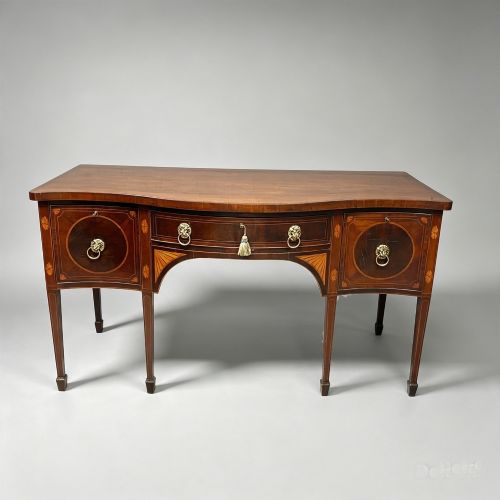
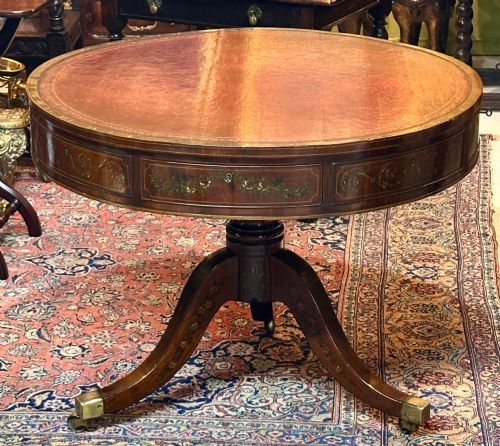
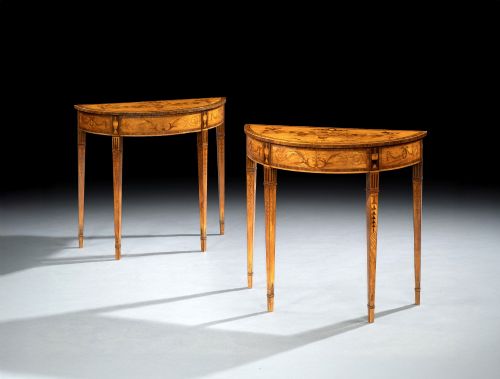
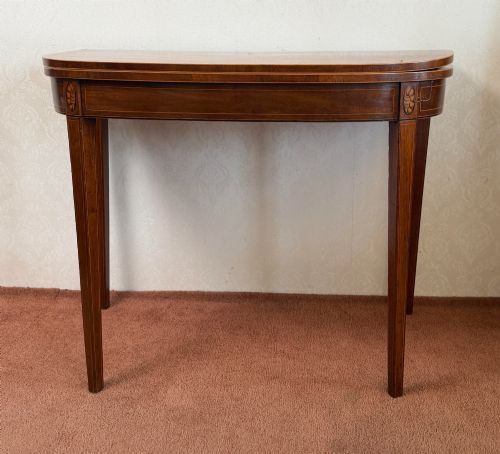
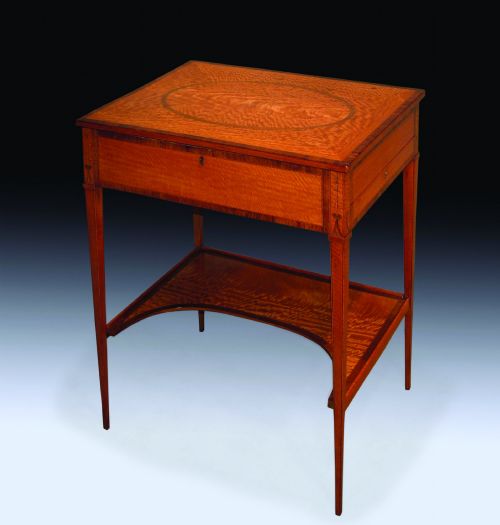
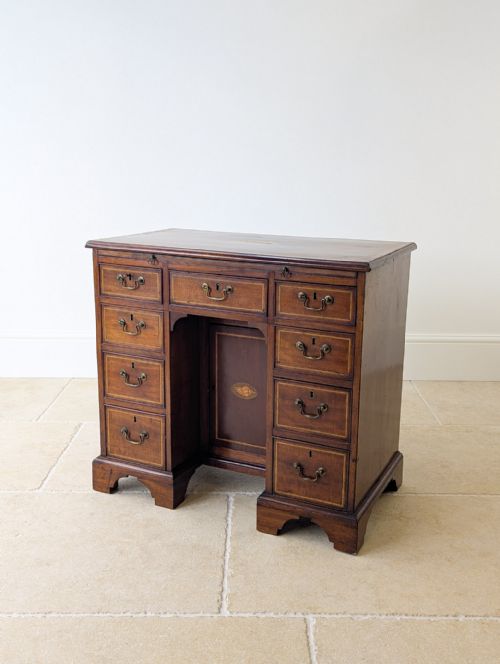
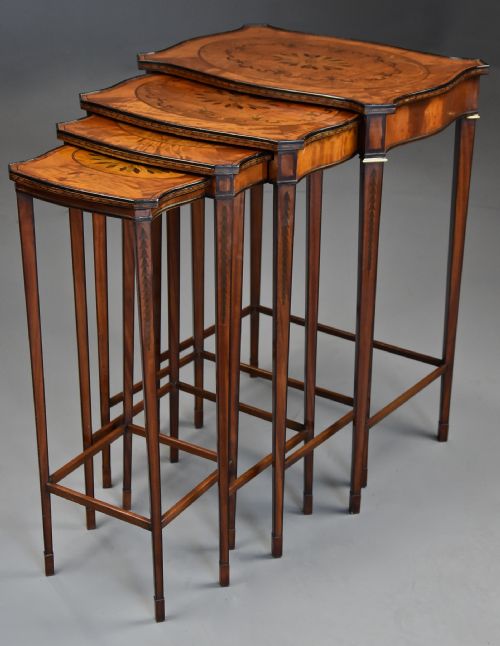
A sheraton period table brings refined late eighteenth-century grace into a room through delicate legwork and crisp geometric inlay.
Sheraton Period Table
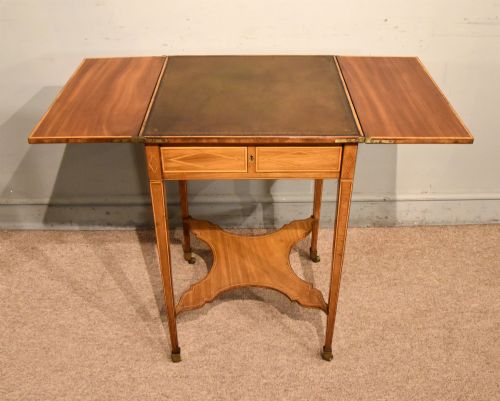
A sheraton period table encompasses versatile furniture forms designed in the late eighteenth and early nineteenth centuries, aligning closely with the George III and Regency eras. Buyers exploring this category encounter a rich variety of functional pieces, from Pembroke and card tables to writing desks and side servers.
The prevailing examples on this page date predominantly from the eighteenth century, though later Edwardian revivals also appear. Pembroke and demi-lune card tables surface frequently among the listings, alongside occasional and console designs.
Makers and designers of these pieces favoured slender, tapering legs and rectilinear or serpentine proportions. Surviving forms reflect the refined domestic requirements of polite society, adapting easily to modern interiors as functional writing surfaces or display tables.
Materials and construction techniques
Cabinet makers built these pieces using dense hardwoods such as mahogany and rosewood as primary structural timbers. Selected veneers provided smooth surfaces suited to elaborate decorative schemes.
Satinwood, boxwood, and harewood provided contrasting pale tones for intricate marquetry and line inlay. Craftspeople employed fine stringing and banded borders to define the edges of tabletops and drawer fronts.
Secondary timbers like oak supported drawer linings, while brass fittings such as castors and swing handles completed the functional hardware.
Sheraton Period Table Retail Price Guide 2026
Typical asking prices for sheraton period table among the pieces listed under this phrase on Sellingantiques today, from the lower quarter to the upper quarter. They describe what is for sale here now, not the wider market.
Listings feature pieces spanning the eighteenth century through the Edwardian era, incorporating mahogany, satinwood, and rosewood.
Judging execution and preservation
Quality rests upon the crispness of the inlay work and the harmonious figuring of the timber veneers. Superior examples display tightly matched grain patterns across folding leaves and tabletops, executed with meticulous precision.
The integrity of the structural joinery and the retention of original surface finishes dictate the desirability of a piece. Finer items maintain their original brass hardware, stable leg construction, and subtle patination developed over centuries of polite use.
Gillow
The Sheraton Period Table Glossary
- Pembroke table
- A small drop-leaf table featuring hinged flaps on opposing sides, introduced during the eighteenth century for breakfast or occasional writing use.
- Demi-lune
- A half-moon shape commonly utilised for tabletops and sideboards designed to stand flush against a wall.
- Marquetry
- Decorative veneer work arranged in pictorial or geometric patterns using various coloured woods.
- Stringing
- Thin strips of contrasting wood inlaid into channels cut into the primary timber surface to form delicate borders.
- Satinwood
- A lustrous, durable timber native to tropical regions, valued for its golden yellow colour and smooth grain during the neoclassical period.
Sheraton Period Table: Frequently Asked Questions
What is a sheraton period table?
A sheraton period table is a piece of furniture created in the late eighteenth or early nineteenth century, characterised by straight tapering legs, light timber veneers, and geometric inlay.
These pieces reflect the neoclassical design principles popularised during the Georgian and Regency eras, prioritising elegance and domestic utility.
How do I spot an original?
Original pieces display period construction methods, including hand-cut dovetails on drawer boxes and timber shrinkage appropriate to age.
Examine the secondary woods inside and look for consistent patination across the surfaces that suggests long-term preservation.
Can I use one daily?
These tables adapt well to modern daily life when treated with reasonable care regarding moisture and heat.
Pembroke and writing surfaces offer practical workspace or display areas while maintaining historic character within a room.
Are Edwardian copies common?
Edwardian revival pieces frequently appear on the market, replicating the light satinwood aesthetic and serpentine forms of the original eighteenth-century designs.
Inspect the internal construction materials and finishing techniques to differentiate between original Georgian production and later nineteenth- or twentieth-century interpretations.