
George III Mahogany Tilt Top Table
A george iii mahogany tilt top table balances practicality with elegance, offering a versatile surface that folds away when not in use.
George III Mahogany Tilt Top Table
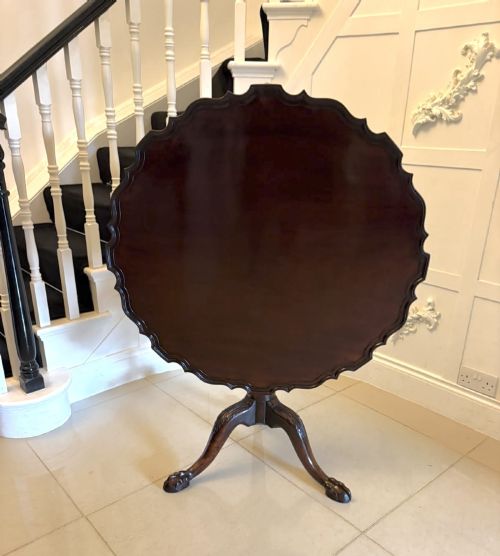
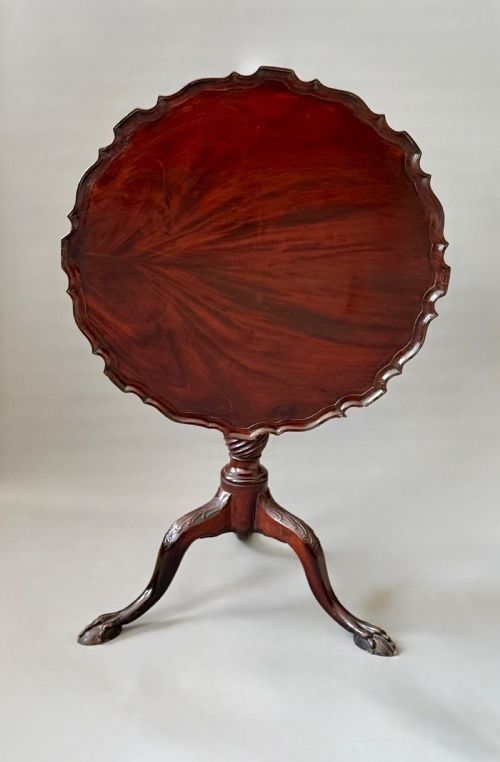
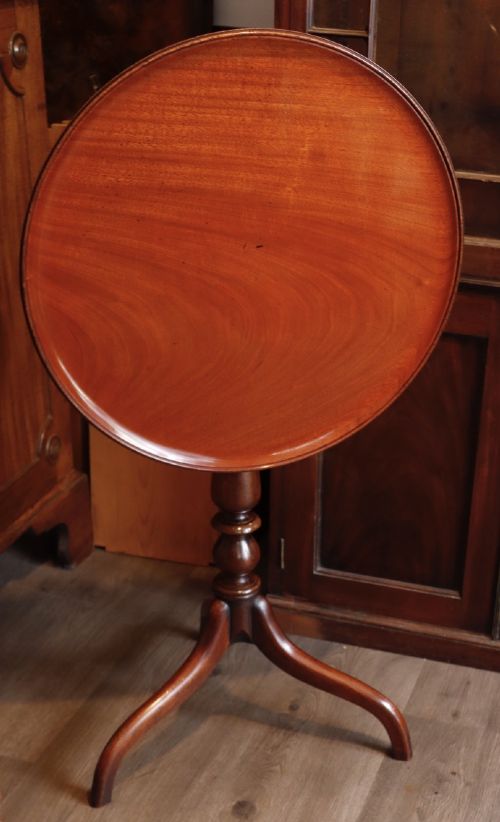
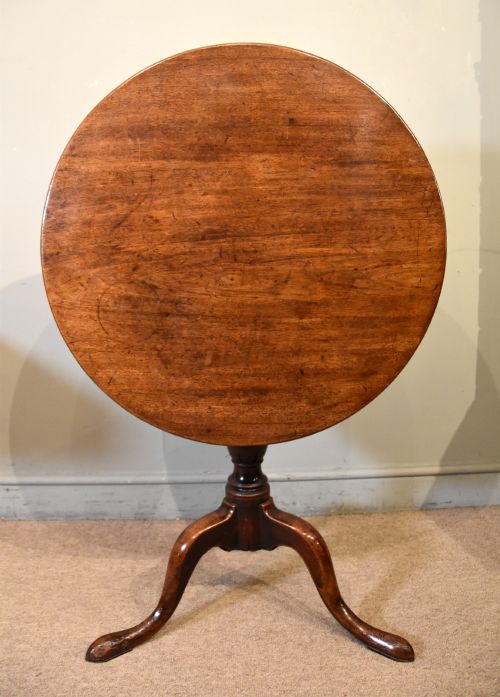
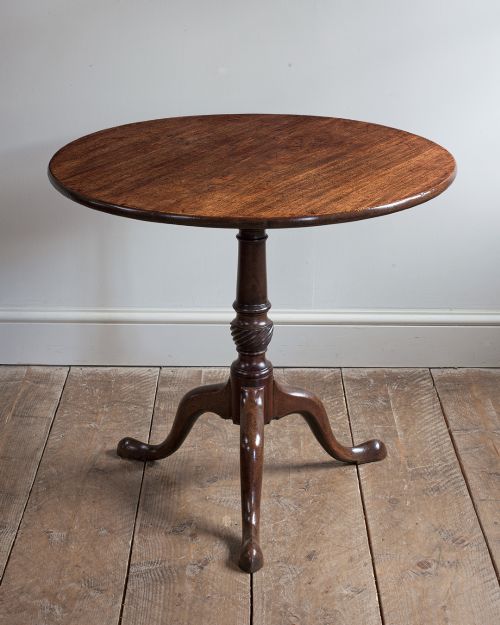
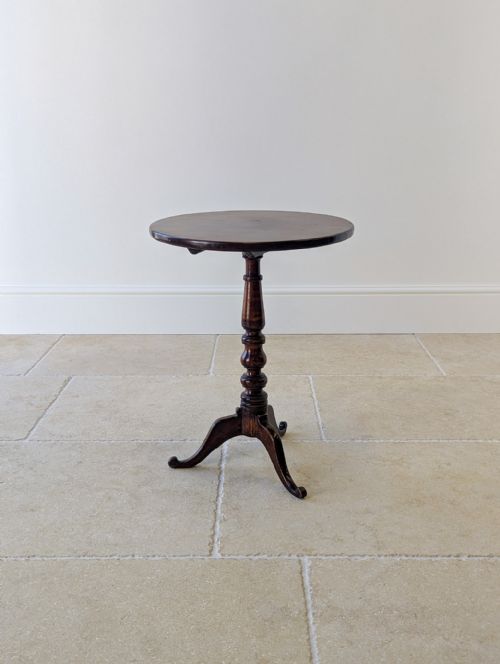
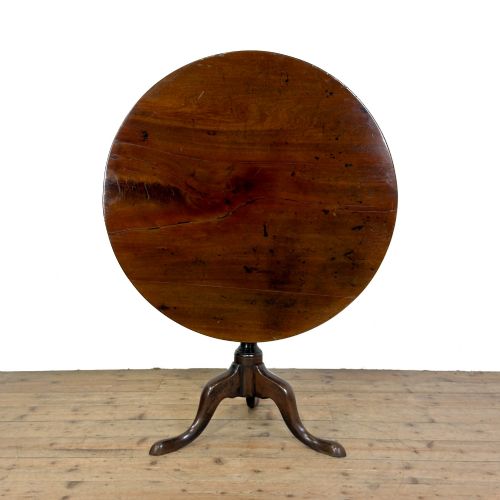
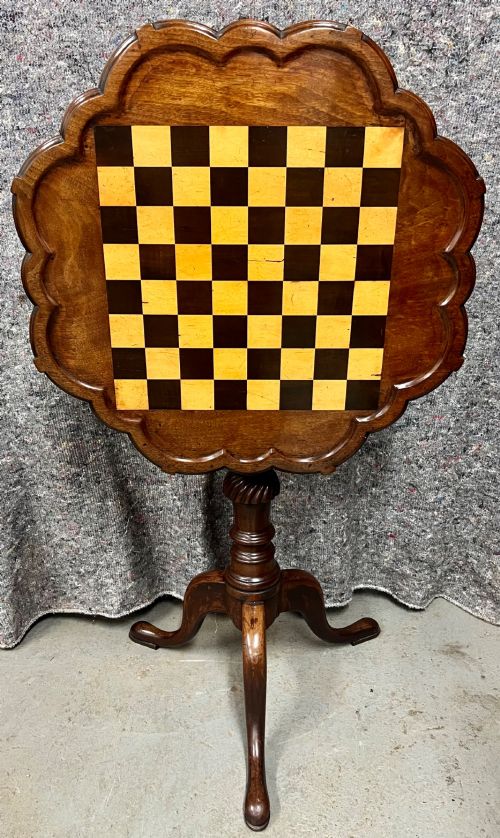
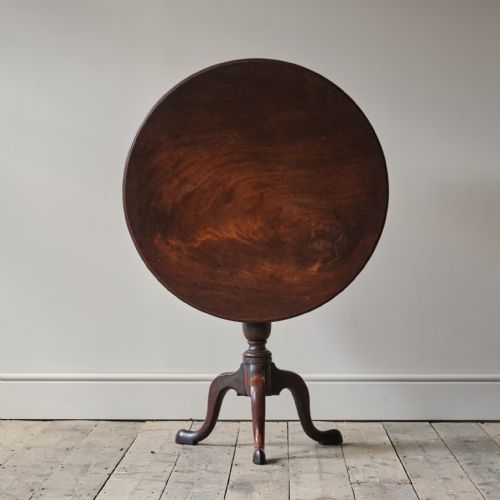
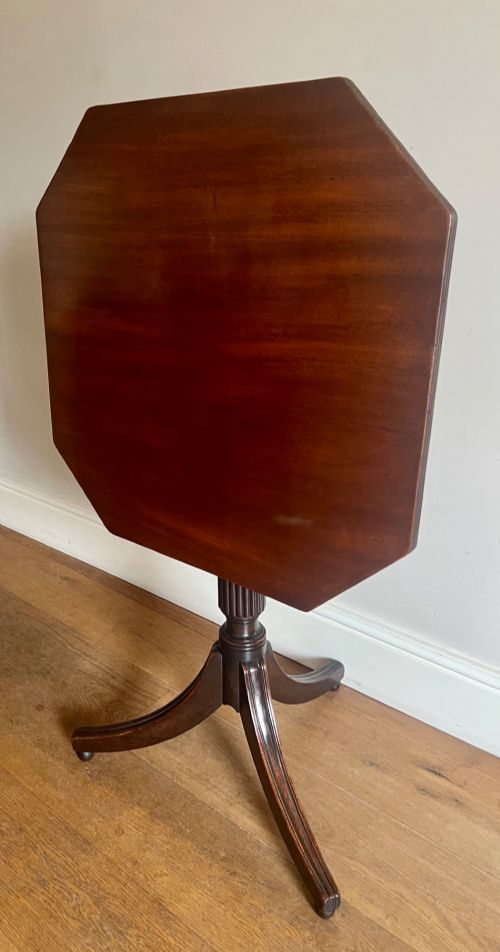
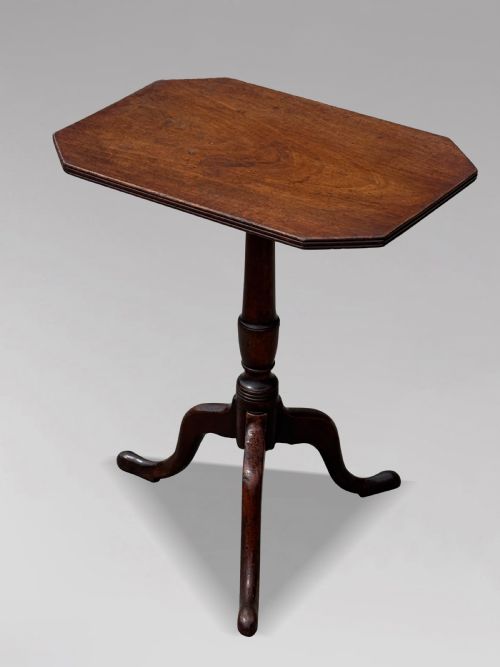
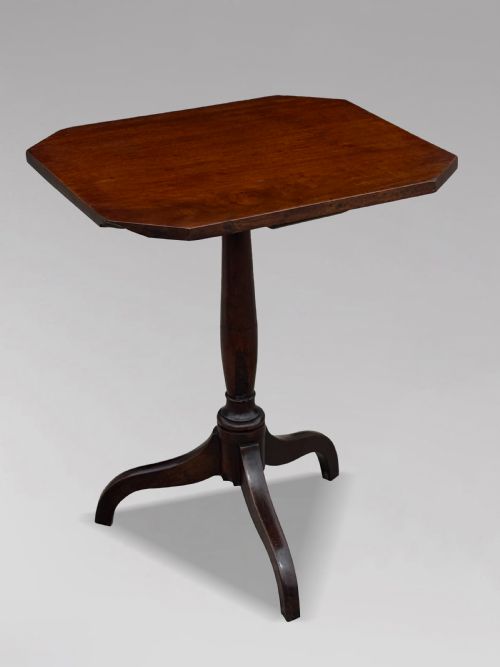
A george iii mahogany tilt top table is typically encountered as a tripod table designed for tea, wine, or general occasional use in domestic interiors. These pieces predominantly date from the eighteenth century and the Georgian period, spanning circular tops, piecrust edges, and occasional inlaid chess boards. The form combines a central pedestal with three legs, allowing the timber top to pivot vertically on a catch mechanism.
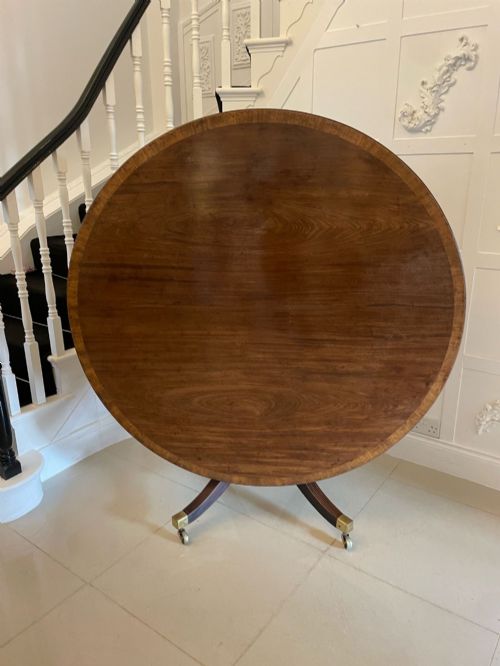
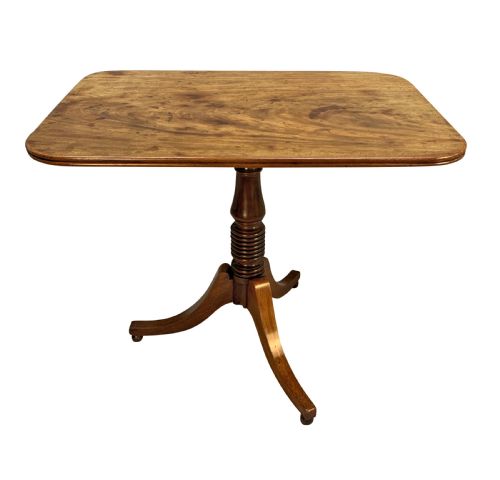
Beyond standard wine and tea tables, larger breakfast or dining variations appear alongside occasional side tables and compact lamp stands. Many examples utilise a birdcage mechanism beneath the surface, permitting the top to both tilt and rotate independently. These tables reflect the shifting social habits of the Georgian period, where furniture required easy reconfiguration within parlours and drawing rooms.
Materials and Construction
Makers relied heavily on solid mahogany, frequently selecting timber with figured grain or distinct single-piece tops for the primary surfaces. Secondary materials such as brass fittings, iron fasteners, and occasional stringing in satinwood or ebonised wood provided structural support and decorative contrast.
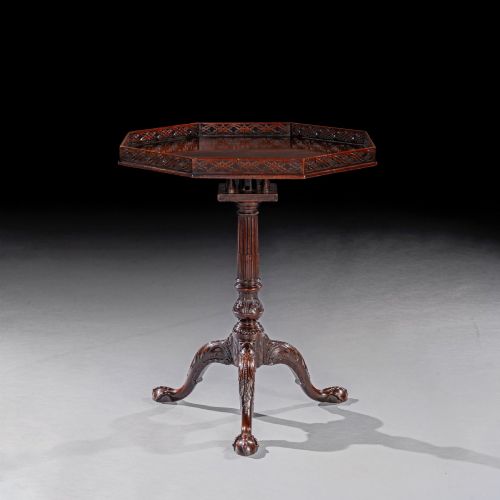
The tripod base construction demanded precise joinery to ensure stability across three splayed legs, often terminating in pad, snake, or claw and ball feet. Table tops were attached to the central pillar via a birdcage block or a snap-top latch, allowing the pivoting action to function smoothly without lateral wobble.
Listings feature mahogany predominantly, alongside occasional accents of satinwood, rosewood, and brass inlay across eighteenth and nineteenth-century periods.
Distinctions in Execution
Quality reveals itself in the handling of the timber and the crispness of any carved details, such as scalloped piecrust edges or acanthus leaves on the knees of the tripod. Superior pieces display carefully chosen mahogany with rich figure and colour, whereas simpler iterations rely on plain timber surfaces without moulded borders.
Mechanical execution distinguishes the workshop standards; a well-fitted birdcage or snap mechanism operates without excessive play or loose joints. The proportion between the diameter of the top and the spread of the tripod legs determines the visual balance and physical stability of the piece.
Gillows
The George III Mahogany Tilt Top Table Glossary
- Tilt-top
- A table mechanism allowing the surface to pivot into a vertical position for storage against a wall. This space-saving design became standard for eighteenth-century dining and tea tables.
- Birdcage
- A timber framework beneath the table top that enables the surface to both rotate and tilt. It consists of small upright spindles held between two parallel plates.
- Piecrust edge
- A raised, scalloped border carved directly from the solid mahogany edge of the table top. It resembles pastry work and prevents items from sliding off.
- Tripod base
- A pedestal support featuring three radiating legs attached to a central pillar. This configuration ensured stability on uneven historical floors.
George III Mahogany Tilt Top Table: Frequently Asked Questions
What was a tilt top table used for?
These tables served flexible roles in Georgian homes, functioning as tea tables, supper tables, or occasional stands. When meals or social gatherings concluded, the top tilted vertically so the furniture could be pushed against the perimeter of the room to clear floor space.
Smaller versions accommodated drinking vessels and candlesticks near seating areas, while larger variations supported communal breakfast dining or card games. Their portable nature allowed servants to reposition them effortlessly according to the daily routine of the household.
How do I spot an 18th-century table?
Examining the construction methods underneath provides reliable indicators of age, including hand-cut joinery, pegged tenons, and timber shrinkage appropriate to mature hardwoods. Eighteenth-century surfaces often exhibit the deep patina and soft lustre accumulated through generations of polishing.
Hardware elements such as handmade iron screws or brass latches also correspond to period manufacturing techniques. Comparing the proportions of the central pillar and the attachment of the tripod legs helps verify historical authenticity.
Can I use a tripod table daily?
These tables adapt well to modern living as lamp stands, bedside surfaces, or compact coffee tables. Their modest footprint makes them useful in tighter spaces where a rigid four-legged table might overwhelm the room.
Care should be taken to protect the polished mahogany surface from moisture, direct heat, and sharp impacts. Operating the tilt mechanism gently preserves the historical birdcage or snap catch from unnecessary strain.
What is the difference between snap top and tilt top?
The terms often describe the same pivoting function, though minor mechanical distinctions exist in how the top locks into the horizontal position. A snap top typically utilises a spring-loaded wooden catch or brass latch that clicks into place instantly when lowered.
A tilt top governed by a birdcage mechanism relies on a wedge or pin inserted through the frame to secure the surface. Both designs achieve the same primary objective of allowing the table to fold flat for storage.