

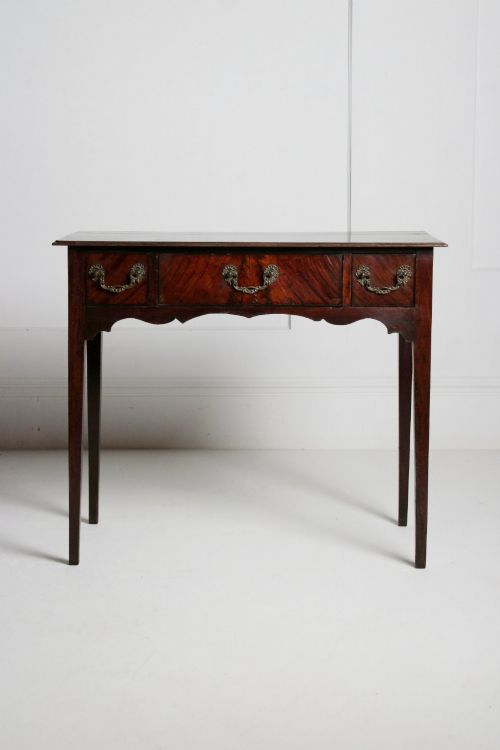


George III Lowboy
A george iii lowboy brings compact eighteenth-century proportion and fitted drawer storage to a hallway or drawing room.
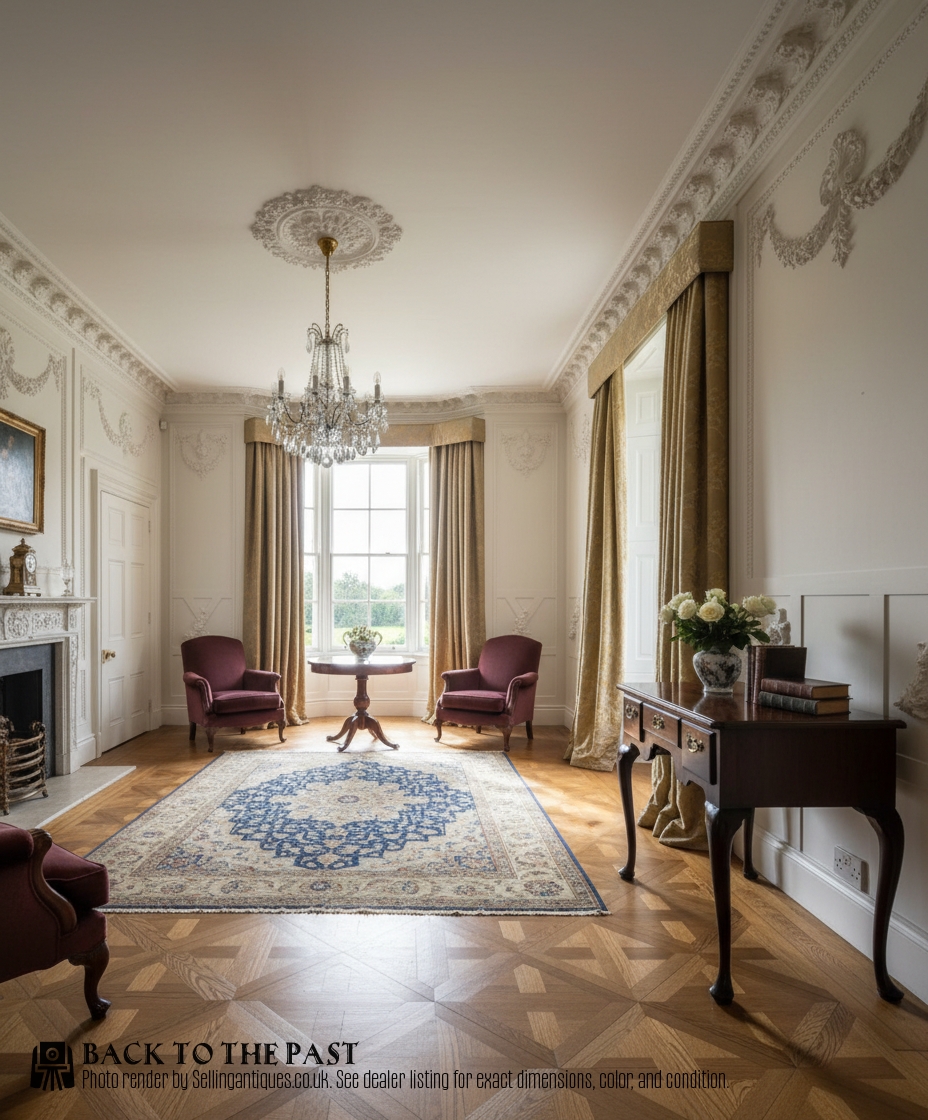
George III Lowboy
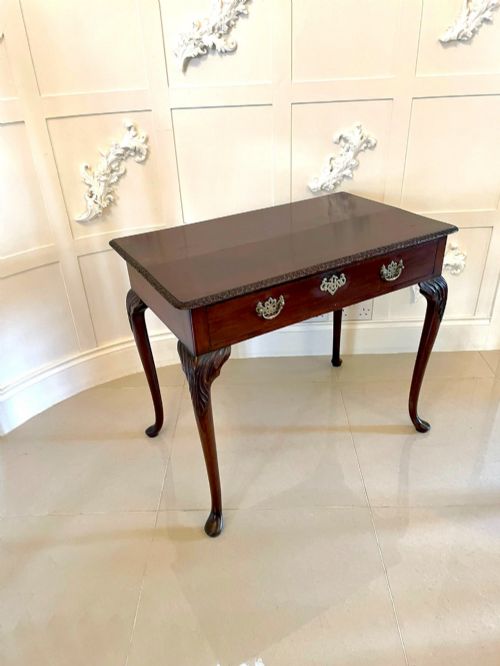
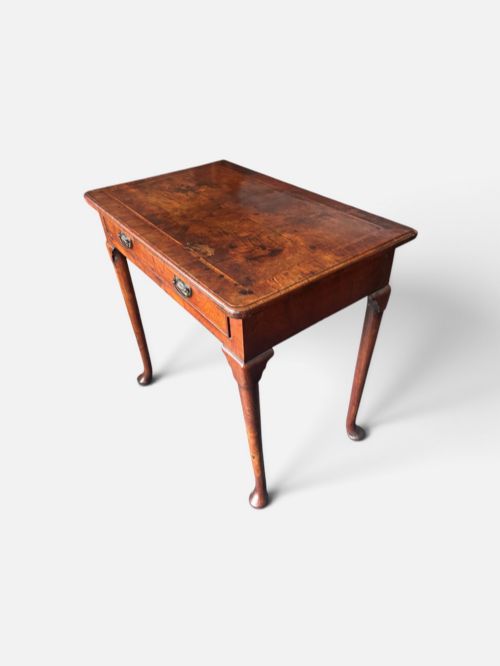
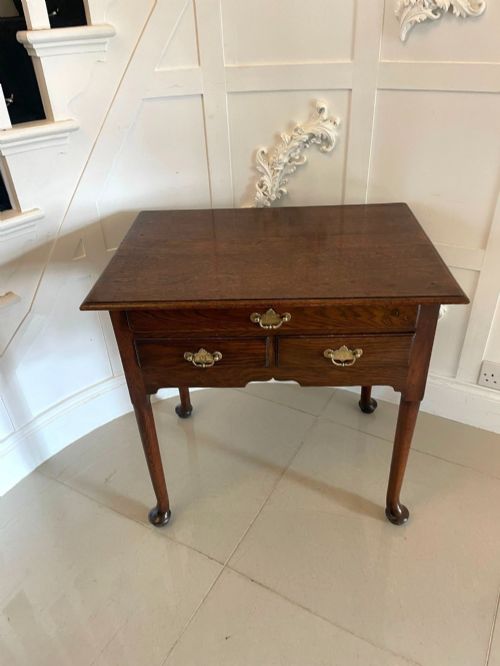
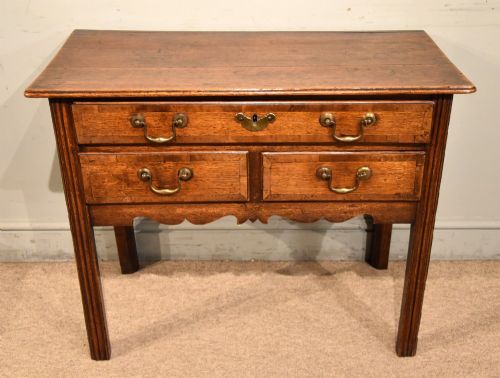
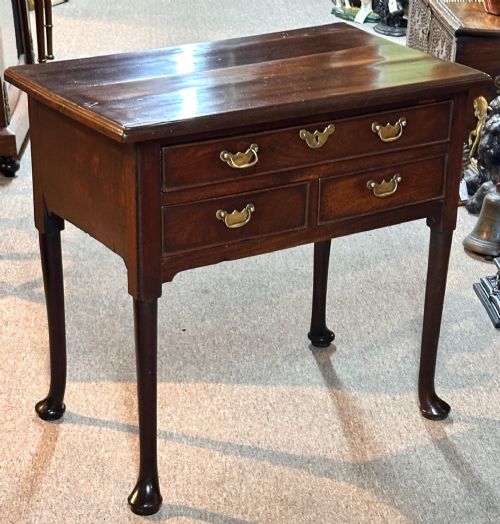
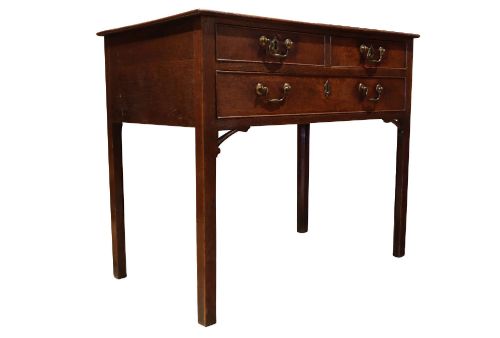
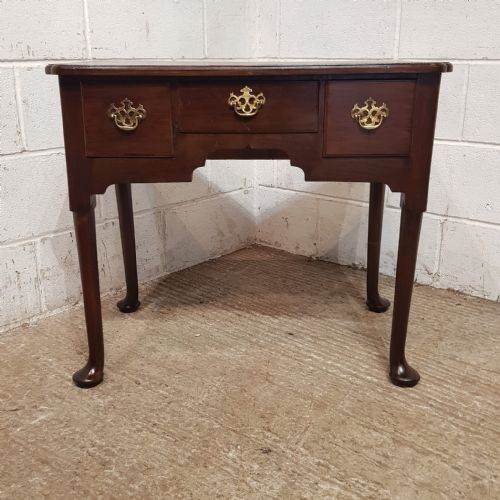
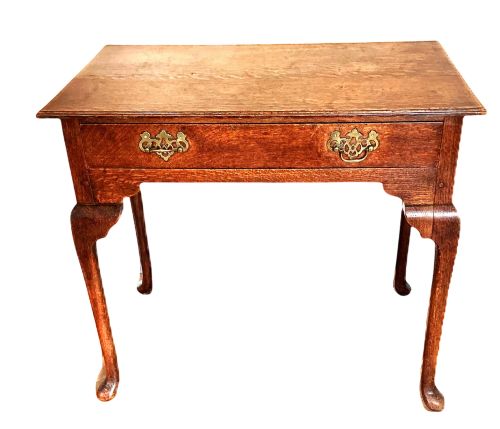
A george iii lowboy is a small side table designed with one to three drawers beneath the top, appearing frequently in oak, mahogany, and walnut across the Georgian period and the eighteenth century. These pieces function as occasional tables or dressing surfaces, offering surface display alongside practical concealed storage.
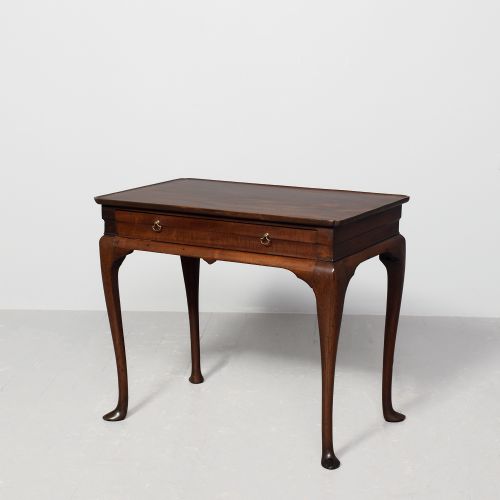
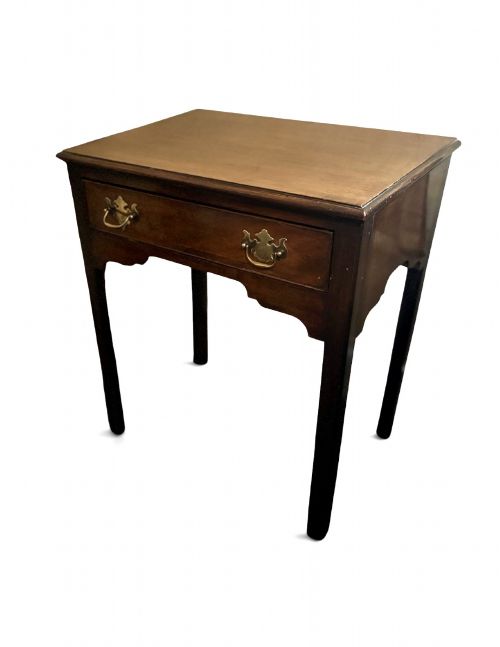
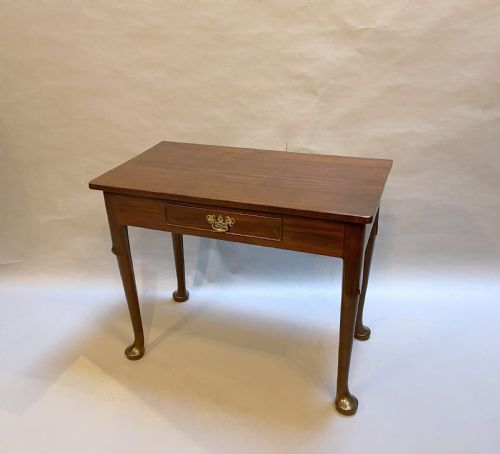
The versions most commonly met on this page are constructed from oak or mahogany, often presenting a rectangular top above a frieze fitted with drawers. Many examples stand on cabriole legs, while others utilise straight legs consistent with the stylistic shifts recorded in these listings.
Materials and Construction
Cabinetmakers constructed these tables using solid timbers such as oak, mahogany, and walnut, frequently selecting pine for internal drawer linings and secondary framing components. Selected examples incorporate burr walnut veneers or crossbanding in mahogany and walnut to decorate the primary surfaces.
Joinery techniques involve dovetailed drawer construction and mortise and tenon frames, occasionally supported by brass hardware including handles and escutcheons fixed to the drawer fronts.
Some tables feature secret drawers hidden behind decorative mouldings, waiting for a lost key to reveal their contents.
Gradations in Quality
Quality rests in the selection of timber figure, such as highly figured mahogany, burr walnut, or quarter-sawn oak, coupled with the crispness of the joinery and the retention of original brass drawer furniture. Tables exhibiting refined proportions, crossbanded borders, or carved details like ball and claw feet represent the upper tier of the range.
Simpler country pieces constructed from solid plain oak sit at the other end of the scale, relying on utility and honest proportion rather than decorative veneers or elaborate leg carving.
The George III Lowboy Glossary
- Lowboy
- A low side table with drawers, commonly used as a dressing table or side table during the eighteenth century.
- Crossbanding
- A narrow strip of veneer applied to the border of a furniture top, laid with the grain running perpendicular to the centre panel.
- Cabriole leg
- A furniture leg that curves out in a convex arc and tapers inward in a concave arc, frequently terminating in pad or ball and claw feet.
- Escutcheon
- A protective metal plate surrounding the keyhole of a drawer or cabinet door.
- Serpentine top
- A furniture surface featuring a wavy outline with a convex centre flanked by concave curves.
George III Lowboy: Frequently Asked Questions
Where should I place a lowboy?
These compact tables fit well in narrow hallways, as lamp tables in living rooms, or beneath mirrors in bedrooms where surface space is limited.
The shallow depth allows them to sit against walls without obstructing pathways while providing useful drawer storage.
How do I distinguish oak from mahogany examples?
Oak pieces typically display a pronounced open grain with visible medullary rays, often carrying a warm brown tone associated with country furniture.
Mahogany and walnut versions present tighter grain patterns and deeper red-brown hues, frequently chosen for formal urban parlours.
Did all lowboys have drawers?
The vast majority featured a single long drawer or a configuration of three drawers arranged beneath the main surface.
This fitted storage distinguishes the form from standard side tables of the same period.
What is the difference between a lowboy and a chest of drawers?
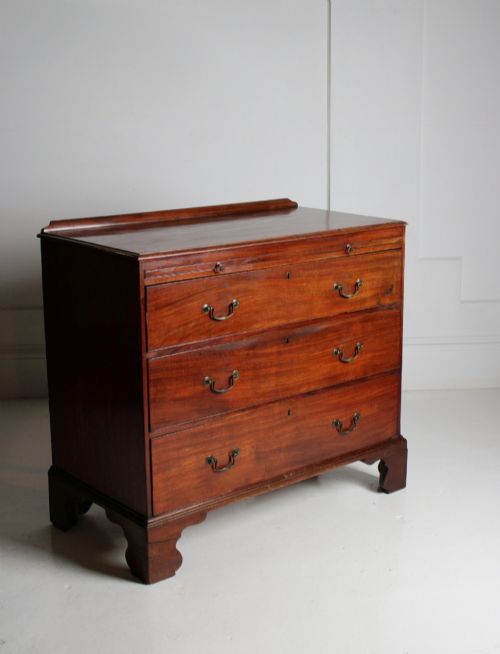
A lowboy is constructed as a table on raised legs with one to three shallow drawers built into the frieze.
A chest of drawers is a tall carcase piece stacking multiple full-depth drawers from top to bottom.