
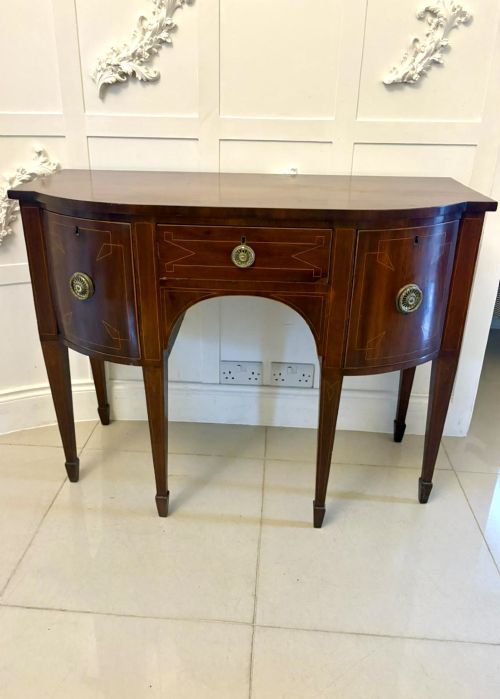
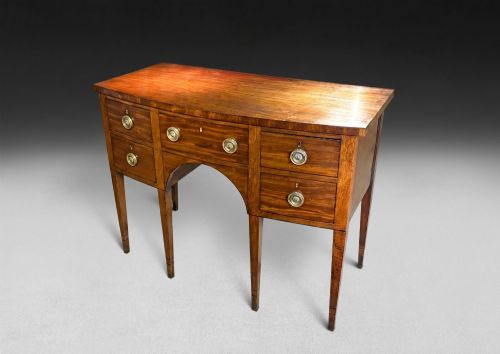
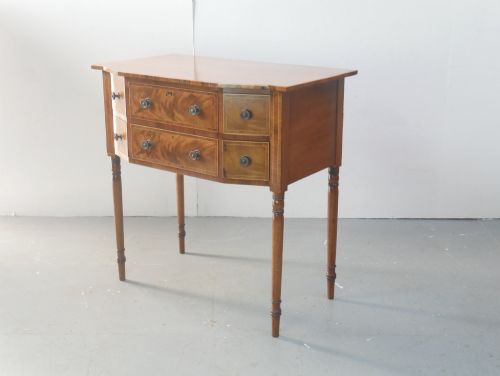
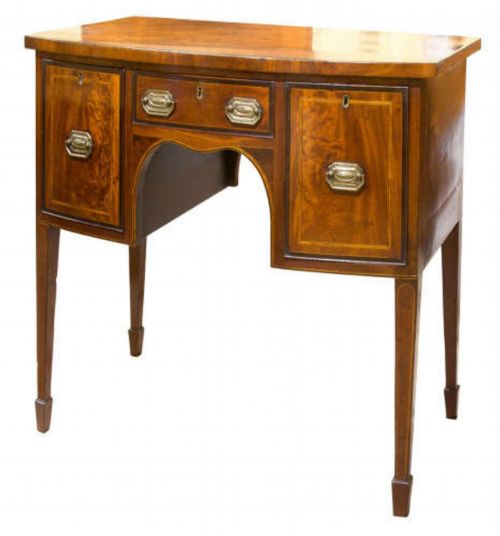


George III Bowfront Sideboard
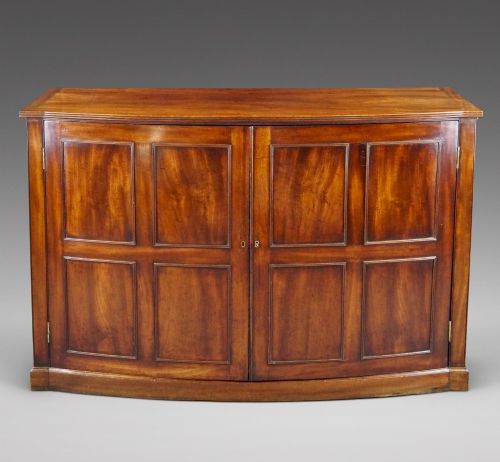
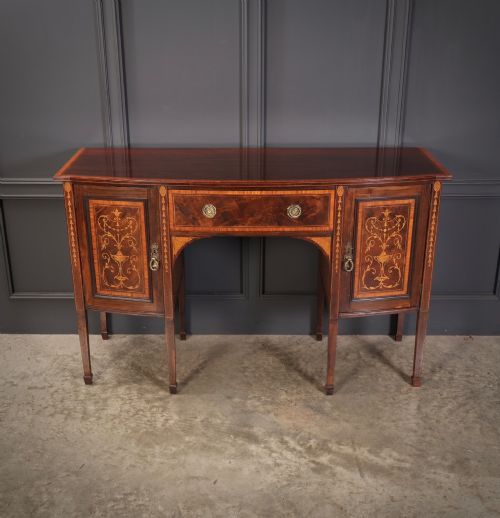
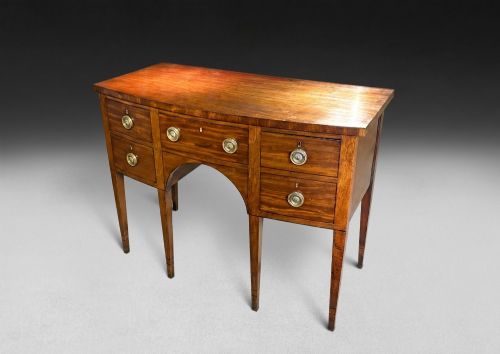
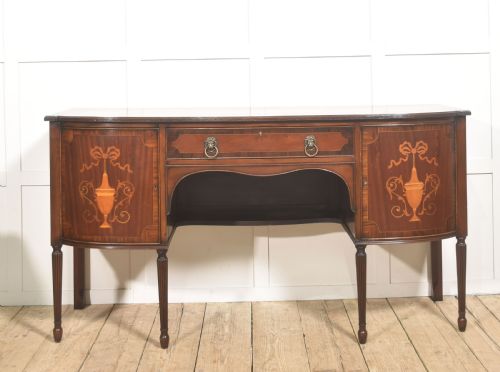
A george iii bowfront sideboard brings sculptural elegance to a dining room, offering deep curved storage crafted in rich figured woods.
George III Bowfront Sideboard
When you search for a george iii bowfront sideboard, you look for a commanding dining room piece defined by a sweeping, convex front facade. The pieces seen here span genuine eighteenth-century origins as well as later revival interpretations from the nineteenth and early twentieth centuries.
Most examples you meet on this page rely on the classic proportions of the Georgian period, featuring a curved central top above drawers and flanking cupboards. These dining items evolved from simple serving tables into sophisticated cabinetry designed to hold silver, linen, and wine.
Makers utilised the curved profile to soften the rigid geometry of dining spaces while providing practical storage. The format remains a cornerstone of traditional interior decoration, prized for utility and graceful line.
Materials and Construction
The primary timber across these pieces is mahogany, often selected for strong figure, flame grain, or deep natural warmth. Cabinetmakers paired this foundational wood with contrasting stringing and banding in satinwood, boxwood, and purpleheart to define the curved edges.
Construction relied on solid oak drawer linings and precise dovetail joints to support the heavy loads of tableware. Inlaid details, botanical marquetry, and delicate brass hardware were applied by hand to elevate the finished facade.
George III Bowfront Sideboard Retail Price Guide 2026
Typical asking prices for george iii bowfront sideboard among the pieces listed under this phrase on Sellingantiques today, from the lower quarter to the upper quarter. They describe what is for sale here now, not the wider market.
The inventory records pieces spanning the eighteenth century through to revival movements in nineteen-ten, utilising mahogany, satinwood, and purpleheart.
Judging Quality
The distinction between ordinary utility items and exceptional pieces rests upon timber selection and the fluidity of the bow curve. Superior examples display uninterrupted flame mahogany across the drawer fronts, matched symmetrically down the centre.
Subtlety in inlay work separates fine cabinetmaking from mass production, with crisp boxwood stringing executed without gaps. Original brass handles, clean drawer linings, and retained colour indicate superior preservation over the centuries.
The George III Bowfront Sideboard Glossary
- Bowfront
- A convex furniture front that curves outward in the centre, softening room geometry and increasing internal storage capacity.
- Flame mahogany
- A decorative veneer cut from the branch junction of a mahogany tree, showing a distinctive flickering flame pattern.
- Stringing
- Thin inlay lines of contrasting light wood, such as boxwood, embedded into the darker mahogany surface to create borders.
- Purpleheart
- A dense, durable exotic timber utilised sparingly for contrasting bands and decorative highlights.
- Marquetry
- Elaborate decorative patterns formed by fitting together thin veneers of various coloured woods.
George III Bowfront Sideboard: Frequently Asked Questions
Where did they place these sideboards?
These pieces traditionally stood against the dining room wall, positioned near the dining table to hold serving dishes, cutlery, and wine decanters during long meals.
Today, they function equally well in entrance halls or large living spaces where generous surface area and concealed storage are required.
How do I spot a later revival piece?
Revival pieces often feature standardised machine-cut dovetails and modern secondary timbers hidden inside the drawer construction, unlike eighteenth-century originals.
Examining the underside and drawer interiors reveals the tool marks and ageing characteristics distinct to the nineteen-hundreds.
What is boxwood inlay?
Boxwood inlay involves small strips of pale, dense boxwood inserted into grooves cut into the darker mahogany cabinet frame.
This technique creates sharp geometric borders that accentuate the curved shape of the bowfront.
How should I care for the surface?
Protect the antique mahogany finish by avoiding direct sunlight and maintaining stable room humidity to prevent veneer cracking.
Occasional application of traditional beeswax nourishes the timber and preserves the depth of the grain.