
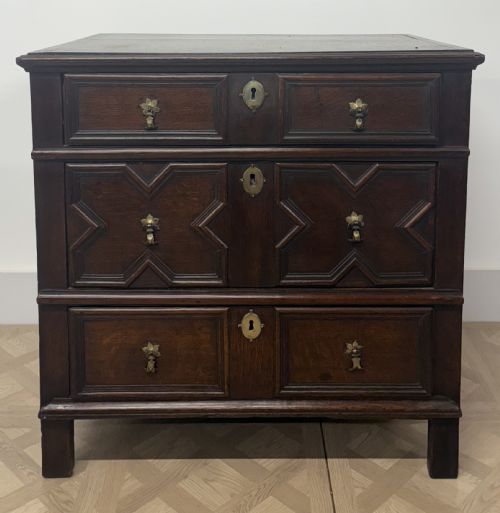
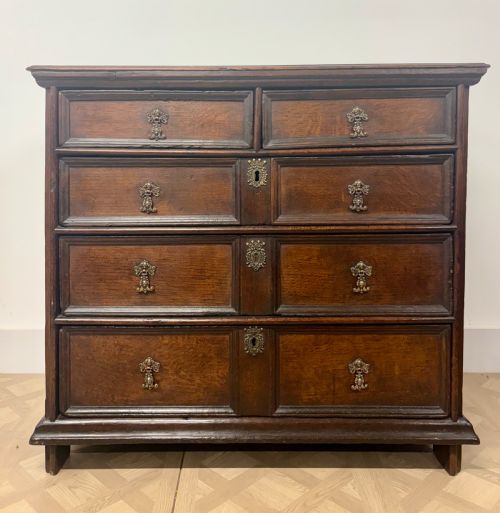
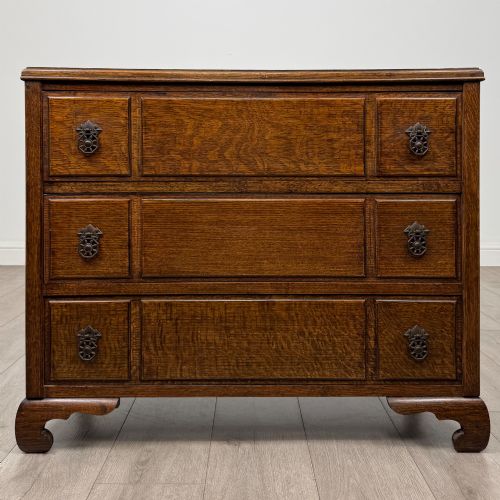
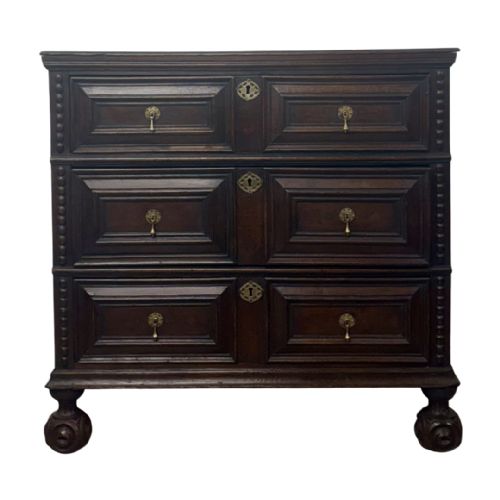
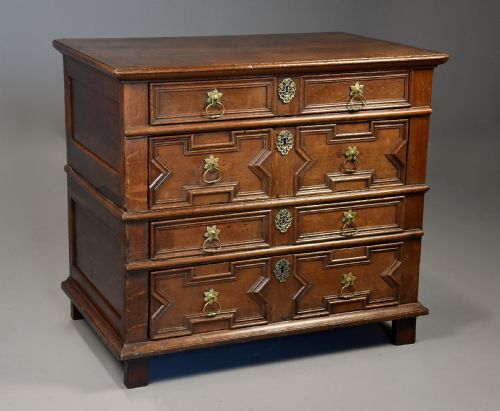
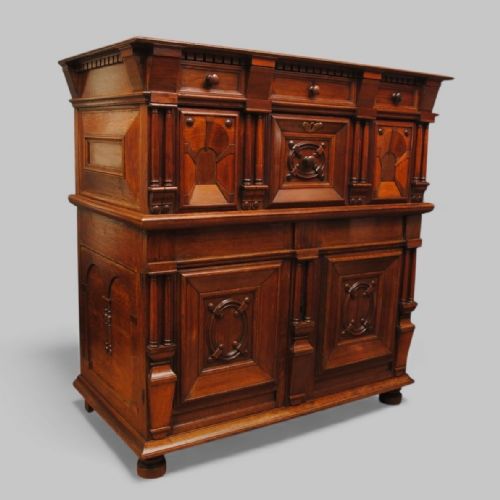


Geometric Panelled Oak Chest
A geometric panelled oak chest brings seventeenth-century craftsmanship directly into a room, offering sturdy storage anchored by bold applied mouldings.
Geometric Panelled Oak Chest
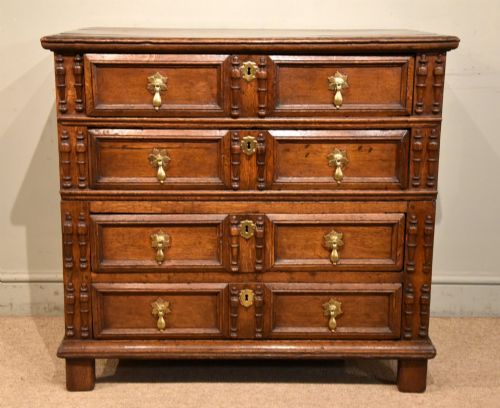
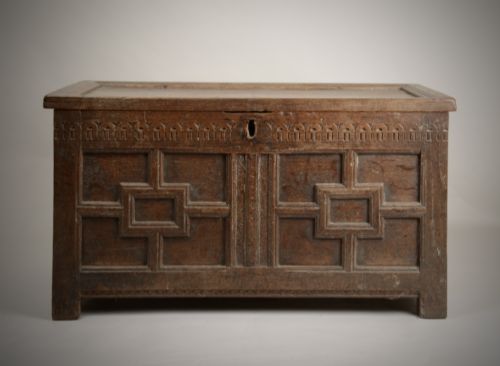
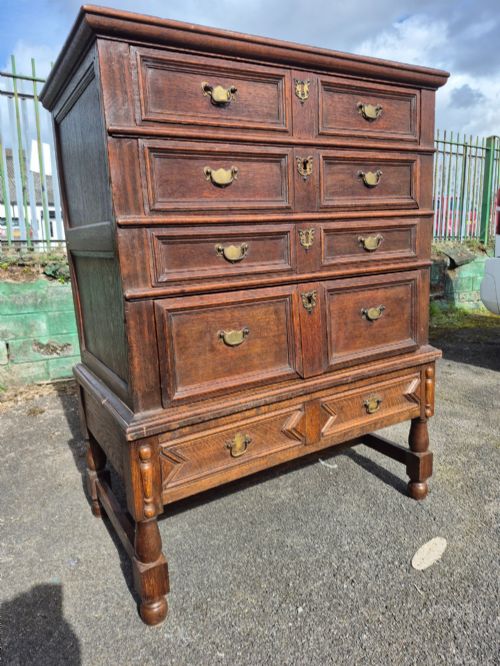
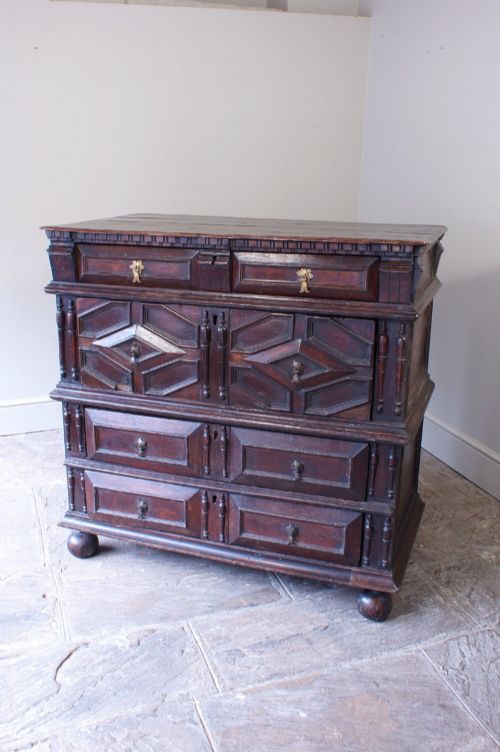
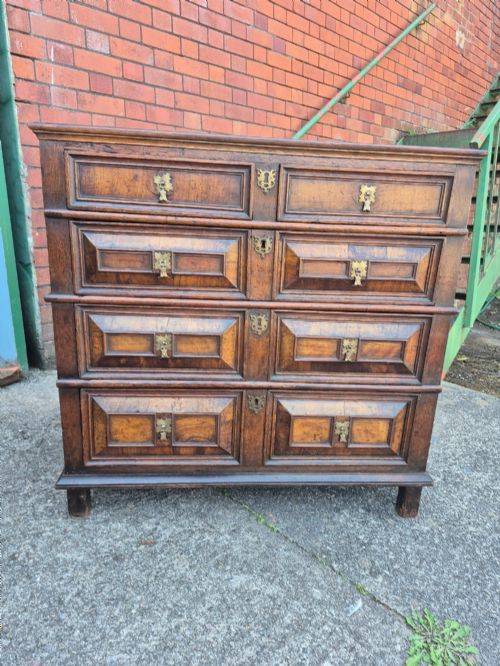
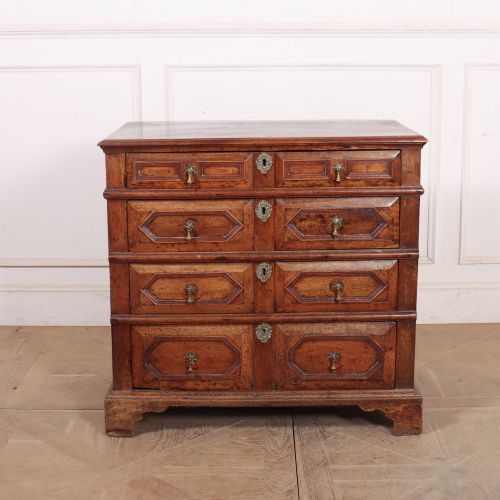
A geometric panelled oak chest unites practical storage with the decorative joinery characteristic of the late seventeenth century, particularly the Charles II and William and Mary periods. These pieces appear primarily as chests of drawers, mule chests, or coffer forms featuring structured facades.
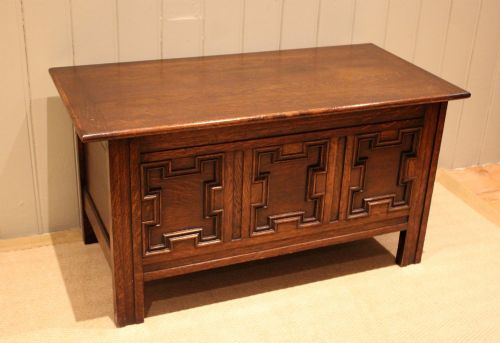
The layout relies on distinct frame-and-panel construction where raised or applied geometric shapes create depth across the front. Alongside seventeenth-century examples, the selection includes later revivals from the twentieth century executed in similar dark timber.
Originating mostly from English workshops, these items serve as both functional furniture and historical anchors for an interior. The form ranges from simple two-part chests on stands to robust mule chests fitted with lower drawers.
Material Depth and Joinery
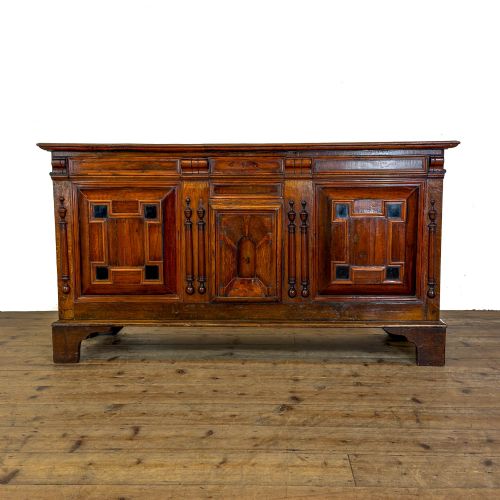
The distinction between tiers rests upon the crispness of the applied geometric mouldings and the complexity of the timber selection. Pieces that incorporate contrasting woods like walnut, fruitwood, and snakewood alongside oak demonstrate greater ambition than monochrome examples.
Surface preservation defines the upper tier, where natural ageing produces a faded, rich patina over the oak grain. The integrity of the original frame-and-panel joints and the retention of period brass hardware further separate standard utilitarian chests from finer workshop productions.
The listings feature seventeenth-century and later oak chests utilising walnut, fruitwood, and snakewood for geometric panel decoration.
The Geometric Panelled Oak Chest Glossary
- Geometric moulding
- Applied strips of wood arranged in repeating shapes across a drawer front or panel to create a three-dimensional pattern. This technique defines the visual style of late seventeenth-century case furniture.
- Mule chest
- A storage chest fitted with one or more drawers at the base beneath the main compartment. It bridges the transition between a traditional coffer and a full chest of drawers.
- Frame and panel
- A method of construction where a sturdy outer framework holds a thinner central board loosely in a groove. This allows the wood to move with humidity changes without splitting.
- Patina
- The deep sheen and surface coloration developed by wood over centuries of handling, exposure to light, and polishing. It marks the authentic passage of time on seventeenth-century oak.
- Two-part chest
- A modular chest of drawers built in distinct upper and lower sections to ease transport. This format frequently rests on a low stand or short legs.
Geometric Panelled Oak Chest: Frequently Asked Questions
How do I date a geometric panelled oak chest?
Dating relies on examining the construction methods, handle hardware, and timber combinations present in the carcass. Seventeenth-century examples typically display hand-riven oak panels and pegged joints alongside applied walnut or fruitwood mouldings.
Later twentieth-century Jacobean revival pieces often show machine-cut precision and standardised internal fixings. Comparing the drawer linings and backboards to known period examples helps confirm the age of the piece.
Where should I place a geometric oak chest in my home?
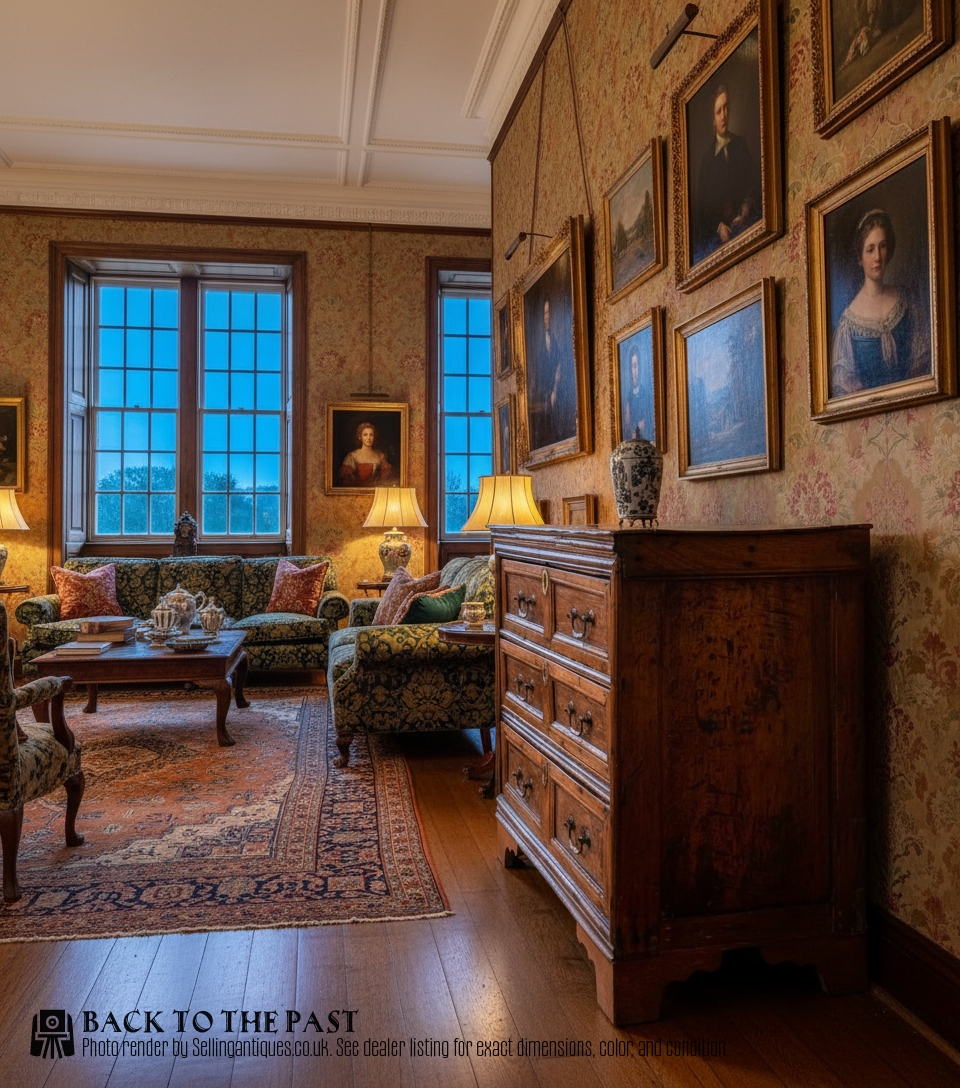
These robust pieces function well in hallways, living rooms, or bedrooms as statement storage units. Their strong linear facades complement both traditional interiors and modern minimalist spaces.
Keep the chest away from direct heat sources and strong sunlight to protect the dry oak timber and prevent the applied geometric mouldings from warping or shrinking.
What is the difference between a coffer and a chest of drawers?
A coffer opens from the top via a hinged lid, serving as a primary box for linens and household goods. A chest of drawers utilises horizontal sliding drawers accessed from the front, reflecting a later development in domestic storage.
Many mule chests combine both forms by placing drawers beneath a traditional top-opening coffer compartment.
How do I care for antique oak furniture?
Maintain the surface by applying occasional coats of traditional beeswax to nourish the dry oak and preserve the natural sheen. Avoid silicone-based sprays that can penetrate the grain and damage the historic finish.
Control the room humidity to ensure the multi-wood geometric decorations and applied mouldings remain stable over time.