

Vintage Oak Commode Drawers
These vintage oak commode drawers offer practical storage grounded in sturdy timber, combining historic utility with enduring design.
Vintage Oak Commode Drawers
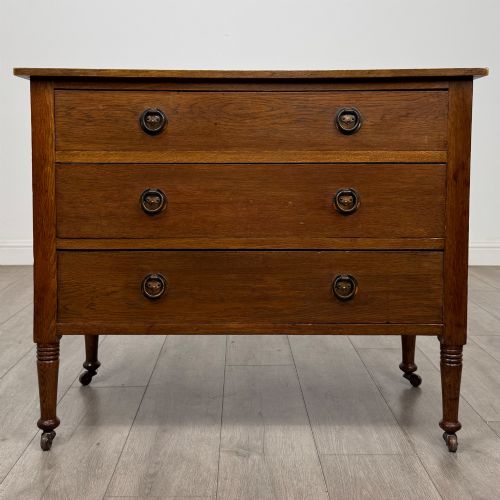
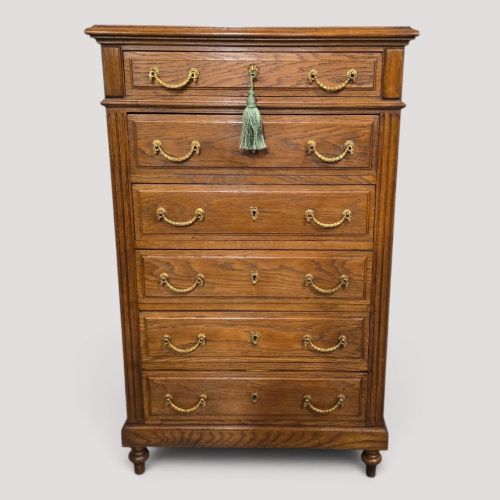
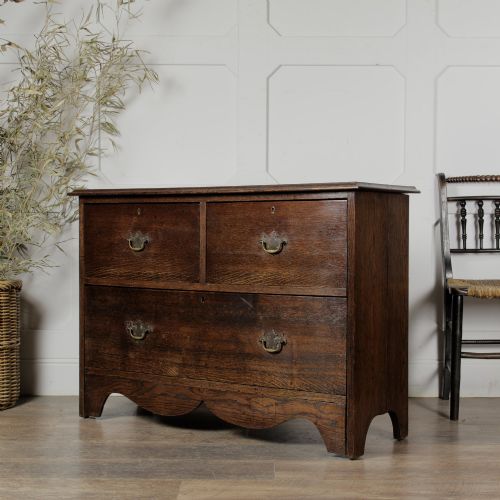
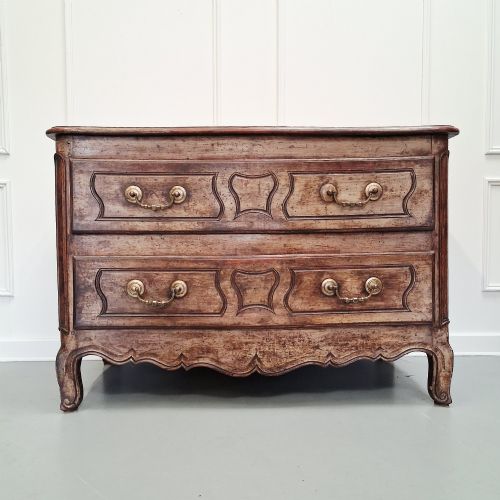
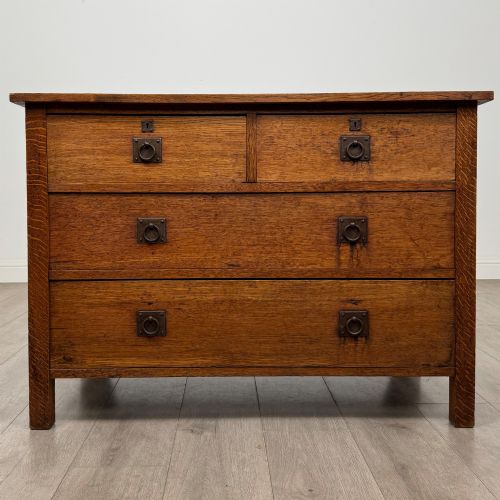
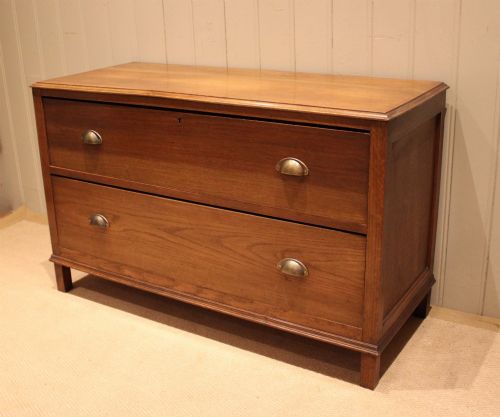
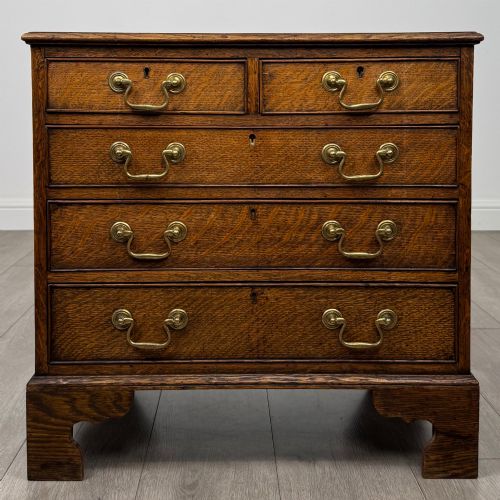
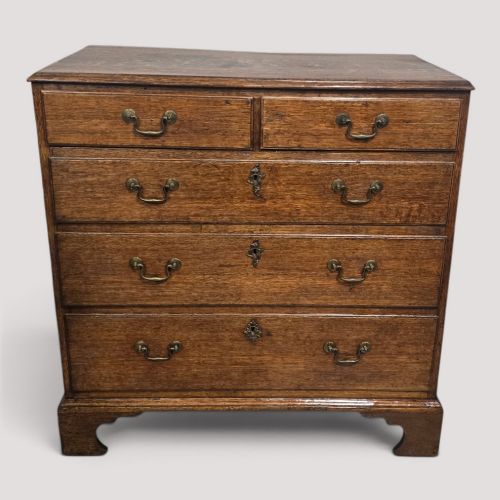
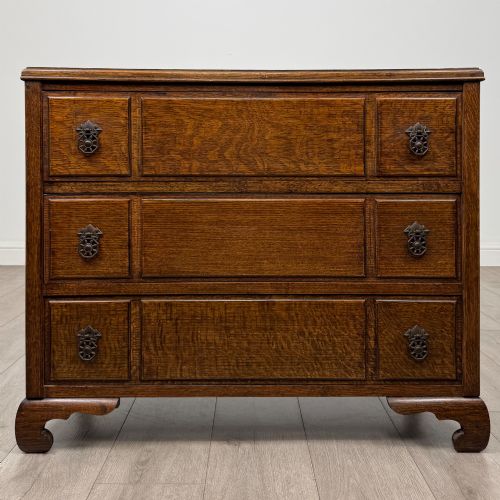
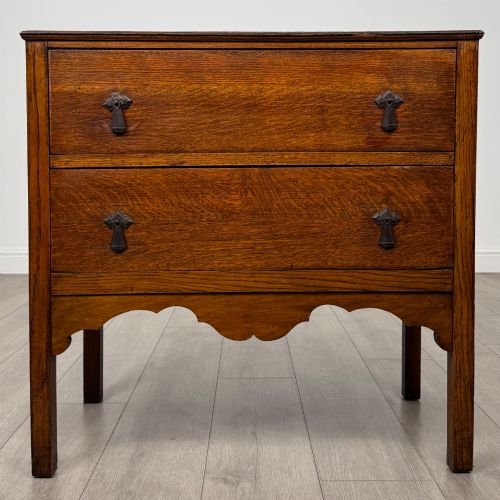
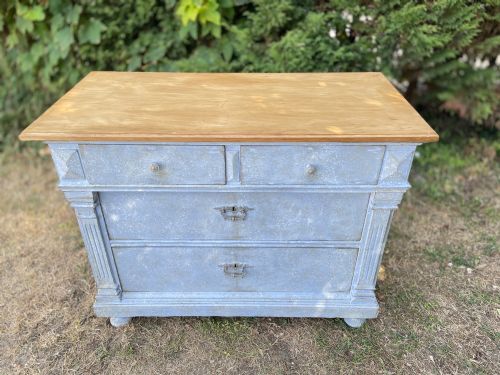
You are most likely to meet Edwardian and early twentieth-century oak chests of drawers on this page, alongside various French carved and bleached oak commodes. These items serve as functional bedroom or living space furniture, offering multiple drawers for storage while displaying the distinct grain and colour of oak.
What varies in quality
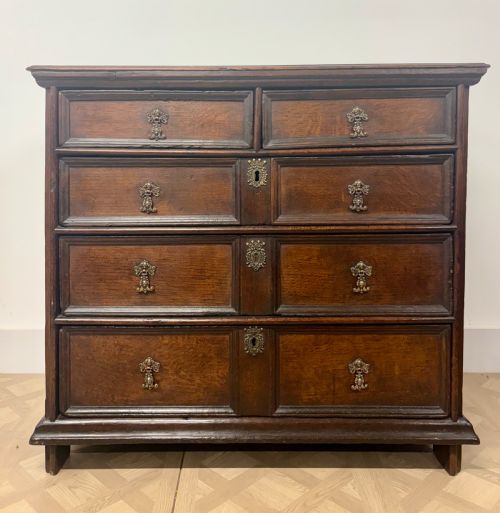
Quality differences stem from the selection of timber, the crispness of carved ornamentation, and the integrity of the original construction. Pieces featuring finely figured grain, substantial solid oak thickness, and well-executed stylistic details such as Georgian proportions or French provincial carving sit at the higher end.
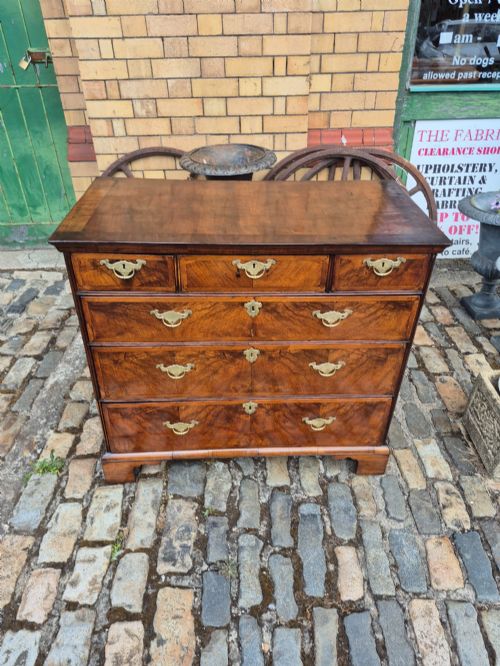
Listings feature oak alongside walnut, mahogany, marble, and brass, spanning periods from the 17th century through the Edwardian era.
The Vintage Oak Commode Drawers Glossary
- Commode
- A low chest of drawers or cabinet, often of French origin. These pieces typically stand on short legs and provide enclosed storage for domestic use.
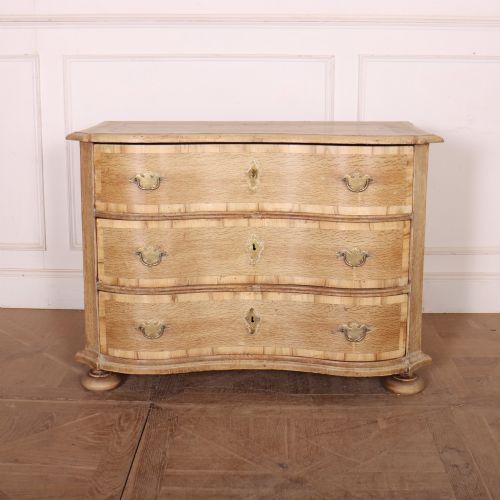
- Bleached oak
- Timber treated to lighten its natural tone, commonly found on twentieth-century French commodes and bedside cabinets. This finish creates a paler, scrubbed appearance.
- Carcase
- The main structural body or frame of a chest of drawers, excluding the drawers themselves. It provides the foundational support for the entire piece.
- Secret drawer
- A concealed compartment built into the upper section of certain chests, often disguised within the moulding. It requires a specific release mechanism to open.
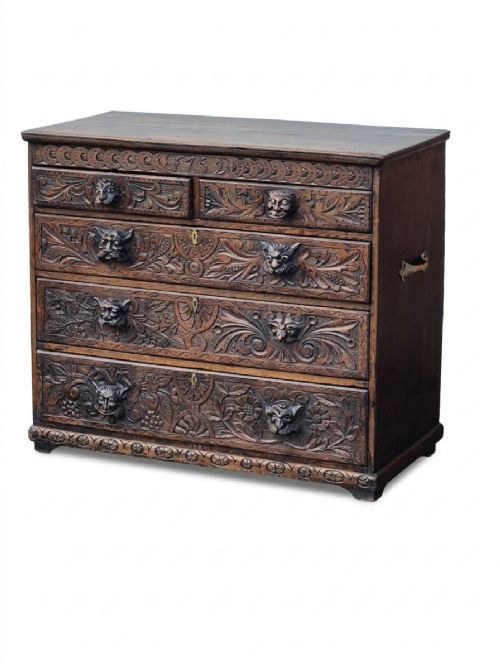
- Green Man
- A sculptural architectural ornament depicting a human face entwined with foliage or vines. This motif appears carved into the wood on specific Victorian and revival pieces.
Vintage Oak Commode Drawers: Frequently Asked Questions
How do I date an oak chest?
Dating relies on examining construction techniques, drawer linings, and overall stylistic proportions. Earlier pieces from the seventeenth and eighteenth centuries often display hand-cut dovetails and pegged joints.
Later Edwardian and twentieth-century examples utilise more standardised machining while reflecting the revival styles popular during their respective decades.
Where should I place a commode?
These pieces function well in bedrooms as primary storage chests or beside beds as low cabinets. Their sturdy timber construction also suits hallways and living rooms as side storage units.
Ensure placement avoids direct heat sources and strong sunlight to protect the oak timber and any applied surface finishes.
Are marble tops original?
Marble tops appear frequently on French commodes and washstands dating from the late nineteenth and early twentieth centuries. They provided a durable, water-resistant surface for washing and grooming routines.
Checking the fit against the wooden carcase helps determine whether the stone matches the period and construction of the base.
How do I clean oak furniture?
Maintain the surface using a soft, dry cloth to remove dust regularly. Avoid silicone-based polishes, which can build up and dull the historic finish of the timber.
Feed dry wood occasionally with appropriate wax to preserve the natural lustre and protect the grain.