
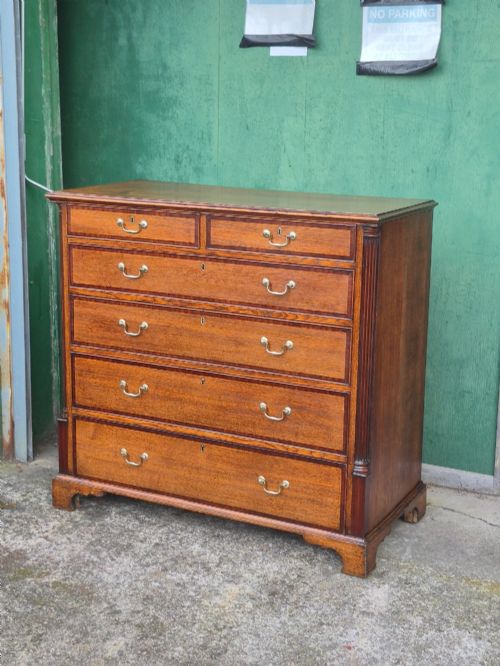
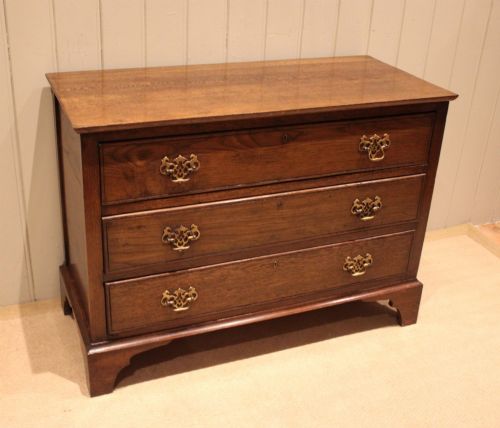
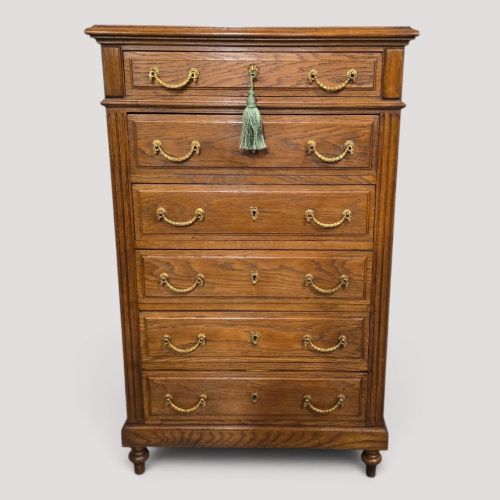
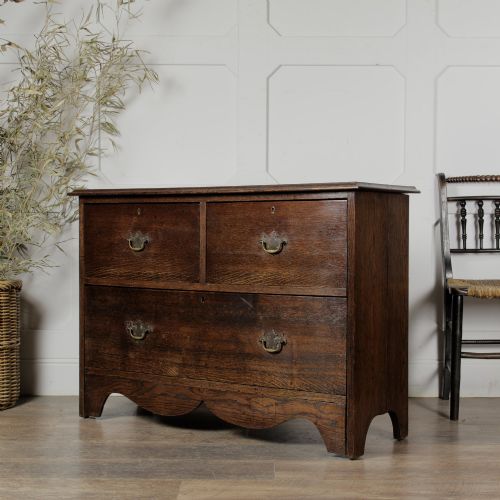
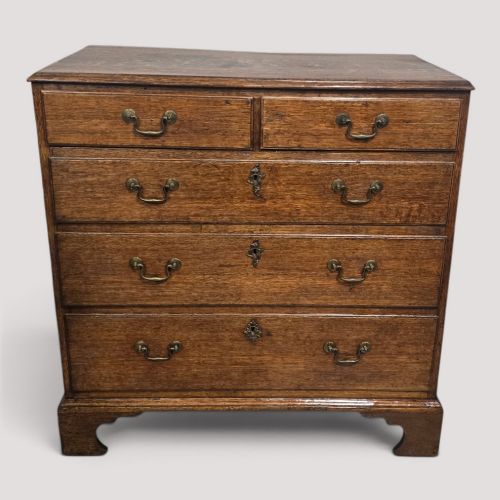
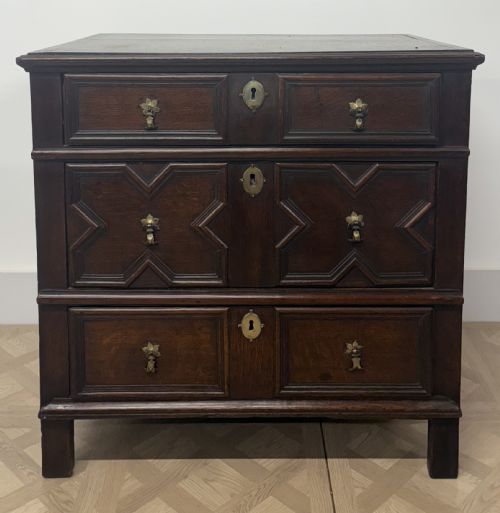
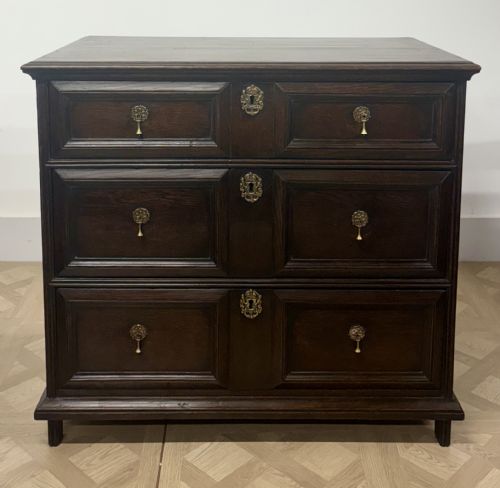
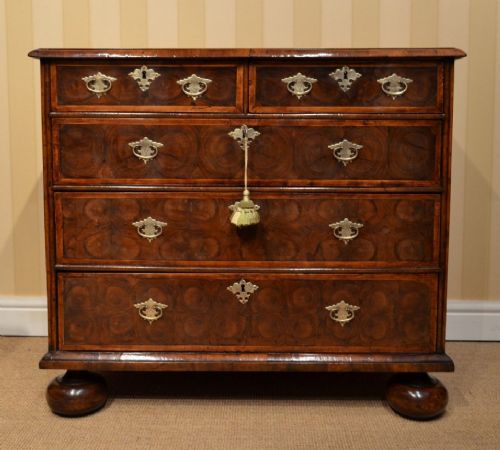
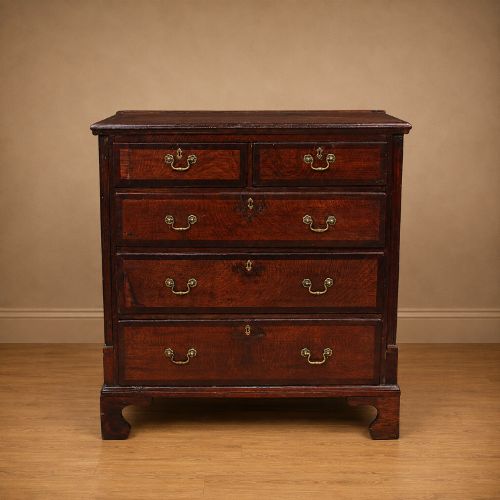
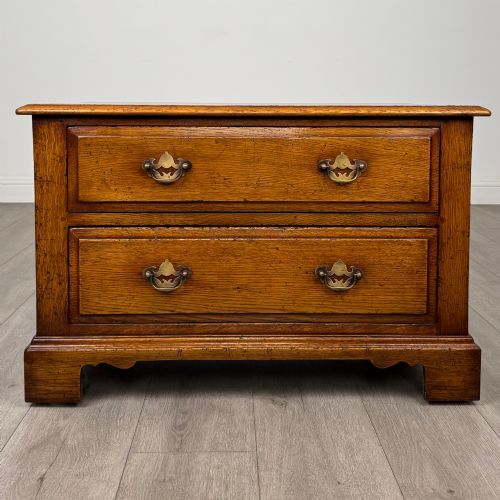
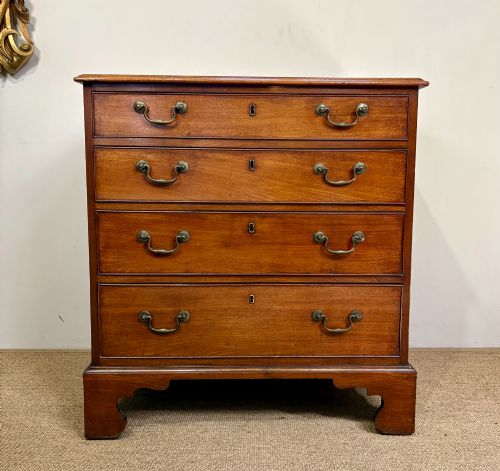
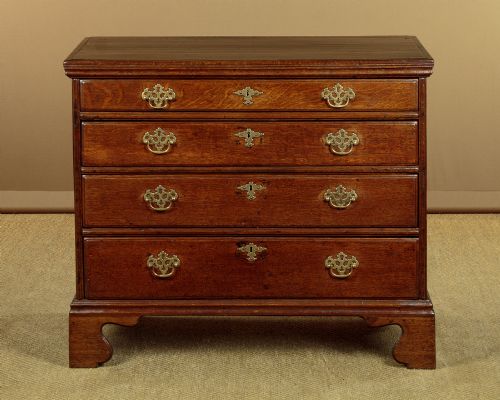
Brass Handle Oak Commode
A brass handle oak commode provides robust storage, anchoring a room with rich timber grain and polished metal hardware.

Brass Handle Oak Commode
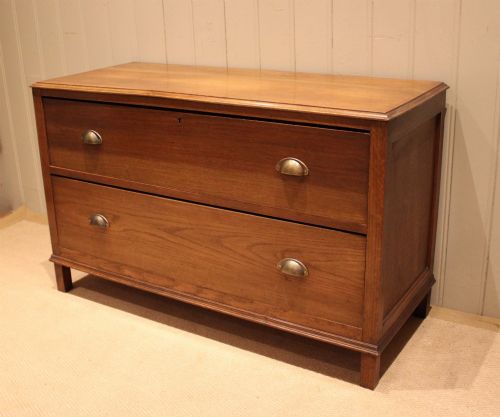
A brass handle oak commode is fundamentally a chest of drawers constructed primarily from timber and fitted with metal pulls. When searching for this phrase, a buyer encounters forms ranging from compact bachelor chests to tall multi-drawer units.
The pieces appearing on this page span several distinct periods, most notably the eighteenth century and the Georgian era, alongside later nineteenth and twentieth-century interpretations. These items function primarily as bedroom or hallway storage.
Makers utilised various regional styles, including French provincial and English country designs. The most frequently met examples display straightforward rectangular silhouettes, while others incorporate serpentine fronts or crossbanded details.
Construction and materials
Craftsmen built these chests using solid oak timbers, frequently employing oak for internal drawer linings as well as external structures. Secondary woods such as mahogany, walnut, and fruitwood appear in crossbanding or decorative inlays.
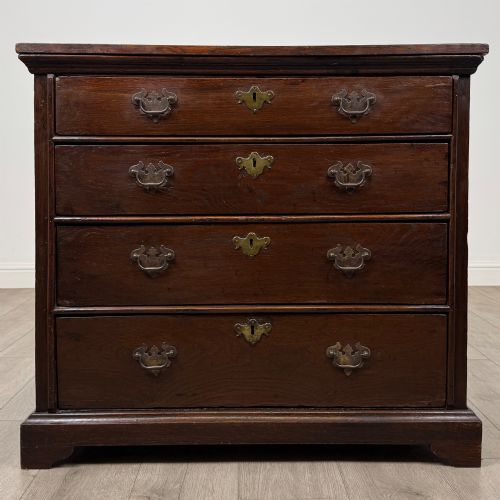
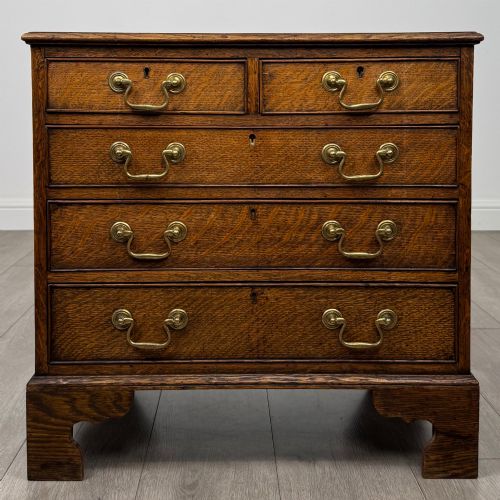
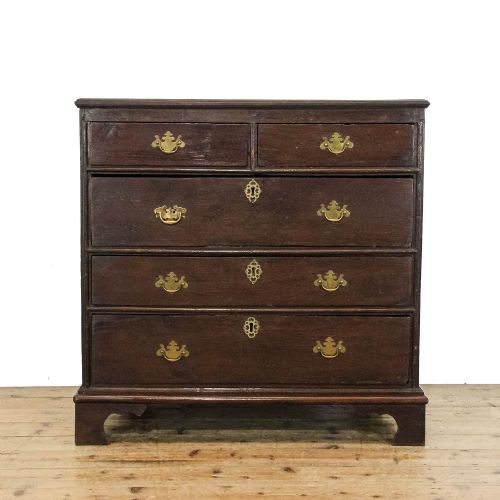
Metalwork played a defining role, with brass drop handles and backplates secured to the drawer fronts. Joinery techniques varied by period, moving from early geometric mouldings and two-part frames to standard dovetail joints on later drawers.
Listings feature oak chests from the seventeenth, eighteenth, and nineteenth centuries, alongside twentieth-century reproductions.
Factors of quality
The standard of a brass handle oak commode rests upon timber selection and the integrity of the original hardware. Pieces featuring figured grain, clean drawer linings, and untouched brass mounts command greater appreciation from collectors.
Construction depth also dictates distinction, where crisp geometric mouldings, precise crossbanding, and well-executed bracket feet separate exceptional examples from simpler utilitarian chests.
The Brass Handle Oak Commode Glossary
- Crossbanding
- A narrow strip of veneer applied perpendicularly to the grain of the drawer front to create a contrasting border.
- Bracket foot
- A simple furniture foot shaped like a bracket, commonly supporting Georgian chests of drawers.
- Oyster veneer
- Slices of branch wood arranged to form decorative circular patterns resembling oyster shells.
- Serpentine front
- A furniture front curved with a convex centre flanked by concave ends.
- Bachelor's chest
- A small, compact chest of drawers featuring a fold-over top used for writing.
Brass Handle Oak Commode: Frequently Asked Questions
Where should I place an oak chest?
These chests suit bedrooms, hallways, or living spaces where substantial timber furniture adds warmth.
Ensure placement avoids direct heat sources to protect the historic wood and brass fittings.
How do I clean brass handles?
Use a soft, dry cloth to remove dust from both the timber surfaces and the metal hardware.
Avoid harsh chemical polishes that might damage the surrounding oak finish.
Are these drawers suitable for daily use?
Solid oak construction provides durable storage capable of handling everyday clothing and household items.
Older drawer runners operate differently from modern mechanisms and benefit from careful handling.
How do I identify a Georgian chest?
Georgian pieces typically display restrained proportions, bracket feet, and distinct timber patination.
Details such as oak drawer linings and original brass hardware help confirm the period.