
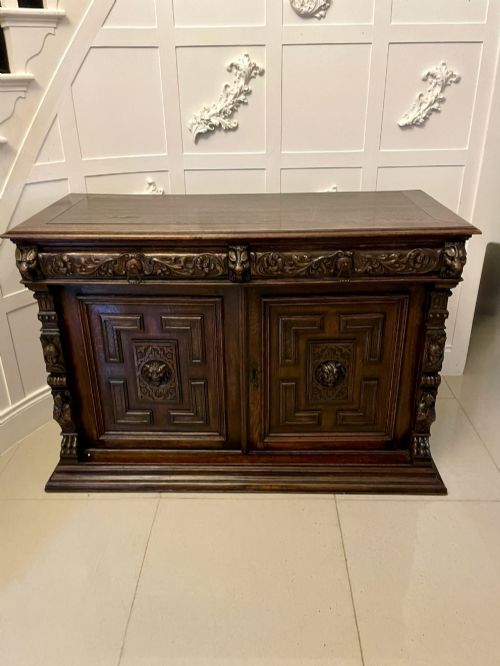
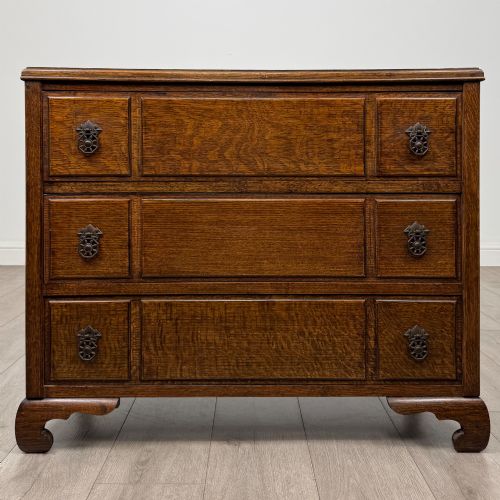
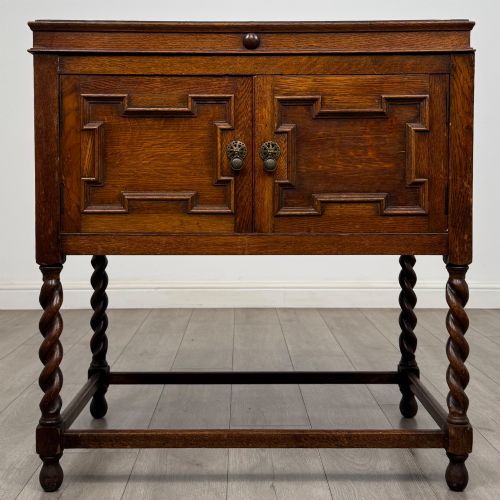
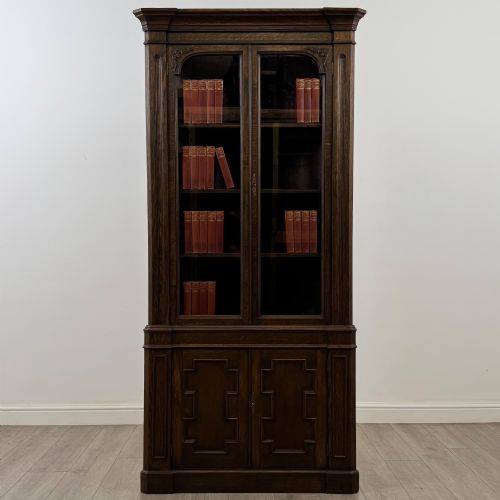
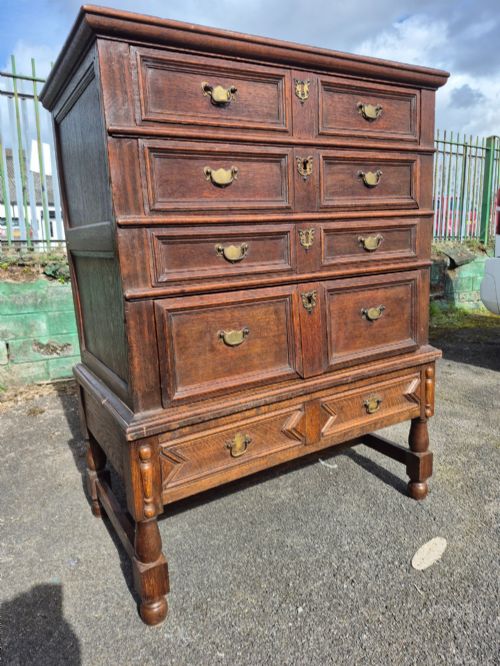
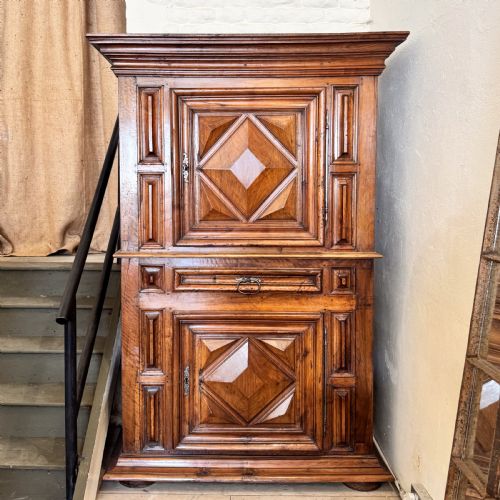
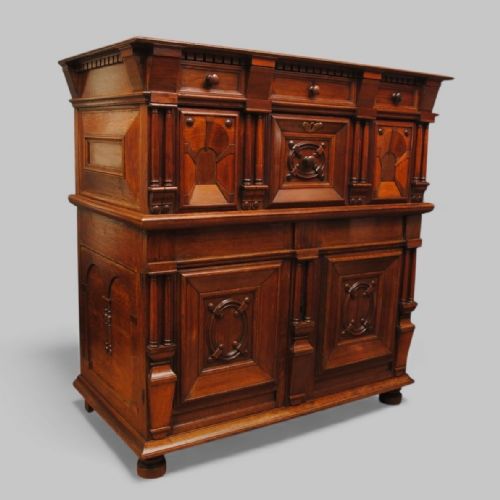


Geometric Panel Cabinet
A geometric panel cabinet brings centuries of timber-framing skill straight into a room, offering robust storage built from rich oak, walnut and fruitwood.
Geometric Panel Cabinet
A geometric panel cabinet encompasses sturdy storage forms such as cupboards, sideboards, dressers, chests of drawers and bureaus dating from the seventeenth century through to the Edwardian period and nineteen-twenty. These pieces range from seventeenth-century oak chests and Flemish table cabinets to later Jacobean style side cabinets, corner cabinets and Welsh dressers.
Buyers meet variations spanning English, Italian and Flemish origins, executed in styles like Jacobean, Renaissance Revival, Charles II and Italian Baroque. The selection relies heavily on oak, supported by walnut, fruitwood, snakewood, brass, glass, leaded glass, metal and iron fittings.
Materials and construction
Construction relies predominantly on solid oak, walnut and fruitwood, often featuring moulded fronts and applied decorative details in contrasting woods like snakewood. Cabinet makers utilised traditional joinery methods to assemble heavy frames, chests on stands, and two-part dressers.
Metalwork played a structural and decorative role, incorporating brass, iron and leaded glass panes into doors and drawer fronts. Surfaces display carved elements and veneering techniques, particularly on pieces originating from seventeenth-century workshops up to twentieth-century revivals.
Object forms on this site range from side cabinets and dressers to chests of drawers, bureaus, and corner cabinets in Jacobean and Baroque styles.
Distinctions in quality
Quality separates through the crispness of the timber carving and the precision of the geometric moulding applied to the panels and drawer fronts. Superior examples maintain structural integrity in their heavy timber frames, stands and multi-part constructions without excessive modern timber replacement.
The sophistication of the secondary woods, such as snakewood and fruitwood contrasting against the primary oak or walnut, defines the upper tier. Original hardware, including brass fittings and leaded glass, elevates the distinction between standard utilitarian cupboards and finer decorative presentation pieces.
The Geometric Panel Cabinet Glossary
- Chest on stand
- A cabinet form where a primary chest of drawers or cupboard sits elevated upon a separate open frame or stand with legs. This configuration lightens the visual weight of heavy oak furniture.
- Leaded glass
- Small panes of glass held together within grooved lead cames, frequently utilised in cabinet and bookcase doors. It provides durability while allowing light into the interior.
- Moulded-front
- A decorative treatment where timber is shaped in profile and applied to drawer fronts or cabinet doors to create raised geometric patterns. This technique defines the architectural facade of seventeenth-century pieces.
Geometric Panel Cabinet: Frequently Asked Questions
What is a geometric panel cabinet?
A geometric panel cabinet is a storage piece defined by applied mouldings and raised wooden panels arranged in repeating geometric patterns. These items appear across various forms including cupboards, chests and sideboards.
Originating primarily in the seventeenth century and revisited during later revival periods, they showcase the cabinet maker's skill in timber shaping and joinery.
How do I date a geometric panel cabinet?
Dating relies on examining the timber species, construction joints, hardware and overall form. Seventeenth-century examples typically feature hand-cleaved oak and early peg joinery, whereas Edwardian or nineteen-twenty revival pieces may display machine-cut elements and distinct veneer work.
Comparing the style against known periods like Charles II, Jacobean or Edwardian helps narrow the era of production.
How were these cabinets used originally?
These cabinets served as primary storage furniture in domestic interiors for textiles, valuables, documents and tableware. Bureau versions provided a sloped surface specifically designed for writing and correspondence.
Larger configurations like dressers and sideboards functioned in kitchens and dining rooms to display and store household provisions and dining ware.
How should I care for an antique oak cabinet?
Preserve antique timber cabinets by placing them away from direct heat sources and strong sunlight, which can dry out the wood and warp the panels. Maintaining stable indoor humidity prevents the oak and walnut from splitting.
Apply traditional wax polishes sparingly to nourish the surface without building up excessive residues that dull the carved details.