


Carved Oak Drinks Cabinet
These carved oak drinks cabinets bring solid timber, deep carving and period character straight to your entertaining space.
Carved Oak Drinks Cabinet
A carved oak drinks cabinet provides dedicated storage for bottles and glassware, taking the form of side cabinets, cabinets on stands and specialised bar units. When you search for this phrase, you encounter pieces spanning from the nineteenth century through the 1930s, reflecting revivals of earlier historical styles.
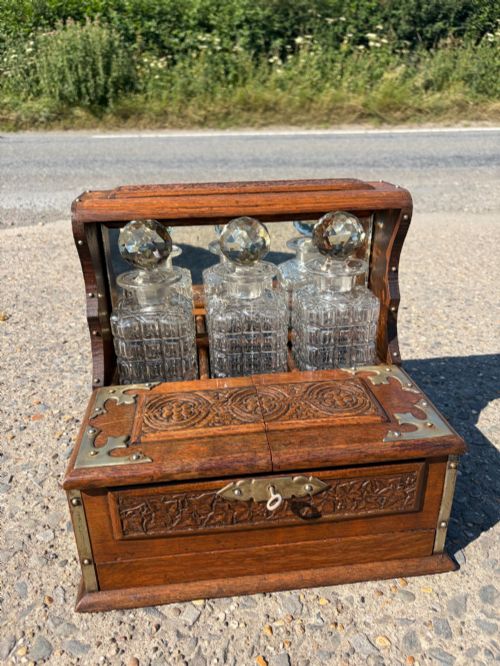
Jacobean Revival, Gothic Revival and Flemish Renaissance Revival styles dominate the selection, featuring heavy timber and sculptural detail. You also find practical variations including tantalus sets, decanter sets and home bars adapted for modern hosting.
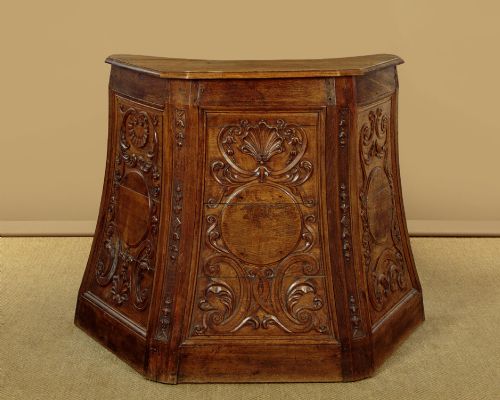
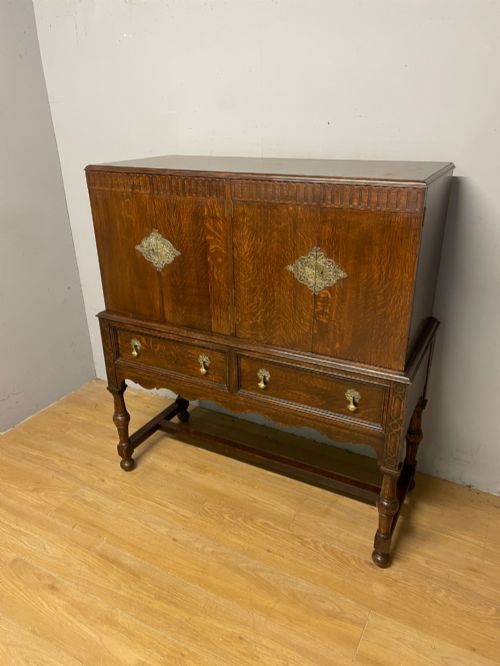
The construction ranges from solid oak side cabinets to elaborate nineteenth-century cabinets on stands embellished with lion masks. Each piece serves as both a functional drinks station and a striking focal point in a room.
Materials and construction
Makers utilised solid oak as the primary structural timber, often selecting dark oak finishes or burr walnut accents to create visual depth and rich surface texture. Heavy carving defines the decorative approach, drawing upon historical revival motifs.
Metal fittings such as brass mounts, locks and handles provide structural support and functional operation for doors and internal compartments. Glass, mirror glass and cut glass feature in display sections, decanter sets and tantalus frames to hold and reflect glassware.
One solid oak side cabinet arrives complete with its original sign written for the Steinkeller Beer Keller.
Assessing quality in carved oak drinks cabinets
The distinction between standard and superior pieces rests on the depth and crispness of the carving, particularly on architectural panels, cupboard doors and stands. Superior examples display hand-chiseled detail with sharp relief, whereas lesser pieces feature softer, shallower mechanical stamping.
The integrity of the timber and the quality of the hardware dictate long-term durability. Solid oak construction with substantial brass mounts and intact internal mirror glass represents the upper tier of craftsmanship compared to veneered alternatives with lesser metalwork.
Waring & Gillows
The Carved Oak Drinks Cabinet Glossary
- Jacobean Revival
- A nineteenth and early twentieth-century design style imitating seventeenth-century English furnishings. It relies on geometric moulding, turned legs and dark oak surfaces.
- Flemish Renaissance Revival
- A nineteenth-century stylistic movement incorporating elaborate continental European motifs. Pieces often display high-relief carving, figural elements and architectural proportions.
- Cabinet on Stand
- A raised storage compartment supported by an open or framed base with legs. This form lifts the main body of the cabinet off the floor for a more imposing silhouette.
Carved Oak Drinks Cabinet: Frequently Asked Questions
What is a tantalus drinks cabinet?
A tantalus drinks cabinet is a specialised storage piece that houses decanters within a secure wooden or metal frame. The locking mechanism prevents guests from accessing the contents while still displaying the bottles.
These pieces often incorporate brass mounts and mirrored backs to enhance the presentation of cut glass decanters. They became popular in the Victorian era for entertaining in drawing rooms and studies.
How do I identify Jacobean style oak?
Jacobean style oak furniture is characterised by heavy proportions, dark timber tones and geometric panel moulding. You will often see turned baluster legs and strapwork carving.
Items from this revival period date predominantly to the early twentieth century, mimicking seventeenth-century craftsmanship. The carved details tend to be deep and robust, emphasising the natural grain of the solid oak.
Where should I place a drinks cabinet?
A drinks cabinet suits a dining room, living room or dedicated home bar space where you entertain guests. Position the piece away from direct sunlight and radiators to protect the oak timber and any internal mirror glass.
Ensure there is sufficient clearance around the cabinet doors and drop-down flaps for serving drinks comfortably. Placing the unit against a sturdy wall supports the weight of solid timber construction and bottled contents.
How do I care for antique oak?
Care for antique oak by dusting regularly with a soft, dry cloth and avoiding silicone-based polishes. Period furniture responds best to occasional applications of quality beeswax to nourish the timber.
Keep humidity levels in the room stable to prevent the solid oak panels from warping or splitting. Clean any internal glass and mirror components with a gentle glass cleaner applied to a cloth rather than sprayed directly onto the wood.