
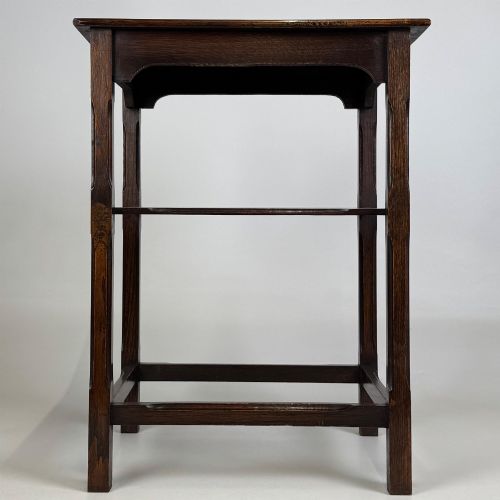
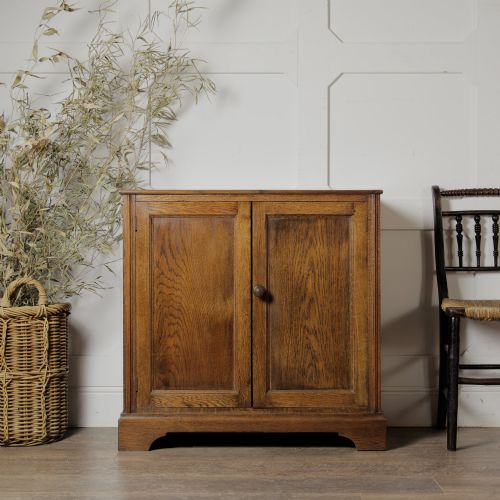
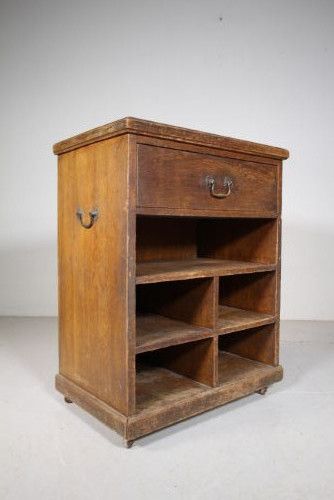
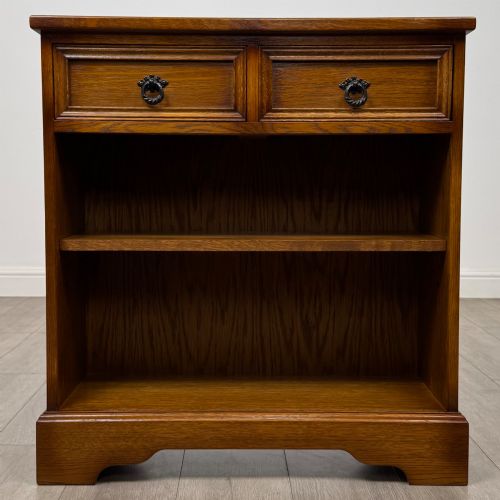
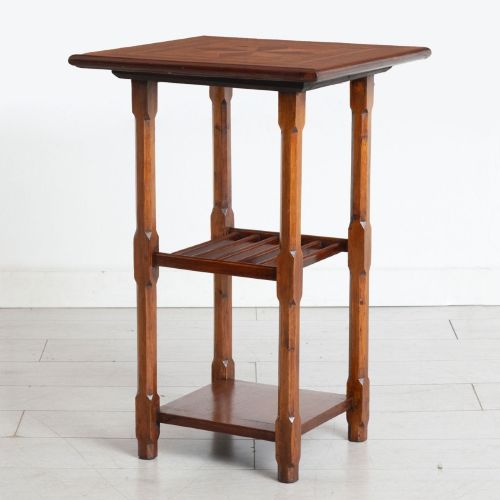
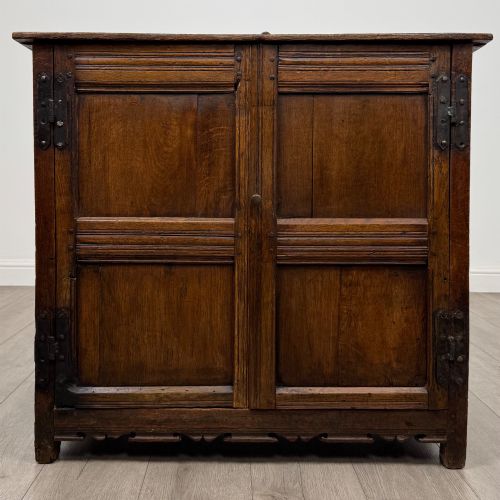
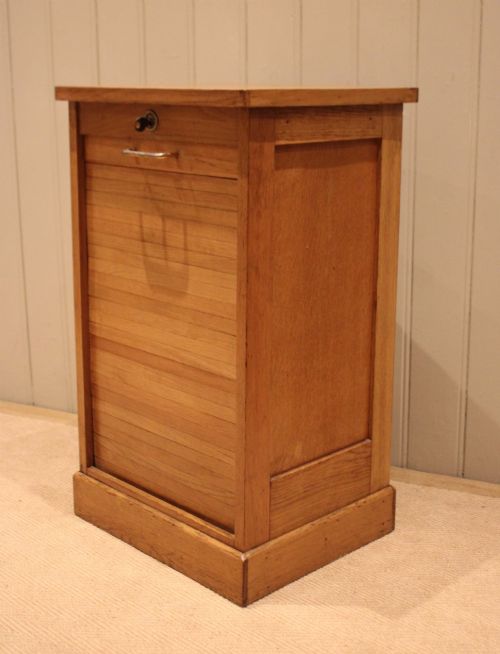
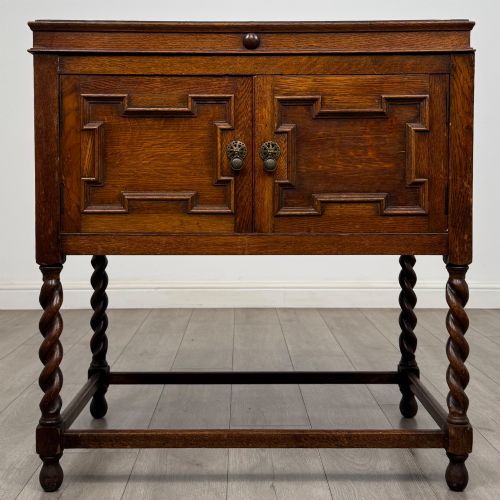
Small Oak Side Cabinet
A small oak side cabinet offers compact storage with a warm, timber-grained finish, suiting tight spaces in modern rooms.
What these pieces are
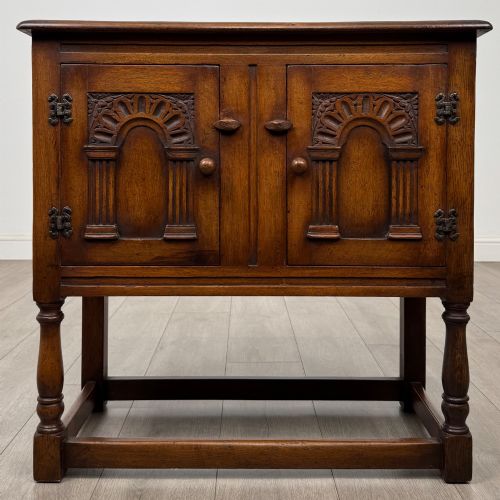
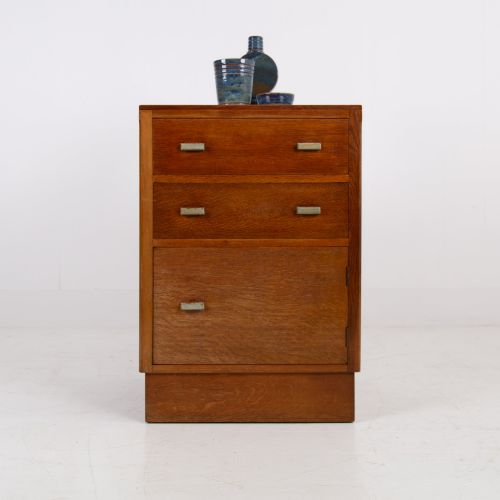
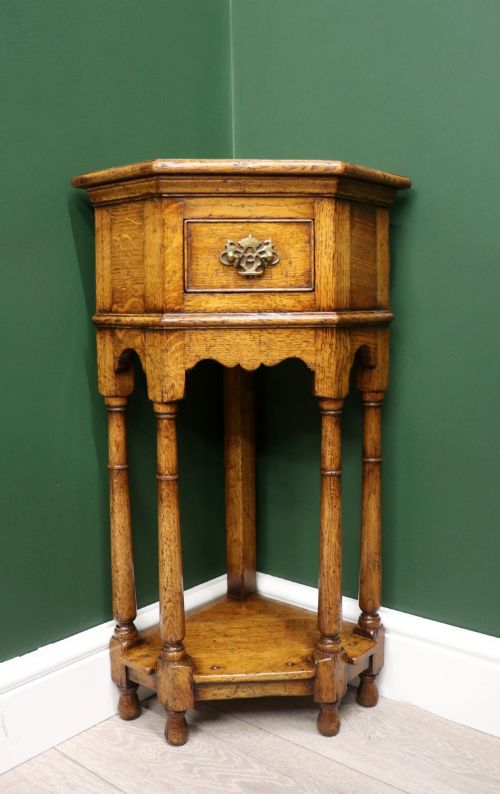
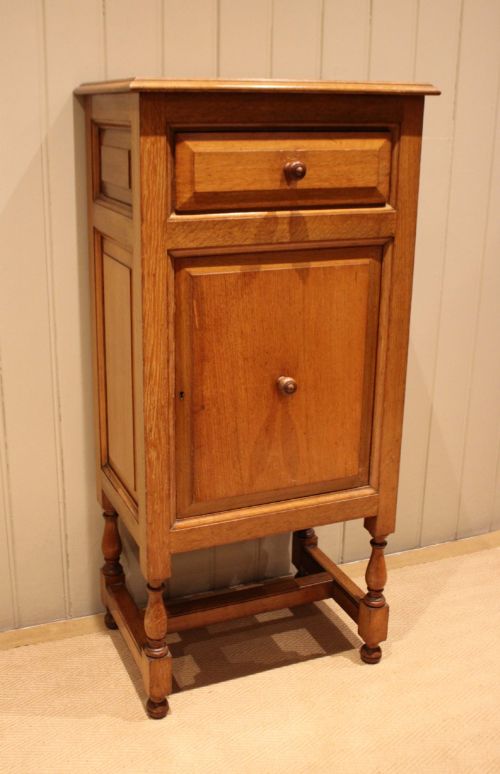
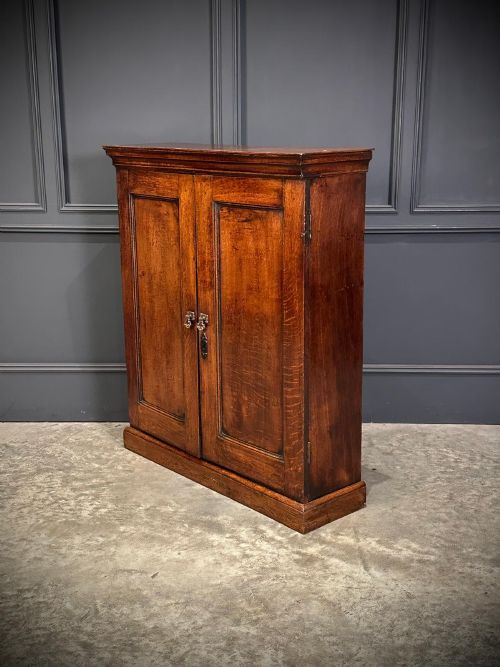
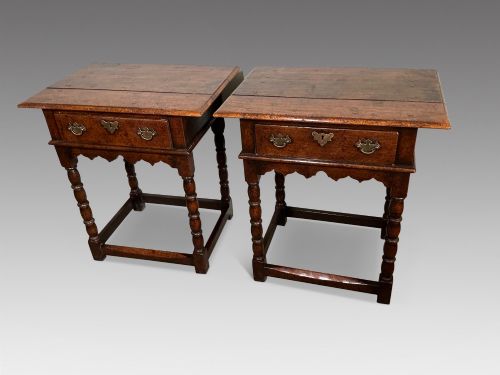
A small oak side cabinet provides practical surface space and enclosed storage, appearing in forms such as bedside cupboards, filing units, and diminutive court cupboards. These compact pieces serve various domestic functions while maintaining a modest footprint in a room.
The selection includes examples from the nineteenth and twentieth centuries, spanning Victorian, Edwardian, and Art Deco periods. Buyers frequently encounter revivalist interpretations, notably Jacobean and Gothic styles executed in solid timber.
Makers such as Gomme and Heals are represented in the record, alongside uncredited regional pieces in Welsh or English oak. Proportions remain deliberately small, making them adaptable for hallway use or beside a bed.
How they were made
Construction relies primarily on oak, sometimes paired with burr oak veneers, supported by brass, steel, iron, or other metal hardware for hinges and drawer pulls. Surfaces are often finished with wax to highlight the natural grain of the wood.
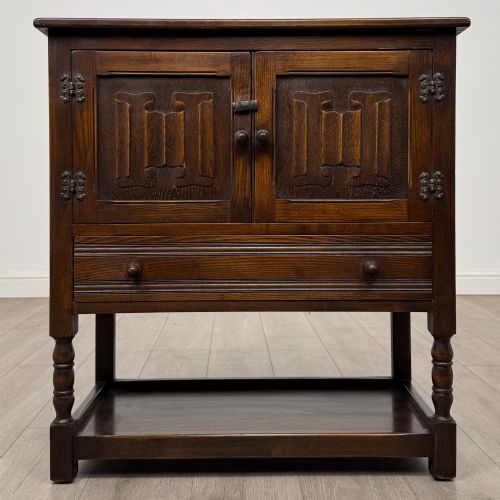
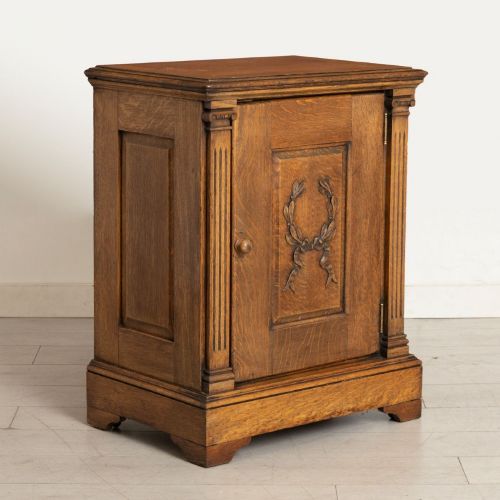
Joinery techniques include panelled doors and fitted drawers, occasionally complemented by carved detailing such as linenfold or geometric motifs. Pieces range from straightforward vernacular builds to more considered workshop productions.
One diminutive cabinet doubles as a filing system, proving that Victorian paperwork could be neatly tucked away behind respectable oak linenfold panels.
What varies in quality
Quality rests on the selection of timber, the crispness of any applied carving, and the integrity of the original hardware. Superior examples show careful timber matching and tight joinery that has survived decades of daily use.
Proportion and utility also dictate value, with pieces retaining original handles, working locks, and unblemished wax finishes standing apart from heavily altered or stripped alternatives.
Gomme·Heals
The Small Oak Side Cabinet Glossary
- Court cupboard
- A short, enclosed sideboard or cupboard used historically for displaying plate, typically featuring recessed upper sections.
- Jacobean revival
- A nineteenth or twentieth-century style imitating the heavy, geometric carved woodwork of the early seventeenth century.
- Chiffonier
- A low sideboard or cabinet equipped with drawers and enclosed shelving, popular during the nineteenth century.
- Burr oak
- A figured timber harvested from tree growths, valued for its swirling grain patterns when used in veneering.
Frequently Asked Questions
What rooms suit a small oak side cabinet?
These compact pieces fit easily into hallways, bedrooms, or living spaces where floor area is limited. They provide convenient surfaces for lamps and concealed storage for everyday items.
Their restrained proportions ensure they blend readily with both traditional interiors and more contemporary room schemes.
How do I identify a revival style?
Revival pieces borrow decorative motifs from earlier eras, such as seventeenth-century geometric panels or nineteenth-century Gothic tracery. Examining the construction methods and timber ageing usually reveals whether a piece is period or a later interpretation.
Stylistic markers like strapwork or linenfold carving point directly to these deliberate historical revivals.
Are these cabinets purely for bedrooms?
While many examples function as bedside cupboards, others serve as hall units, small filing cabinets, or compact sideboards. Their adaptable internal layouts suit diverse storage needs across the home.
Historical listings show them fulfilling roles from bedside table to diminutive chiffonier.
What metalwork is typical on these pieces?
Hardware ranges from brass drop handles to iron hinges and steel fittings, depending on the period and workshop. Original metal fixtures contribute significantly to the character and integrity of each cabinet.
Art Deco examples often feature streamlined metal pulls, whereas revival pieces lean towards traditional brass drop handles.