
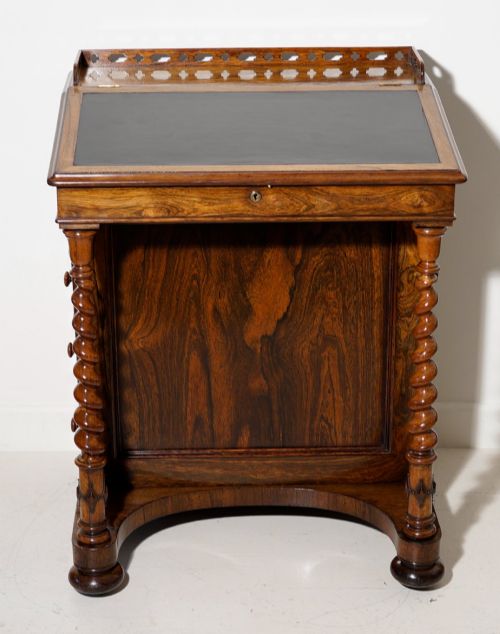
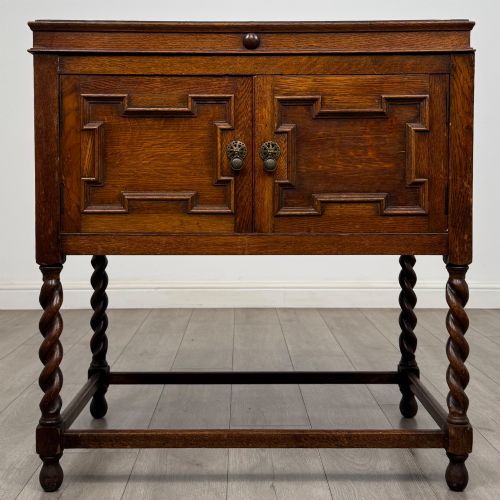
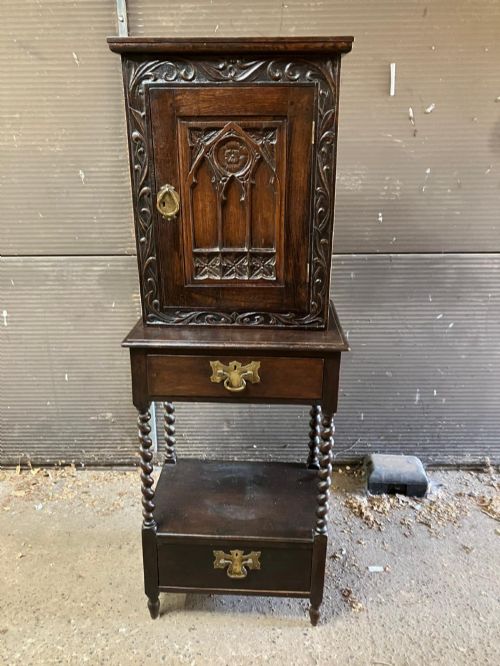


Barley Twist Side Cabinet
These barley twist side cabinet pieces bring solid timber and turned columns to a room, offering practical storage with distinct period character.
Barley Twist Side Cabinet
A barley twist side cabinet brings together useful storage and turned wooden columns, appearing across several distinct nineteenth-century and early twentieth-century periods. These items serve as compact cupboards, sideboards, and occasional storage pieces within a room.
Cabinet forms span from bedside tables and night cupboards to larger credenzas and sideboards, demonstrating how varied the storage height and footprint can be. Each piece adapts the traditional turned twist motif to fit the specific furniture fashions of its decade.
Construction and materials
Cabinetmakers constructed these frames using solid timbers including oak, walnut, and rosewood, often combining denser woods with turned structural components. The distinct spiral columns were shaped on lathes to produce the characteristic twist profile seen on uprights and supports.
Surfaces were frequently enhanced with carved details such as Green Man motifs or fielded panels, alongside applied mouldings and brass hardware. Certain iterations incorporate contrasting materials like inset marble tops and leather writing surfaces to complete the design.
Barley Twist Side Cabinet Retail Price Guide 2026
Typical asking prices for barley twist side cabinet among the pieces listed under this phrase on Sellingantiques today, from the lower quarter to the upper quarter. They describe what is for sale here now, not the wider market.
The site records show material combinations including brass hardware, leather panels, and inset specimen marble tops.
Judging quality and craftsmanship
Quality rests heavily on the crispness of the timber turning and the depth of hand-carved elements across the frame. Finely executed barley twist columns display clean, uniform spirals without clumsy jointing or heavy modern repairs.
The choice of primary timber and secondary veneers dictates the overall presence of the piece, with richly figured rosewood and substantial oak standing apart from plain alternatives. Original hardware, tight door fittings, and intact marble inserts further separate standard examples from finer workshops.
The Barley Twist Side Cabinet Glossary
- Barley twist
- A turned wooden column resembling a spiralling rope or barley sugar stick. This decorative motif appears frequently on the uprights and legs of seventeenth-century revival furniture.
- Credenza
- A low-standing side cabinet used for storage and display, often featuring glazed or panelled doors. In Victorian examples, these pieces frequently incorporate decorative columns and mirrored backs.
- Davenport
- A compact writing desk featuring a sloped leather-lined writing surface above a bank of drawers. The form was developed during the Regency period and remained popular through the Victorian era.
- Jacobean Revival
- A nineteenth-century revival style that imitates the heavy, dark oak furniture of the early seventeenth century. Pieces in this style typically feature geometric moulding and turned details.
- Green Man
- A sculptural architectural ornament depicting a human face entwined with foliage or vines. This pagan symbol saw a significant revival in nineteenth-century oak furniture and architectural carving.
Barley Twist Side Cabinet: Frequently Asked Questions
What rooms suit a barley twist side cabinet?
These compact cupboards and credenzas fit naturally into living rooms, hallways, or bedrooms where surface space and enclosed storage are both needed.
Their varied timber tones allow them to sit comfortably alongside both traditional and more eclectic contemporary interior schemes.
How do I identify the period of a twist cabinet?
Dating relies on examining the timber species, construction joints, and stylistic revival cues such as Gothic arches or Jacobean mouldings.
Dark oak usually points toward revival styles and the early twentieth century, while rosewood and walnut often indicate mid-nineteenth-century Victorian production.
Are these cabinets practical for daily storage?
Most pieces provide functional shelving or drawer space behind panelled doors, making them suitable for tableware, books, or general household items.
Buyers should check internal dimensions within listings to ensure the storage compartment meets their specific organizational needs.
How should I care for a rosewood or oak cabinet?
Routine maintenance involves dusting with a soft, dry cloth and occasionally applying natural beeswax to nourish the antique timber.
Keeping the furniture away from direct heat sources and strong sunlight preserves the polished finish and prevents the wood from drying out.