


Continental Oak Cabinet
A continental oak cabinet brings substantial timber and deep regional carving into a room, offering both display space and secure storage.
Continental Oak Cabinet
A continental oak cabinet encompasses a varied group of storage furniture originating from across Europe, ranging from compact bedside units to large armoires and linen cupboards. When you search for a continental oak cabinet, you encounter diverse regional forms spanning from the seventeenth century through the Victorian era.
The selection frequently includes smaller bedside cabinets in pine and oak, alongside larger architectural cupboards and bookcases. Pieces from the eighteenth and nineteenth centuries dominate, often showing heavy carving and regional adaptations.
How they were made
Construction relies heavily on solid oak, frequently paired with secondary woods like pine or accented with walnut and brass hardware. Cabinetmakers utilised robust joinery methods to build heavy panelled doors and structural frames that endure for centuries.
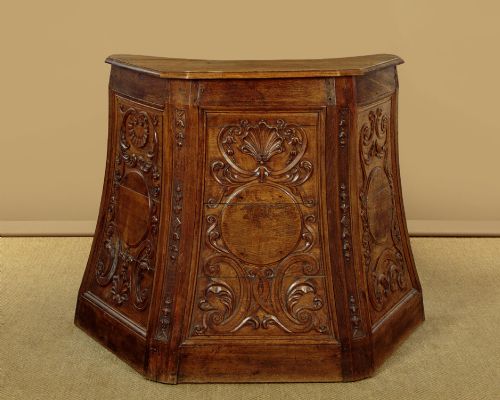
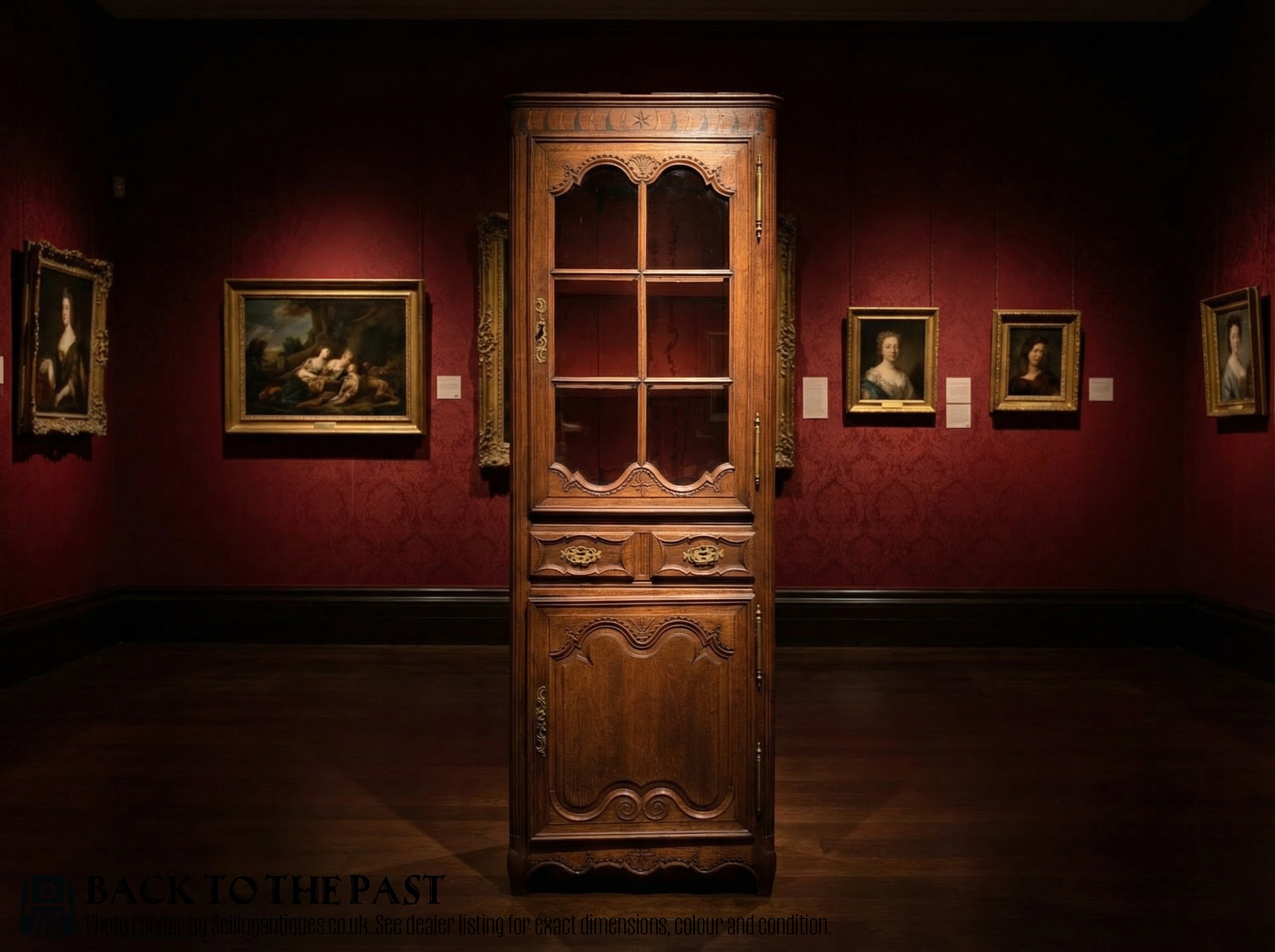
Surface ornamentation ranges from deeply carved figural and floral motifs in Flemish and Baroque styles to painted black finishes and contrasting veneers. Glazed panels, marble tops, and iron fittings appear on specific regional variants like bedside cabinets and glass-fronted bookcases.
One pulp-built piece masquerades as a pulpit bar, proving cabinetmakers possessed a sense of ecclesiastical theatre.
What varies in quality
Quality rests upon the crispness and depth of the hand carving, the choice of timber figuring, and the integrity of the original construction. Superior examples maintain balanced proportions and harmonious integration of decorative elements such as columns or stained glass.
The degree of original hardware, unaltered secondary timbers, and the finesse of regional joinery distinguish finer workshop output from simpler utilitarian storage pieces.
The Continental Oak Cabinet Glossary
- Armoire
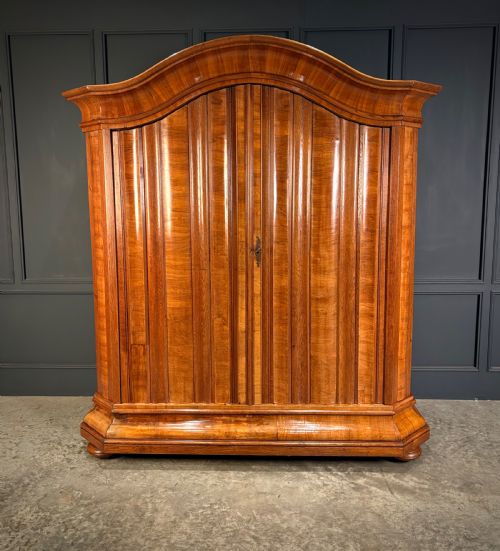
- A large freestanding cupboard or wardrobe used for storing garments and household textiles. These pieces often feature deep double doors and elaborate carved panelling.
- Baroque style
- An ornate artistic approach characterised by dramatic movement, rich surface detail, and sculptural carved elements. This style appears frequently on seventeenth and eighteenth-century Flemish and continental case furniture.
- Gothic Revival
- A nineteenth-century architectural and decorative movement that revives medieval forms. Cabinets in this style often incorporate pointed arches, tracery, and heavy carved oak.
- Linen cupboard
- A tall storage piece designed specifically for domestic linens and folded fabrics. Seventeenth-century Dutch examples represent traditional forms of this utilitarian yet decorative furniture.
- Secessionist
- A twentieth-century design movement akin to Art Nouveau that rejected historicism in favour of simplified geometric forms. Pieces from this tradition show cleaner lines than earlier revival styles.
Continental Oak Cabinet: Frequently Asked Questions
How do I date a continental oak cabinet?
Dating relies on examining construction techniques, joinery marks, and stylistic indicators such as carved mouldings or hardware. Earlier seventeenth and eighteenth-century pieces often display hand-riven timber and pegged framing, whereas nineteenth-century examples incorporate machine-sawn elements and revivalist motifs.
Changes in regional proportions and decorative idioms further help place a cabinet within a specific century or stylistic movement.
Where were these cabinets made?
These cabinets originate from various European regions, with strong representation from the Netherlands, Flanders, Hungary, and Germany. Each area developed distinct joinery traditions and decorative preferences, from Dutch linen cupboards to Hungarian painted bedside cabinets.
Local workshop practices and the availability of regional timbers like oak and pine dictated the final appearance of each piece.
How do I care for antique oak furniture?
Maintain oak furniture by keeping it away from direct heat sources and drastic humidity shifts that cause timber to split. Regular dusting with a dry cloth and occasional application of appropriate wax preserves the natural finish without building up residue.
Avoid commercial liquid polishes containing silicones, which can penetrate porous historic wood and damage the surface over time.
What is the difference between a cupboard and an armoire?
A cupboard generally refers to a smaller enclosed storage unit with shelves, whereas an armoire is a tall wardrobe primarily designed for hanging garments. Armoires typically feature larger double doors and deeper internal cavities for clothing storage.
Both forms utilise solid oak construction, but their internal layouts reflect different domestic storage needs.