


Geometric Oak Bureau
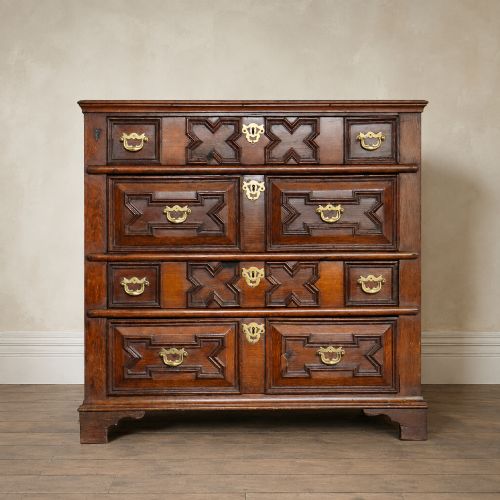
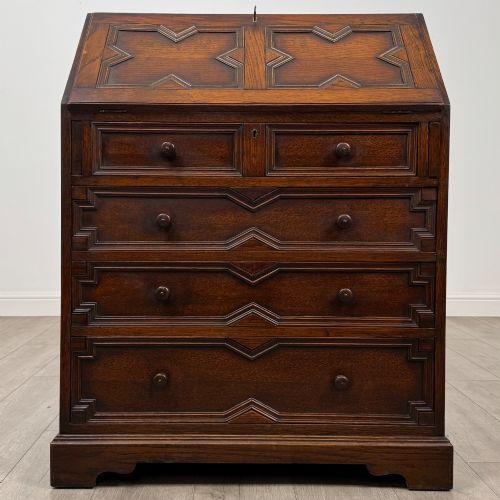
A geometric oak bureau brings heavy timber and precise mouldings together, offering a working surface backed by centuries of cabinet-making.
Geometric Oak Bureau
A geometric oak bureau combines drop-front writing surfaces with fitted interior compartments, anchored in the robust traditions of seventeenth-century and revival joinery. These pieces range from early examples featuring raised panels and moulded fronts to later twentieth-century interpretations influenced by Jacobean and Edwardian tastes.
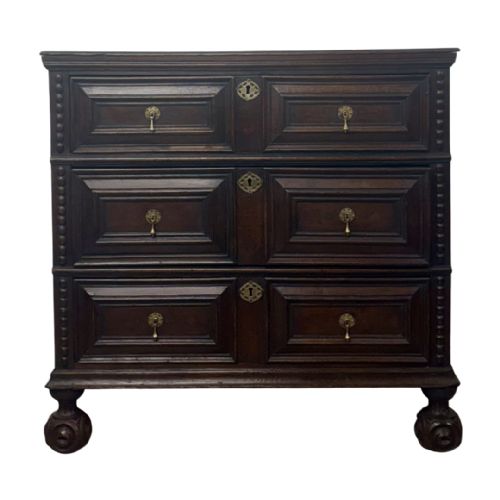
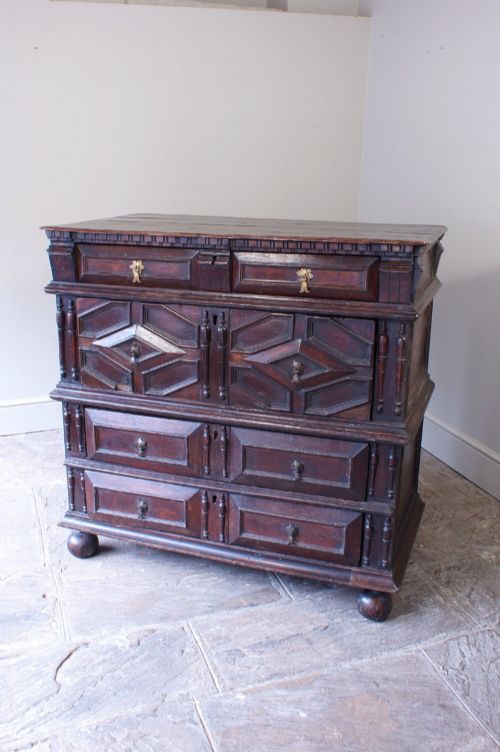
The chests of drawers and bureau bookcases sharing this search phrase demonstrate similar structural heft, often utilising veneered panels and geometric mouldings across the primary elevation. Buyers encounter both utilitarian writing desks and more complex combinations incorporating upper bookcase sections.
Origins span authentic seventeenth-century periods through to early twentieth-century revivals, alongside occasional French Art Deco desks that broaden the material palette. The core of the selection remains centred on oak timber, sometimes enriched with contrasting wood inlay and brass hardware.
How they were made
Makers constructed these pieces primarily from solid oak and oak veneer, relying on iron and brass for structural fastenings, hinges, and drop handles. Panels were frequently shaped with geometric mouldings to create depth and shadow across the drawer fronts and fall-front writing flaps.
Carpenters utilised traditional joinery methods such as mortise and tenon frames, housing the writing drawers above turned legs or bracket feet. Wood inlay occasionally accents the primary surfaces, while glass appears within the upper doors of bookcase variants.
The listings on this site encompass oak, brass, iron, and glass materials across periods ranging from the seventeenth century through the Edwardian era to the 1930s.
What varies in quality
Quality rests in the crispness of the geometric mouldings and the selection of the oak timber, where tighter grain and coherent figuring elevate the piece. The integration of the fall-front mechanism and the precision of the interior pigeonholes distinguish standard workshop output from superior craftsmanship.
The integrity of the original brass hardware and the stability of the veneered surfaces further define the standing of an individual bureau. Pieces that retain their structural rigidity without excessive timber shrinkage represent the higher tier of surviving examples.
Étienne Kohlmann
The Geometric Oak Bureau Glossary
- Geometric moulding
- Raised wooden strips applied in repeating geometric patterns to drawer fronts and door panels. This technique creates architectural depth and reflects seventeenth-century decorative preferences.
- Bureau
- A sloping flap desk that opens to reveal a fitted interior of small drawers and pigeonholes. It serves primarily as a compact writing station.
- Bureau bookcase
- A dual-purpose furniture form featuring a writing bureau base beneath an enclosed upper shelving cabinet. Glass doors are frequently fitted to the upper section.
- Oak veneer
- A thin layer of oak timber applied over a secondary wood substrate to present a decorative grain pattern. It allows cabinet-makers to display striking figuring without relying wholly on solid boards.
- Jacobean style
- A revival aesthetic drawing on seventeenth-century English design characteristics, including dark finishes and heavy turned supports. Many twentieth-century bureaus adopt this vocabulary.
Geometric Oak Bureau: Frequently Asked Questions
How do I use a bureau?
The sloping front drops down to form a flat writing surface, supported by extendable wooden arms or side lopers.
Inside, small drawers and pigeonholes provide storage for writing materials and correspondence.
Where should I place an oak bureau?
These pieces suit home studies, living rooms, or hallways where their substantial timber presence and compact footprint function effectively.
Keep them away from direct heat sources and strong sunlight to protect the oak and any applied veneers.
How do I date a bureau?
Examine the construction methods, drawer linings, and timber characteristics to distinguish seventeenth-century originals from twentieth-century revivals.
Style indicators like geometric mouldings appear across both periods, requiring careful inspection of hardware and interior joinery.
What is a secret compartment?
Many writing bureaus conceal small hidden drawers or sliding panels within the interior fitments.
Cabinet-makers designed these spaces to secure valuable documents or currency away from casual view.