

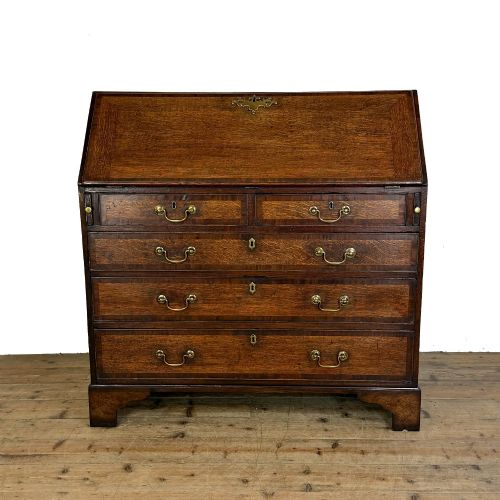


Brown Oak Chest Bureau
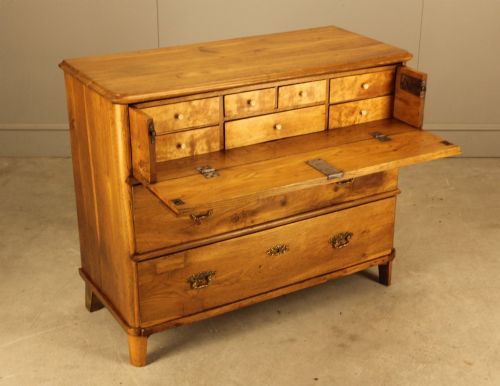
A brown oak chest bureau combines the storage of a drawer unit with a fall-front writing surface.
Brown Oak Chest Bureau
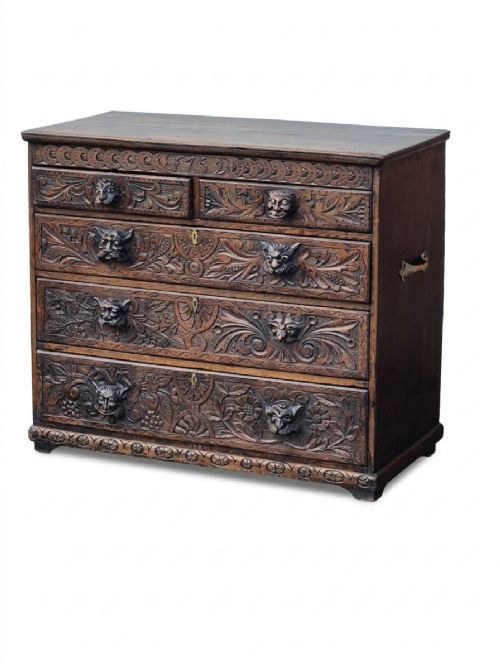
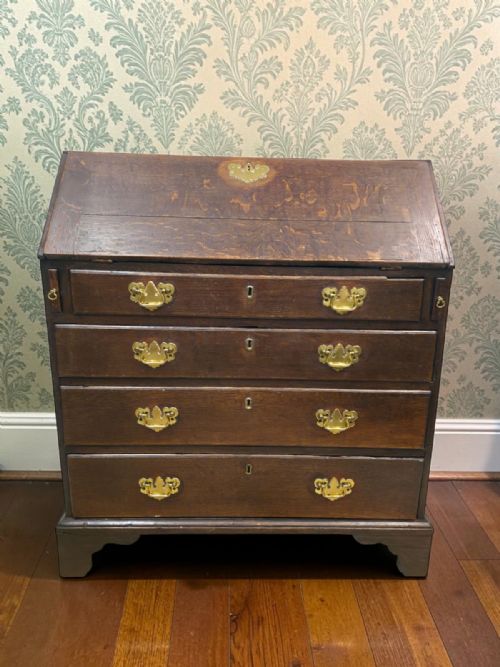
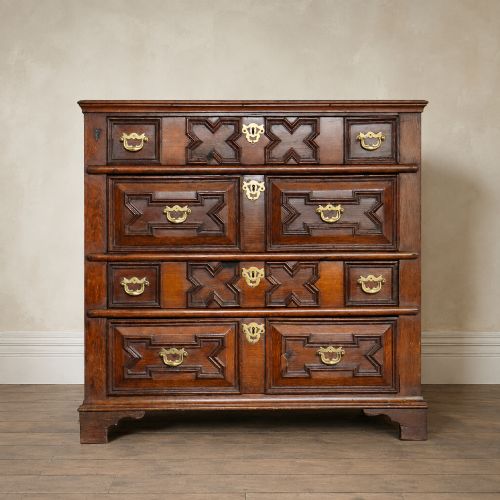
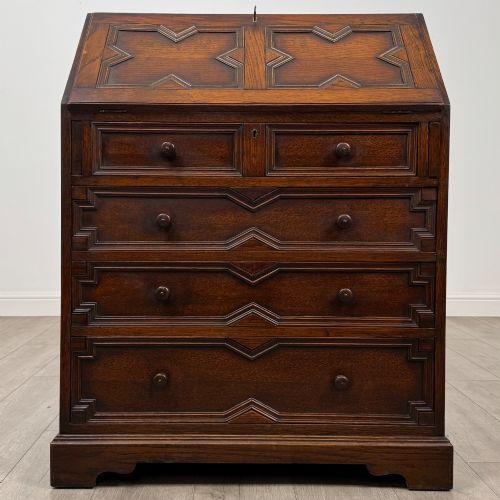
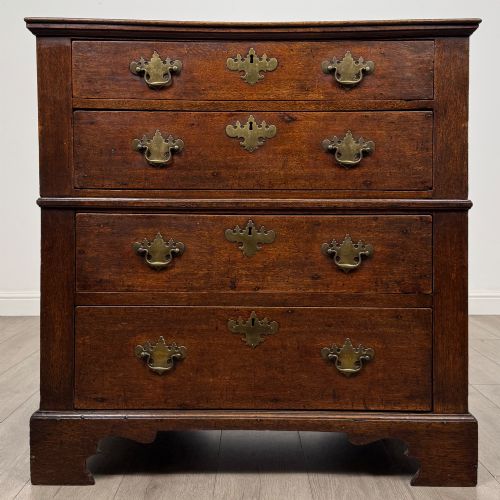
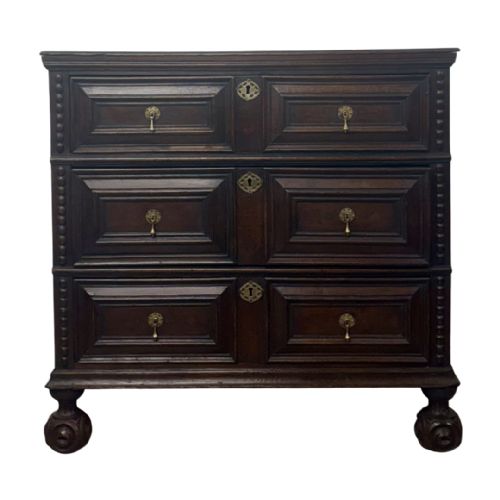
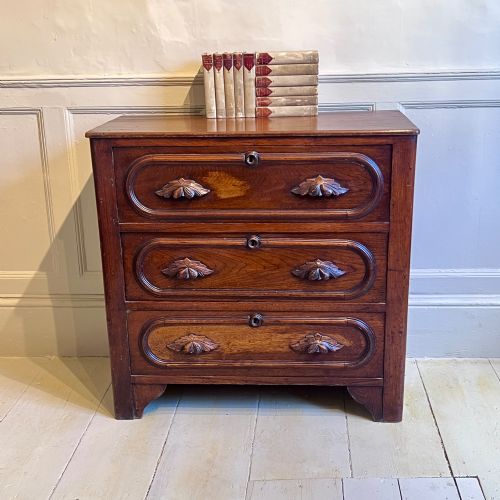
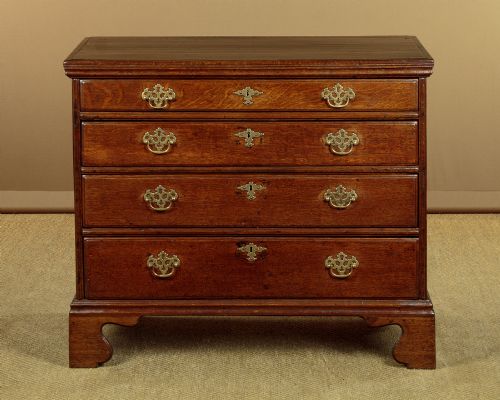
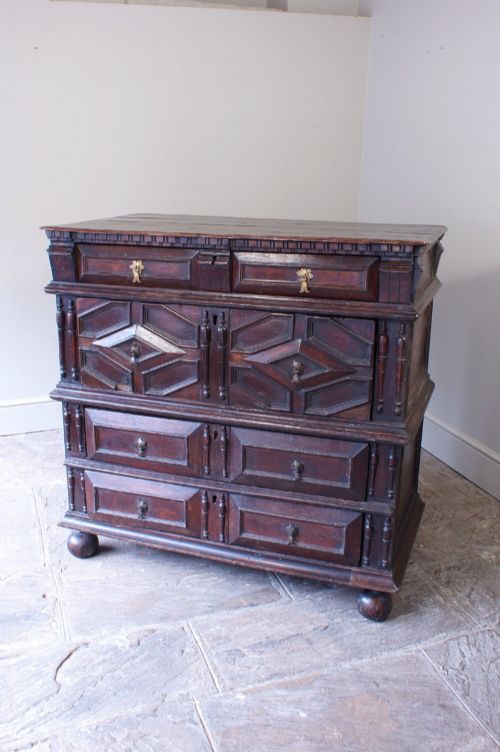
A brown oak chest bureau brings together two distinct functional forms into a single sturdy timber item. When you search for a brown oak chest bureau, you encounter examples spanning multiple centuries, from early seventeenth-century geometric designs to later Georgian iterations.
The pieces on this page primarily unite the lower storage capacity of a chest of drawers with an upper sloping fall-front writing compartment. Most listings feature oak construction, though variants incorporate mahogany or walnut alongside brass hardware.
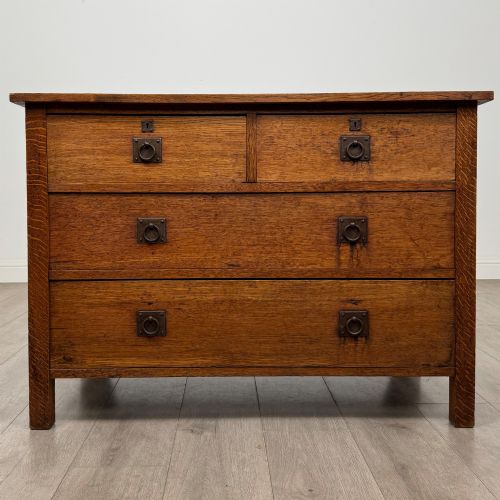
The proportions range from compact domestic writing desks to larger multi-drawer cabinets fitted with internal pigeon holes and small compartments. Buyers regularly find stylistic influences stretching from Charles II and Jacobean periods through to Edwardian and Arts and Crafts revivals.
Assessing quality in construction and material
The standard of a brown oak chest bureau depends heavily on the crispness of the timber moulding, the integrity of the joints, and the retention of original brass hardware. Superior examples display carefully matched grain patterns across the drawer fronts and fall-front writing lids.
Interior fittings also distinguish finer specimens, particularly where drawers inside the bureau desk feature precise hand-cut dovetails and tidy pigeonhole partitions. The depth of the natural oak patina and the smoothness of the drawer action separate standard utility furniture from exceptional workshop production.
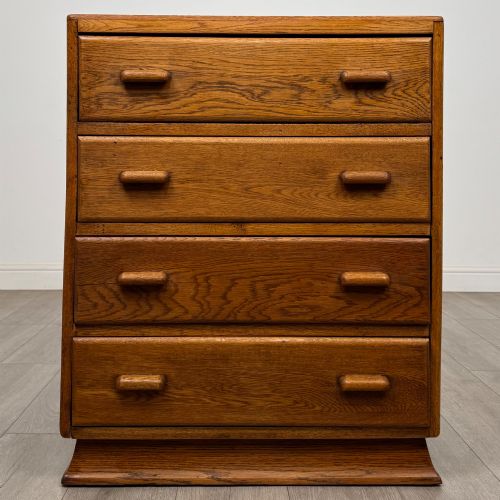
The listings span periods from the 17th century through to the 1920s, predominantly utilising oak and mahogany.
Harris Lebus
The Brown Oak Chest Bureau Glossary
- Fall-front
- A hinged writing flap that pulls down to form a horizontal desk surface. This panel conceals internal compartments and small drawers when closed.
- Dovetail
- A joint interlocking two pieces of wood through fan-shaped tenons. It provides robust tensile strength for drawer corners.
- Geometric moulding
- Raised wooden mouldings applied in symmetrical geometric patterns to drawer fronts. This decorative technique is common on seventeenth-century pieces.
- Escutcheon
- A protective plate surrounding a keyhole. These are typically fashioned from brass and mounted onto drawer or bureau fronts.
- Secretaire
- A piece of furniture containing a built-in writing drawer or compartment. The term often describes desks disguised as standard chests of drawers.
- Baize
- A coarse woollen fabric traditionally used to line writing surfaces and desk flaps. It offers a smooth plane for paper and pens.
Brown Oak Chest Bureau: Frequently Asked Questions
How do I use a bureau desk?
Lower the hinged fall-front flap to reveal the interior writing space and pigeonholes.
Store writing materials inside the internal compartments when the flap is closed.
What is the difference between oak and mahogany?
Oak provides a prominent open grain with a warm brown hue common in earlier periods.
Mahogany offers a denser, finer grain that became popular during the Georgian era.
How do I date a chest bureau?
Examine the construction methods, such as hand-cut dovetails and the style of the brass hardware.
Compare the exterior mouldings and leg forms against documented historical periods like William and Mary or Edwardian.
How do I care for antique oak?
Keep the timber away from direct heat sources and sudden humidity changes to prevent splitting.
Apply traditional wax polish occasionally to nourish the natural brown grain.