

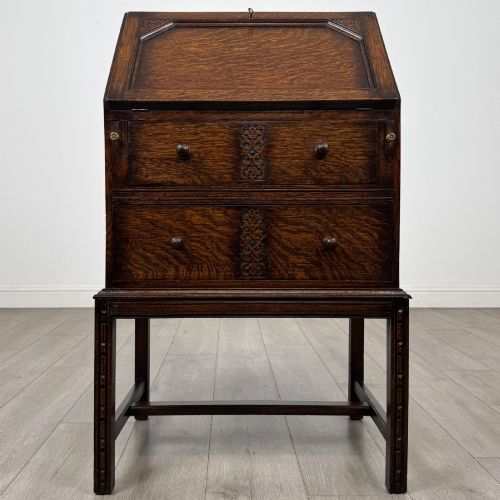
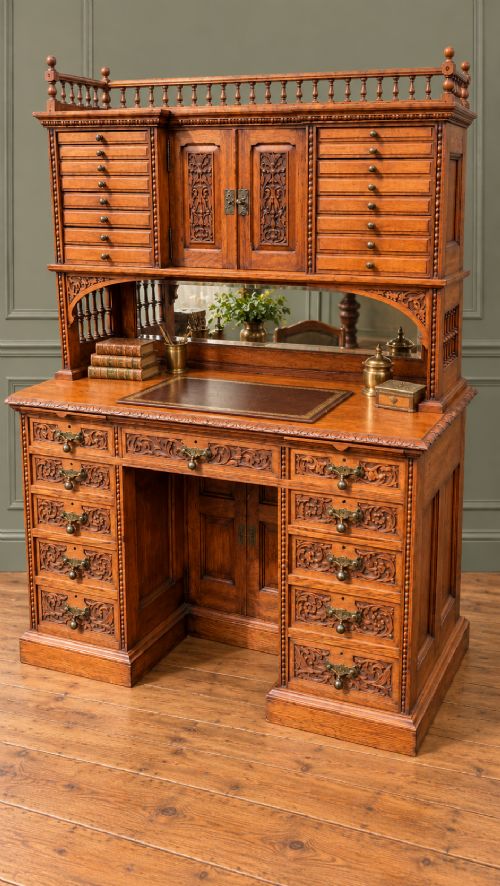
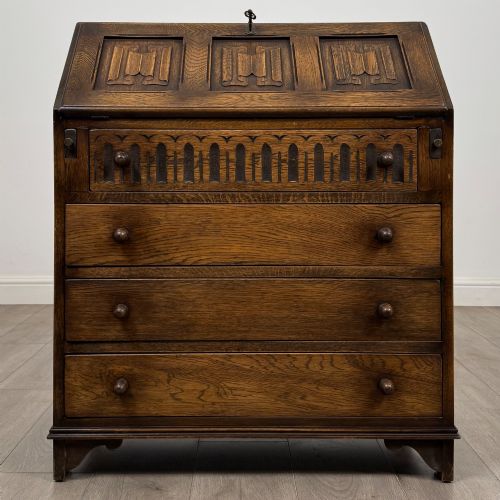
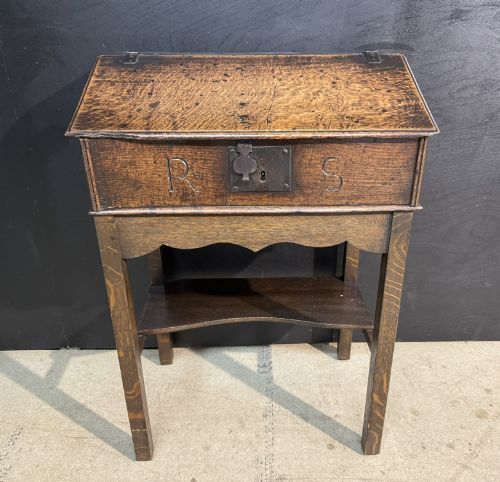
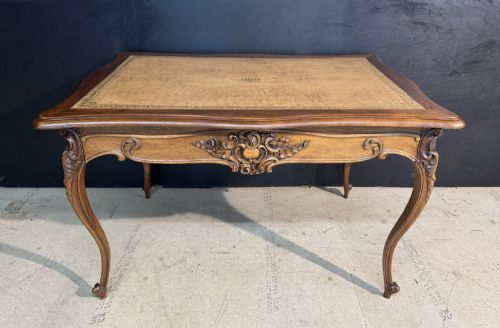
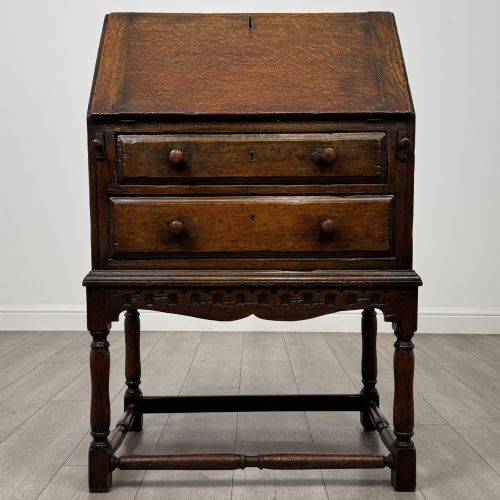
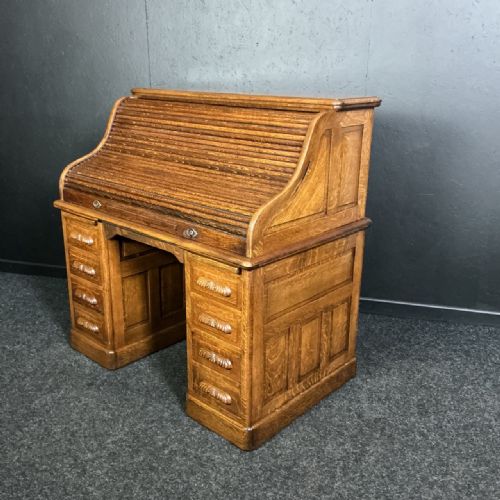
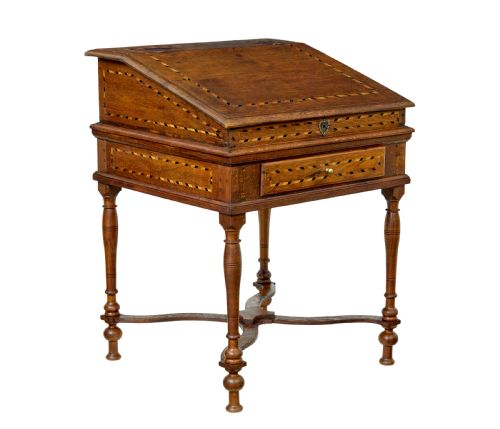
Carved Oak Writing Bureau
A carved oak writing bureau brings immediate character to a room, offering a practical writing surface alongside hidden compartments for papers.
Carved Oak Writing Bureau
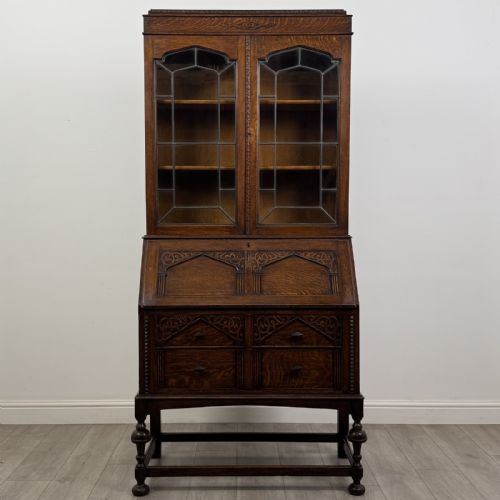
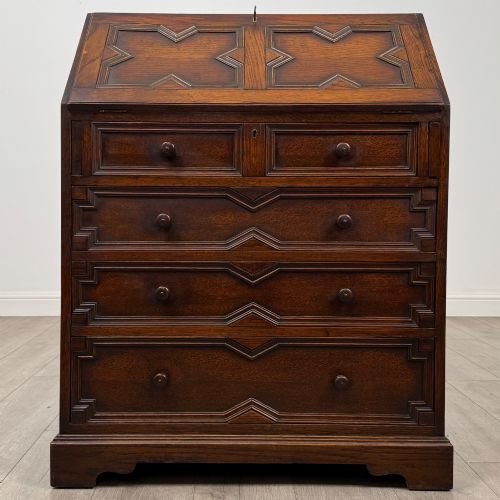
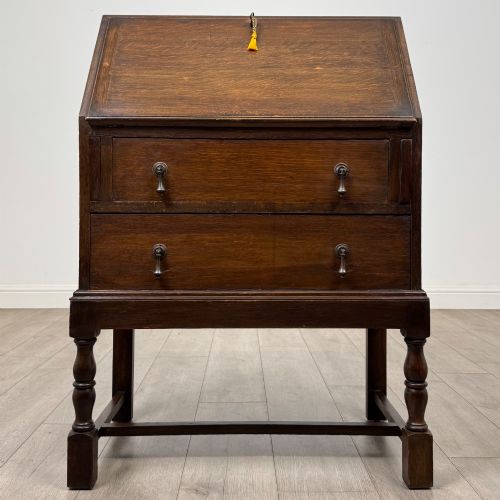
A carved oak writing bureau combines a sloping fall-front desk with internal pigeonholes and drawers, resting above a set of lower drawers. You will frequently encounter Edwardian and Victorian interpretations of earlier styles when exploring these pieces.
The selection spans from compact twentieth-century variations to seventeenth-century vernacular pieces with outstanding interiors. Many examples incorporate bookcases or display cabinets above the main writing compartment.
Makers often drew inspiration from Jacobean, Tudor, and Gothic revivals, adding deep relief carving such as linenfold panels or Green Man motifs.
Materials and Construction
Makers relied primarily on solid oak, occasionally incorporating pollard oak veneers or secondary woods for internal drawers and partitions. Iron, copper, and brass hardware such as hinges, handles, and drop pulls secured the structural elements and drawers.
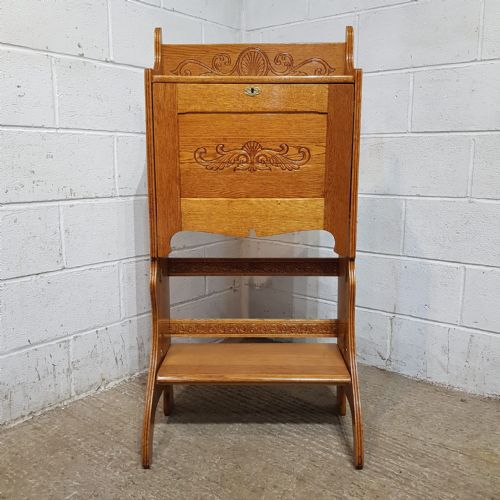
Surfaces frequently feature hand-carved ornamentation executed in relief, ranging from geometric strapwork to figurative panels. Internal compartments often conceal sliding secrets, miniature drawers, and telescopic mechanisms operated by hidden levers.
Carved Oak Writing Bureau Retail Price Guide 2026
Typical asking prices for carved oak writing bureau among the pieces listed under this phrase on Sellingantiques today, from the lower quarter to the upper quarter. They describe what is for sale here now, not the wider market.
Some nineteenth-century examples hide telescopic interiors that slide forward smoothly at the touch of a secret internal button.
Judging Quality and Execution
The distinction between standard production and exceptional work lies in the depth and crispness of the carved details. Superior examples display thoughtfully figured timber selection and smooth operation of the fall-front hinges and internal drawers.
Interior configuration heavily influences desirability, with well-appointed compartments featuring secret drawers and arched pigeonholes commanding greater interest. The integrity of the original brasses and structural joinery remains paramount.
Blyth & Son·George W Jack·Liberty & Co·Morris & Co·Robert Mouseman Thompson·Étienne Kohlmann
The Carved Oak Writing Bureau Glossary
- Fall-front
- The hinged writing flap that pulls down to form a horizontal desk surface. It conceals the interior compartments when closed and locked.
- Linenfold
- A style of relief carving that mimics folded lengths of fabric. It appears frequently on panels of Edwardian and revival furniture.
- Green Man
- A sculptural motif representing a human face entwined with foliage or vines. This ancient symbol recurs on Victorian carved oak pieces.
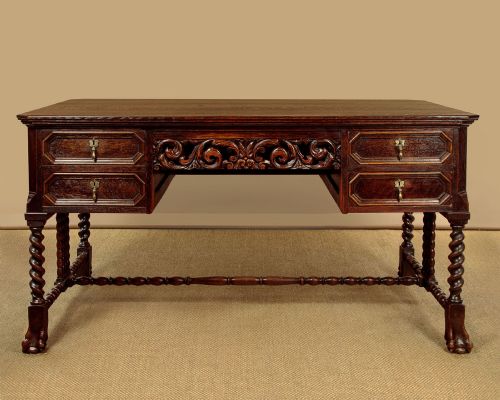
- Kneehole desk
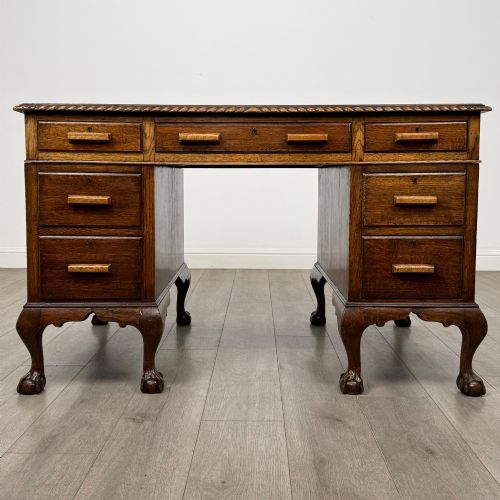
- A form featuring a central recess for the user's legs, flanked by pedestals of small drawers. Some variations integrate a bureau top above this arrangement.
- Vernacular
- Furniture produced by local craftsmen for regional use, often displaying traditional construction methods rather than high-style metropolitan design.
Carved Oak Writing Bureau: Frequently Asked Questions
How do I use a bureau desk?
Lower the hinged flap to create a writing surface, which rests upon pull-out wooden supports when opened. Inside, you will find small drawers and pigeonholes designed for storing correspondence and writing implements.
When you finish writing, simply return your papers to the internal compartments and lift the flap back into its vertical position, securing it with a key if desired.
Are these desks difficult to maintain?
Oak is a robust and durable timber that requires minimal upkeep beyond occasional dusting with a dry cloth. Avoid placing the piece in direct sunlight or near heat sources to prevent the wood from drying out.
Applying a traditional beeswax polish periodically helps nourish the grain and maintain the natural lustre of the carved surfaces.
What is a bureau bookcase?
A bureau bookcase combines a sloping writing desk at the base with an enclosed shelving unit or glazed cabinet fixed directly on top. This dual-purpose form became popular for storing both books and writing materials within a single footprint.
Earlier examples feature solid wooden doors, while later Victorian and Edwardian versions frequently utilise glass panels to display book collections.
How can I tell the period?
Examine the hardware, construction methods, and carving styles to establish an approximate date of manufacture. Seventeenth-century pieces display simple vernacular joinery and heavy mouldings, whereas nineteenth-century revivals often feature crisper machine assistance alongside hand carving.
Makers' stamps, paper labels, and secondary woods inside the drawers also provide reliable clues regarding the exact era of production.