


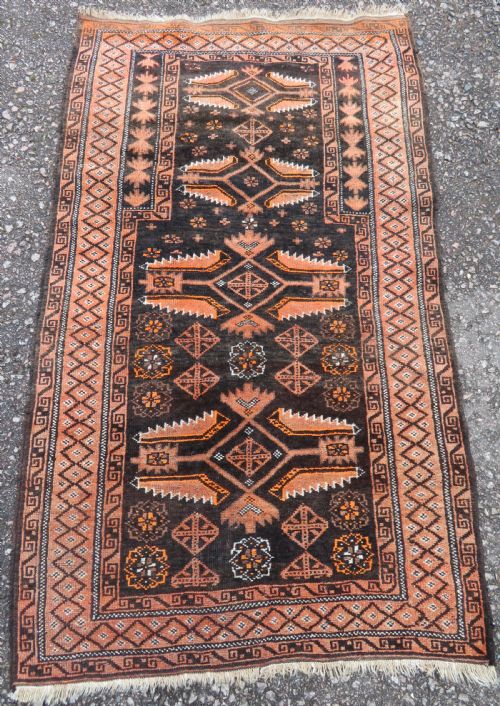


Geometric Mihrab Rug
A geometric mihrab rug brings centuries of tribal weaving traditions into a room through sharp architectural arches and stark linear motifs.
Geometric Mihrab Rug
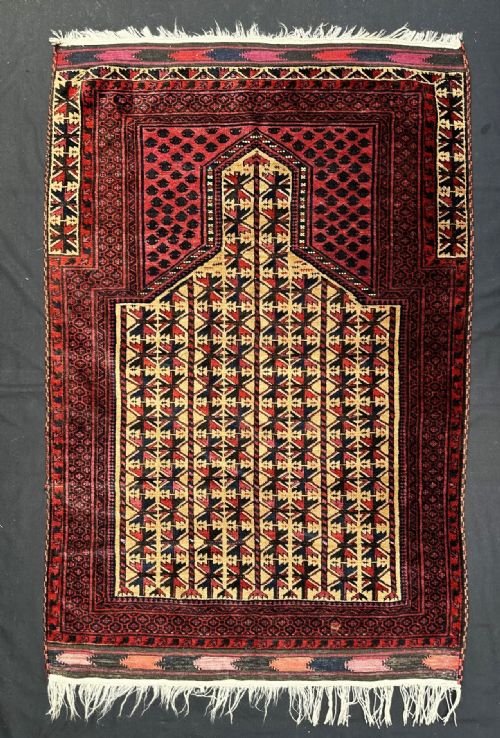
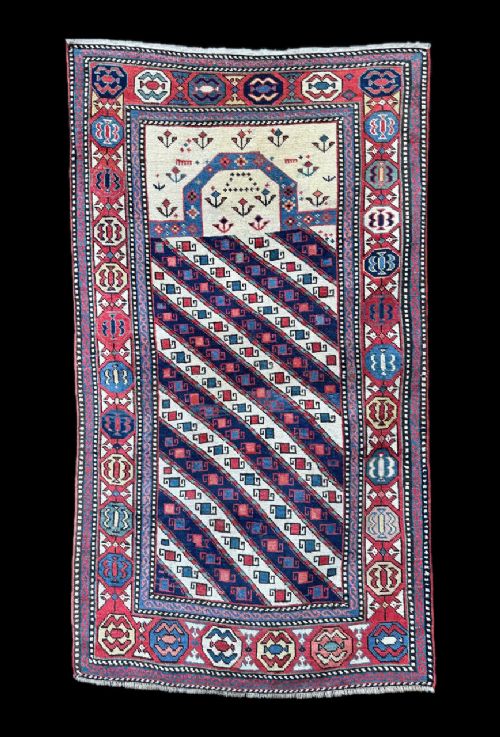
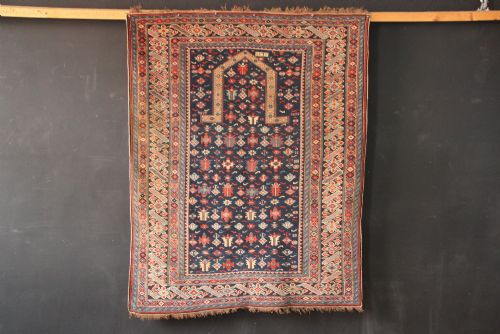
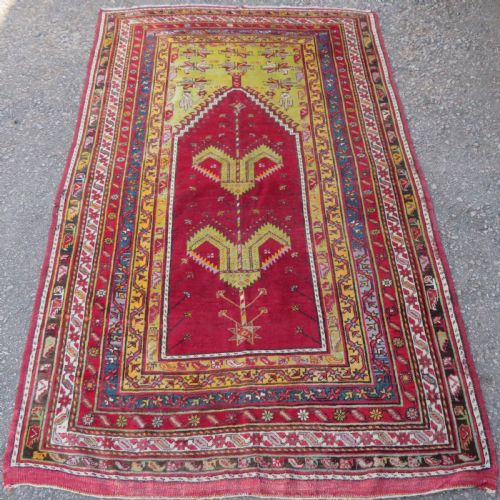
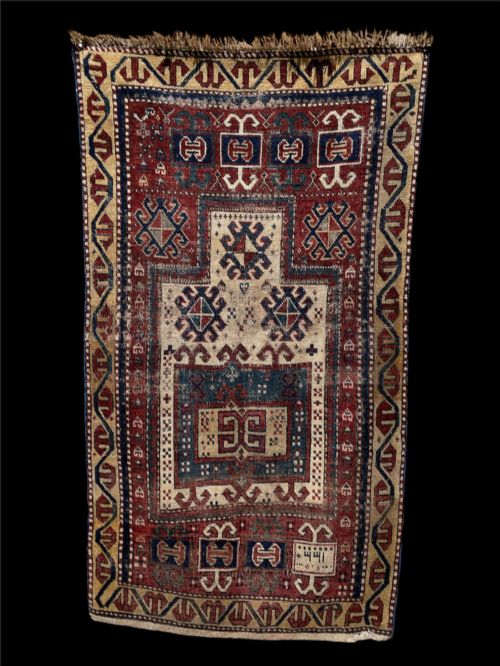
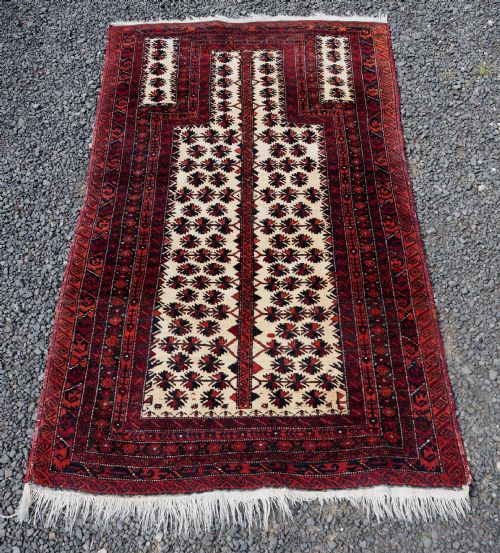
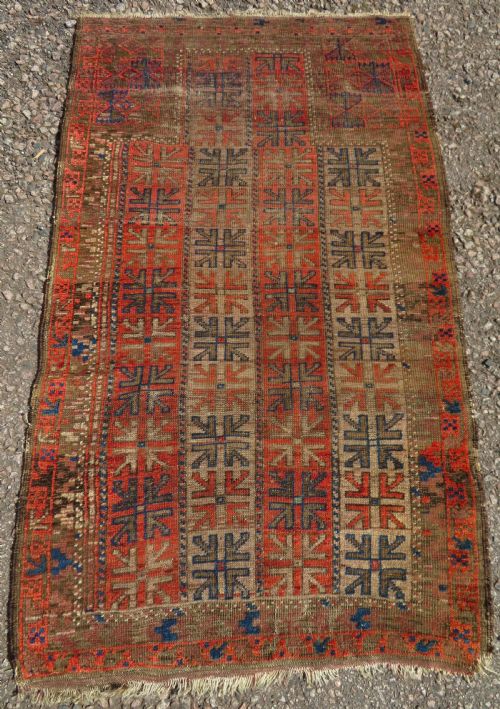
A geometric mihrab rug is a textile featuring a distinctive pointed arch design that represents the prayer niche directed towards Mecca, rendered in straight lines, angles and polygons rather than curves. These pieces originate primarily from Caucasian, Anatolian, Persian and Afghan tribal workshops or village communities.
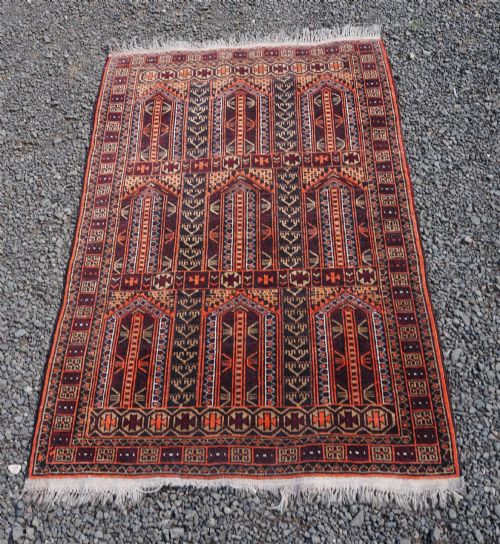
The format centres on the prayer arch, sometimes multiplied into double, triple or seh mihrab layouts, surrounded by borders filled with stars, lattice patterns or geometric motifs.
Most examples found in these listings date from the Victorian era up through the early twentieth century, spanning periods from the mid nineteenth century to approximately nineteen thirty.
Materials and Construction
Weavers constructed these rugs using hand-spun wool, cotton foundation threads and occasionally goat hair or camel hair for durability and texture.
Natural dyes provide the characteristic colour palette, yielding deep tones that soften gracefully over decades of light exposure and use.
The hand-knotted pile creates a dense, tactile surface designed to withstand regular foot traffic while maintaining crisp linear patterns.
Geometric Mihrab Rug Retail Price Guide 2026
Typical asking prices for geometric mihrab rug among the pieces listed under this phrase on Sellingantiques today, from the lower quarter to the upper quarter. They describe what is for sale here now, not the wider market.
Current selections span weaving traditions from the Caucasus, Anatolia, Persia and Afghanistan, dating from eighteen fifty through nineteen thirty.
Judging Quality and Execution
Quality rests in the precision of the geometric drawing, where sharp angles and straight lines display the weaver's control over the grid.
The handling of natural dyes creates subtle variations in tone across the field, distinguishing pieces with rich depth from flatter compositions.
The density of the knotting and the condition of the original kilim ends determine the structural integrity and longevity of the textile.
The Geometric Mihrab Rug Glossary
- Mihrab
- The arched niche in a prayer rug that signifies the direction of prayer. Its shape guides the visual composition of the piece.
- Seh Mihrab
- A design layout featuring three distinct prayer arches grouped across the upper field. This multi-niche format appears frequently in Afghan village weaving.
- Kilim end
- The flat-woven portion at the ends of a rug, executed prior to the knotted pile section. These woven strips protect the piece from fraying.
- Double mihrab
- A prayer rug design incorporating two arches, often positioned at opposite ends of the central field. This symmetrical layout allows the rug to be used from multiple orientations.
Geometric Mihrab Rug: Frequently Asked Questions
How were these rugs used originally?
These textiles served primarily as portable prayer spaces for individuals during daily devotions. Their design directed the user towards the proper orientation while offering a clean, insulated surface for kneeling.
Beyond religious use, village families laid them across living spaces to add warmth and decorative order to domestic interiors.
How do I care for an antique rug?
Vacuum these textiles gently with a suction-only attachment, avoiding motorized brush rolls that can catch wool fibres. Rotate the piece periodically to ensure even wear from foot traffic and sunlight exposure.
Professional cleaning by a specialist familiar with natural dyes and hand-spun wool preserves the structural integrity of the fibres.
How can I tell different regional styles apart?
Regional attribution relies on specific combinations of palette, border motifs and structural proportions. Caucasian pieces often display crisp, saturated geometry, while Baluch and Afghan works utilise deep earth tones and camel hair.
Anatolian village examples present distinct floral lattice designs and star borders unique to western regions like Milas and Kirsehir.
What does a seh mihrab design mean?
A seh mihrab translates to three prayer niches arranged side by side across the field of the rug. This specific layout represents a traditional variant developed within Afghan and Baluch village workshops.
The multiplication of arches creates a dense architectural pattern that distinguishes these pieces from single-niche formats.