






Afghan Tribal Prayer Rug
When you examine an afghan tribal prayer rug, you encounter hand-woven wool floor coverings created by nomadic groups and village weavers across nineteenth- and early twentieth-century Central Asia.
Afghan Tribal Prayer Rug
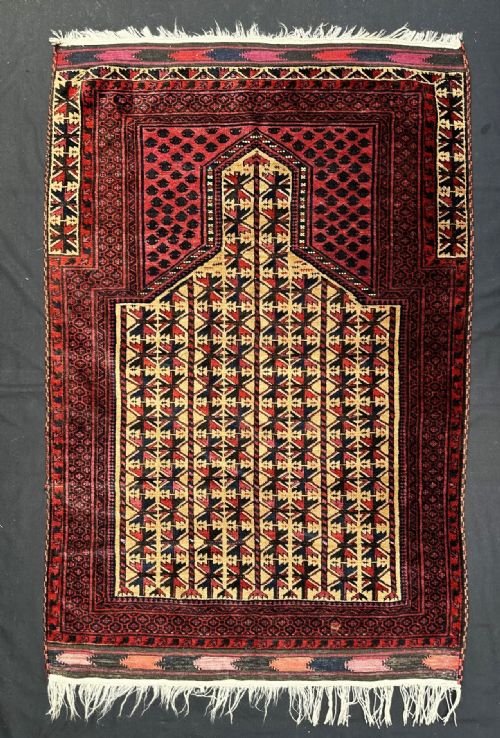
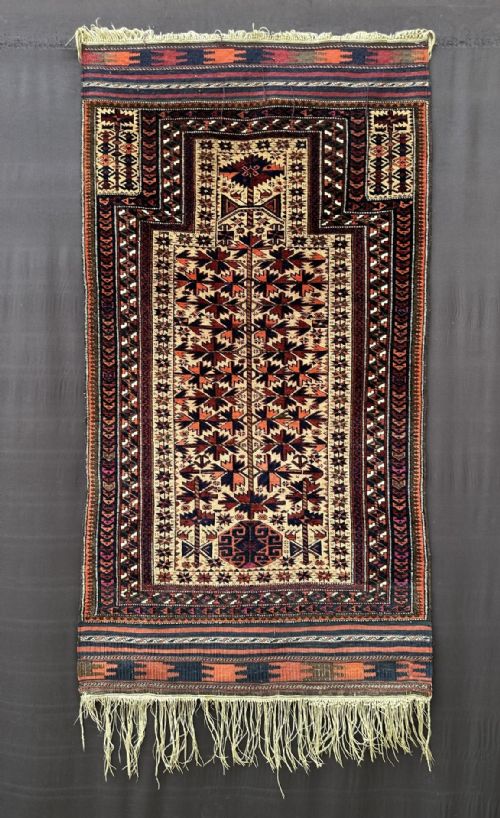
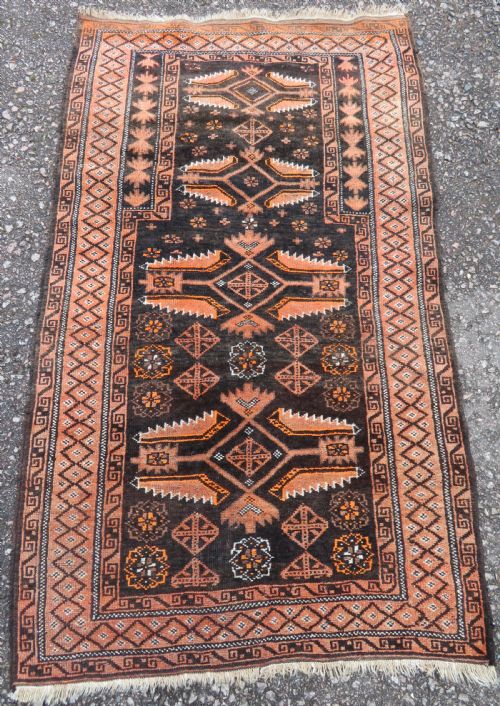
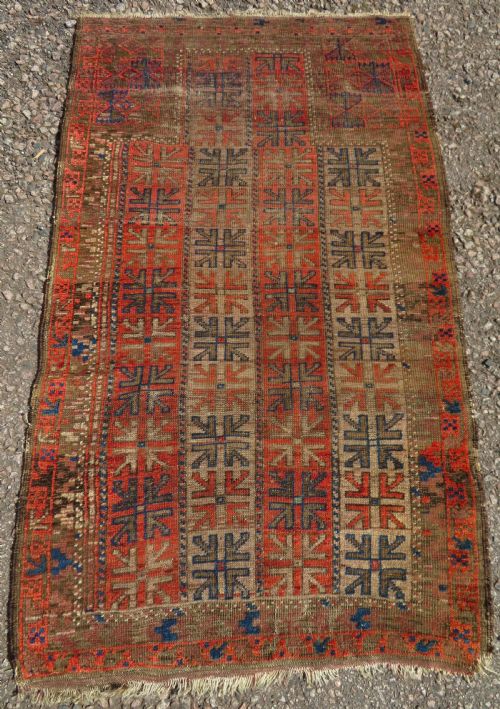
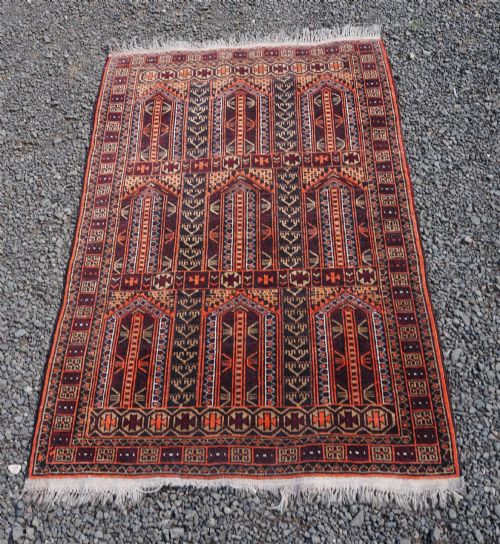
An afghan tribal prayer rug primarily serves personal devotional use, defined by a distinct architectural arch or niche known as a mihrab that directs the user toward Mecca. These portable textiles emerge from regional groups such as the Baluch, Timuri, Taimani, and Kizil Ayak communities working in nineteenth and early twentieth-century borderlands.
Most examples found here date from the late nineteenth century up through the nineteen-thirties, manifesting compact formats suited for domestic placement or travel. Makers incorporate single, double, or triple mihrab formats alongside recurring motifs like the lotus leaf, rams horn, and mosque lanterns.
The aesthetic vocabulary bridges village traditions and nomadic utility, resulting in pieces carrying long kilim ends and mixed technique foundations. Buyers encounter formats ranging from standard single-niche rugs to scarce variations featuring complex multi-arched layouts.
Materials and Construction
The foundational structure relies on hand-spun wool for the pile, supplemented by cotton or wool used for the warps and wefts. Weavers also incorporated animal fibres such as goat hair and camel hair, particularly in mixed technique pieces originating from Sistan and surrounding regions.
Colour derives from natural dyes applied to local fleece, yielding rich variations across the field and borders. The construction involves durable knotting techniques executed on portable vertical or horizontal looms set up in tribal camps and rural settlements.
Afghan Tribal Prayer Rug Retail Price Guide 2026
Typical asking prices for afghan tribal prayer rug among the pieces listed under this phrase on Sellingantiques today, from the lower quarter to the upper quarter. They describe what is for sale here now, not the wider market.
The inventory highlights regional traditions including Baluch, Timuri, Kizil Ayak, and Taimani tribal aesthetics.
Evaluating Craftsmanship
Quality in an afghan tribal prayer rug rests upon the fineness of the knotting, the handling of the wool, and the clarity of the natural dyes. Tighter foundations and more supple hand-spun wool indicate superior tactile and structural integrity.
Design execution separates standard production from exceptional pieces, with unusual mihrab configurations, double lanterns, and crisp tribal motifs commanding deeper visual interest. The preservation of original kilim ends and structural balance further distinguishes the upper tier of surviving examples.
The Afghan Tribal Prayer Rug Glossary
- Mihrab
- The arched architectural niche depicted on a prayer rug, symbolising the direction of prayer. It forms the focal point of the composition.
- Kilim
- A flat-woven textile technique utilised for the non-pile end sections of rugs. These flat ends protect the knotted pile from fraying.
- Baluch
- A nomadic and semi-nomadic tribal grouping spanning the borderlands of Persia and Afghanistan. Their weavers are renowned for deep tones and geometric prayer designs.
- Timuri
- A tribal group associated with north-east Persia and north-west Afghanistan. Their weavings frequently share stylistic overlaps with Baluch work.
- Seh Mihrab
- A design layout featuring three distinct prayer arches arranged across the field. This format appears frequently in village and tribal pieces.
Afghan Tribal Prayer Rug: Frequently Asked Questions
What is a mihrab on these rugs?
The mihrab is the arched niche depicted near the top of the field, representing the prayer arch found in mosques. Weavers position this architectural element to orient the user during daily devotions.
Different tribal groups developed distinct interpretations of this arch, ranging from simple single curves to double and triple configurations framed by geometric borders.
How do I distinguish Baluch from Kizil Ayak pieces?
Baluch rugs typically display rich, dark wools with geometric motifs and nomadic influences linked to borderland regions. Kizil Ayak pieces often reflect Turkmen tribal traditions featuring specific medallion and prayer formats.
Examining the structural details, palette, and secondary motifs helps clarify the specific tribal origin of each weaving.
Where were these textiles made?
Production took place across rural villages and nomadic camps in Afghanistan and neighbouring borderlands of Persia. Weavers worked within specific tribal groups such as the Taimani, Timuri, and Pashtun communities.
These pieces reflect the distinct regional aesthetics and available materials of the Central Asian landscape during the nineteenth and early twentieth centuries.
How should I care for an antique rug?
Protect the textile by placing it in low-traffic areas away from direct sunlight to preserve the natural dyes and wool pile. Regular gentle vacuuming without a rotating brush bar keeps dust from settling into the foundation.
Allowing the fibres to breathe and addressing spills promptly with professional cleaning ensures the longevity of these historical floor coverings.