


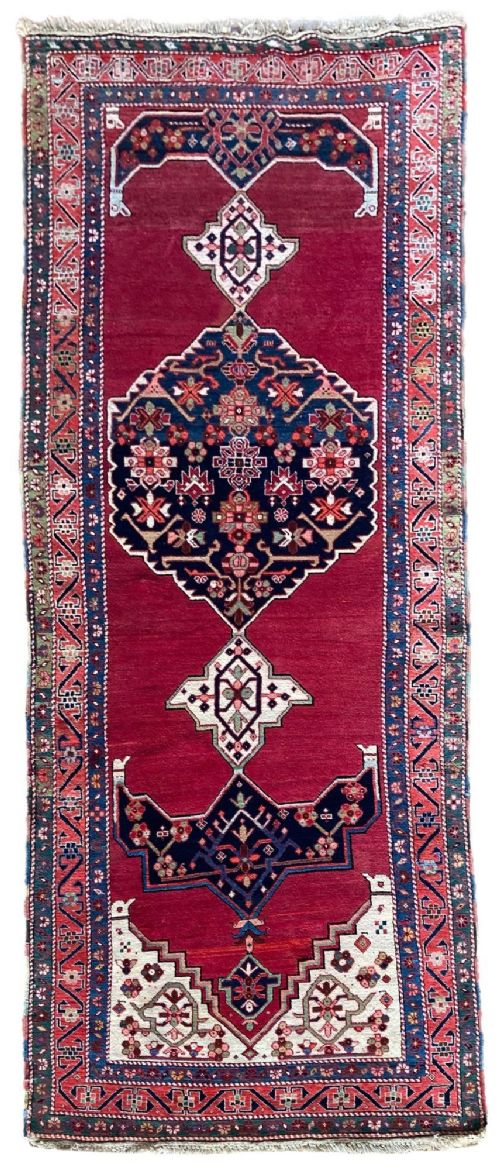
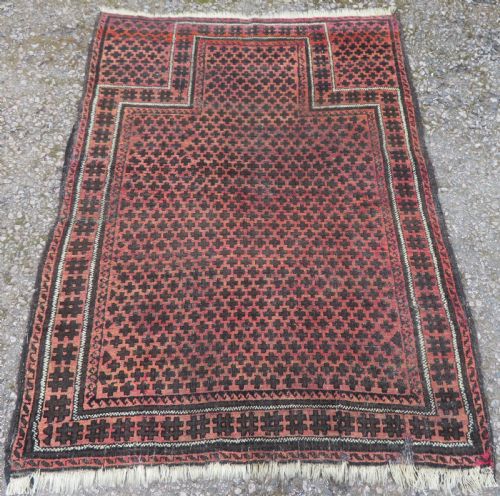


Dark Red Oriental Carpet
A dark red oriental carpet brings grounded warmth and rich pattern to a room through centuries of tribal and village weaving traditions.
Dark Red Oriental Carpet
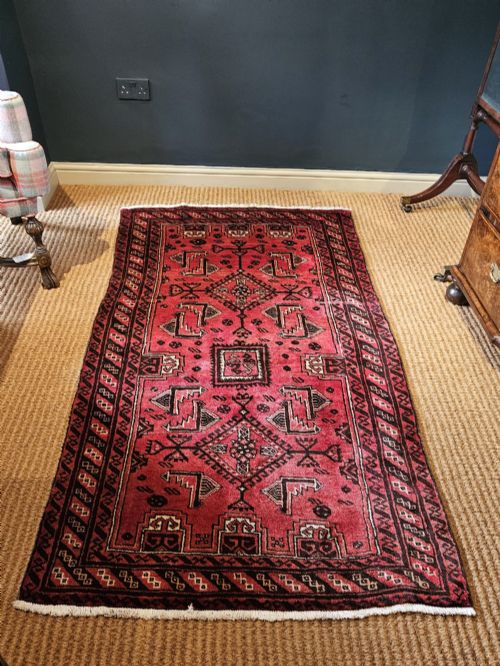
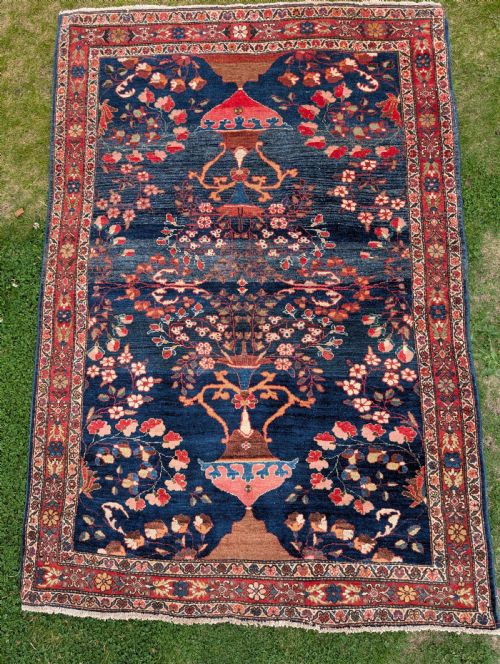
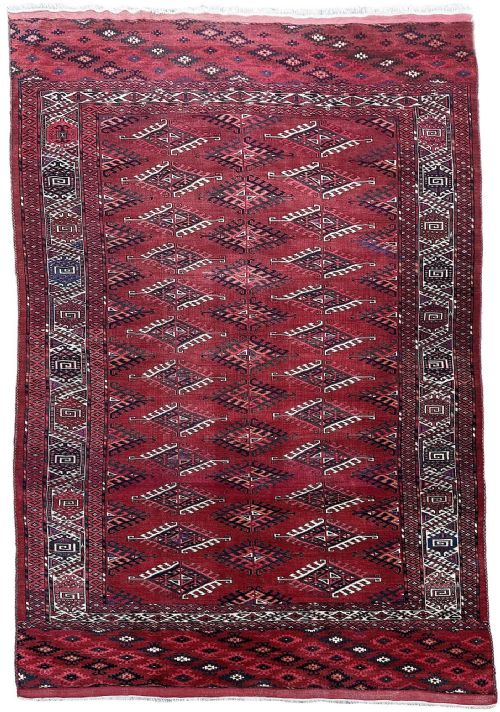
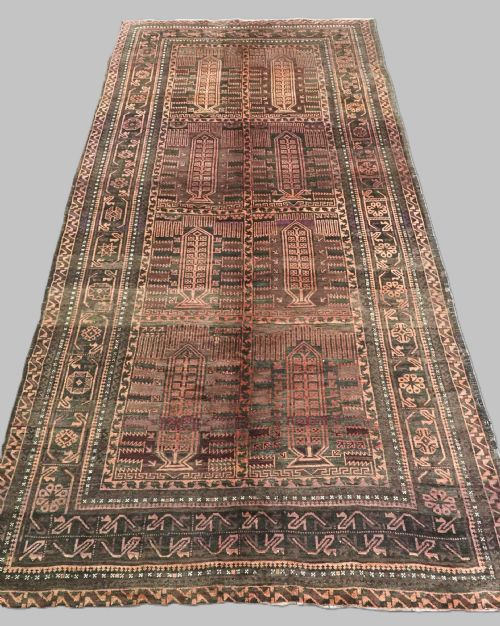
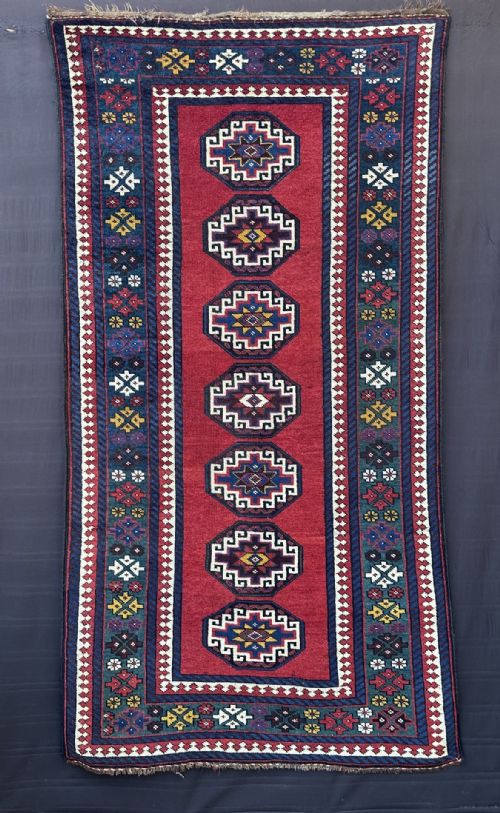
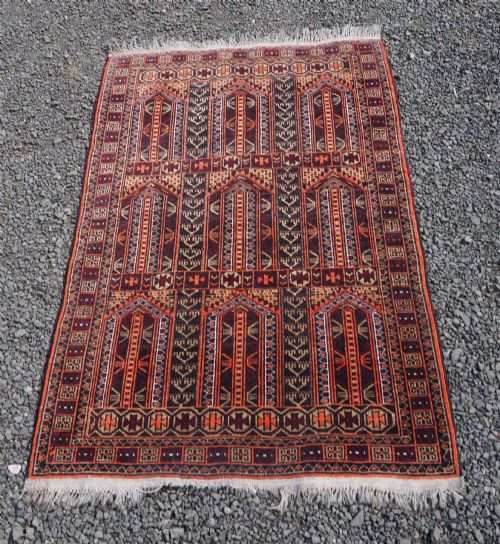
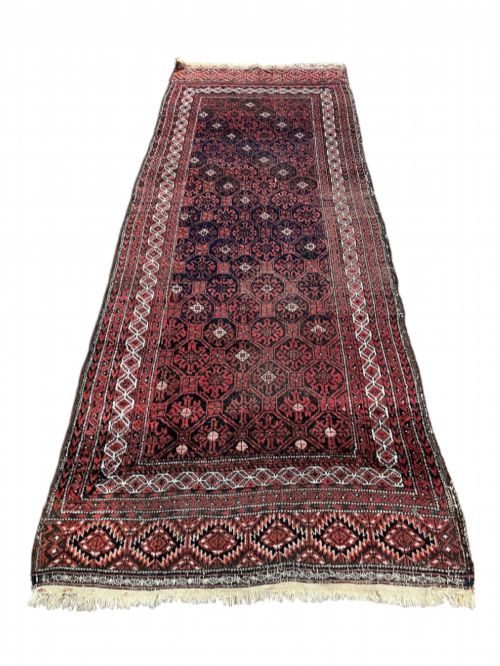
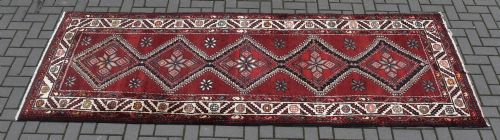
A dark red oriental carpet encompasses handwoven tribal and village textiles originating from Persia, Afghanistan, the Caucasus, and Turkmen territories. These floor coverings and runners serve both functional and decorative roles, carrying deep historic roots in nomadic and settled craft traditions.
The pieces appearing on this page span the late nineteenth century into the early decades of the twentieth century, displaying regional weaving signatures. Common formats include area rugs, runners, prayer rugs, and larger carpets featuring distinct local motifs.
Baluch and Afghan tribal pieces feature prominently alongside Persian workshops and Caucasian village rugs. Each grouping employs particular design vocabulary, from geometric field patterns to directional prayer niches and medallion layouts.
Materials and construction
Weavers constructed these carpets predominantly from wool, hand-spun wool, and cotton foundations, occasionally incorporating goat hair or silk for specific structural details. Natural dyes provide the enduring palette of deep reds, madder tones, and contrasting accents.
Handknotting techniques secure the pile to cotton or wool warp and weft threads, creating dense and resilient surfaces designed for long-term utility. The integration of hand-spun materials gives individual rugs subtle variations in texture and colour saturation.
Some Baluch weavers incorporated tiny protective talismans and accidental asymmetrical knots into their prayer rugs to ward off the evil eye.
Assessing quality and execution
Quality rests in the precision of the knotting, the handling of the natural dyes, and the clarity of the design execution. Tighter knot counts allow for sharper geometric definition and finer curves within complex medallion or field layouts.
The stability of the foundation and the integrity of the selvedges determine structural longevity. Superior examples maintain balanced proportions, harmonious colour ageing, and resilient pile despite decades of use.
The Dark Red Oriental Carpet Glossary
- Mihrab
- A niche design element indicating the direction of prayer, frequently found on prayer rugs from Baluch and Anatolian traditions.
- Gul
- An octagonal medallion or primary motif repeated across Turkmen and Baluch carpets, often signifying specific tribal lineages.
- Kelleh
- A long, rectangular format carpet traditionally used in Persian rooms, narrower than a standard room-size carpet.
- Warp
- The vertical foundation threads stretched lengthwise on the loom, onto which the knots are tied.
- Madder
- A natural organic dye derived from plant roots, responsible for the deep reds and terracotta hues characteristic of these textiles.
Dark Red Oriental Carpet: Frequently Asked Questions
How do I clean a vintage carpet?
Professional specialist cleaning is essential for antique wool and natural dye textiles to prevent dye migration and fibre damage. Regular gentle suction without a rotating brush helps remove embedded dust.
Avoid home chemical treatments and excessive water exposure, which weaken old cotton foundations and sensitive hand-spun wool piles.
Can these rugs take heavy foot traffic?
Sturdily knotted wool and goat hair carpets tolerate moderate to heavy domestic use when paired with a quality underlay. Placing them in lower-traffic zones preserves fragile silk accents or distressed pile.
Rotating the rug periodically ensures even wear patterns across areas exposed to direct sunlight or heavy footsteps.
How do I identify tribal origins?
Design vocabulary, palette choices, and structural characteristics point directly to specific weaving groups like the Baluch, Yomut, or Qashqai. Examining knot direction, selvedge finishes, and end finishes reveals regional techniques.
Reference literature helps match specific recurring guls and field patterns to the communities that originally wove them.
What underlay should I use?
A breathable, mesh-style natural rubber underlay prevents slipping and cushions the foundation threads against hard floors. Avoid plastic or solid foam backings that trap moisture and degrade old wool.
An appropriately sized underlay also stops the rug from stretching unevenly when walked upon.