



Geometric Mihrab Carpet
A geometric mihrab carpet brings angular prayer arches and tribal symbols into domestic spaces.
Geometric Mihrab Carpet
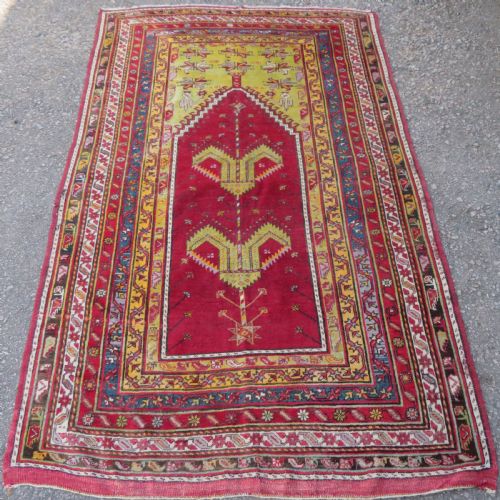
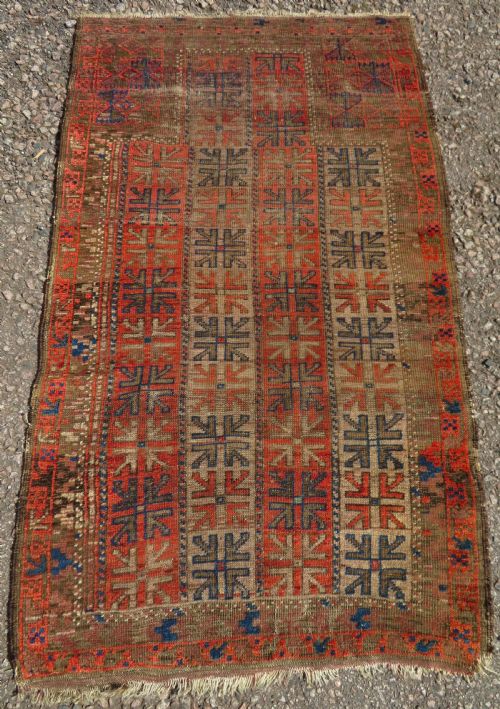
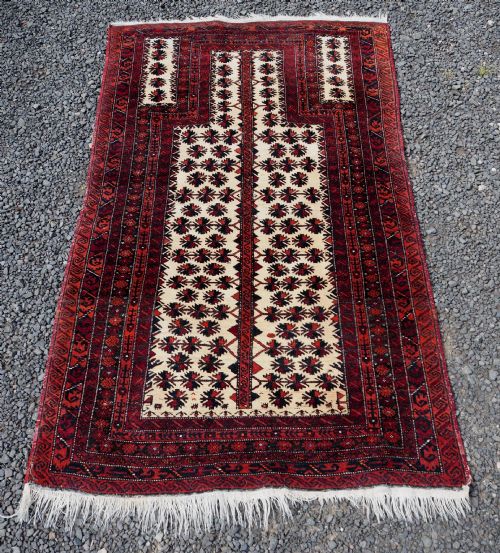
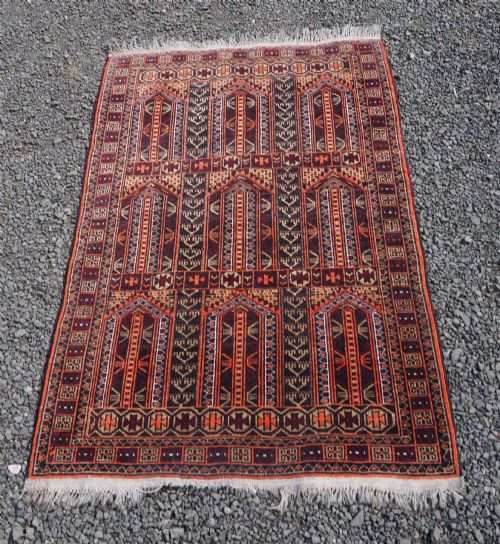
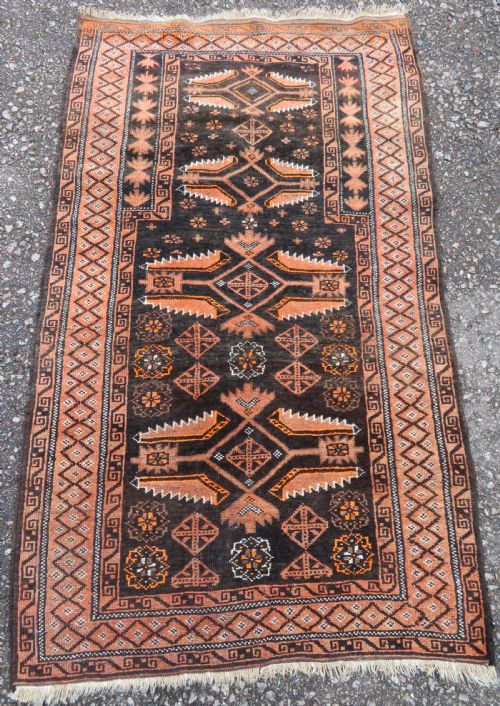
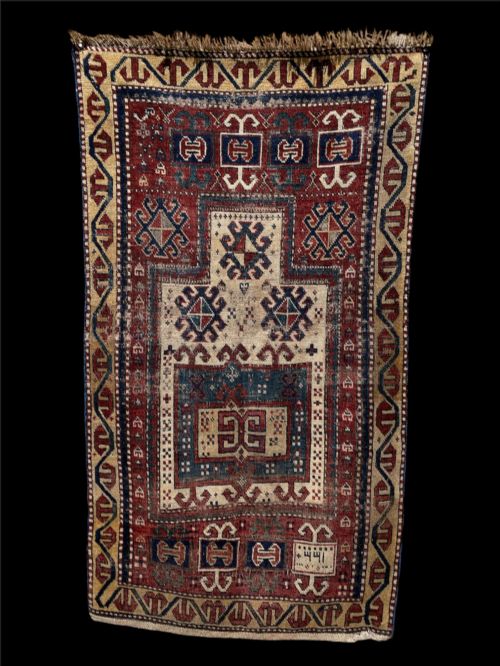
A geometric mihrab carpet typically takes the form of a prayer rug featuring pointed or stepped arches constructed from straight lines and angular motifs. These pieces originate primarily from tribal and village workshops across regions such as the Caucasus, Afghanistan, Anatolia, and Persia.
The inventory leans heavily towards antique village productions dating from the nineteenth and early twentieth centuries, including Victorian era examples. Buyers frequently encounter formats featuring single, double, or multiple mihrab arches decorated with rams horns, stars, or lotus leaf designs.
Many of these rugs serve as portable places of prayer, woven by nomadic and semi-nomadic groups. The overarching aesthetic relies on geometric discipline rather than flowing curves, giving each piece a distinct architectural clarity.
Materials and construction methods
Weavers constructed these textiles using hand-spun wool, cotton, and occasionally camel hair or goat hair for the foundation and pile. Natural dyes supplied the palette, yielding deep tones that mellow gradually across decades of exposure.
The handwoven structure combines durable wool knots tied onto sturdy cotton or wool warps and wefts. Long kilim ends frequently terminate the rugs, preserving the functional integrity of the flatwoven borders.
Certain prayer rugs incorporate tiny floating stars inside the mihrab arch, guiding the weaver's eye towards the heavens.
Evaluating quality and execution
Quality rests in the precision of the angular drawing and the saturation of the natural dyes. Tighter knotting and balanced proportions distinguish finer village outputs from simpler utility pieces.
The integrity of the wool pile and the survival of the original kilim ends dictate the physical condition. Secondary materials like camel hair or goat hair introduce subtle texture shifts that elevate certain weaves.
The Geometric Mihrab Carpet Glossary
- Mihrab
- The arched niche in a prayer rug that indicates the direction of prayer. In these pieces, the arch is rendered through geometric angles and stepped lines rather than curves.
- Seh Mihrab
- A design featuring three distinct prayer arches grouped across the field. This multi-niche format frequently appears in Afghan and Baluch village rugs.
- Kilim end
- The flatwoven band of fabric at either end of a piled rug. These sections protect the knots from unravelling and often display supplementary coloured patterns.
- Rams horn
- A hooked motif symbolising power and protection. It frequently frames the mihrab arch in tribal carpets.
- Natural dye
- Colour derived from plants, insects, or minerals rather than synthetic compounds. These dyes create nuanced shades that develop a rich patina over time.
Geometric Mihrab Carpet: Frequently Asked Questions
How do I care for an antique prayer rug?
Vacuum gently using suction only, avoiding any rotating brush bars that might pull the wool pile. Keep the textile out of direct sunlight to protect the natural dyes from fading.
Rotate the rug periodically to ensure even wear across the surface from foot traffic. Professional cleaning should be undertaken sparingly by specialists experienced in antique tribal textiles.
Where were these tribal rugs made?
Production centres span the Caucasus, Anatolia, and the tribal territories of Afghanistan and Persia. Nomadic groups and village weavers produced these textiles for daily use.
Specific regions such as Shirvan, Gendje, and Baluchistan developed distinct regional palettes and geometric vocabularies. These local traditions help identify the geographic origins of individual pieces.
How can I tell the age of a rug?
Age is determined by examining the materials, dye types, and structural wear patterns. Hand-spun wool and early natural dye palettes typically indicate nineteenth or early twentieth-century origins.
Structural details such as the presence of camel hair, goat hair foundations, or long kilim ends provide further chronological clues. Comparing knot density and design motifs with documented examples helps refine the dating.