
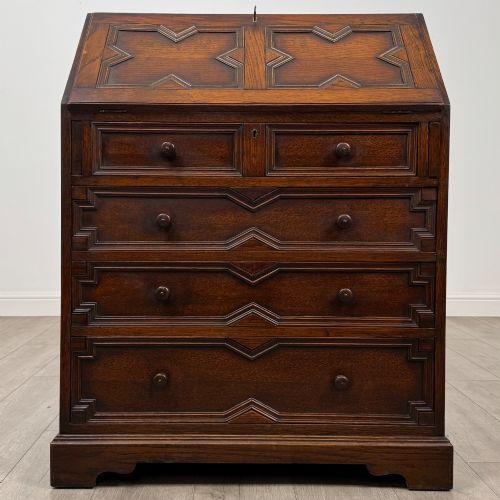
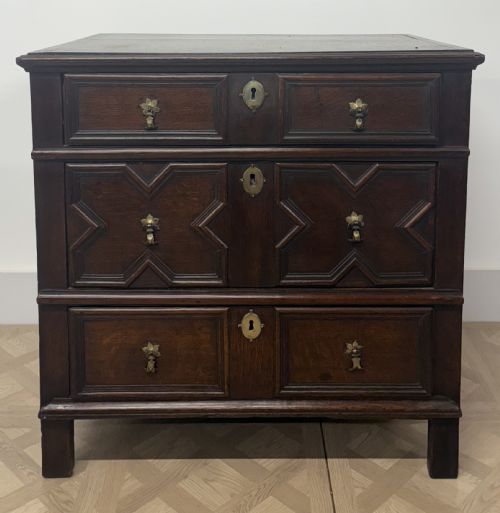
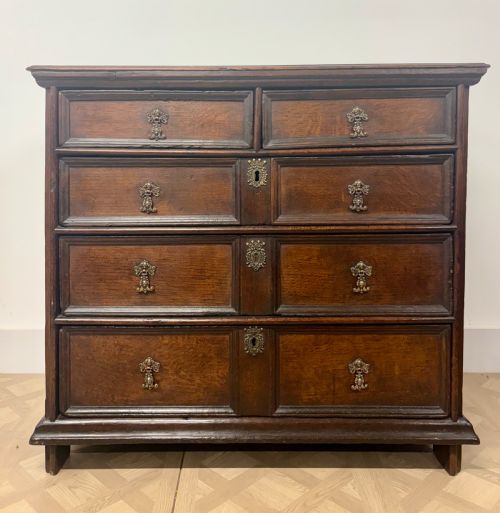
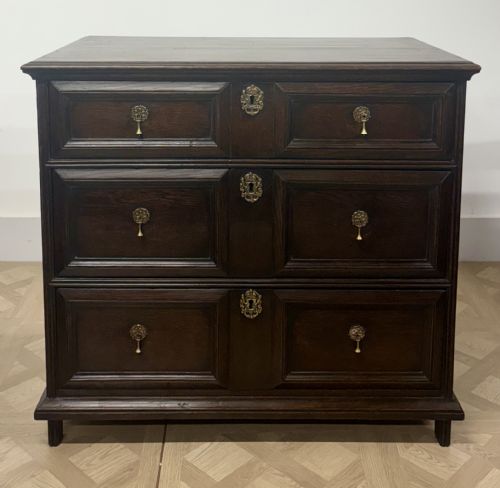

Geometric Carved Chest
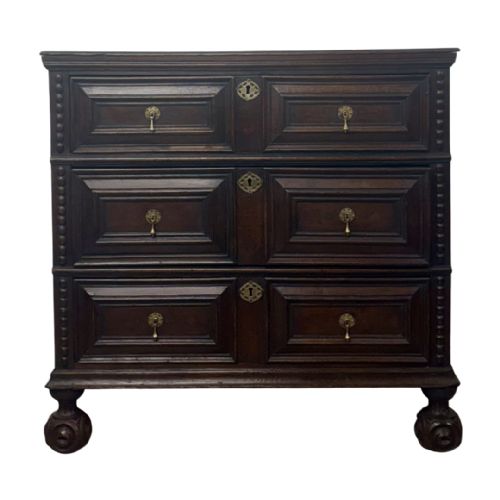
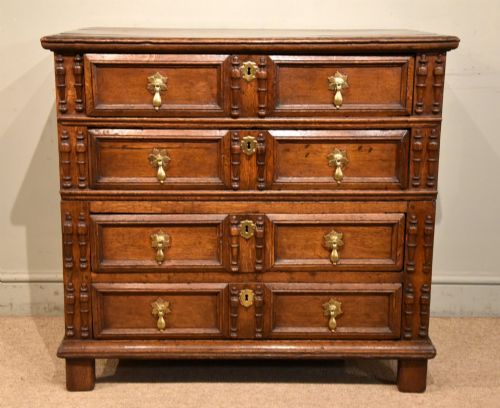
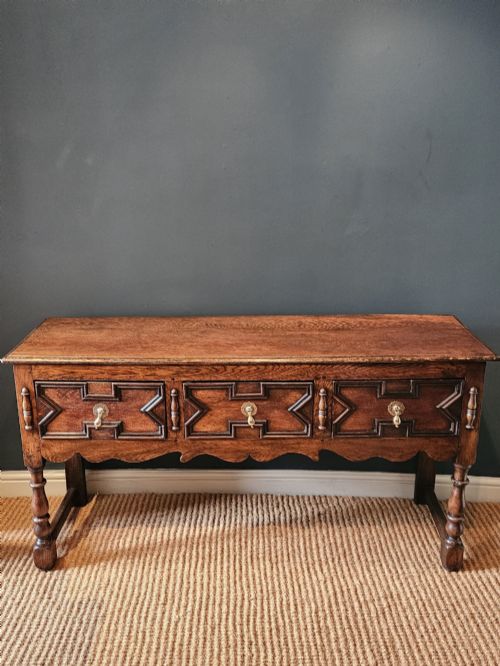
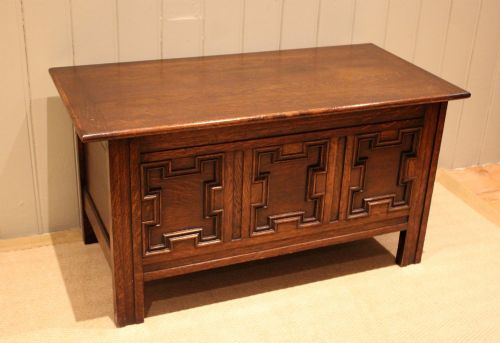
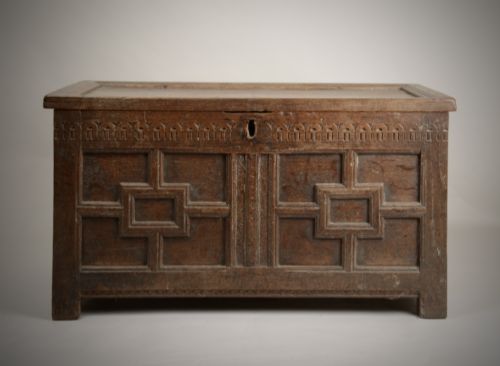
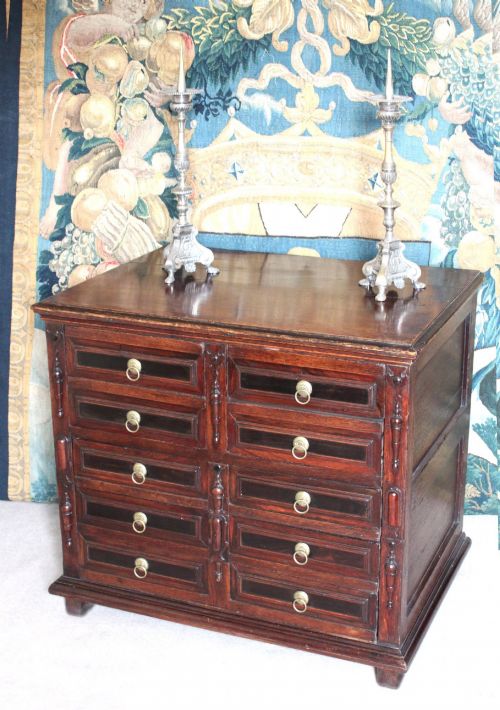
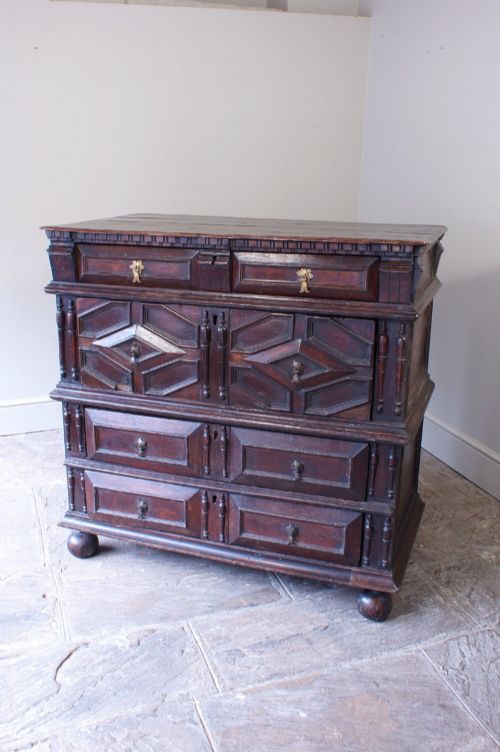
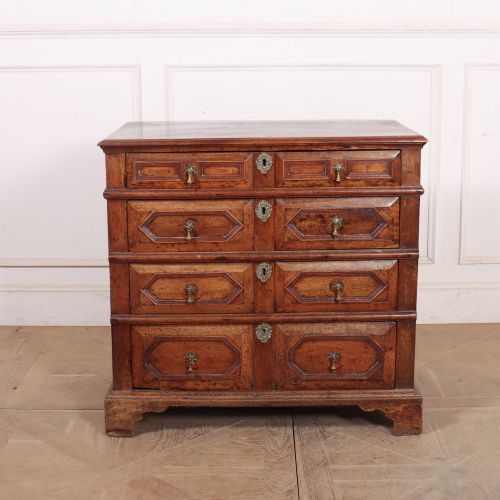
A geometric carved chest brings tangible seventeenth-century craftsmanship into a room, offering sturdy storage anchored by architectural wood mouldings.
Geometric Carved Chest
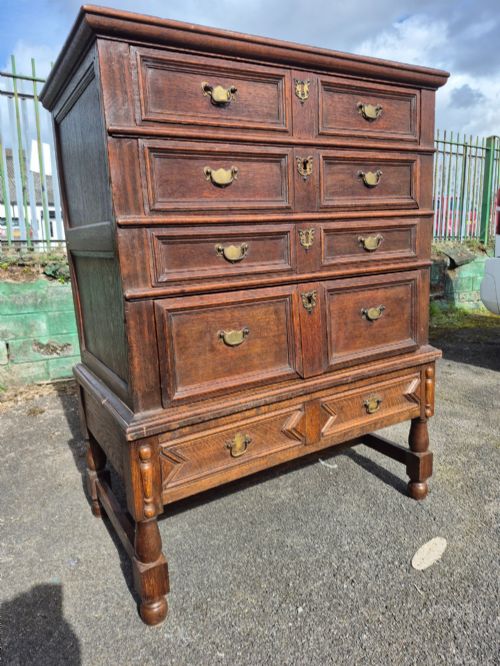
A geometric carved chest typically takes the form of a sturdy timber storage piece or a multi-drawer chest featuring applied mouldings on the facade. These items originate predominantly from the seventeenth century, spanning the Jacobean, Charles II, and Georgian periods, alongside later revival pieces produced in the twentieth century.
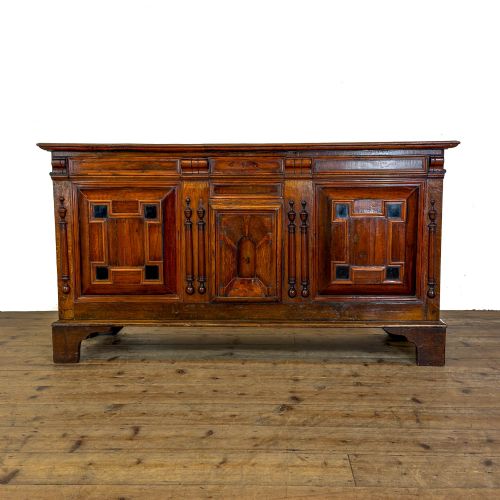
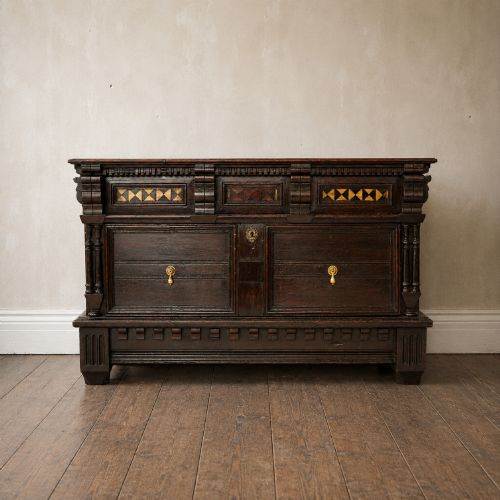
The most common formats met on this page are Charles II chests of drawers and oak coffers adorned with fielded panels, geometric panels, and geometric mouldings. Pieces range from straightforward two-part drawer units to sophisticated chests on stands and mule chests incorporating fruitwood and walnut elements.
Materials and construction methods
Cabinet makers built these pieces primarily using solid oak, often combining walnut, fruitwood, and ebonised wood to create striking tonal contrasts within the geometric designs. Wood inlay added further surface ornamentation.
Structural hardware relied on iron and brass, with original brass drop handles and escutcheons frequently securing the drawers and doors of seventeenth-century examples.
Some seventeenth-century drawers shut with such airtight precision that they sigh gently when pushed home.
Distinguishing quality across examples
Quality rests upon the crispness of the applied mouldings and the integrity of the timber used across the carcass. Pieces retaining original brasses and uncompromised secondary woods stand apart from those altered or heavily restored over centuries.
The depth and precision of the carved details dictate the visual strength of a piece. Earlier seventeenth-century origins command attention through authentic patination and joinery, whereas later revivals reflect the cabinet-making standards of their specific production decades.
The Geometric Carved Chest Glossary
- Moulding
- A strip of material with a profiled cross section used to create surface decoration. On these chests, applied mouldings form geometric patterns across the drawer fronts.
- Coffer
- A large wooden chest used historically for storage. These box-like containers often feature hinged lids and carved front panels.
- Mule chest
- A storage chest fitted with one or more drawers at the base beneath the main compartment. They bridge the functional gap between a traditional coffer and a chest of drawers.
- Chest on stand
- A case piece elevated upon a distinct supporting base or frame. This form lifts the primary storage volume off the floor.
- Ebonised wood
- Timber treated to resemble ebony through staining or finishing. Cabinet makers utilised this dark material to create sharp contrast against lighter oak.
Geometric Carved Chest: Frequently Asked Questions
What is a geometric carved chest?
A geometric carved chest is a seventeenth-century or revival storage item defined by applied wooden mouldings arranged in geometric patterns across its drawers or front panels.
These pieces utilise timber construction, predominantly oak, and serve as both functional furniture and historical examples of architectural joinery.
How do I date a seventeenth-century chest?
Dating relies on examining the construction methods, timber species, joinery techniques, and hardware present on the piece. Hand-cut joints and original brasses often indicate the period of manufacture.
Stylistic markers such as Charles II moulded drawer fronts or Jacobean framing help place the item within its specific historical era.
Where were these chests used?
These chests functioned primarily as domestic storage for textiles, valuables, and household goods in period homes. Their sturdy construction suited daily use in hallways, chambers, and main living spaces.
Today, they adapt readily to modern interiors as statement storage units in bedrooms, hallways, or living rooms.
Are revival pieces common?
Revival pieces from the Edwardian era and the twentieth century appear frequently alongside genuine seventeenth-century examples. These later interpretations emulate earlier styles using traditional forms and materials.
Comparing construction details helps distinguish period originals from subsequent stylistic revivals.