



Gendje Carpet Runner
These gendje carpet runner examples bring bold Caucasian tribal patterns and rich natural dyes directly into hallway spaces.
Gendje Carpet Runner
A gendje carpet runner sits within the broader tradition of Caucasian tribal weaving, often taking the form of a long rug or narrow runner intended for hallways and corridors. These woven pieces emerge from the Caucasus region during the late nineteenth century, spanning periods around eighteen eighty, eighteen ninety, and nineteen hundred.
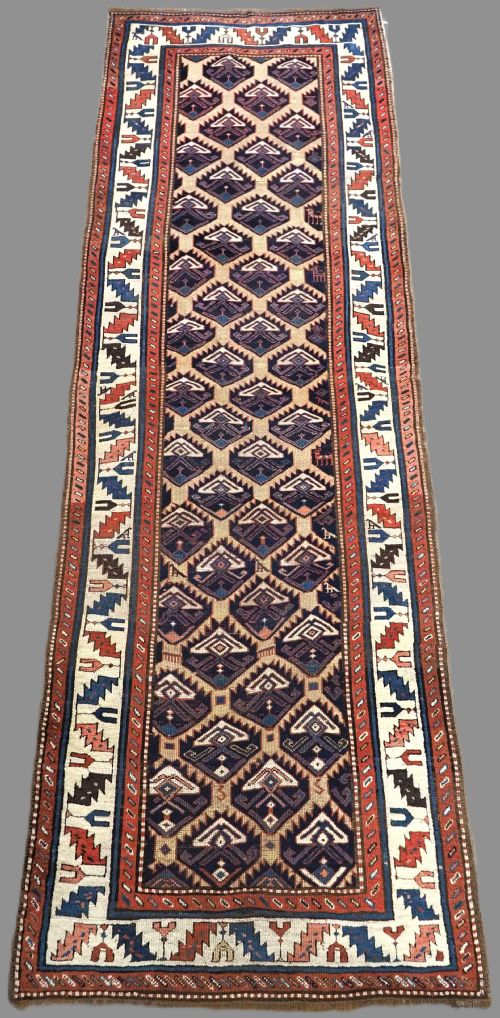
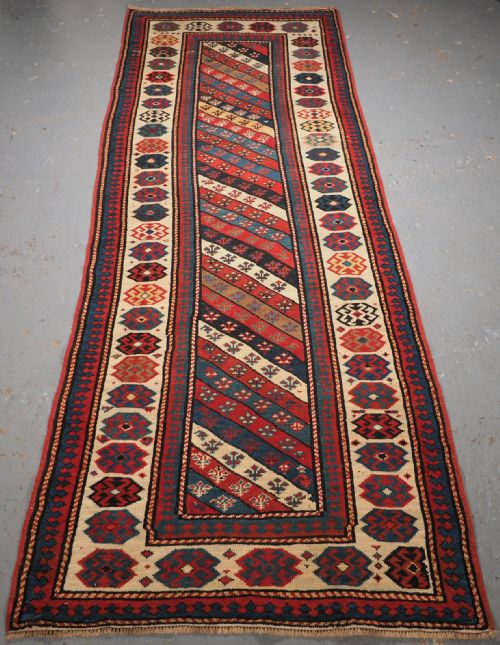
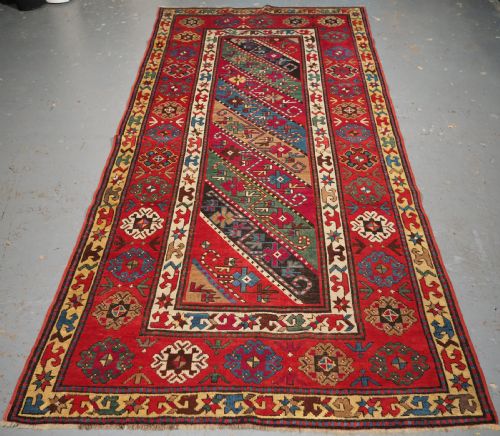
The format varies between dedicated hallway runners, long rugs, and prayer rugs featuring specific niche designs. Buyers searching for a gendje carpet runner encounter geometric formats decorated with lattice patterns, diagonal stripes, and figurative folk art elements.
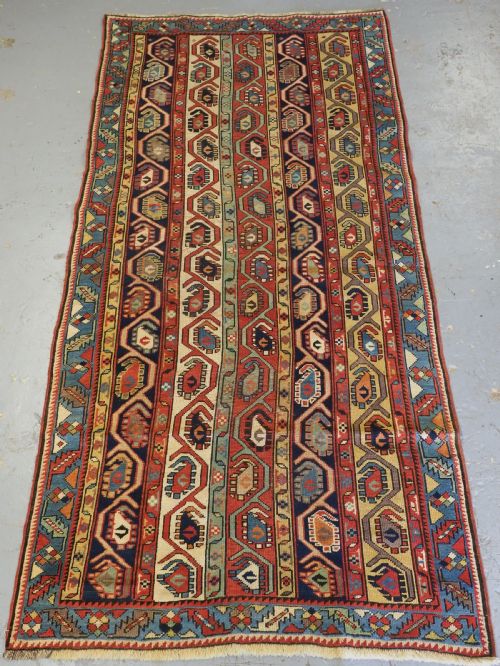
Regional attribution sometimes connects these weaves with neighbouring traditions like Kazak, Shahsavan, or Kurd workshops. The most common format meeting this search phrase combines elongated proportions with repeating boteh motifs or colourful geometric fields.
Assessing quality in Caucasian weave
Quality rests upon the crispness of the geometric design and the complexity of the chosen layout, whether featuring a floral lattice, diagonal stripes, or figurative motifs like horses and people. Finer examples display precise execution in repetitive patterns such as the boteh motif.
The condition of the hand-spun wool pile and the retention of original natural dye colours heavily influence the integrity of each piece. Superior weaving exhibits tight knotting and well-balanced proportions that maintain structural stability in a hallway setting.
Woven horses and people trot across the wool pile, reminding us that anonymous village weavers enjoyed telling stories on the loom.
The Gendje Carpet Runner Glossary
- Boteh
- A recurring stylised almond or pear-shaped motif of Persian origin. This ancient symbol appears frequently in Caucasian and tribal weaving.
- Caucasian
- Pertaining to the Caucasus region situated between the Black Sea and the Caspian Sea. This area encompasses diverse weaving traditions with distinct geometric aesthetics.
- Prayer rug
- A small rug featuring a mihrab or arch design at one end. Historically used for individual prayer, these pieces often display specific devotional iconography.
- Natural dye
- Colourants derived from plant, insect, or mineral sources rather than synthetic chemicals. These traditional dyes yield complex secondary tones as they age.
Gendje Carpet Runner: Frequently Asked Questions
Where should I place a gendje carpet runner?
These narrow formats suit hallways, corridors, and long entryways where floor coverings soften foot traffic and introduce colour. Their elongated proportions fit well in transitional spaces that require linear visual interest.
Ensure you use an appropriate underlay to prevent slipping on smooth wooden or tiled floors. This extra layer protects the antique wool foundation from excessive friction against hard surfaces.
How do I identify a nineteenth century piece?
Look for the characteristic use of hand-spun wool combined with traditional natural dyes that show gentle abrash or tonal variation. Nineteenth century examples typically display authentic tribal asymmetry and saturated colour palettes.
Structural evidence such as primitive selvedges and wool foundation threads also help confirm the period. Comparing the weave density against known pieces from eighteen eighty to nineteen hundred clarifies the timeline.
What designs appear on these runners?
Common decorative schemes include geometric lattice patterns, diagonal stripes, and repeating boteh motifs arranged along the central field. Some rarer examples incorporate figurative folk art elements depicting people and horses.
Field colours range from deep saturated tones to scarce blue grounds framed by elaborate multi-stripe borders. Each design reflects the specific tribal heritage of the Caucasian weaver.
How do I care for antique wool runners?
Vacuum gently using suction only without a rotating brush roll to protect the fragile hand-spun pile. Professional cleaning by specialists in antique textiles prevents fibre degradation.
Rotate the piece periodically to ensure even wear from foot traffic and sunlight exposure. Keeping the rug away from direct, harsh sunlight preserves the natural dye colours.