




Tribal Lattice Pattern Runner
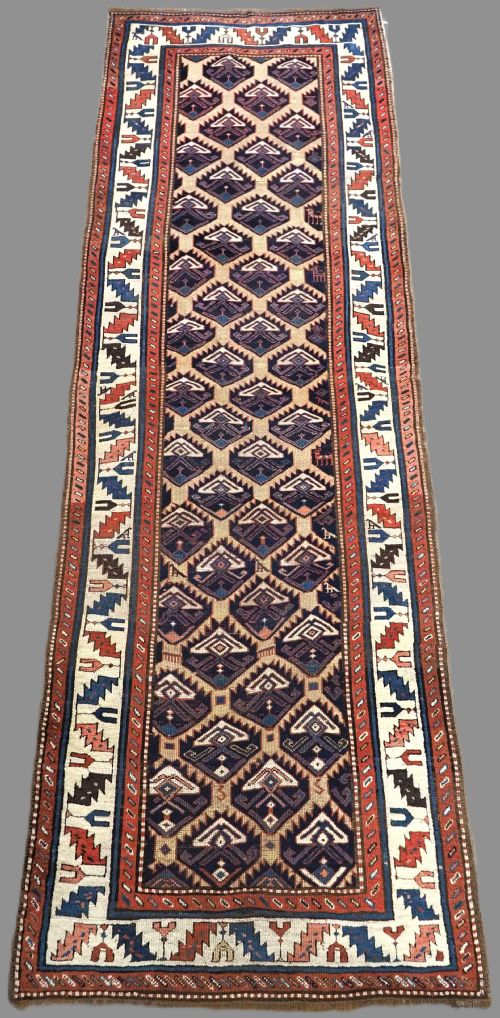
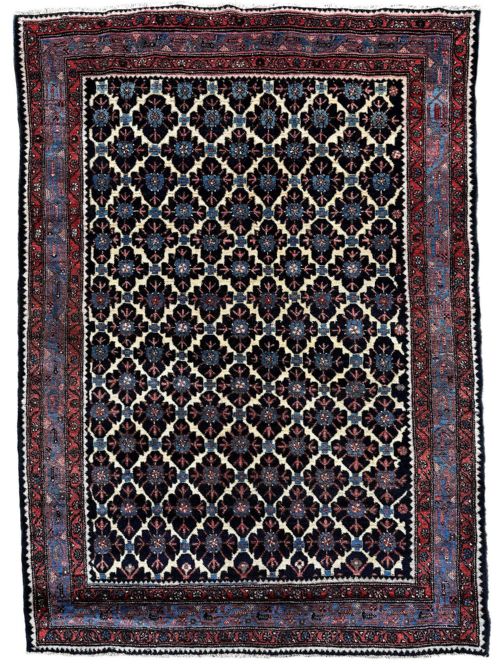
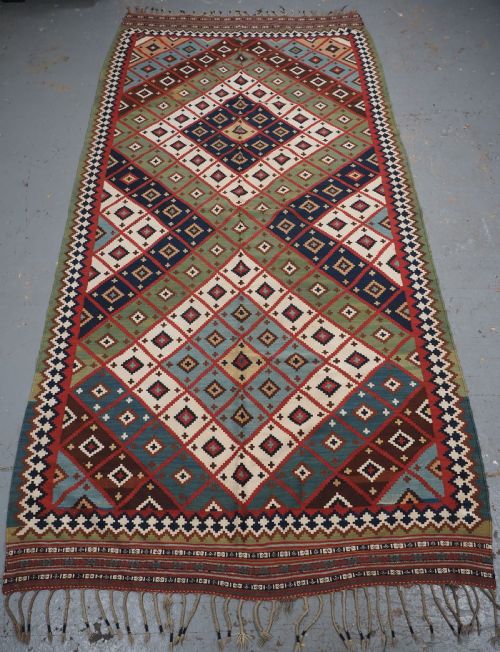
These tribal lattice pattern runner pieces bring geometric discipline and nomadic energy to corridors through bold repeat designs woven in wool.
Tribal Lattice Pattern Runner
A tribal lattice pattern runner is a narrow, elongated floor covering defined by repeating geometric grid motifs originating from nomadic or village weaving traditions. When you search for a tribal lattice pattern runner, you are looking at historical pieces originating from Caucasian, Persian, and Central Asian regions, often produced between the late nineteenth century and the early twentieth century.
The hallway runners and long rugs available in this category display traditional structures such as the mina khani design, star patterns, and stylised trellis networks. These items served practical purposes in village homes and nomadic tents while displaying the distinct visual identity of groups including the Baluch, Qashqai, Shahsavan, and Kurdish weavers.
Materials and construction
These textiles rely upon hand-spun wool for both foundation and pile, providing a dense and resilient structure suited to heavy foot traffic. Natural dyes supply the depth of colour found across the designs, reacting with the wool fibres over decades to develop rich patination.
Weavers constructed these pieces on upright or horizontal looms using knotting techniques specific to their regional heritage. Cotton occasionally appears in the foundations of certain village pieces alongside the predominant wool construction.
Some runners are remarkably narrow, dipping down to eighty-one centimetres wide to fit tight historical corridors.
Distinctions in quality
The standard of a tribal lattice pattern runner depends upon the precision of the knotting and the crispness of the geometric grid. Tighter knot density allows for sharper definition within the lattice motifs and greater durability over time.
The purity and saturation of the natural dyes significantly influence the visual impact of the piece. Examples with harmonious colour palettes and well-balanced proportions command greater appreciation among collectors.
The Tribal Lattice Pattern Runner Glossary
- Mina khani
- A traditional Persian floral lattice pattern featuring daisy-like blossoms connected by curving trellis lines. This motif appears frequently in classical village and tribal weaving.
- Runner
- A long, narrow carpet format specifically proportioned for corridors, hallways, and narrow spaces. These objects balance decorative presence with functional dimensions.
- Natural Dyes
- Colourants derived from plant, insect, and mineral sources prior to the widespread adoption of synthetic aniline dyes. They yield subtle tonal variations and age with distinct character.
- Kilim
- A flat-woven textile produced without a pile by tightly interweaving warp and weft threads. These pieces offer lightweight versatility and sharp geometric design work.
- Pile
- The vertical or slanted cut loops of yarn that form the soft surface of a carpet. Pile height and density vary according to the regional weaving traditions and intended use.
Tribal Lattice Pattern Runner: Frequently Asked Questions
Where should I place a runner?
These narrow formats work best in high-traffic hallways, corridors, and entryways where their elongated proportions fit comfortably. They also function effectively alongside long kitchen islands or beside beds.
Ensure you use an appropriate underlay to protect the historic wool foundation from slipping and premature wear on hard floors.
How do I care for antique wool rugs?
Regular gentle vacuuming without a rotating beater bar prevents dust accumulation within the wool pile. Professional cleaning by specialists in historic textiles ensures the natural dyes remain stable.
Keep these pieces out of direct, prolonged sunlight to prevent fading of the natural dye colours over time.
How do I identify a tribal design?
Tribal designs typically feature geometric abstraction, repeating lattice grids, and motifs inspired by nomadic life rather than courtly floral curves. The drawing is often less rigid, reflecting the weaver's individual expression.
Regional characteristics such as specific border arrangements and palette choices help pinpoint the origin to groups like the Baluch or Qashqai.
What age are these rugs?
The pieces seen here date predominantly from the late nineteenth century through the early decades of the twentieth century. This era encompasses traditional village and nomadic production before commercial synthetic materials became dominant.
Dates are estimated based on structural traits, wool characteristics, and dye chemistry rather than explicit documentation.