


Garden Lion Statues
Garden lion statues stand as classical guards for gateways and lawns, bringing centuries of sculptural presence to outdoor spaces.
Garden Lion Statues
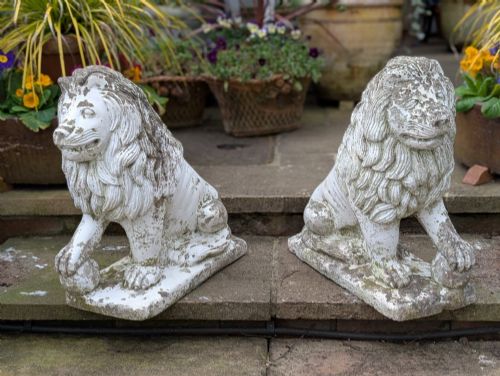
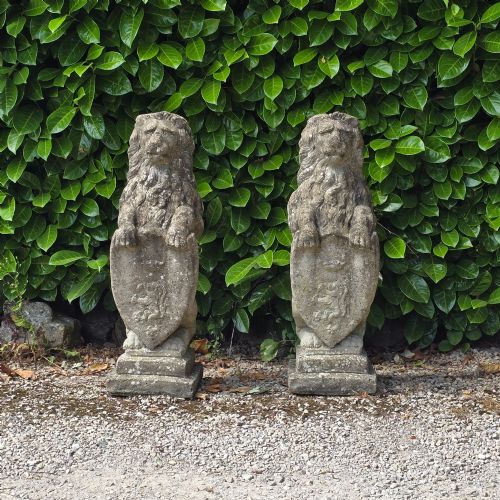
Garden lion statues are traditional outdoor sculptures designed to flank entrances, gates, and garden paths. When searching for garden lion statues, buyers encounter pairs formed as seated guardians, standing protectors, or recumbent beasts.
The pieces on this page span from the seventeenth century through to the mid-twentieth century, drawing on neoclassical, Victorian, and Italianate styles. French Medici types and classical iterations appear frequently alongside vernacular stone and terracotta versions.
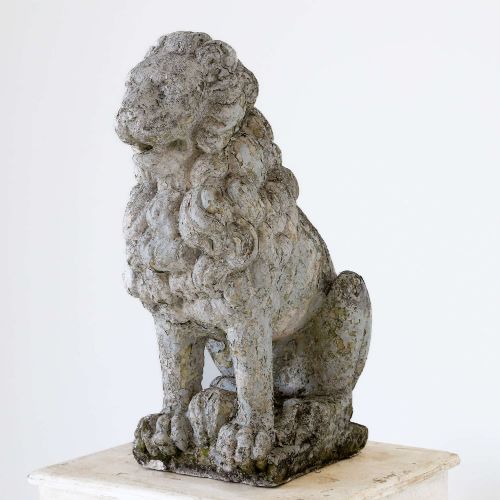
Most examples emerge as matched pairs intended for symmetry on pillars or plinths. Single figures and specialised forms such as gate finials also populate the selection.
Materials and construction
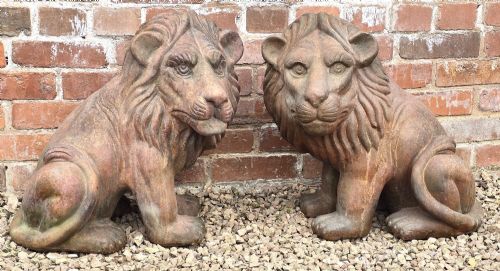
Statues utilise durable media suited for external exposure, notably cast stone, reconstituted stone, and composite stone. Hand-sculpted terracotta and salt-glazed pottery provide alternative earthenware finishes.
Carved marble and solid white marble represent the finer sculptural works, requiring skilled stonemasonry. Surviving pieces often retain traces of old paint applied to weather the stone or terracotta surface.
Listings feature materials ranging from salt-glazed pottery and terracotta to carved marble and reconstituted stone.
Assessing quality and proportion
Quality rests in the anatomical definition of the carving and the naturalism of the pose. Finer pieces demonstrate careful attention to the mane, muscular structure, and facial expression.
Scale and presence dictate the visual impact of each figure, with heavy weathering adding desirable historic character to stone and terracotta surfaces.
The Garden Lion Statues Glossary
- Terracotta
- Fired clay used for sculptural modeling. This material takes crisp detail from the mould or carver's hand before baking.
- Reconstituted stone
- Aggregate stone mixed with a binder and moulded into shape. It offers durability and uniform texture for garden ornamentation.
- Finial
- A decorative ornament topping a gatepost, wall, or pier. Lion finials serve to terminate architectural boundaries.
- Medici lion
- A specific sculptural type modeled after the ancient marble lions in Florence. These figures typically rest one paw upon a spherical ball.
- Plinth
- A heavy base block supporting a statue. Statues often elevate upon matching plinths to gain height at entranceways.
Garden Lion Statues: Frequently Asked Questions
Where should I place garden lion statues?
These figures find their traditional home flanking entrance gates, driveway pillars, or the steps of a terrace. Positioning them in pairs creates a balanced architectural framework for the approach to a house or garden.
They also sit effectively at the end of garden paths or half-hidden among shrubbery to surprise the eye as visitors explore the grounds.
How do I care for stone lions?
Stone and terracotta statues withstand the elements naturally, developing a weathered patina over decades of exposure. Gentle washing with water removes excessive organic growth without harming the surface.
Avoid harsh pressure washing on older terracotta or composite stone, as this strips away historic finishes and delicate outer crusts.
Are these statues frost resistant?
Most stone, reconstituted stone, and salt-glazed pottery pieces tolerate winter temperatures well. Porous terracotta requires closer attention during freezing weather to prevent moisture expansion inside the clay.
Elevating statues slightly off damp ground using slate or wooden pads helps protect the lower bases from frost damage.
How can I tell the age of a stone lion?
Age reveals itself through surface weathering, tool marks, and the specific composition of the stone or terracotta. Natural lichen growth, softening of sharp edges, and old paint layers point to long exposure outdoors.
Stylistic cues such as neoclassical proportions or Victorian manufacturing methods also help anchor pieces to specific centuries.