
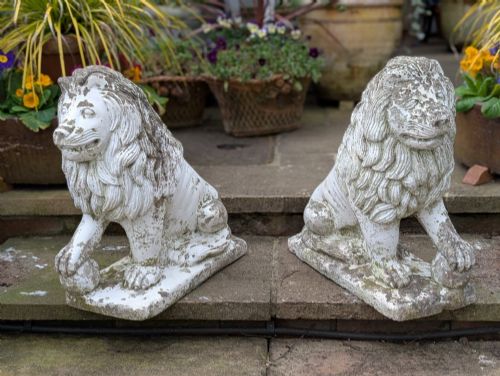
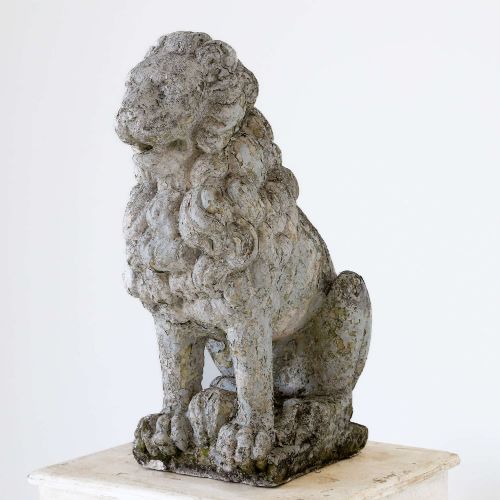


Outdoor Stone Lion Ornaments
Outdoor stone lion ornaments stand guard at gates and terraces, bringing classical dignity and enduring presence to gardens.
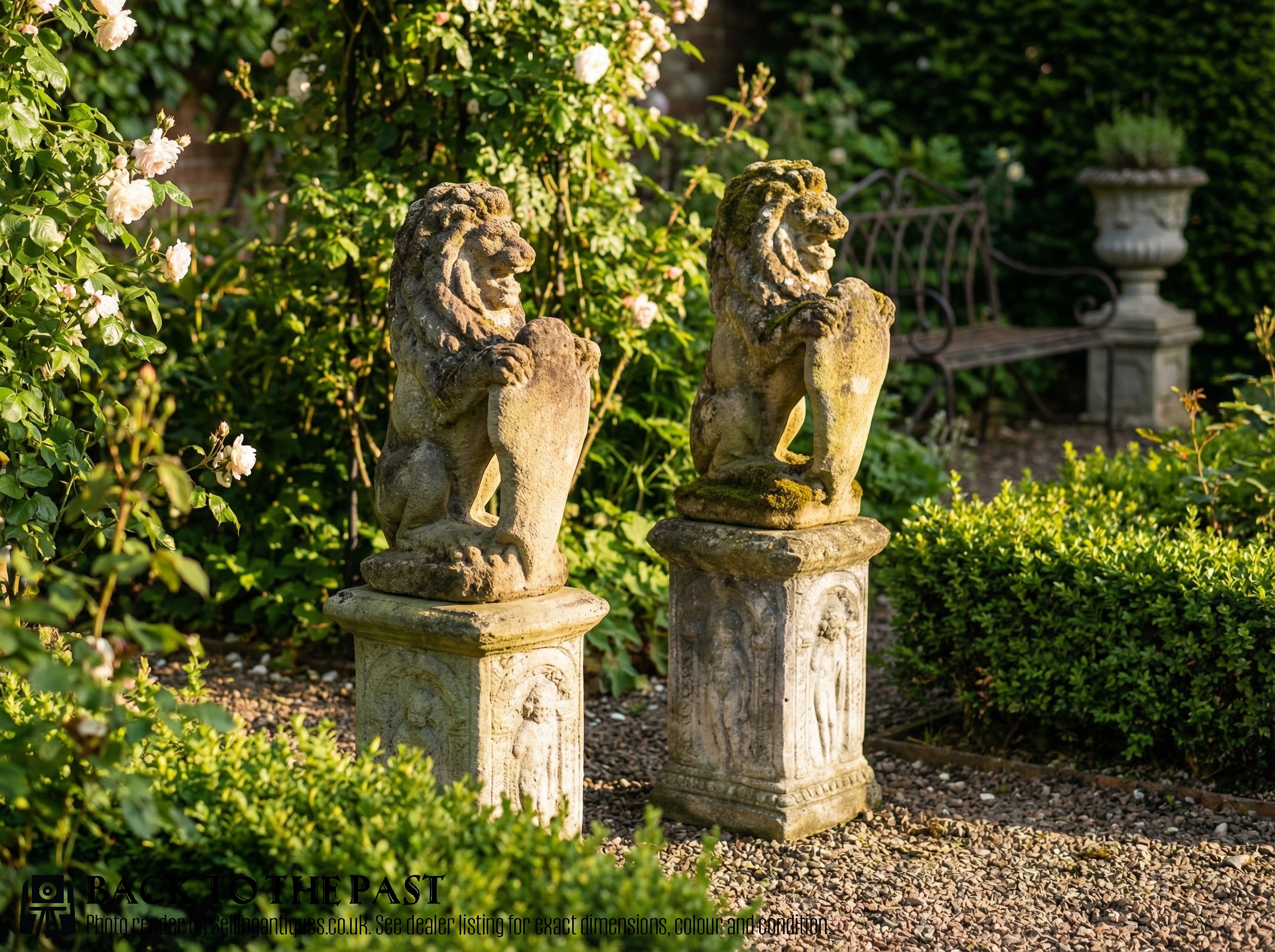
Outdoor Stone Lion Ornaments
Outdoor stone lion ornaments comprise garden statues, gate finials, and statuary designed to flank entrances or punctuate paths. When searching for outdoor stone lion ornaments, buyers frequently encounter pairs intended for gates or walls, originating from periods such as the nineteenth century up to the nineteen-fifties.
The selection ranges from neoclassical pairs on plinths to substantial terracotta and marble guardians. Traditional architectural forms dominate, reflecting classical revival styles suited to English garden settings.
Most examples appear as seated or standing pairs, occasionally incorporating original paint or mounted on dedicated stone bases. These pieces serve both as decorative focal points and architectural markers for boundaries.
Materials and Construction
Carved marble and solid sandstone represent the traditional high-end approach, shaping durable stone through detailed chisel work. Artisans also utilised cast and composite stone, pressing mixtures into moulds to achieve consistent proportions for garden statuary.
Terracotta and salt-glazed pottery offered alternative methods, fired in kilns to produce robust figures of impressive scale. Surface treatments range from unadorned natural finishes to historical layers of paint applied for protection and visual character.
Listings span from the nineteenth century to the nineteen-fifties, featuring reconstituted stone, marble, sandstone, and terracotta.
Judging Quality
The choice of medium heavily influences character, with hand-carved marble offering depth that moulded composite stone rarely matches. Original surfaces and weathering add a desirable patina, whereas heavy restoration or crude casting diminishes the artistic merit.
Hurlford Kilmarnock
The Outdoor Stone Lion Ornaments Glossary
- Neoclassical
- A style reviving classical Roman and Greek motifs, frequently seen in nineteenth-century garden ornaments. It relies on symmetry, restraint, and formal dignity.
- Finial
- A decorative architectural ornament placed at the apex of a gatepost, wall, or pier. Lions often serve this function to mark an entrance.
- Reconstituted stone
- A composite material made from crushed stone and a binding agent, moulded into specific architectural shapes. It provides a durable alternative to natural quarried rock.
- Terracotta
- Fired clay used for sculptural and architectural ceramics. It yields a warm, reddish-brown tone well suited to outdoor settings.
- Plinth
- A heavy flat-topped base or block upon which a statue or urn is elevated. It lifts the ornament above ground level to improve visibility.
Outdoor Stone Lion Ornaments: Frequently Asked Questions
Where should I place stone lions?
Stone lions traditionally flank gates, driveways, or terrace steps to frame an entrance and establish a formal boundary. Position them on solid foundations such as stone plinths or paved terraces to prevent sinking into damp earth.
Ensure the scale matches the surrounding architecture so the guardians complement rather than overwhelm the approach.
How do I clean outdoor stone?
Remove surface debris and loose dirt using a soft bristle brush and plain water. Avoid harsh chemical cleaners or pressure washers, which can erode the surface layer and strip away patination accumulated over decades.
Allow the stone to weather naturally, as gentle moss and lichen growth often enhance the visual character of outdoor ornaments.
Are these ornaments frost-proof?
Natural stone, cast stone, and salt-glazed pottery generally withstand winter weather if they sit clear of standing water. Porous materials can absorb moisture that expands during freezing temperatures, leading to surface cracking.
Raise figures slightly off the ground during severe frosts or ensure adequate drainage beneath their bases to minimise weather damage.
How do I date an ornament?
Examine the material composition, tool marks, and weathering patterns to estimate the period of manufacture. Nineteenth-century pieces typically feature hand-carved details or early cast stone formulations, whereas mid-twentieth-century examples often utilise standardised composite mixes.
Original paint remnants and historical wear provide further clues regarding the age and history of the piece.