
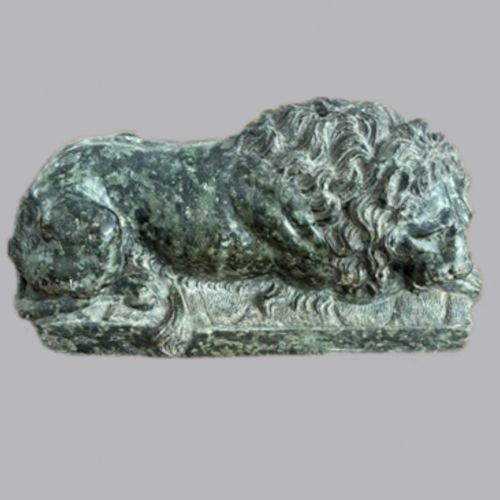
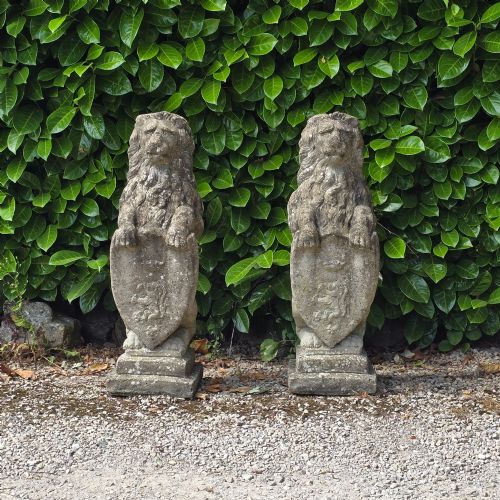
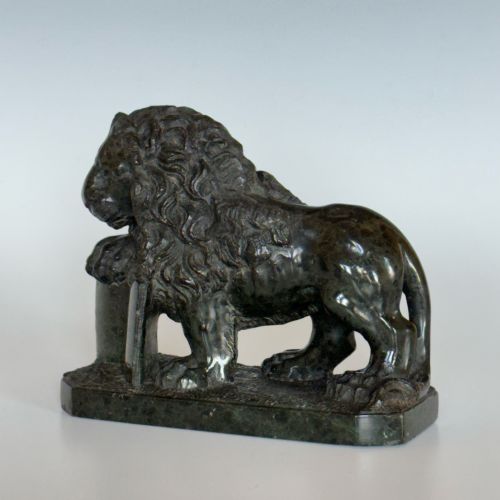


Carved Stone Lion Statues
These carved stone lion statues are historic figures rendered in marble, soapstone, and stone to guard gates, hearths, and studies.
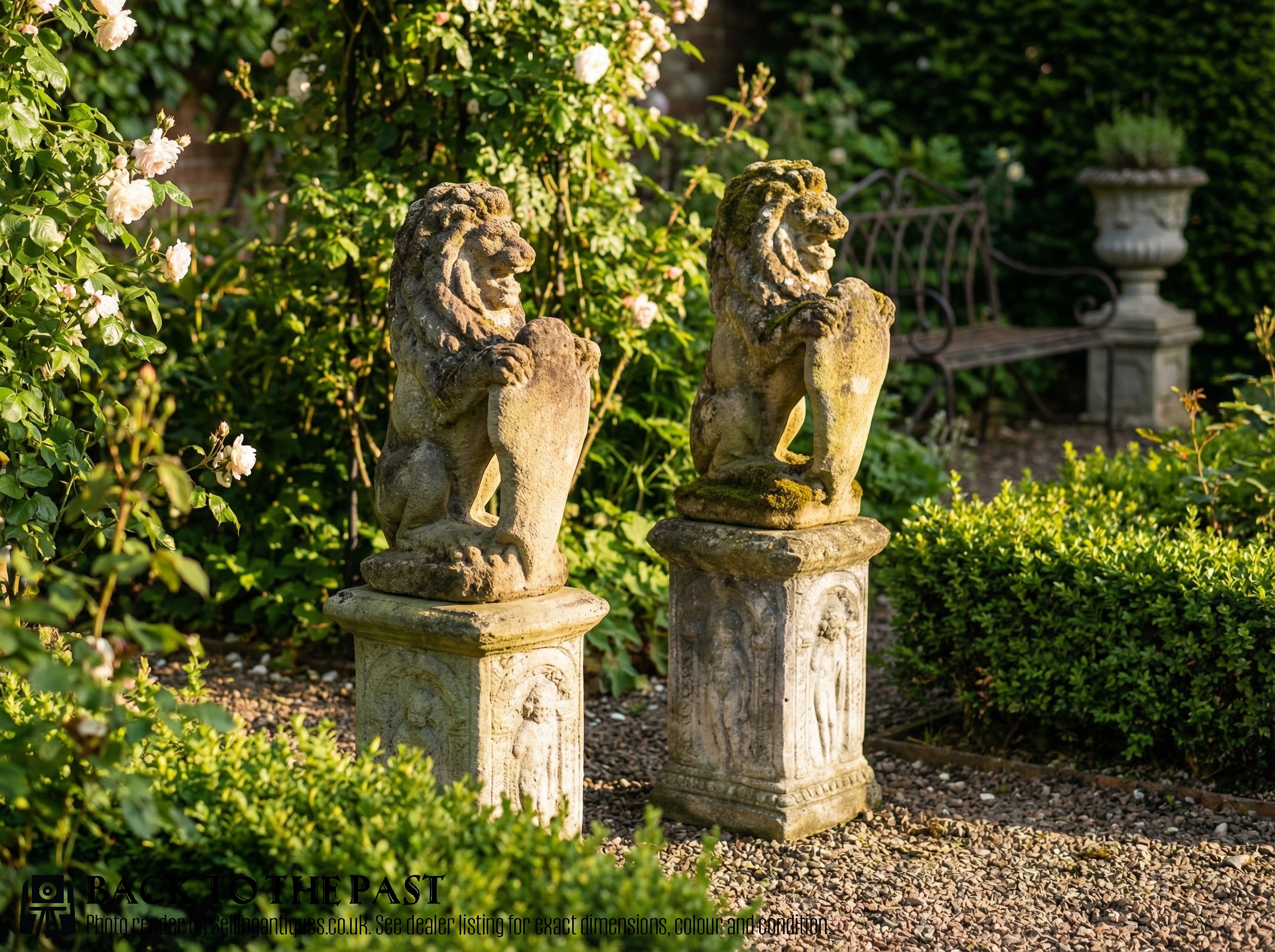
Carved Stone Lion Statues
Carved stone lion statues span centuries of sculptural tradition, appearing as monumental guardians for gardens and smaller decorative figures for interiors. When exploring carved stone lion statues, buyers encounter pieces ranging from Victorian garden statuary to Grand Tour souvenirs.
Origins stretch from the seventeenth century through the Victorian era into the mid-twentieth century. European pieces frequently adopt Neoclassical or English country house aesthetics, whilst Asian works utilise jade marble and soapstone.
How they were made
Makers shaped these works from solid blocks of natural material, employing hand-carving techniques on marble, alabaster, serpentine, and soapstone. Artisans rendered anatomical details and flowing manes directly into the stone using chisels and abrasive polishing agents.
Weathered garden examples utilise robust stone and reconstituted stone designed to withstand outdoor exposure, whilst interior decorative works employ finer decorative marbles such as green marble and white marble.
Some garden groups combine distinct stone elements, mounting heavy carved stone lions onto separate matching plinths to elevate the sculpture.
Listings feature periods spanning from the seventeenth century through the Victorian era to the mid-twentieth century.
What varies in quality
The sculptural ambition of the carving dictates the distinction between standard production and exceptional examples. Master carvers capture tension in the musculature and distinct expression in the face, whereas lesser pieces rely on rigid symmetry.
Material choice shapes the visual depth of the finished sculpture, with richly veined serpentine and Hualien green marble offering complex chromatic variation compared to uniform plain stone. Surface weathering on older garden examples adds a patinated layer that alters the visual texture over time.
The Carved Stone Lion Statues Glossary
- Grand Tour
- A nineteenth-century cultural journey undertaken by wealthy Europeans seeking classical antiquities and smaller architectural models as souvenirs. These souvenir pieces often recreated famous monuments or classical sculptures in miniature marble.
- Canova Lions
- Sculptural designs inspired by the neoclassical marble lions created by Antonio Canova for the tomb of Pope Clement XIII in Rome. They are typically depicted recumbent and restful.
- Dog of Fo
- Traditional Chinese guardian lions placed outside imperial palaces, tombs, and temples to ward off negative spirits. They are frequently rendered in pairs with one male holding a ball and a female with a cub.
- Serpentine Marble
- A dark green metamorphic rock rich in magnesium and silica, named for its mottled, serpent-like skin appearance. It was favoured by Italian carvers for Grand Tour animal sculptures.
- Recumbent
- Reclining or resting with the head raised, a common posture for large stone lions designed to flank gateways or hearths.
Carved Stone Lion Statues: Frequently Asked Questions
Where should I place these stone lions?
Large garden pairs suit exterior placement on stone plinths flanking paths, steps, or gateways. Weathered stone handles outdoor elements well.
Smaller marble or soapstone pieces belong indoors on desks, bookcases, or mantels where interior light highlights the carved details.
How do I distinguish Italian Grand Tour pieces?
Grand Tour pieces typically employ fine Italian marbles like serpentine or green marble and replicate famous classical monuments. They date primarily to the nineteenth century.
These sculptures are usually smaller in scale, designed as decorative objects for studies and libraries rather than architectural guardians.
What is the difference between Foo dogs and European lions?
Foo dogs originate from Chinese traditions as temple guard animals, often featuring stylised curly manes and paws resting on balls or cubs. They carry specific symbolic protection meanings.
European lions follow classical Greek, Roman, or Victorian academic sculpting traditions, focusing on realistic anatomy and regal poses.
How do I care for antique marble sculptures?
Dust interior marble and soapstone regularly with a soft dry cloth to prevent dirt accumulation in carved crevices. Avoid abrasive cleaners.
Outdoor stone statues benefit from gentle washing with water to clear moss, though historic weathering should be preserved rather than scrubbed away.