
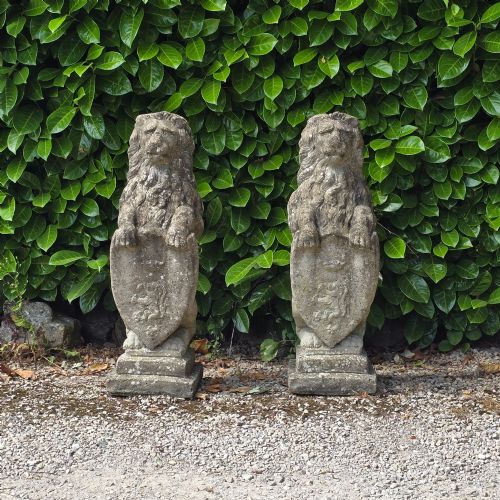
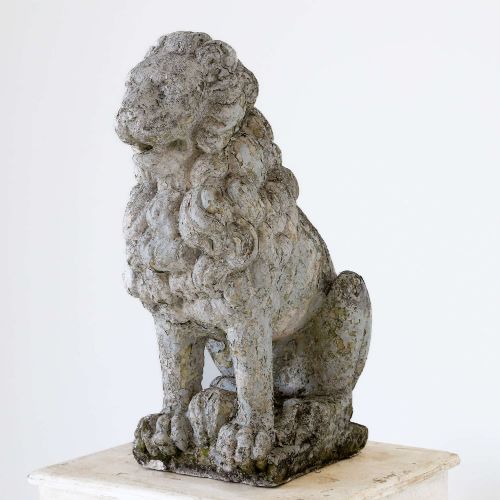


Grey Stone Lion Statues
Grey stone lion statues bring undeniable presence to an entrance, spanning sturdy twentieth-century garden pairs to nineteenth-century Chinese carvings.
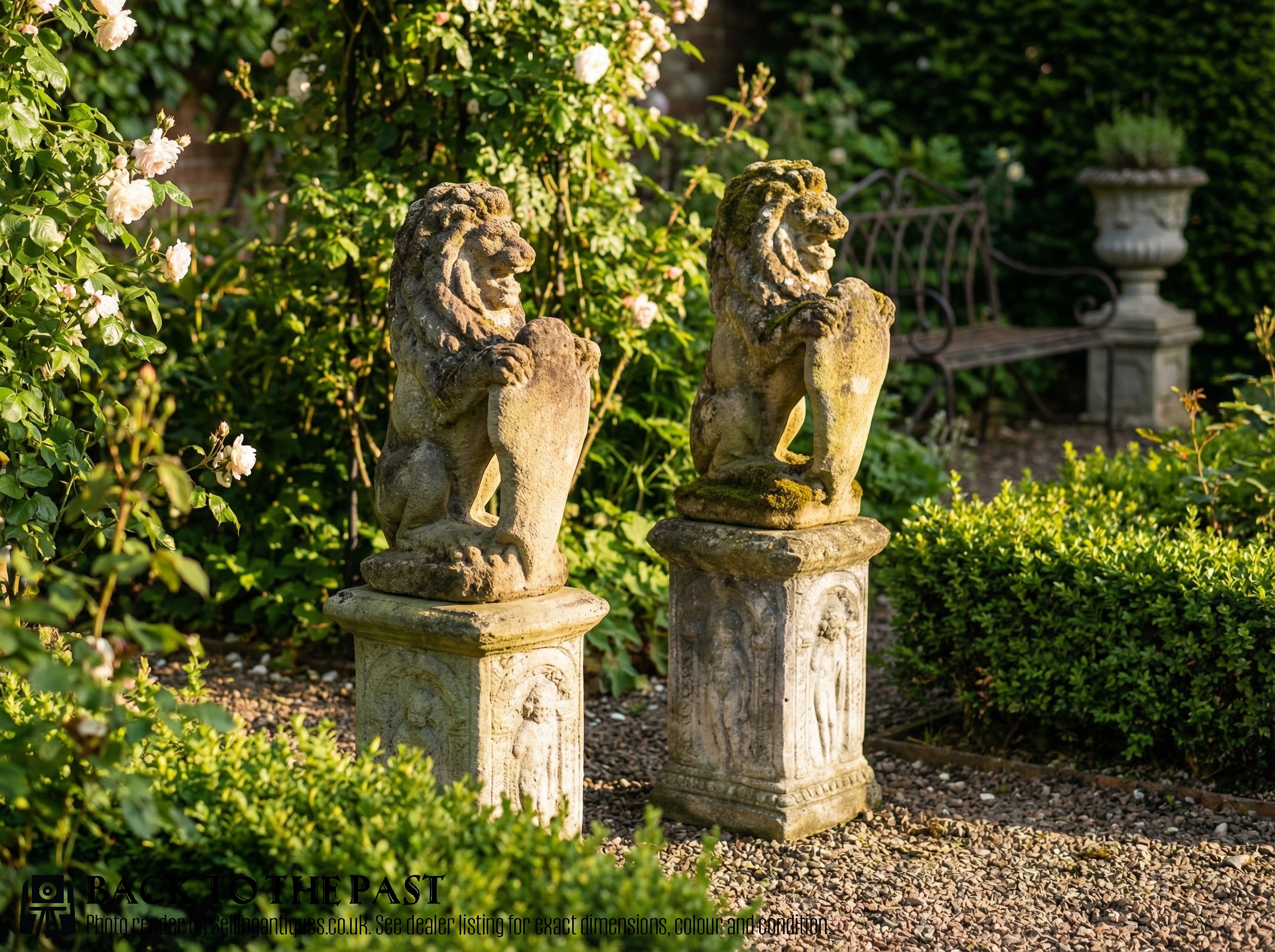
Grey Stone Lion Statues
Grey stone lion statues encompass garden statuary, gate finials, bookends and architectural sculptures designed for display both indoors and out. When searching for grey stone lion statues, buyers encounter domestic pairs alongside imposing guardians intended for exterior posts and plinths.
The selection ranges across distinct periods, drawing from twentieth-century garden ornaments, nineteenth-century Chinese works, Victorian pieces, and seventeenth-century European items. These figures take various forms, including seated beasts, standing guards, and traditional dogs of fo.
Makers and origins stretch from English country house traditions to Italian marble and Scottish salt-glazed pottery from Kilmarnock. Buyers frequently find matching pairs intended to flank gates, doorways, or garden paths with classical symmetry.
How they were made
Production methods rely heavily on cast and reconstituted stone, alongside hand-carved soapstone, marble, and salt-glazed pottery. Sculptors and manufacturers shaped durable materials to withstand outdoor exposure while retaining sharp architectural detail.
Surface finishes include original old paint and natural weathering acquired over decades. Salt-glazed pottery pieces from the nineteenth century utilise specialised firing techniques to achieve dense, durable stoneware bodies.
Materials represented include soapstone, salt-glazed stoneware, marble, and composite stone.
What varies in quality
Quality reveals itself in the anatomical definition of the carving or casting, particularly around the mane, paws, and facial expression. Superior examples maintain crisp lines and convincing proportions that survive decades of weathering.
The integrity of the material dictates longevity, with dense stone and high-fired salt-glazed pottery resisting frost damage better than softer compositions. Original surface treatments, such as genuine aged paint or mellowed stone patination, add depth that modern replicas lack.
Hurlford Kilmarnock
The Grey Stone Lion Statues Glossary
- Reconstituted stone
- A manufactured material made from crushed stone or aggregates mixed with a binder to imitate natural quarried rock. It allows for detailed moulding of architectural ornaments and garden statuary.
- Gate finials
- Ornamental figures or caps mounted on top of gate piers or posts. They serve a decorative purpose while marking an entrance.
- Salt-glazed stoneware
- Pottery that develops a glass-like texture from the introduction of salt into the kiln during the high-temperature firing process. This creates a hard, impermeable finish suited to outdoor elements.
- Dog of fo
- Traditional Chinese guardian lions representing prosperity and protection. They are commonly depicted in pairs guarding entrances.
- Post finials
- Sculptural elements designed to sit atop structural posts or architectural supports. They often echo classical motifs.
Grey Stone Lion Statues: Frequently Asked Questions
Where should I place a pair of lion statues?
These figures suit outdoor settings such as garden entrances, pathways, and patio boundaries where paired compositions create formal symmetry. Smaller examples, such as soapstone bookends, function effectively on interior shelves and desks.
Larger gate finials and architectural sculptures look best mounted securely on stone plinths or sturdy piers to anchor exterior spaces.
How do I care for outdoor stone statues?
Exterior stone requires minimal maintenance beyond gentle washing with water to remove moss and organic debris. Avoid harsh chemical cleaners that can strip natural weathering or damage original paint layers.
Protect vulnerable pieces from severe frost by ensuring proper drainage beneath bases or moving smaller composite items indoors during winter months.
Are these statues suitable for indoor display?
Many pieces adapt easily to interior environments, particularly smaller carvings, pottery figures, and decorative bookends. They bring architectural weight and historical character to entrance halls and studies.
Larger garden sculptures require adequate floor support and sufficient space to balance their visual mass within a room.
How can I tell the period of a stone lion?
Dating relies on material composition, tooling marks, and surface patination accumulated through age and exposure. Twentieth-century garden pieces often employ cast or reconstituted stone, whereas older items show hand-carved details or distinct regional ceramic techniques.
Comparing the stylistic approach - such as classical revival motifs versus traditional Chinese carving - helps clarify the era of origin.