


Pair of Stone Lions
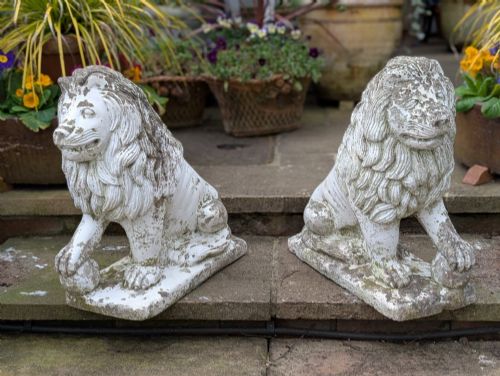
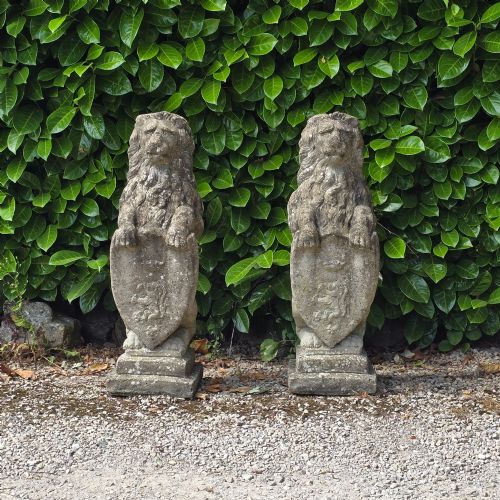
A pair of stone lions commands a gate, porch or interior study, bringing classical dignity and a resolute guard to any property.
Pair of Stone Lions
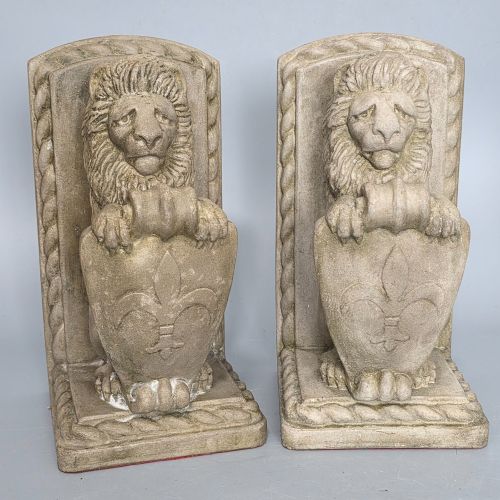
A pair of stone lions encompasses heavy garden statuary, architectural gate post finials, and modest interior bookends or desk accessories. The visitor frequently encounters monumental garden guardians and seated figures shaped from reconstituted stone or cast stone dating from the nineteenth and twentieth centuries.
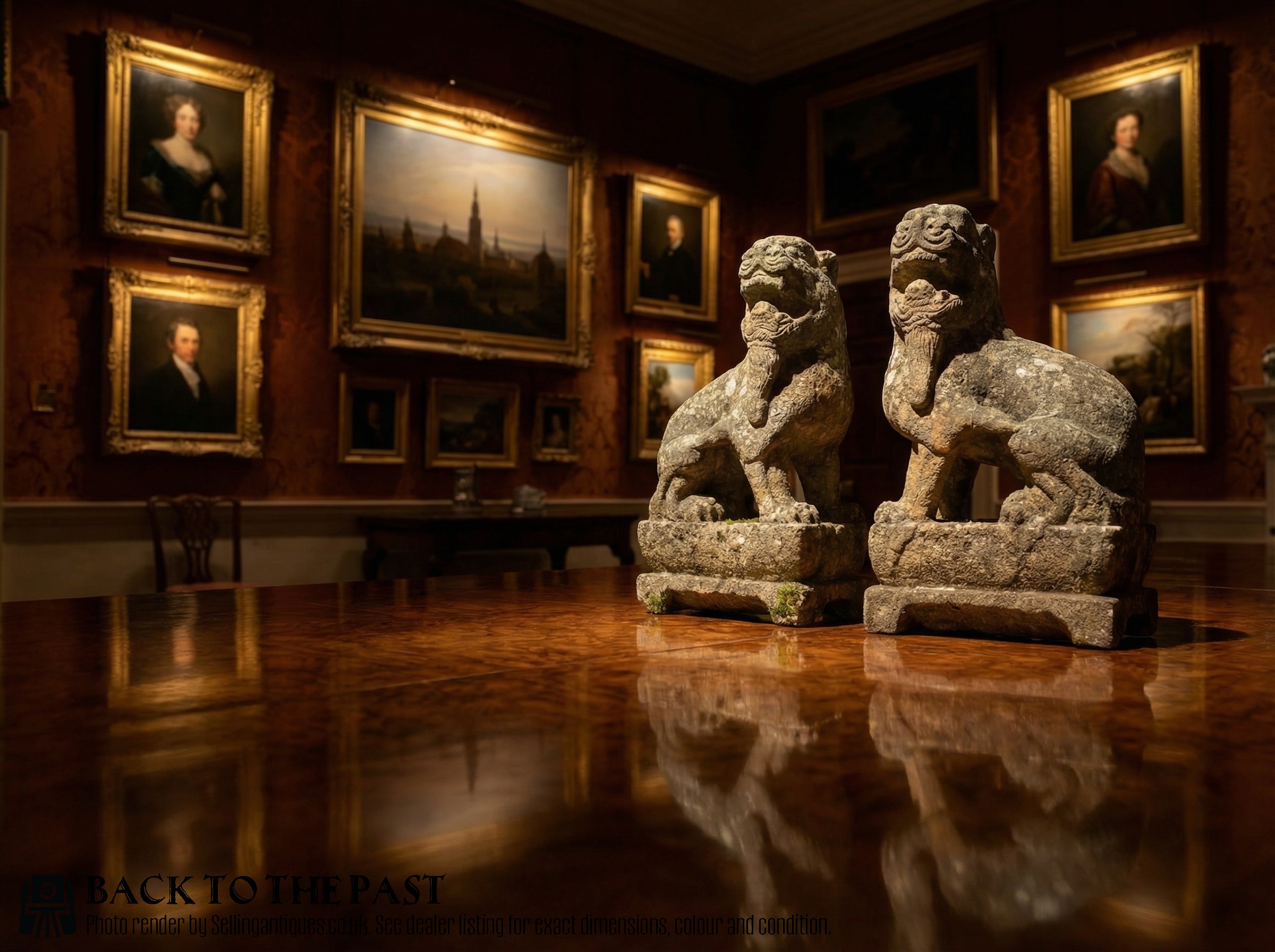
Beyond the standard garden ornaments, the selection includes pieces influenced by neoclassical and Grand Tour traditions alongside terracotta figures and Chinese carved stone guardians. Forms range from recumbent beasts and standing sentinels to salt glazed pottery examples and alabaster sculptures.
Materials and methods
Makers utilised durable outdoor media such as reconstituted stone, cast stone, composition stone, and terracotta, often applying a painted finish or weathering to simulate age. Monumental examples rely on carved stone, serpentine, marble, and salt glazed pottery, whilst smaller interior items utilise soapstone, jade marble, alabaster, and carved wood.
Techniques varied from traditional hand carving by masons to industrial casting methods using composite stone mixtures poured into moulds. Gate post finials and garden statues required robust binders to withstand weathering, whereas desk seals and bookends involved intricate shaping of softer minerals.
Even the fiercest stone guardian requires a gentle dusting behind the ears after a windy autumn.
Judging quality
The choice of medium dictates the texture and long term weathering characteristics, with high grade reconstituted stone and dense marbles retaining sharper architectural details than inferior poured compositions.
Hurlford Kilmarnock
The Pair of Stone Lions Glossary
- Reconstituted stone
- A composite material made from crushed stone and a binder, cast in moulds to replicate natural carved masonry. It is widely utilised for durable garden ornaments and architectural finials.
- Gate finial
- An architectural ornament placed atop a gate pier, post or wall boundary. These stone pairs serve both a decorative and a protective function at entranceways.
- Grand Tour
- A cultural journey undertaken by nineteenth century elites across Europe, collecting classical antiquities and Neoclassical sculpture. Pieces from this tradition often reference Italian models.
- Dog of Fo
- A traditional Chinese guardian lion, frequently carved from soapstone, jade marble or serpentine. Pairs of these mythical beasts serve as protective guardians in domestic or scholarly settings.
- Terracotta
- Fired unglazed clay of a brownish red or buff colour, utilised for large scale garden figures. Its porous nature develops a distinctive weathered patina over decades outdoors.
Pair of Stone Lions: Frequently Asked Questions
Where should I place a pair of stone lions?
Monumental pairs suit exterior gate posts, garden entrances, and porches where they act as architectural guardians. Smaller examples, such as bookends and desk accessories, fit interior libraries and studies.
Positioning depends primarily on weight and material. Dense stone and terracotta require stable masonry or ground support, whilst soapstone and alabaster pieces belong indoors.
How do I care for outdoor stone lions?
Outdoor composite and reconstituted stone pieces withstand weathering naturally, gradually developing an aged patina. Regular gentle cleaning prevents heavy moss accumulation in crevices.
Protect vulnerable terracotta and salt glazed pottery from severe frost damage during winter months if local temperatures drop significantly.
What is the difference between cast stone and carved stone?
Carved stone involves direct manual chiselling from a solid block of natural material like marble or serpentine. This process leaves unique tool marks and distinct geological grain.
Cast stone uses a liquid or semi fluid mixture poured into a mould. This technique allows for uniform production of detailed garden ornaments and repetitive architectural pairs.
Are these lions antique or modern reproductions?
The listings span from the nineteenth century through to mid twentieth century production periods. Materials, weathering patterns, and specific casting styles help determine the age of each pair.
Nineteenth century examples often display deeper patination and hand finished details, whereas twentieth century pieces reflect twentieth century manufacturing standards.