



Vintage Garden Lion Sculptures
Vintage garden lion sculptures bring monumental presence to an outdoor space, offering classical weight and enduring guardianship.
Vintage Garden Lion Sculptures
Vintage garden lion sculptures encompass architectural ornaments and statuary designed to stand guard over grounds, terraces, and gateways. These pieces most commonly appear as pairs of seated or standing guardians, reflecting classical forms rooted in English country house and Italianate traditions.
The selections available here range from nineteenth-century territorial pairs in carved marble and terracotta to mid-twentieth-century examples cast in composite and reconstituted stone. Buyers encountering these works will find forms spanning nineteenth-century French Medici designs alongside robust post finials and traditional garden statues.
How they were made
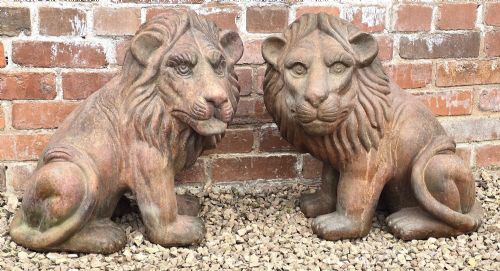
Makers fashioned these sculptures from durable outdoor mediums, notably hand-sculpted terracotta, carved marble, and robust stone compositions. Nineteenth-century examples often utilise heavy terracotta or carved marble, requiring skilled sculptural carving or meticulous firing in large kilns.
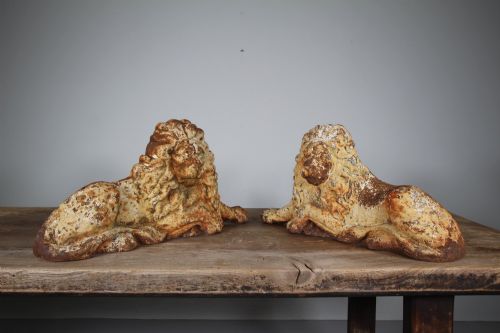
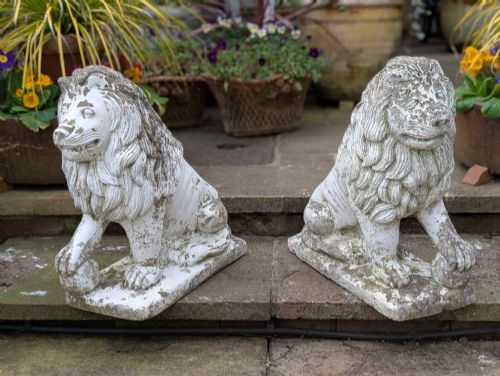
Later twentieth-century production shifted towards composite, reconstituted, and cast stone poured into moulds to capture fine architectural details. Some surfaces retain traces of original old paint, applied to weather the elements or alter the tone of the underlying material.
Vintage Garden Lion Sculptures Retail Price Guide 2026
Typical asking prices for vintage garden lion sculptures among the pieces listed under this phrase on Sellingantiques today, from the lower quarter to the upper quarter. They describe what is for sale here now, not the wider market.
The inventory records garden statuary and gate finials styled in Neoclassical, Italianate, and English Country House traditions.
What varies in quality
The choice of medium equally dictates the character of the piece, with hand-sculpted marble and early terracotta offering distinct individuality compared to mass-cast composite stone. Natural weathering and the retention of original historic paint layers also influence the visual depth and historical integrity of the piece.
The Vintage Garden Lion Sculptures Glossary
- Medici Lions
- A pair of historic marble sculptures modelled on the antique lions in Florence, depicting one animal resting its paw on a sphere. This classical posture heavily influenced nineteenth-century European garden ornament.
- Terracotta
- Fired clay used extensively for large-scale garden statuary due to its ability to hold sharp sculptural detail. It ages with a porous, atmospheric surface patina.
- Reconstituted Stone
- A composite material made from crushed stone aggregate and a binder, cast into moulds to replicate natural carved stone. It provides robust frost resistance for outdoor placement.
- Post Finials
- Ornamental architectural elements placed on top of gate piers, walls, or posts. Garden lions frequently take this form to serve as territorial sentinels at entrances.
- Neoclassical
- A revival style drawing inspiration from the classical art and architecture of ancient Greece and Rome. This aesthetic governs the proportion and dignified posture of many nineteenth-century figures.
Vintage Garden Lion Sculptures: Frequently Asked Questions
How do I place stone lions in a garden?
Position pairs of lions symmetrically at primary entry points, gate piers, or at the head of stone steps to create a formal architectural focal point.
Ensure the base rests upon a flat, stable surface such as York stone paving or a reinforced concrete plinth to distribute the substantial weight safely.
Are terracotta lions frost resistant?
Nineteenth-century terracotta pieces were fired to withstand outdoor exposure, but extreme freeze-thaw cycles can still affect porous historical clay.
Protect vulnerable antique terracotta during severe winter weather by sheltering them under unheated structures or covering them with breathable breathable materials.
How do I clean vintage garden sculptures?
Remove surface dirt and organic matter gently using a soft-bristle brush and clean water without harsh chemical detergents.
Preserve the accumulated lichens and atmospheric weathering patina, as collectors value the aged surface character acquired over decades outdoors.
What is the difference between terracotta and stone lions?
Terracotta sculptures are formed from fired clay, offering a warm reddish-brown hue and sharp hand-sculpted surface definition.
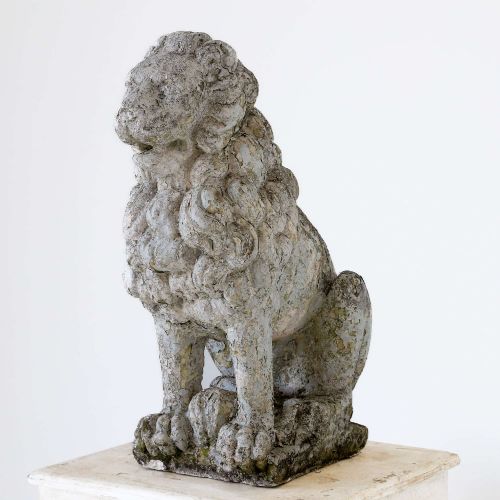
Stone variants, whether carved marble or cast composite stone, provide a heavier, paler neutral palette with a granular texture suited to classical architectural settings.