


Grey Stone Lions
Grey stone lions stand as enduring guardians for gardens and interiors, carved or cast to bring classical authority to any setting.
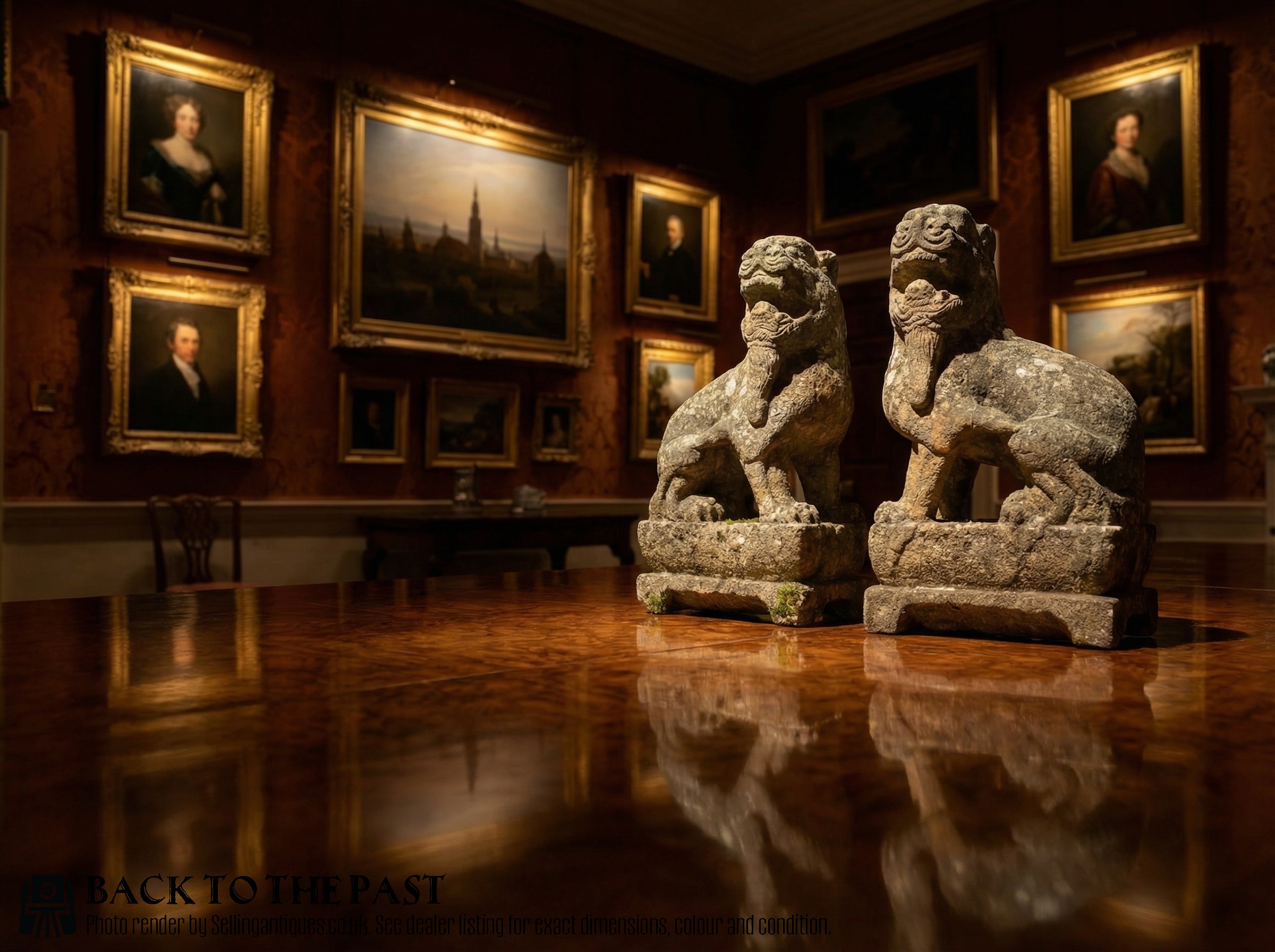
Grey Stone Lions
Grey stone lions encompass figures designed for gardens, architectural salvage, and interior display. These pieces range from substantial garden statuary and gate finials to decorative bookends and carved fragments.
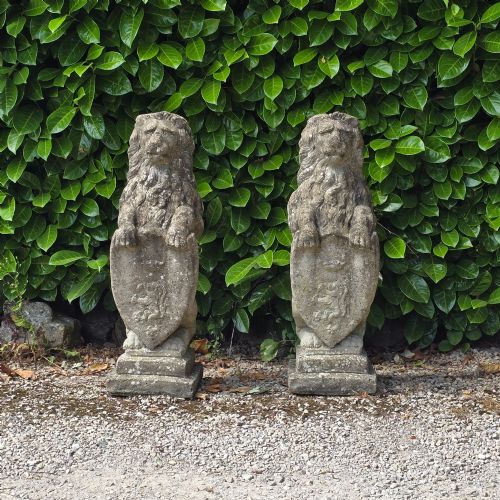
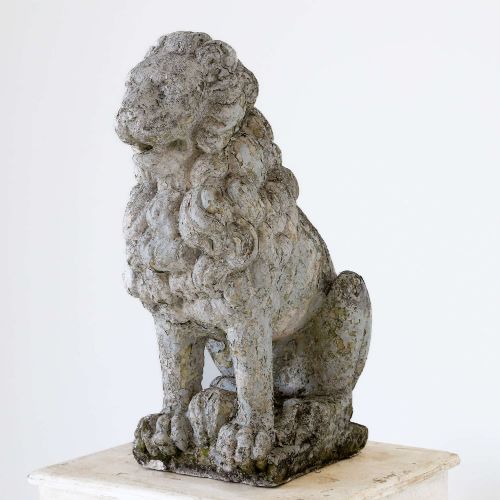
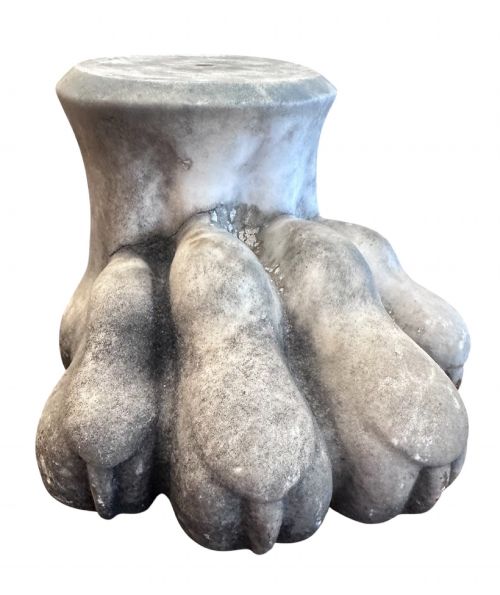
The selections available on this page reflect diverse origins and periods, stretching from seventeenth-century Italian marble to mid-twentieth-century garden pairs. Buyers encounter standing guardians, seated pairs on plinths, and architectural paw supports.
Traditional forms draw heavily on neoclassical revival and English garden styles, alongside nineteenth-century Chinese carved stone lions and soapstone dog bookends. Reconstituted and cast stone examples dominate the twentieth-century garden pieces.
How they were made
Maker methods rely upon the carving of natural materials such as Carrara marble, soapstone, and various stones using traditional chisel techniques. Hand-carved nineteenth-century Chinese examples and seventeenth-century Italian marble demonstrate direct subtractive sculpting.
Twentieth-century production turns to casting, utilising composite, reconstituted, and salt-glazed stoneware poured or pressed into moulds. Some cast stone and composite examples retain traces of original old paint applied to seal or colour the surface.
Materials range from salt-glazed stoneware and soapstone to Carrara marble and painted composite stone.
What varies in quality
Quality rests upon the crispness of the carving and the fidelity of the cast. Natural marble and hand-carved stone display anatomical precision and depth in the mane and paws that simpler moulded pieces lack.
Weathering and surface patina also dictate visual success. Finely aged salt-glazed pottery and naturally weathered cast stone acquire an organic texture that enhances the sculptural presence.
Hurlford Kilmarnock
The Grey Stone Lions Glossary
- Reconstituted Stone
- A manufactured material made from crushed stone aggregate and a binder, cast in moulds to imitate natural rock. It offers durability for outdoor garden statuary.
- Salt Glazed Stoneware
- Pottery fired at high temperatures where salt is introduced into the kiln to produce a vitreous, glossy finish. This technique creates a dense, weather-resistant body suitable for garden pottery.
- Gate Finials
- Ornamental architectural elements placed on top of gate piers or posts. Lion finials serve both a decorative and symbolic guarding purpose.
- Carrara Marble
- A type of white and grey marble quarried in the city of Carrara in Italy. It provides a fine-grained, smooth surface favored for classical sculpture and architectural details.
- Dog of Fo
- Traditional Chinese guardian lions represented in statuary and decorative objects. These mythical beasts symbolize protection and prosperity.
Grey Stone Lions: Frequently Asked Questions
Where should I place garden lions?
Garden lions traditionally flank entrances, gate piers, or garden paths to act as sentinels. Larger pairs suit open lawns or terrace steps, while smaller seated versions anchor flower beds.
Position them where weathering can interact naturally with the stone or cast surface over time.
How do I care for stone sculptures?
Outdoor stone and reconstituted pieces require minimal maintenance beyond gentle washing with water to remove moss or debris. Avoid harsh chemical cleaners that can strip surface patinas or original paint.
Indoor items like soapstone or marble bookends need only a soft, dry cloth for dusting.
Are these lions suitable for indoors?
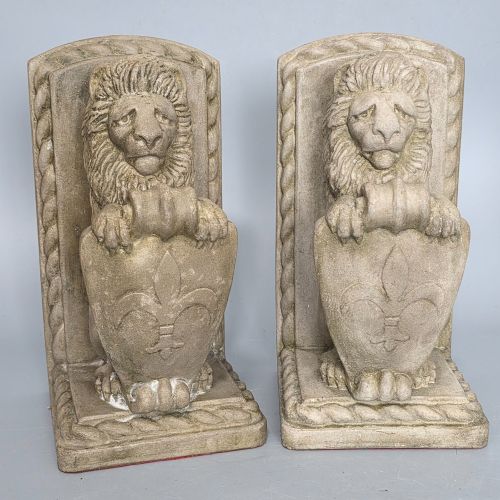
Many smaller forms, including bookends, soapstone temple dogs, and marble fragments, are scaled specifically for interior spaces. They sit comfortably on desks, bookshelves, or mantelpieces.
Larger garden statuary is exceptionally heavy and designed primarily for exterior architectural use.
What is cast stone?
Cast stone is a refined architectural concrete manufacturing process used to simulate natural cut stone. It allows makers to produce detailed garden ornaments and finials from moulds.
Over decades outdoors, cast stone develops a natural mossy patina similar to quarried rock.