


French Vanity Mirror
A french vanity mirror brings the polished brass, carved walnut and gilt bronze of the nineteenth and early twentieth centuries directly to the dressing table.
French Vanity Mirror
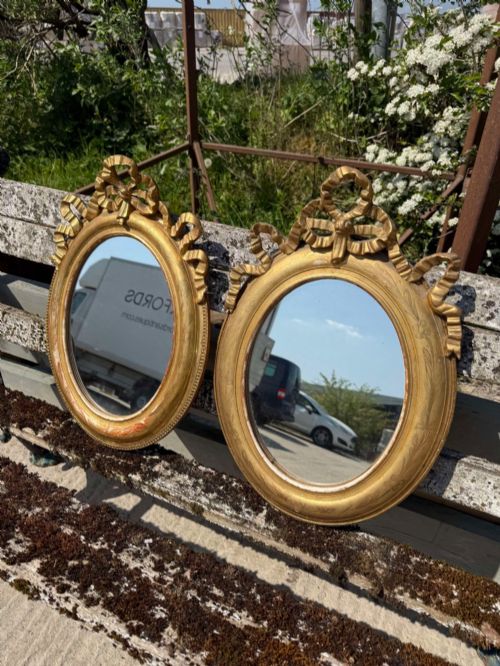
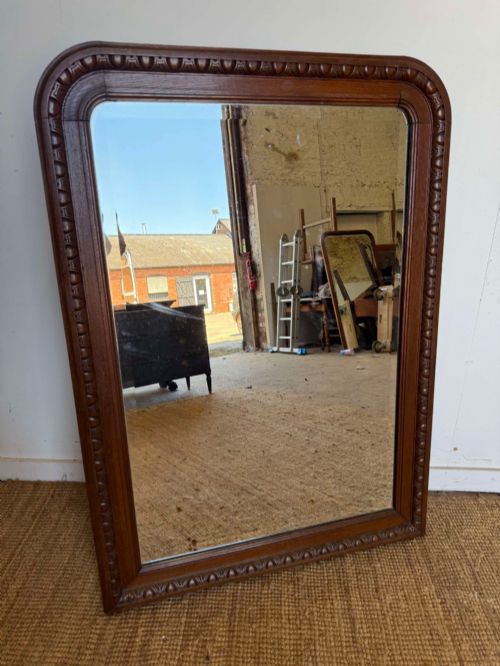
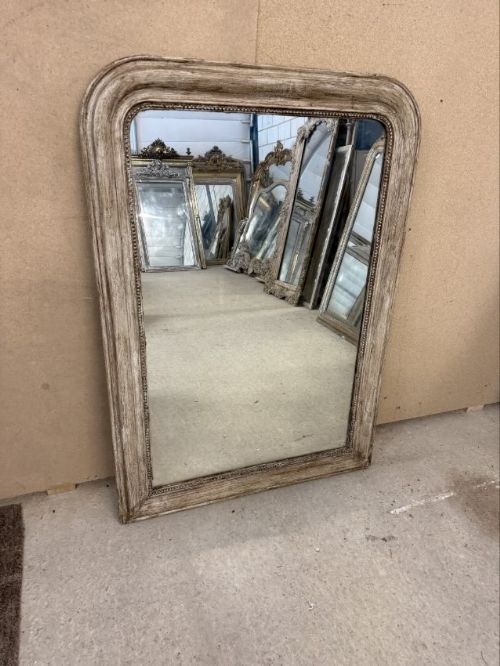
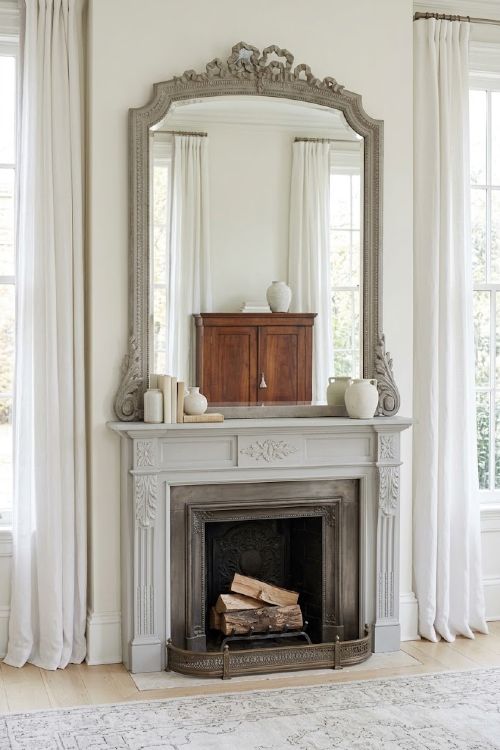
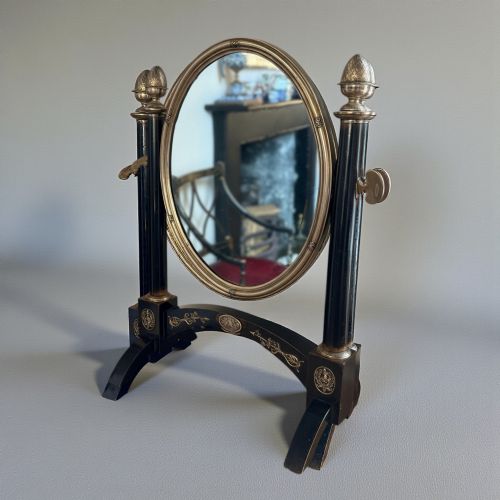
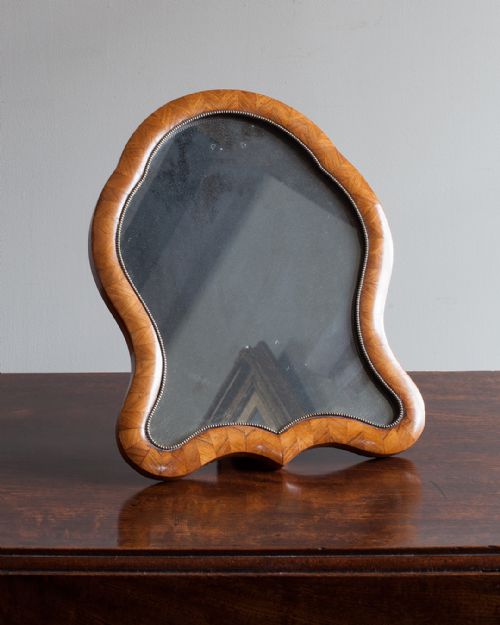
A french vanity mirror is primarily a dressing or table mirror designed for use on a dressing table, chest of drawers or washstand, though wall-hanging variants appear frequently across the period selections.
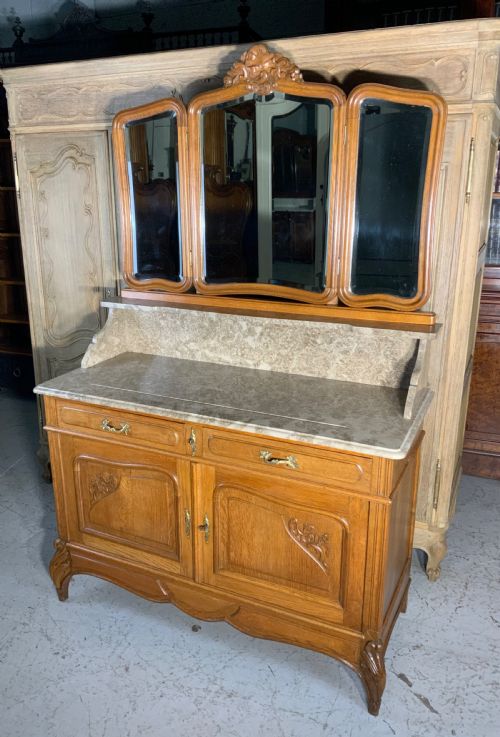
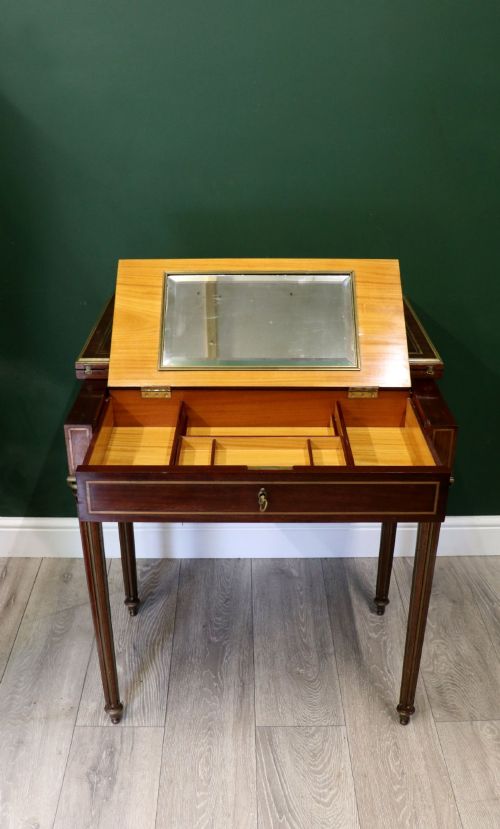
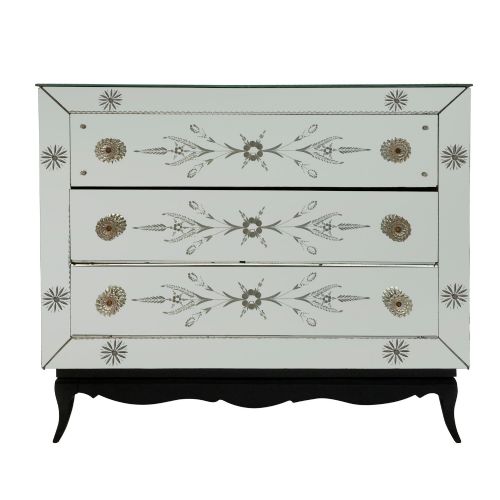
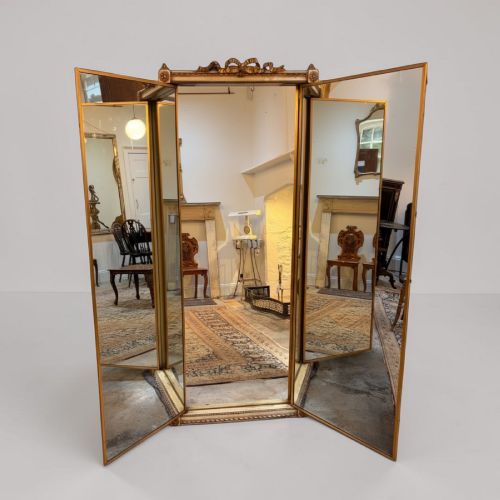
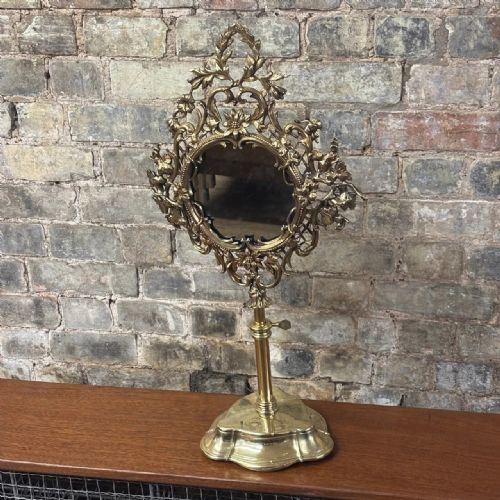
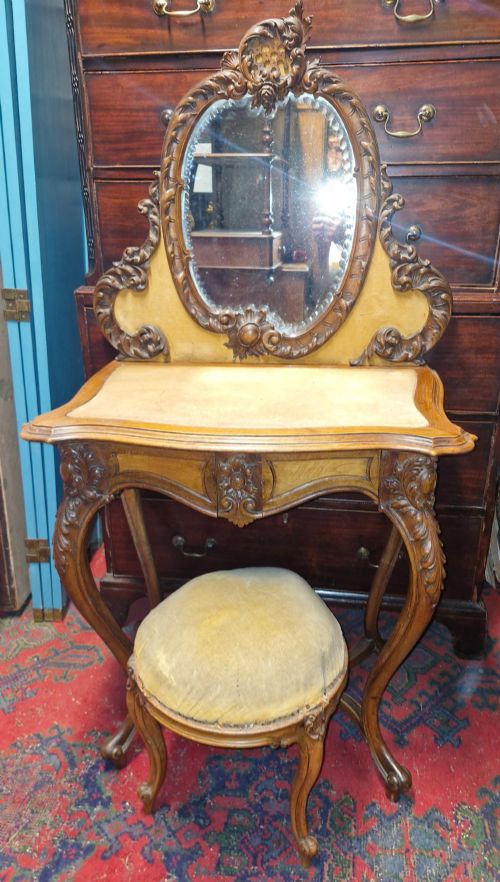
The objects span compact brass desk pieces from the late nineteenth century to larger mahogany or walnut dressing tables fitted with pivoting or triple mirrors, representing styles from Rococo Revival and French Empire to Art Deco.
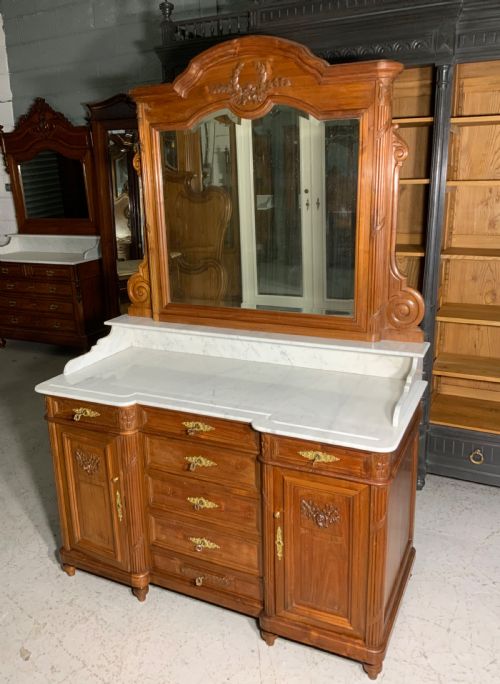
Buyers will encounter small easel-backed table glasses alongside substantial marble-topped washstands and dressing chests that incorporate swinging mirror plates within their upper frameworks.
Materials and Construction
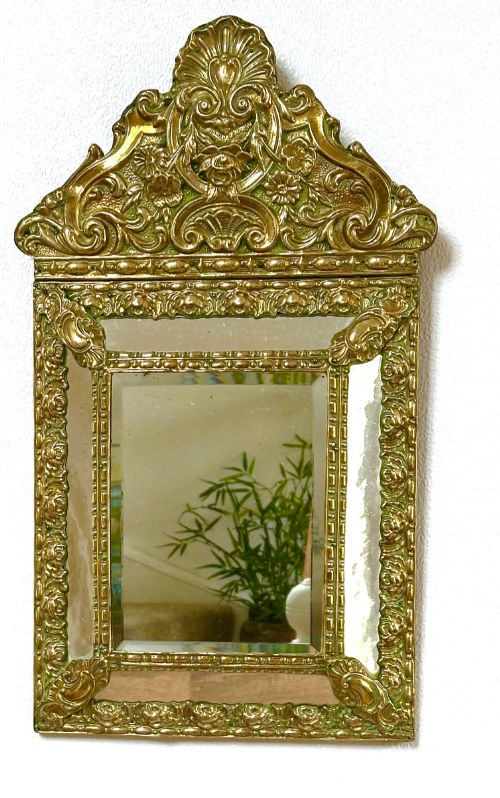
Frames are constructed from solid hardwoods such as mahogany, oak, walnut and kingwood, frequently enriched with cast gilt bronze, ormolu mounts, champlevé enamel or pressed brass.
Surface ornamentation relies on carved gesso, giltwood and floral paintwork, while heavier pieces combine wooden structures with inset marble tops and clear glass mirror plates.
French Vanity Mirror Retail Price Guide 2026
Typical asking prices for french vanity mirror among the pieces listed under this phrase on Sellingantiques today, from the lower quarter to the upper quarter. They describe what is for sale here now, not the wider market.
Even the smallest brass easel mirror from the nineteenth century usually managed to incorporate intricate scrollwork, proving that nobody ever minded a fussy reflection.
Distinctions in Quality
Quality rests upon the crispness of the cast bronze or carved wooden ornamentation, where finer examples display sharp relief in their scrollwork and floral motifs rather than soft, commercial casting.
The integrity of the structural joinery, the weight and clarity of the original glass mirror plate, and the retention of fire-gilding or original surface finishes separate standard production pieces from finer studio or foundry works.
Maples of London and Paris·Louis Auguste Moreau·Thiebaut Freres
The French Vanity Mirror Glossary
- Champleve
- An enamelling technique where trenches are scooped into a metal surface, filled with vitreous enamel, and fired. This colourful decoration appears frequently on late nineteenth century frames and mounts.
- Ormolu
- Gilded bronze mounts applied to furniture and mirror frames. The technique involves a mercury-gilding process that produces a deep, durable metallic lustre.
- Gesso
- A plaster-like mixture applied to wood surfaces as a base for gilding or painting. It allows for deeply sculpted decorative mouldings.
- Louis Philippe
- A mid nineteenth century French aesthetic defined by restrained curves and arched profiles. Pieces from this era lean towards simplicity of line.
- Cheval mirror
- A full length mirror suspended on a freestanding frame with pivoting pins. This form allows the glass to tilt to various angles.
French Vanity Mirror: Frequently Asked Questions
How do I date a french vanity mirror?
Dating relies on examining the construction of the wooden frame, the composition of the metal mounts, and the backing materials behind the glass. Earlier pieces often utilise hand-beveled plates and heavier cast brass or bronze work.
Stylistic cues also guide the timeline, as ornate Rococo Revival elements dominate the mid-nineteenth century, while cleaner geometric lines emerge in the later Art Deco period.
Where should I place a table mirror?
These pieces sit securely on top of wooden dressing tables, chests of drawers or heavy marble-topped washstands. Their compact footprints allow them to function effectively on bedroom surfaces or console tables.
Ensure the supporting furniture is level, as the pivoting weight of the mirror frame requires a stable base.
Are the mirror plates usually original?
Many surviving examples retain their original glass, which can exhibit light foxing or small age spots. These natural signs of oxidation confirm the age of the piece.
Replacement glass occurs when an old plate has suffered damage, though period replacements are common and acceptable to collectors.