



Vintage Brass Vanity Mirror
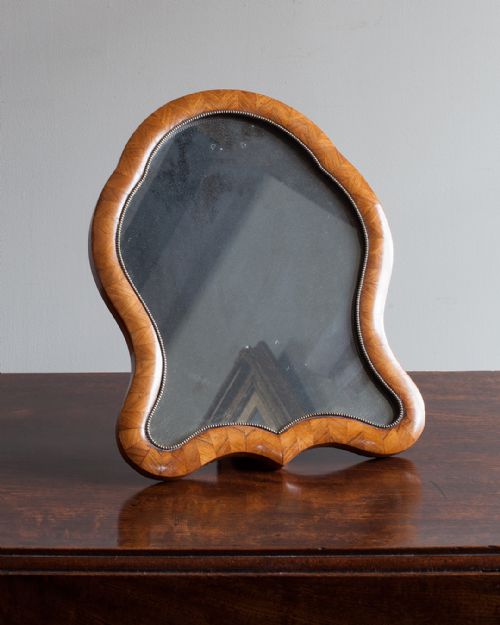
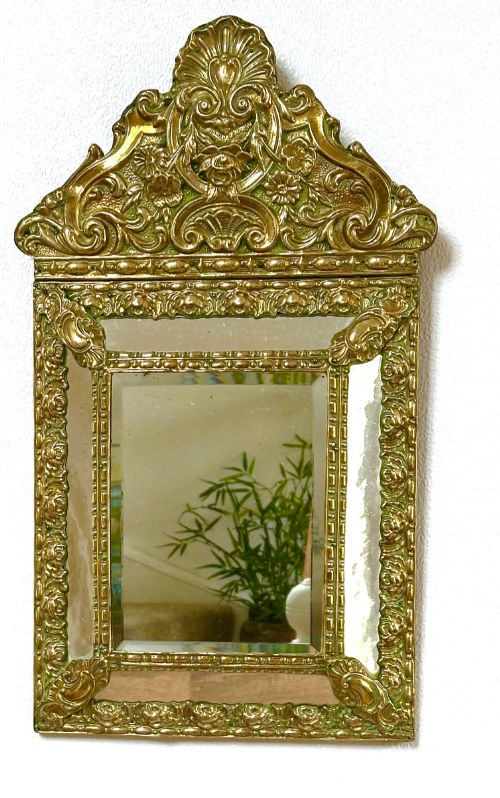
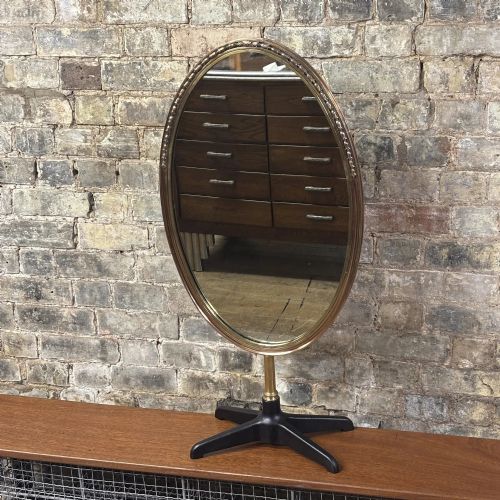
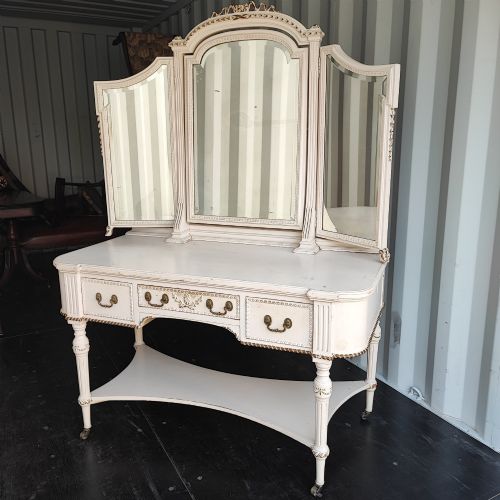
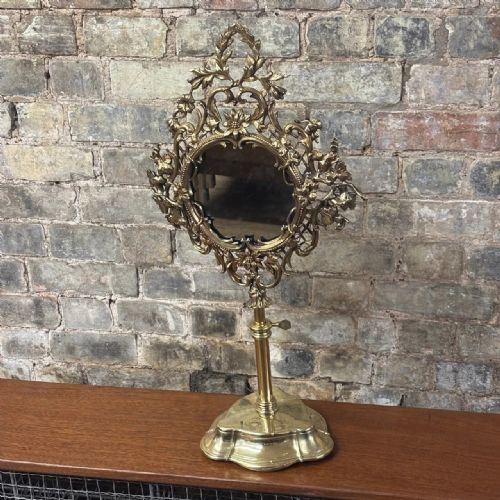
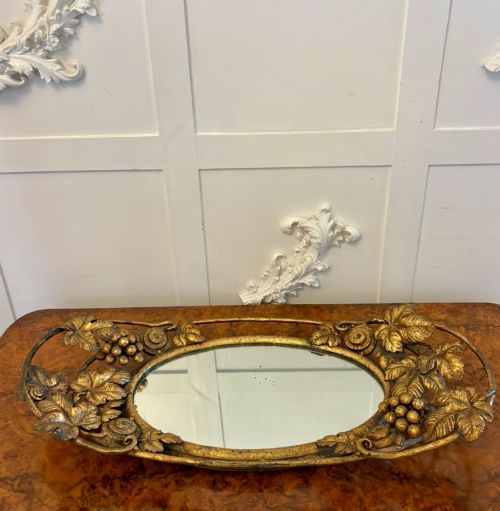
These vintage brass vanity mirror examples bring reflective elegance to a dressing space, combining functional glass with decorative metalwork.
Vintage Brass Vanity Mirror
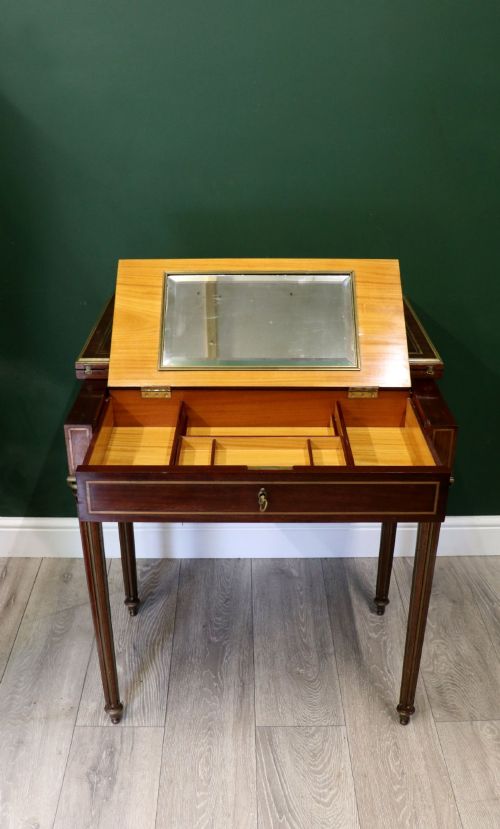
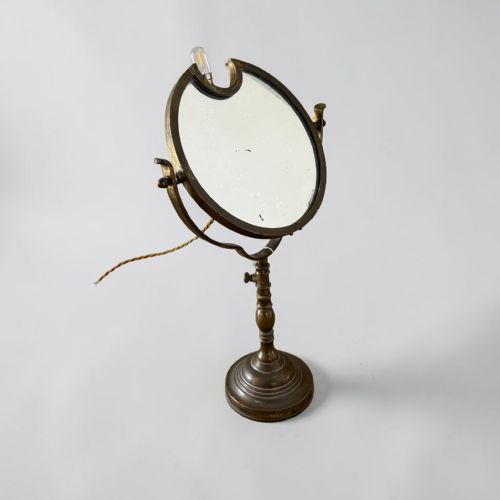
A vintage brass vanity mirror functions as a movable dressing accessory designed for tabletop use, often featuring an adjustable frame to tilt the glass plate. The selection spans compact table models alongside wall-hanging variants, reflecting personal grooming habits from the late nineteenth century through the early twentieth century.
Most items you encounter here date from the Victorian and Edwardian eras, with distinct representations from the Art Deco period and French revival styles. These pieces frequently employ pivoting mechanisms supported by sturdy feet or easel backs, allowing for practical adjustment during daily use.
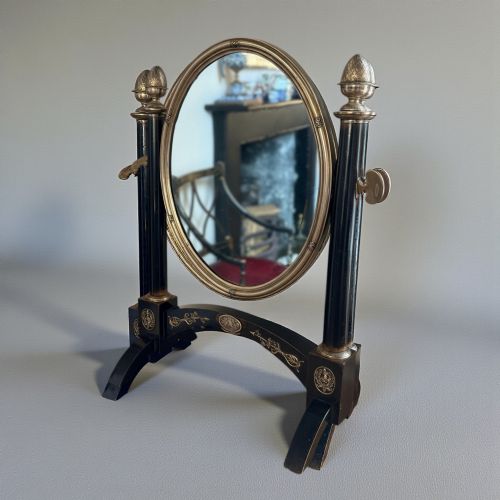
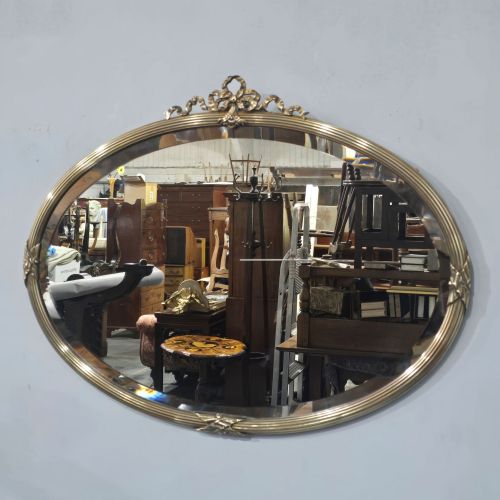
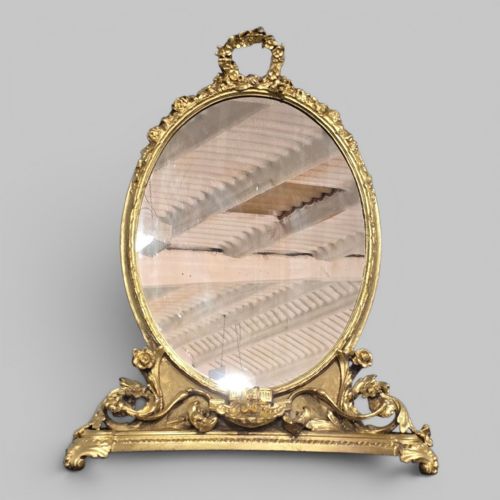
Makers utilised various secondary materials alongside brass, incorporating mahogany, oak, green onyx, and bevelled glass into the overarching design. The physical forms range from simple oval frames to ornate cast structures bearing decorative motifs.
How they were made
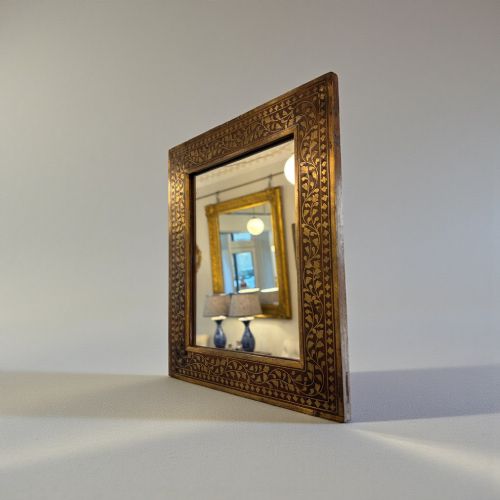
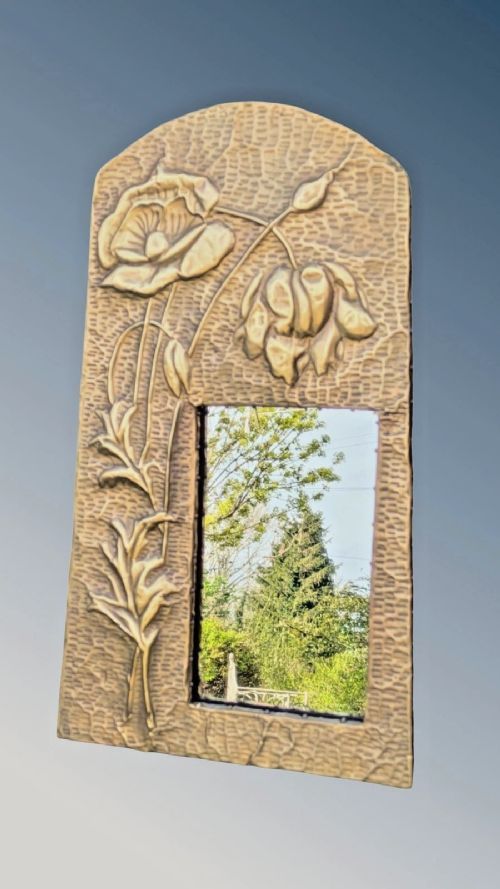
Craftsmen shaped these objects using foundational metalworking techniques, frequently employing cast brass or pressed sheet metal ornamented with repoussé and champlevé detailing. Frames were constructed to house mirror glass securely, sometimes incorporating bevelled edges that added depth to the reflection.
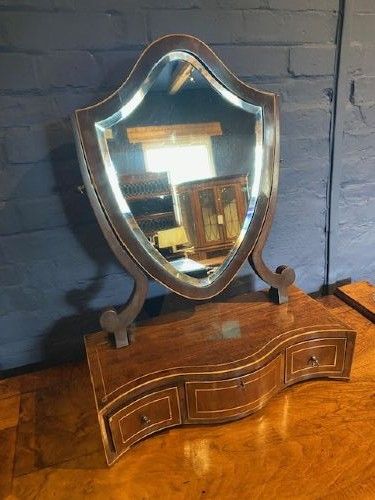
Structural elements combined metal frames with wooden stands made from mahogany, burr walnut, or painted wood, held together with brass screws and hinges. Gilt finishes and patinated surfaces were applied to enhance the visual warmth of the metal components.
Vintage Brass Vanity Mirror Retail Price Guide 2026
Typical asking prices for vintage brass vanity mirror among the pieces listed under this phrase on Sellingantiques today, from the lower quarter to the upper quarter. They describe what is for sale here now, not the wider market.
What varies in quality
The weight and thickness of the cast brass frame dictate the overall substance of the object, with heavier castings providing greater stability on a dressing table. Finer examples display crisp detail in chased or embossed ornamentation, whereas simpler pieces rely on basic presswork.
The condition of the original mirror plate contributes significantly to the character of the piece, as does the smooth operation of any pivoting or adjustable joints. Integrated materials such as polished hardwood stands or green onyx bases further distinguish standard production items from more ambitious commissions.
Thomas Rubergall of London·Maples of London and Paris
The Vintage Brass Vanity Mirror Glossary
- Repoussé
- A metalworking technique where the metal is hammered from the reverse side to form a raised design on the front. This method is frequently observed on Edwardian mirror frames.
- Bevelled glass
- Mirror plate with an angled edge cut and polished around the perimeter. This treatment catches the light and adds a decorative border to the reflection.
- Easel mirror
- A dressing mirror supported by a hinged leg at the back, allowing it to stand independently on a flat surface. It contrasts with fixed wall mirrors and heavy swing stands.
- Champlevé
- An enamelling technique where troughs are carved into the metal surface and filled with vitreous enamel before firing. It appears on decorative French table mirrors from the late nineteenth century.
- Swing mirror
- A mirror plate suspended within upright posts by pivot screws, enabling the glass to tilt forward or backward. This format is standard for traditional dressing table mirrors.
Vintage Brass Vanity Mirror: Frequently Asked Questions
How do I clean an antique brass mirror frame?
Dust the surface gently with a soft dry cloth to remove accumulated particles without disturbing the historic patina.
Avoid using harsh chemical polishes that can strip the aged finish and diminish the character of the metal.
Can these mirrors be mounted on a wall?
Most examples designed as vanity mirrors rely on easel backs or weighted table stands rather than wall fixings.
Items intended for suspension typically feature integrated hanging loops or chains secured directly to the frame.
What is the difference between a vanity mirror and a toilet mirror?
The terms are often used interchangeably to describe portable looking glasses placed on dressing chests or tables.
Historically, toilet mirrors often incorporated small drawers or partitioned wooden bases for holding personal items.
How do I identify an Edwardian brass mirror?
Edwardian pieces frequently display lighter cast brass frames influenced by revival styles, often featuring soft repoussé floral motifs.
They commonly date from the period around nineteen hundred and may incorporate polished oak or mahogany supports.