
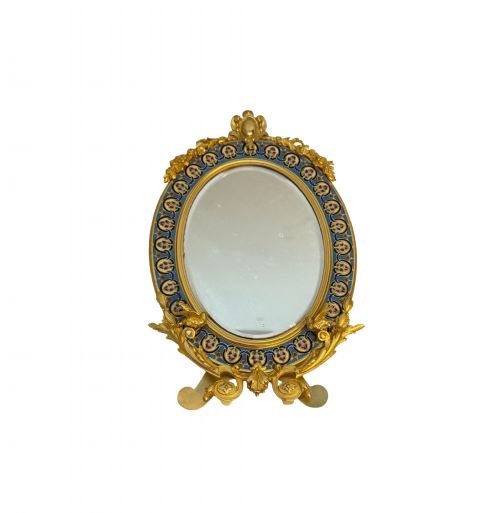


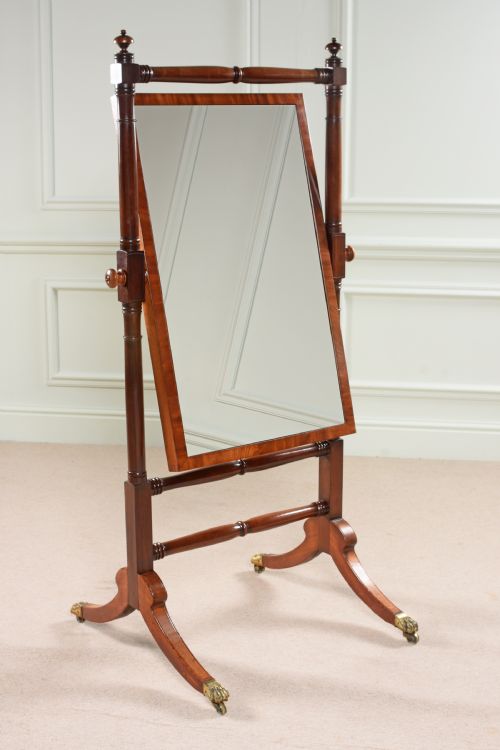

Brass Swing Mirror
These brass swing mirror examples combine rotating mirror plates with polished metal mounts, offering practical adjustment and period character for any dressing table or room.
Brass Swing Mirror
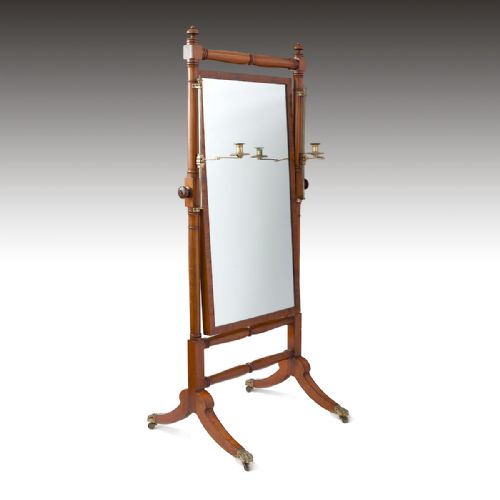
A brass swing mirror combines a pivoting glass plate within a secure frame, designed to tilt for personal grooming. You will find these pieces appearing in various formats, from compact table dressing mirrors to large floor-standing cheval mirrors.
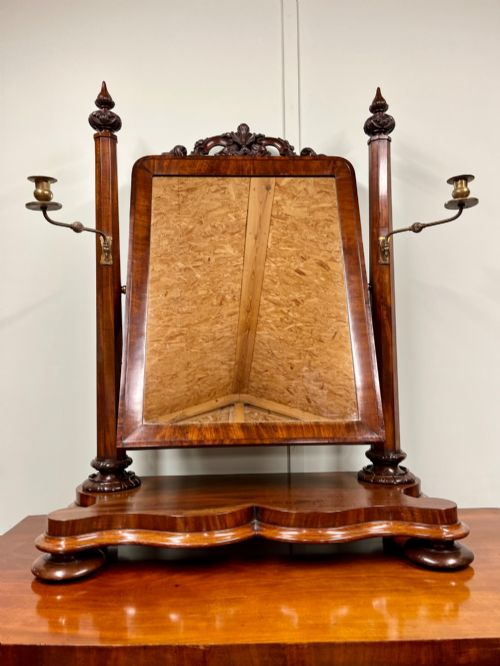
The selection ranges across several eras, featuring designs from the eighteenth century up through the Edwardian period. Smaller toilet mirrors sit comfortably on chests or tables, while grander cheval frames stand directly on the floor.
Origin influences form greatly, with English mahogany frames appearing alongside French gilt bronze and champleve creations. Each version retains the characteristic swivel mechanism that allows the glass to angle smoothly.
What varies in quality
Subtlety in casting and turning defines the better brass elements, where screw threads turn smoothly and joints remain rigid. Finer frames show precise timber selection, such as figured mahogany or meticulously matched veneers.
Proportion and weight dictate stability, ensuring larger cheval or table mirrors tilt without tipping or sagging. Quality rests in the integration of metal fittings with woodwork, rather than superficial decoration alone.
Listings feature woods like mahogany, kingwood, and satinwood alongside cast brass and gilt bronze.
The Brass Swing Mirror Glossary
- Cheval mirror
- A large floor-standing mirror mounted in a frame that allows the whole plate to swing vertically. These tall pieces typically stand on four legs and provide a full-length reflection.
- Toilet mirror
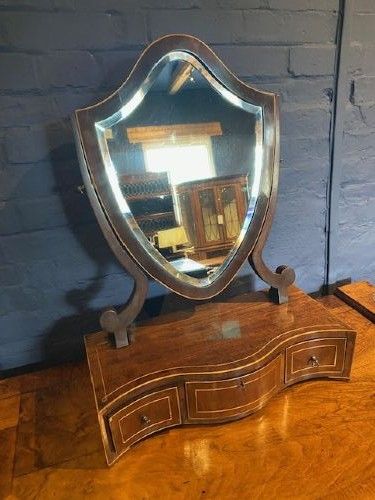
- A smaller tabletop mirror designed for a dressing table or washstand. These units usually feature a small base box, sometimes fitted with drawers.
- Champleve
- An enamelling technique where troughs are gouged into metal and filled with vitreous paste before firing. This method creates colourful decorative patterns on nineteenth-century brass and bronze frames.
- Finial
- A decorative terminal ornament placed at the top corners of a mirror frame or on pivot screws. These elements add height and finish to the overall silhouette.
- Shield mirror
- A mirror plate cut into the rounded shape of a heraldic shield. These frames are frequently mounted on pivoting brackets above small stands.
Brass Swing Mirror: Frequently Asked Questions
How do I secure a loose swing mirror?
Most pivoting mirrors use threaded side screws or tension washers that can be gently tightened by hand or with a proper tool. Check the brackets on both sides to ensure even pressure holds the glass at your chosen angle.
Avoid forcing stiff metal fittings, as older brass threads can strip if over-tightened. A drop of appropriate lubricant on the pivot pin often restores smooth movement.
Where should I place a table swing mirror?
These pieces suit dressing tables, chests of drawers, or sideboards where they catch natural light. Position the mirror so the pivoting glass reflects a bright area of the room.
Ensure the supporting surface is level to prevent the frame from twisting or putting uneven strain on the wooden joints and brass pivots.
How do I clean nineteenth-century brass fittings?
Dust metal parts gently with a soft dry cloth to remove surface grime without disturbing the aged patina. Avoid harsh chemical polishes that strip historical character from the brass.
Keep moisture away from the wooden frames and the silvered backing of the mirror glass during cleaning to prevent edge tarnishing.
What is the difference between a cheval and a toilet mirror?
A cheval mirror is a tall, floor-standing piece designed for viewing the entire outfit. A toilet mirror is much smaller and sits upon a piece of furniture.
Both utilise a similar swinging mechanism, but their scale and placement within a room serve entirely different purposes.