

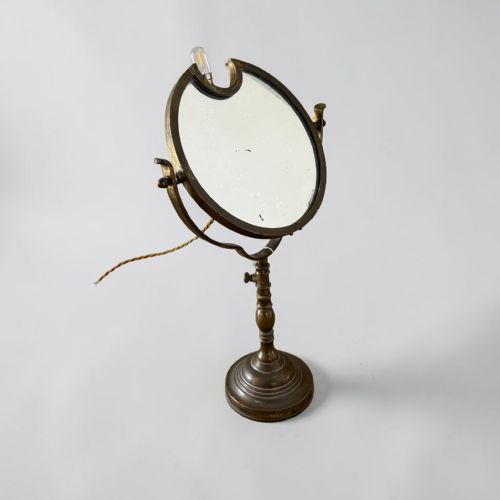
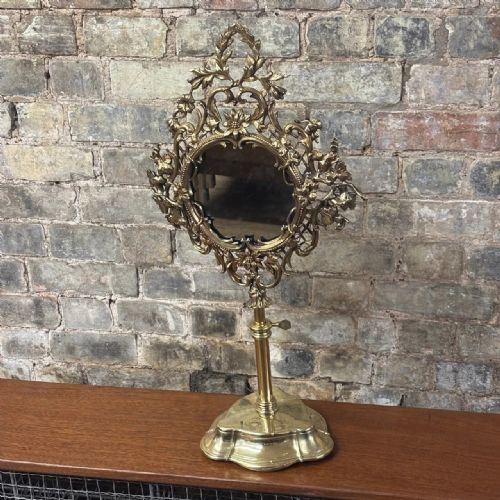
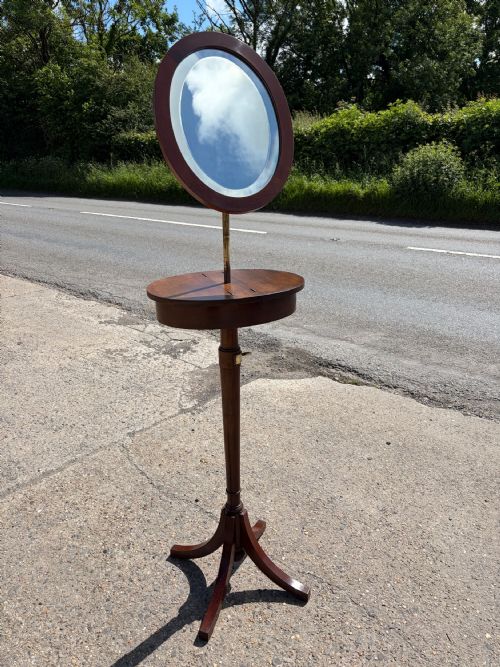


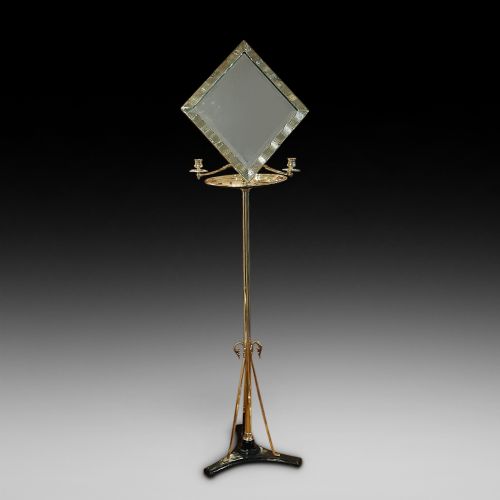


Brass Adjustable Standing Mirror
These brass adjustable standing mirrors offer practical adjustment and bright metalwork for a dressing room or washstand.
Brass Adjustable Standing Mirror
A brass adjustable standing mirror provides a movable glass surface supported on a table base, a tripod, or a pedestal stand. The selection includes Victorian, Edwardian, and Regency examples, alongside pieces from the nineteenth century dated around 1880, 1890, and 1900.
The forms vary across the listings from simple table mirrors and tabletop mirrors to shaving stands, dressing stands, and shaving mirrors. Many incorporate telescopic mechanisms that raise or lower the glass, while others utilise tilt joints for angle adjustment.
Most specimens rely on brass frameworks, frequently paired with mahogany or walnut woodwork. Certain items introduce bronze, painted metal, mirror glass, fabric cord, or specific revivals such as Louis XV and French Empire styles.
How they were made
The primary structural metal is brass, often formed into solid frames, telescopic shafts, and decorative mounts, sometimes accompanied by bronze or painted metal details. Glass is set within these metal borders or mounted above wooden boxes and stands.
Makers integrated turned timber components in mahogany and walnut for the bases, tripods, and dressing stands. Adjustable joints and telescopic mechanisms required precise metalworking to allow smooth movement without slipping.
Brass Adjustable Standing Mirror Retail Price Guide 2026
Typical asking prices for brass adjustable standing mirror among the pieces listed under this phrase on Sellingantiques today, from the lower quarter to the upper quarter. They describe what is for sale here now, not the wider market.
A gentleman adjusting his mirror in 1890 relied on the exact same brass pivot tension that still holds today.
What varies in quality
Quality rests in the precision of the telescopic mechanism and the stability of the base, whether a heavy brass casting, a tripod, or a fitted wooden shaving stand. Superior examples maintain firm tension in the adjustable joints over years of daily handling.
The choice of secondary materials marks the tier of the piece, distinguishing simple brass frames from elaborate designs featuring figured mahogany, rich walnut, or refined bronze mounts in French Empire and Louis XV revival styles.
The Brass Adjustable Standing Mirror Glossary
- Telescopic
- An adjustable mechanism allowing the vertical shaft to extend or contract in height. This feature appears frequently on nineteenth-century shaving mirrors.
- Shaving stand
- A tall furniture form incorporating a mirror above a small table or cabinet, often fitted with drawers. These pieces served gentlemen for morning routines.
- Tripod base
- A support structure resting on three feet, commonly utilised on nineteenth-century telescopic mirrors for stability. It lifts the glass off the table surface.
- French Empire
- A classical revival style originating in the nineteenth century, characterised by formal symmetry and bronze mounts. Pieces in this manner display heavy classical influence.
- Louis XV Revival
- An ornate decorative style featuring asymmetrical scrollwork and naturalistic curves. This aesthetic appears on Edwardian table mirrors.
Brass Adjustable Standing Mirror: Frequently Asked Questions
What is a telescopic shaving mirror?
A telescopic shaving mirror is a standing glass mounted on an extendable vertical brass shaft. The height adjusts to suit the user during grooming.
These pieces typically date from the Victorian and Edwardian periods, combining brass metalwork with timber bases.
How do you adjust the mirror angle?
Most models use pivot screws or side hinges mounted to the frame. Tightening or loosening these fittings allows the glass to tilt forward or backward.
Older examples rely on well-fitted friction joints that hold the chosen angle without slipping.
Where were shaving stands placed?
Shaving stands and dressing stands stood on tabletops, chests of drawers, or directly on the floor depending on the base design. They belonged in bedrooms, dressing rooms, or wash spaces.
The adjustable glass provided light and convenience for morning routines.
How do I date a brass mirror?
Dating relies on the combination of materials, construction methods, and stylistic cues such as Louis XV Revival or French Empire details. Nineteenth-century examples often show distinct turning on wooden tripod bases.
Examine the type of brass casting and the glass bevel to understand the manufacturing period.